
ChatGPT Is Getting Ads Soon, Starting With Free Users
What this change means for everyday users — and the future of AI conversations
For many people, ChatGPT has become a daily companion. From writing emails and homework help to brainstorming ideas and answering late-night questions, the AI chatbot quietly slipped into everyday life without asking for much in return. No banners. No pop-ups. No sponsored messages.
That era is about to change.
ChatGPT is preparing to introduce advertisements, beginning with free users. While paid subscribers will continue to enjoy an ad-free experience, this shift marks a turning point in how artificial intelligence tools are funded — and how users interact with them.
Why Ads Are Coming to ChatGPT
Running a powerful AI system is expensive. Behind every ChatGPT response are massive servers, energy costs, ongoing research, and constant development. As usage continues to grow worldwide, relying only on subscriptions is no longer enough to sustain free access for millions of users.
Ads offer a familiar solution. Just as social media platforms, video sites, and free apps rely on advertising to stay accessible, ChatGPT is moving toward a hybrid model — free with ads, paid without them.
This approach allows OpenAI to keep ChatGPT available to everyone while shifting part of the cost burden away from users who can’t or don’t want to pay.
Who Will See Ads — And Who Won’t
Not all users will experience this change equally.
Advertisements will initially appear for:
Free ChatGPT users
Lower-cost plans, such as entry-level subscriptions
Meanwhile, users on Plus, Pro, Business, and Enterprise plans will continue to enjoy an ad-free experience.
Importantly, ads will not appear in accounts belonging to users under 18, and sensitive topics like health, politics, and mental well-being are expected to remain ad-free.
This tiered system mirrors what users already experience on streaming platforms, apps, and news websites.
How Ads Will Appear Inside ChatGPT
One of the biggest concerns users have is interruption. Nobody wants an AI conversation broken by flashing banners or forced videos.
According to current plans, ads inside ChatGPT will:
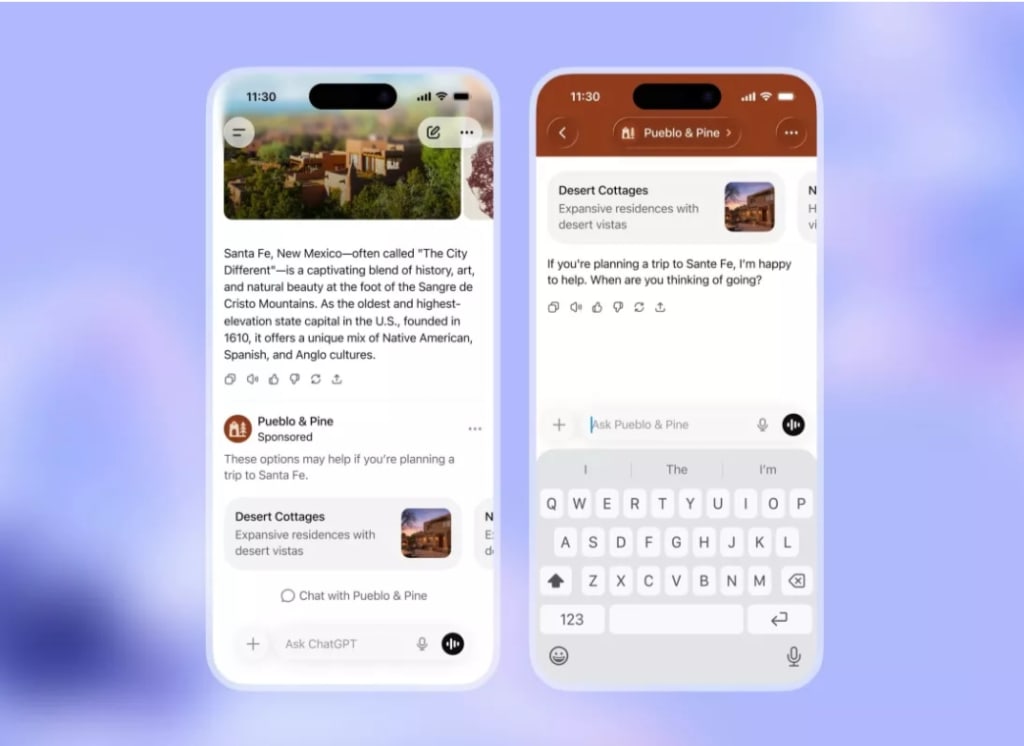
Appear below responses, not inside them
Be clearly labeled as sponsored
Remain separate from the AI’s answers
In other words, ChatGPT will still answer your question normally. Any advertisement shown afterward will be optional to view or ignore.
The goal is to keep conversations natural, informative, and uninterrupted — even with ads present.
Will Ads Affect ChatGPT’s Answers?
This is the question many users care about most.
The short answer: no.
Ads are not supposed to influence how ChatGPT responds. The AI will not recommend products because they paid for placement, nor will it change answers to favor advertisers.
ChatGPT’s responses are generated independently, while ads exist alongside them — not within them.
This distinction matters. Trust is the foundation of any AI tool, and once users feel answers are biased, that trust disappears.
Privacy Concerns and User Control
Any time ads enter a digital space, privacy becomes a concern. OpenAI has emphasized that:
Conversations are not sold to advertisers
Ads do not rely on personal chat content
Users will have control over ad personalization
Users can dismiss ads, provide feedback, and manage settings related to ad relevance.
While skepticism is natural, these safeguards aim to prevent ChatGPT from becoming a data-harvesting platform like traditional social media.
How Users Are Reacting
Reactions have been mixed.
Some users see ads as a reasonable compromise. After all, they’ve been using a powerful AI tool for free — and a small ad feels like a fair trade.
Others worry this is the beginning of a slippery slope. If ads arrive quietly, will they become more intrusive over time? Will free users eventually feel pressured to upgrade just to escape distractions?
Both reactions are valid. Change always feels uncomfortable, especially when it affects tools we rely on daily.
What This Means for the Future of AI
ChatGPT adding ads isn’t just a platform update — it’s a sign of where AI is heading.
As AI becomes more embedded in daily life, companies must find sustainable ways to fund it. Subscriptions alone may not be enough, especially if the goal is universal access.
Ads represent a broader shift: AI tools are becoming mainstream consumer products, not just experimental tech.
How well this balance is managed will shape public trust in AI for years to come.
Should You Upgrade to Avoid Ads?
That depends on how you use ChatGPT.
If you rely on it heavily for work, writing, or long sessions, an ad-free subscription may feel worth it. If you use it casually, ads may barely register.
The key is choice. Users can decide how much convenience, privacy, and focus they want — and what they’re willing to pay for it.
Final Thoughts
ChatGPT introducing ads for free users is a major milestone. It signals growth, maturity, and the realities of sustaining advanced technology at a global scale.
If done thoughtfully, ads could help keep AI accessible without damaging trust or usability. If done poorly, they could push users away.
For now, the message is clear: ChatGPT is evolving — and users are part of that evolution.
The conversation isn’t ending. It’s just being monetized.
About the Creator
Keep reading
More stories from Aarif Lashari and writers in The Swamp and other communities.
At Least Six Killed in Pakistan as Fire Rips Through Karachi Shopping Mall
Karachi has been struck by tragedy after a massive fire ripped through Gul Plaza, one of the city’s busiest shopping malls, late on January 17, 2026. At least six people lost their lives, including a brave firefighter, while dozens more were injured. Families are still searching for loved ones, and many shopowners are left to pick up the pieces after losing their livelihoods.
By Aarif Lashariabout 19 hours ago in The Swamp
A Look Ahead
The way people engage on cellphones has been the same for years. A new year comes, leaks come out, specifications get louder, and our screens are assaulted with promises of "the biggest upgrade yet." But as we approach closer to 2026, things look different. Not because smartphones are suddenly fresh and exciting again, but because the way people use their phones is changing.
By abualyaanartabout 14 hours ago in The Swamp


Comments
There are no comments for this story
Be the first to respond and start the conversation.