
Charlie Kirk’s Assassination Isn’t Justice. It’s a Warning.
If controversial speech is now punishable by death, what happens when the target is you?

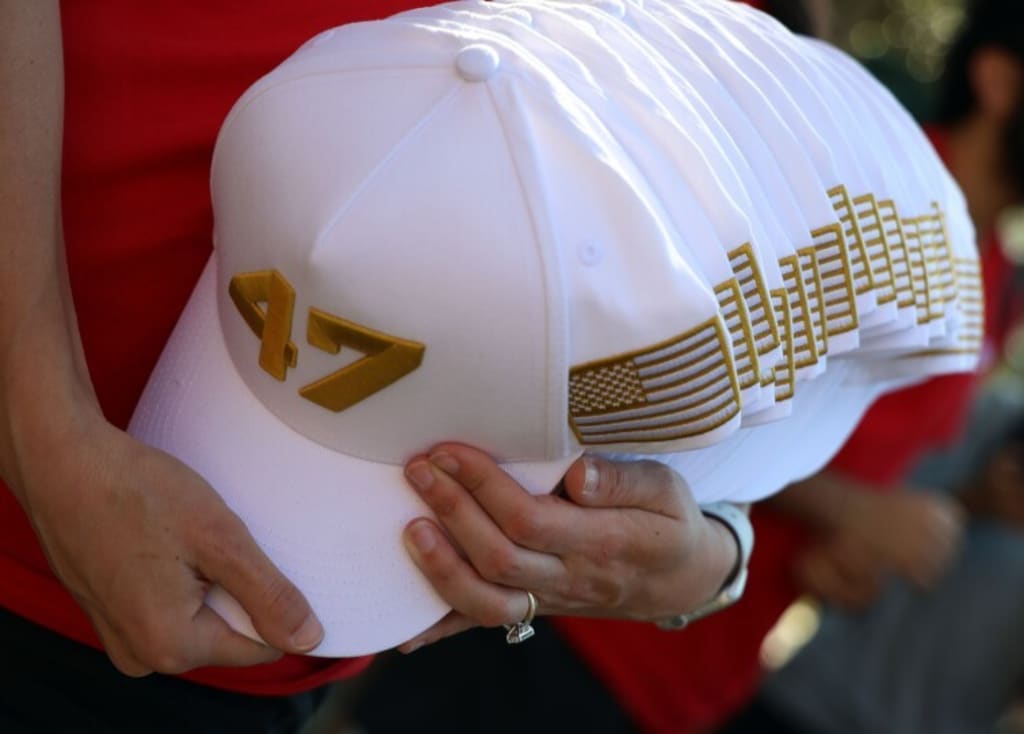
When I heard that Charlie Kirk had been assassinated, I was stunned. But what shocked me even more was how many people celebrated it — as if his death were some sort of victory. It made me reflect, not just on who he was, but on how people have come to talk about him — and others like him.
I’ve always enjoyed watching clips of Charlie debating on college campuses. The exchanges were heated, sure, but that was the point. I’ve never seen a student “win” one of those debates — and honestly, that made sense. He was older, more experienced, and had spent years studying politics and policy. Many students came with strong opinions, but not always with facts or frameworks. And still, Charlie gave them the mic.
That’s one of the things many people didn’t understand about his campus tour: he wasn’t just there to “own the libs.” If you looked closely, you could see that he wanted students to speak up — even if they disagreed with him. He seemed genuinely pleased when someone dared to challenge him. And most of the time, he responded not with mockery, but with explanation.
Yes, some of the clips went viral for all the wrong reasons — close-ups that made it seem like he was surrounded only by angry students, or short edits that erased context. I think that helped shape a false image of Charlie as a bully who enjoyed picking fights with young people. But what I saw was different: someone trying to empower youth through dialogue, even when he didn’t agree with them.
Sometimes, the students crossed lines — yelling, cursing, calling him names. And yes, Charlie pushed back when it went too far. But he also let a lot slide. More than most public figures would in that setting.
It wasn’t until the day of the shooting, when footage from the event started circulating, that I saw something I hadn’t seen in all those viral clips: the size of the crowds. The mix of people. Many were there to support him. There were also lots of non-supporters, but in spite of that came to hear him. That’s not the picture most people see online.
Charlie Kirk was a polarizing figure for a reason. His rhetoric was often sharp, his phrasing sometimes deliberately provocative. He was the kind of person who knew how to trigger reactions — and he used that skill often.
At the same time, we need to ask: were all his “worst” quotes as evil as they seemed? Or were some just uncomfortable truths, clipped out of context, or moments of exaggeration to make a point?
I’m not here to defend every word he ever said. But I am here to say this: most of us have said something heated, sarcastic, or badly worded — whether in a debate, on social media, in private conversations, or even in moments of stress. Especially when we care deeply about what we’re discussing. The difference is, Charlie had a massive audience, and his words were constantly under the microscope.
We live in an era where attention is currency, and controversy sells. Sometimes Charlie leaned into that. But sometimes the audience — and the media — twisted it for their own gain too.
What disturbs me most right now isn’t just that Charlie Kirk is dead — it’s that so many people think that’s a good thing.
Some have even tried to justify their celebration of Charlie Kirk’s death by quoting his old critique of the term 'empathy' — as if rejecting the concept in theory means he didn’t deserve any in death. But that’s not how empathy works. It’s not something you earn by being agreeable. It’s a reflection of our own capacity to remember there's a life behind the public image — even when we strongly disagree. Kirk’s criticism wasn’t about denying people’s humanity; it was about how political discourse can manipulate emotion. Ironically, those twisting his words now are doing exactly what he warned about.
A lot of people seem to believe they’re on the “right side of history” for cheering his assassination. But if what happened to him is considered justice — or even acceptable — then we should all be worried.
Because if it only takes a few political hot takes to be publicly targeted and killed, then freedom of speech, freedom of thought, and even freedom to make a mistake are all under threat. Today it’s someone you disagree with. Tomorrow it could be someone you love. And another day it could be YOU.
You don’t have to agree with Charlie Kirk. You don’t even have to like him. But celebrating his death doesn’t make you righteous — it makes you numb to something terrifying. It means you’re okay with violence as long as it’s aimed at someone you believe deserves it.
And that’s not justice. That’s just vengeance pretending to be virtue.
Final thought:
If we’re unable — or unwilling — to acknowledge the humanity in someone like Charlie Kirk, even in the wake of his death, then perhaps we need to ask what that says about our own. Compassion isn't a reward for agreement. It's a reflection of our values, especially when tested by those we fiercely disagree with.
About the Creator
Rena Thorne
Unfiltered. Unbought. Unapologetic.
I’m not here to provoke—I’m here to make you rethink.
Keep reading
More stories from Rena Thorne and writers in The Swamp and other communities.
From Daniel Penny to Iryna Zarutska: Two lives, two outcomes
We live in a time when acts of public violence play out in front of us — on trains, in subways, in parks — and often on camera. These moments force people to make split-second decisions about whether to intervene, freeze, or flee. But what happens after those decisions can be just as defining. And in two very different cases — Daniel Penny’s and Iryna Zarutska’s — we see the risks, the consequences, and the haunting question: what do we expect from each other in public?
By Rena Thorne6 months ago in The Swamp
The Forsyth House Fire
Since 1851, Forsyth House has stood on the corner of Union Street and Gordon Street in the heart of Glasgow. Its iconic, or was... because on Sunday 8th of March, 2026, a fire broke out in a small, seemingly un-named shop in the building and tore all that history down. As I write, the rubble is still unsettled and the street is still blocked off. Central Station is quiet on the upper level, and around 30 small businesses have quite literally gone up in smoke.
By S. A. Crawforda day ago in The Swamp
My Village Has Become Deserted: How Russia’s War Is Emptying Its Rural Communities
Subtitle: Conflict, conscription, and economic collapse are driving residents away from Russia’s countryside, leaving once-lively villages silent and abandoned.In many remote villages across Russia, the effects of the ongoing war with Ukraine are being felt far from the front lines. While the world often focuses on military developments and geopolitical tensions, rural communities inside Russia are quietly experiencing a different kind of devastation—depopulation. In countless small settlements scattered across the country’s vast countryside, residents say their villages are slowly emptying as young men leave for war, families relocate to cities, and local economies collapse. In the small farming village of Novaya Zarya in western Russia, longtime resident Marina Petrovna remembers when the streets were filled with children and tractors moved steadily through nearby fields. Today, the silence is overwhelming. “My village has become deserted,” she says. “Every year there are fewer houses with lights on at night.” Since the start of the war in 2022, many rural areas have seen a sharp decline in population. Young men have been mobilized into the military or have volunteered for service, often leaving behind elderly parents and abandoned homes. Some families have fled to cities or even abroad, fearing further mobilization or seeking economic stability. Demographic decline was already a serious problem in rural Russia before the war began. According to analysts, many villages had been losing residents for decades as young people migrated to urban centers such as Moscow and Saint Petersburg in search of better jobs, education, and healthcare. The war has accelerated this trend dramatically. Local officials in several regions report that schools have closed due to falling enrollment, while clinics struggle to remain open with limited staff. In some places, buses that once connected villages to nearby towns no longer run because too few people remain to justify the service. Economically, the situation has also deteriorated. Agriculture, which is the backbone of many rural communities, depends heavily on manual labor. With a significant number of working-age men gone, farms are struggling to plant and harvest crops. Some fields now lie untouched, slowly returning to wilderness. The social fabric of village life is also unraveling. Community gatherings, traditional festivals, and local markets have become rare. In villages where dozens of families once lived, only a handful of elderly residents remain. They often rely on neighbors for support, but even those networks are weakening. Experts say the problem may worsen if the conflict continues. Russia’s rural regions already face an aging population and declining birth rates. War casualties, migration, and economic hardship could deepen these demographic challenges for years to come. Sociologists warn that entire settlements could disappear. In parts of Siberia and the Russian Far East, villages have already been officially removed from maps after losing all permanent residents. Similar fates may await others if current trends continue. Despite the hardships, some residents remain determined to stay. For older villagers, leaving their homes and farmland is unthinkable. “Our parents and grandparents built this place,” says Petrovna. “Even if the village becomes empty, this is still our home.” The Russian government has announced several rural development programs in recent years, aiming to modernize infrastructure and encourage people to remain in smaller communities. However, critics argue that wartime priorities and economic sanctions have limited the impact of these initiatives. For now, the quiet transformation of rural Russia continues largely unnoticed by the outside world. While battles rage hundreds or even thousands of kilometers away, the consequences are reshaping everyday life in villages across the country. As night falls in Novaya Zarya, only a few houses glow faintly in the darkness. Where laughter, farm work, and village gatherings once defined daily life, there is now a growing stillness—an echo of a countryside slowly fading away.
By Fiaz Ahmed 6 days ago in The Swamp
Why Didn't Anyone Tell Us
Men, move along. This is not for you. This is for the women. I was forty-five when I began menopause. It is pretty young for that to be going on in a woman’s life, but I had undiagnosed PCOS, my entire life. Thank you to all the gynecologists I had seen my entire life. That in itself should encourage women to keep seeking second opinions, especially when you are not getting correct answers or any at all.
By Alexandra Grant4 days ago in Humans


Comments (3)
I saw you commented on my poem earlier, but your comment disappeared before I got out of work. I just thought I'd acknowledge that since I didn't get to read what you had to say there. Anyway, I've known of Charlie Kirk for almost a decade. I went to one of his speaking events when I was in college. It has been clear to me for a very long time that Charlie Kirk was not good at debating, and he did not debate in good faith. He operated heavily on logical fallacies, and his platform caused a significant amount of harm, including harassing university faculty and staff through the watchlist he created with TPUSA. He ridiculed and dismissed others who died violent, recorded deaths before it happened to him, and he excused violence against people he didn't like. I want to be clear that none of this excuses the way he died. I just think it's interesting that you're willing to give him significantly more compassion than he gave others without acknowledging that the people who aren't mourning him are also likely processing their own complicated feelings about the death of someone who caused so much harm. If people are celebrating his death (and I'll be honest, I haven't actually seen much of that), I would first wonder how much of that is a trauma response.
i like it dear. support will grow us faster i am already your supporter but please don,t forget me to support my articles ok dear.
i like it dear. support will grow us faster i am already your supporter but please don,t forget me to support my articles ok dear.