
Canada Summons OpenAI Representatives Over School Shooting Suspect’s ChatGPT Account
A Tragic Case Sparks Global Debate Over AI Safety, Privacy, and Responsibility

Introduction
A tragic school shooting in Canada has sparked a global debate about artificial intelligence oversight after officials called in representatives from OpenAI to explain how a suspect’s chatbot activity was handled prior to the attack.
The case has become a defining moment in conversations about the role of AI companies in identifying potential threats, protecting user privacy, and cooperating with authorities. As governments race to regulate emerging technologies, this incident highlights the real-world consequences of digital behavior that raises safety concerns.
What Happened
The attack occurred in the small community of Tumbler Ridge, a quiet town that rarely makes national headlines. The suspect, an 18-year-old student, carried out a shooting that left multiple victims dead and shocked communities across the country.
During the investigation, authorities discovered the suspect had interacted with ChatGPT, discussing violent scenarios months before the incident. Automated safety systems flagged some of these conversations, leading to the account being suspended for policy violations.
However, law enforcement was not alerted at the time — a decision that has since become the center of intense scrutiny.
Why Officials Summoned OpenAI
Following the revelations, Canada’s government moved quickly. The country’s artificial intelligence leadership, including Evan Solomon, requested meetings with OpenAI’s safety team to understand the company’s internal review process.
Officials wanted answers to key questions:
What warning signs were detected?
Why was the account banned but not reported?
What criteria determine when a threat becomes “credible”?
The government’s concern was not that AI caused the violence, but whether earlier intervention might have helped prevent it.
OpenAI’s Response
OpenAI stated that its monitoring systems identified the account as violating safety policies due to violent content. The company suspended access but concluded the activity did not meet the threshold of an imminent threat requiring escalation to authorities.
This reflects a common challenge for technology platforms: distinguishing between hypothetical discussions, emotional distress, fictional writing, and genuine intent to cause harm.
OpenAI emphasized that it cooperated with investigators after the attack and continues to refine its detection and escalation procedures.
The Privacy vs. Prevention Dilemma
At the heart of the controversy lies a difficult balance. Users expect private conversations when using digital tools, especially educational or creative platforms. Yet governments and communities expect companies to act when warning signs appear.
Reporting every concerning conversation could overwhelm authorities and risk misidentifying vulnerable individuals. But failing to report serious signals may allow dangerous situations to escalate.
This dilemma is not unique to AI. Social media companies have faced similar debates for years — but AI introduces new complexity because conversations can be more detailed, interactive, and personal.
Implications for AI Regulation
The incident is accelerating regulatory discussions across Canada and beyond. Policymakers are considering clearer rules about:
Risk assessment standards
Mandatory reporting thresholds
Transparency in safety decisions
Collaboration between tech companies and law enforcement
In the province of British Columbia, local leaders have also called for stronger digital safety coordination between schools, mental-health services, and technology platforms.
Globally, governments are watching closely because the case represents one of the first high-profile examples linking AI platform moderation to a real-world violent event.
What It Means for Schools and Families
The tragedy underscores the growing presence of AI in students’ daily lives. Chatbots are used for homework, brainstorming, emotional support, and entertainment — making them part of the broader digital environment where warning signs may appear.
Educators are now exploring AI literacy programs that teach:
How AI systems work
What safeguards exist
When online behavior should be reported offline
How to seek help when experiencing distress
Parents are also being encouraged to talk openly with children about digital behavior and mental health rather than relying solely on technology safeguards.
The Future of AI Safety
The meeting between Canadian officials and OpenAI signals a shift in expectations. AI companies are no longer viewed only as innovators — they are increasingly seen as stakeholders in public safety.
Several questions will shape the next phase of AI governance:
How should platforms define credible threats?
Should governments create standardized reporting frameworks?
How can companies avoid over-surveillance while preventing harm?
What role should schools and communities play alongside technology?
Experts argue that no algorithm can replace human judgment, which means collaboration will be essential.
Conclusion
Canada’s decision to summon OpenAI representatives marks a turning point in the global conversation about artificial intelligence accountability. The Tumbler Ridge tragedy illustrates both the capabilities and limitations of AI safety systems.
While banning harmful content is important, the case shows that moderation decisions can carry profound real-world implications. It also highlights that technology alone cannot prevent violence — early intervention depends on communities, mental-health support, and clear communication channels.
As AI becomes more deeply integrated into education and everyday life, societies must develop balanced frameworks that protect privacy while enabling timely action when genuine risks emerge. The debate sparked by this incident is likely to influence AI policy, platform design, and digital safety standards for years to come.
About the Creator
A Gathering of Evil Bosses
“I’m the queen of chin jutting while I smooth my hair, attacking, insulting, and deflecting to protect my appointer.” “Oh, please, Blondi, my hair is curled, highlighted, and longer than yours. I feature television commercials telling immigrants that we will give them a free plane ride home, and if they voluntarily turn themselves in, they will be allowed to legally apply for re-entry. It runs everywhere, and I look good in it! You can’t compete because of your blond hair. Mine is nicer, and my lips are prettier than yours.”
By Andrea Corwin 6 days ago in The Swamp
What’s Happened Since the Supreme Court’s Tariff Ruling
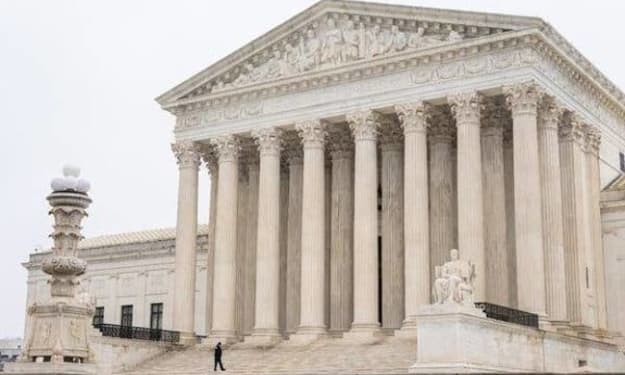
Since the landmark decision by the Supreme Court of the United States limiting the president’s authority to impose sweeping tariffs without congressional approval, Washington and global markets have entered a period of adjustment marked by political debate, legal uncertainty, and cautious economic recalibration. The ruling stemmed from a challenge to emergency trade powers used to justify broad import taxes on foreign goods. While the Court did not immediately strike down all existing tariffs, it made clear that large-scale trade measures must rest on firmer legislative authority. The decision reasserted Congress’s constitutional role in regulating commerce and narrowed the scope of unilateral executive action in trade policy. Congress Moves to Reclaim Control In the weeks following the ruling, lawmakers introduced competing proposals to redefine how future tariffs can be enacted. Some bills aim to require congressional approval for any new tariffs lasting longer than 60 days. Others seek to create a streamlined process for emergency actions, balancing speed with oversight. Supporters of the Court’s decision argue it restores democratic accountability. “Trade policy affects every household,” said one senior lawmaker. “It should not be decided by one office alone.” Critics, however, warn that slower legislative procedures could weaken the United States’ leverage in negotiations with foreign governments accused of unfair trade practices. Committee hearings have featured testimony from economists, manufacturers, and labor groups, reflecting sharply divided views. Exporters want predictability, while domestic producers want continued protection from low-cost imports. For now, Congress has not passed a comprehensive replacement framework, leaving trade policy in a temporary holding pattern. Markets and Businesses Adjust Financial markets initially reacted with modest optimism, interpreting the ruling as a signal of reduced risk of sudden tariff escalations. Shares of retail and manufacturing companies dependent on imported components rose slightly, while shipping and logistics firms welcomed the prospect of more stable trade rules. Businesses, however, remain cautious. Several multinational corporations have delayed long-term supply contracts, citing uncertainty over whether Congress will loosen or reinforce tariff controls. “Legal clarity doesn’t equal policy clarity,” said a trade consultant based in Chicago. “Companies still don’t know what the next six months will bring.” Small and medium-sized enterprises, which often lack the resources to absorb sudden cost increases, have been among the most vocal supporters of the ruling. Many hope it will lead to fewer abrupt changes in import duties and a more predictable regulatory environment. International Response U.S. trading partners reacted with guarded relief. European and Asian officials welcomed the Court’s emphasis on institutional checks, interpreting it as a move toward more rules-based trade policy. Several stalled trade discussions were quietly revived, particularly on industrial goods and agricultural exports. China and other major exporters are watching closely to see how Congress reshapes tariff authority. Diplomats say the ruling could reduce the likelihood of rapid trade wars but may also slow negotiations if U.S. policymakers become divided internally. One senior European official described the decision as “a stabilizing signal,” adding that predictable U.S. policy would benefit global markets already strained by geopolitical tensions and supply chain disruptions. Impact on Consumers For American consumers, the effects have been subtle so far. Prices of imported electronics, appliances, and vehicles remain largely unchanged, as existing tariffs are still in place. Economists say any noticeable shift will depend on whether Congress eventually rolls back certain duties or replaces them with a more targeted system. Consumer advocacy groups argue that the ruling opens the door to lower costs in the long term. “Tariffs are hidden taxes,” one spokesperson said. “If lawmakers use this moment to reduce them responsibly, households could see relief.” A Broader Constitutional Signal Beyond economics, the ruling has set an important legal precedent. Constitutional scholars note that it reinforces limits on executive power in areas tied to national emergencies and foreign commerce. This could influence future cases involving sanctions, export controls, and emergency economic measures. The decision has also reshaped political debate, forcing both parties to confront how trade policy should be made in an era of global competition and domestic economic anxiety. What Comes Next The coming months will determine whether the ruling produces meaningful reform or prolonged gridlock. Businesses want certainty, allies want predictability, and voters want relief from rising costs. All eyes are now on Congress to define a new balance between flexibility and accountability in U.S. trade policy. What is clear is that the Supreme Court’s tariff ruling did not end the controversy—it shifted it from the courtroom to the halls of Congress and the negotiating tables of international trade, where its consequences will continue to unfold.
By Fiaz Ahmed about 7 hours ago in The Swamp



Comments
There are no comments for this story
Be the first to respond and start the conversation.