
Bolivia’s Left Faces Historic Defeat: Runoff Election Set for October
Bolivia’s left has suffered a historic defeat, ending nearly 20 years of dominance. The October 19 runoff between Rodrigo Paz and Jorge Quiroga will decide the country’s future.

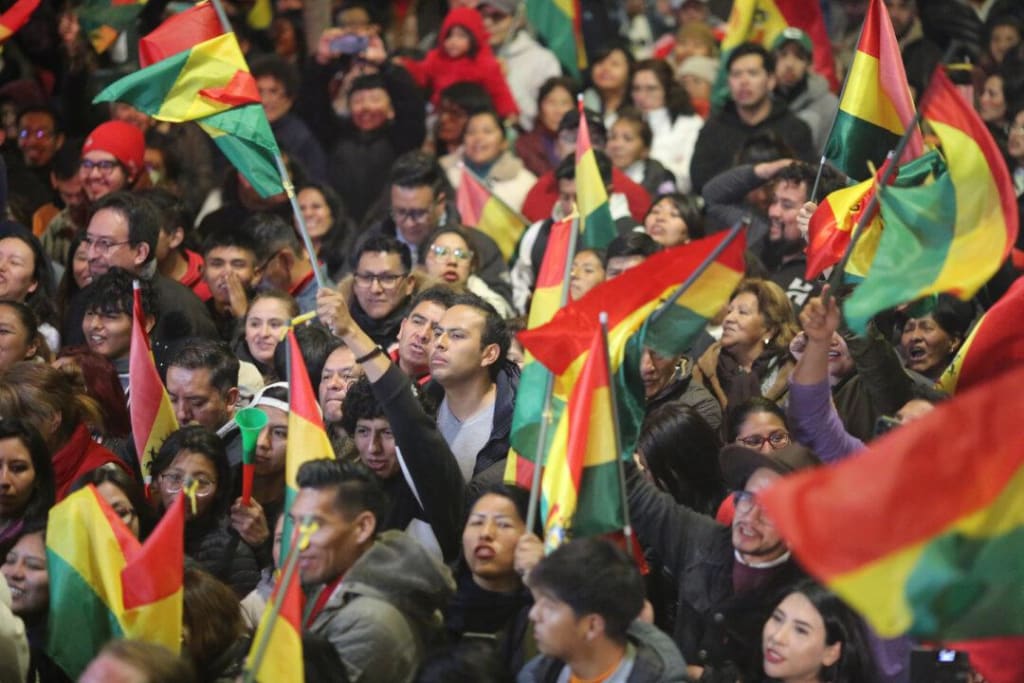
Introduction: A Historic Political Moment
Bolivia has embarked on one of the most significant pages in its contemporary political history. For almost two decades, the Movement for Socialism (MAS), the party established by erstwhile President Evo Morales, controlled the country's political trajectory. Since the early 2000s up to the present, the MAS controlled Bolivia's economy, policies, and foreign relations. But in the presidential election of August 2025, the left's monopoly finally collapsed.
The result surprised all pundits. MAS, the party of immense cross-nationalist patronage in Bolivia, secured barely a fraction over 10% of the vote. This is the worst-ever performance by the party and reflects an absolute fall from grace. For the first time in nearly two decades, Bolivians shall witness a future under not a left-wing government but a center-right one.
The election has set a tight and unpredictable path forward, with the runoff election now scheduled to occur on October 19, 2025.
The Main Candidates and Results
The August vote produced a surprise outcome since none of the candidates achieved an absolute majority of the votes. According to Bolivia's electoral code, a candidate must obtain more than 50% of the votes, or 40% with a 10-point difference, to win the election in the first round. Since none of them managed to do this, the election is moving towards a second round.
Rodrigo Paz: The Centrist Challenger
The leading candidate is Rodrigo Paz, a centrist senator on the Christian Democratic ticket. He polled just over 32% of the vote. Paz campaigned on a program of economic stabilization, anti-corruption, and restoring foreign confidence in Bolivia. His calming and middle-of-the-road imagery appealed to tired voters frustrated with decades of economic crisis and political extremism.
Jorge "Tuto" Quiroga: The Conservative Comeback
Placing second was Jorge "Tuto" Quiroga, a right-wing ex-president who once governed Bolivia in the early 2000s. He garnered approximately 27% of the vote. Quiroga presented himself as a restorer of the nation, an international market protector, and a destroyer of MAS's decades-long dominance.
The Defeat of MAS
The Movement of Socialism (MAS), once unstoppable, fell far behind. It lost with only a little over 10%, its worst defeat ever. For a party that had super loyalty at one point, this defeat is not just a political defeat; it is a resounding rejection by ordinary Bolivians stuck in the present economic situation.
Why Did the Left Lose Its Firm Hold?
The MAS's humiliating defeat was not unexpected. It has taken a long while in arriving because Bolivia's economy has been plagued by increasingly mounting challenges.
Economic Crisis and Inflation
Bolivia is currently experiencing one of the worst economic crises in decades. Inflation rose to more than 23% in June 2025, hiking the price of essentials and leaving families in hardship. Long lines at petrol stations due to fuel shortages added to the people's frustrations. The unavailability of U.S. dollars in the country also made doing business and saving a hardship.
Most Bolivians suffered these issues on a daily basis. The inflation of food, fuel, and medicine led most to blame the ruling party for failing to curb the crisis.
Decline of Morales's Influence
The former President Evo Morales, who was in office between 2006 and 2019, had been MAS's face of strength. Morales himself was excluded from standing in this election. Morales advocated for a boycott of the election but was not obeyed. Voting went on unabated, indicating that Bolivians yearned for change and were ready to vote even in the absence of Morales.
Desire for New Leadership
After nearly two decades of single-party control, many voters simply wanted something new. MAS had once been seen to be the party of indigenous people and the poor. But over time, it was accused of having drifted away from the everyday concerns of ordinary people. The new voters, especially young Bolivians, are less interested in the old socialism promise of jobs, education, and digital access than they are in unemployment, education, and digital access solutions.
The Road to the October Runoff
With Rodrigo Paz and Jorge Quiroga proceeding to October 19 runoff, Bolivia faces a choice of two sharply different futures.
- Rodrigo Paz offers a centrist path forward, one that would mend political divides and focus on practical reforms.
- Jorge Quiroga vows a more conservative government, with a focus on free markets and stronger ties with other international allies.
Both men will now have to woo the millions of voters whose candidates were eliminated in the first round. Negotiations, alliances, and promises will then define Bolivia's political scene for the next two months.
The Role of Voter Turnout
Maybe the most impressive aspect of the election was the high turnout, even with Morales's boycott. This shows that Bolivians are deeply dedicated to their democracy. Citizens want change, and they will go far out of their way to obtain it.
The sheer size of the electorate means the outcome has more legitimacy. Whoever wins in October, the new president will take office knowing that Bolivians spoke out.
What This Election Means for Bolivia's Future
A Shift Away From the Left
This is the first time in close to two decades that Bolivians will be governed by a person who is not affiliated with the MAS party. For many, this marks the end of an era. The shift is a political realignment, with the country moving from left-wing policies to the center or right.
Economic Rebuilding as a Priority
The victor will inherit an economy in crisis. The pressing problems will be inflation, fuel shortages, and minimal foreign reserves. The new government will have to act quickly in order to restore confidence, stabilize prices, and ease the suffering of households.
A New Political Generation
Rodrigo Paz is a new generation leader. A victory for him will pave the way for fresh political energy and innovation. Quiroga, although older, embodies experience and a return to traditional conservative leadership. Either of them will ensure Bolivia's political landscape in 2026 will be quite different from what it has been for the last twenty years.
International Reactions and Expectations
The globe is watching Bolivia closely. Bolivia was in the camp of the leftist governments around Latin America under MAS policies for years. Now, with its fall, there are speculations that Bolivia could head towards more center or rightist neighbors.
Foreign investors are most intensely interested in how the new president will handle Bolivia's natural resources, including reserves of lithium that are key to the world's electric vehicle market. Paz and Quiroga both promised to handle resources in a more transparent manner, but their policies remain unclear.
Timeline of What Happens Next
August 17, 2025: Initial vote, no one with a majority.
October 19, 2025: Runoff election between Rodrigo Paz and Jorge Quiroga.
November 8, 2025: The new president will be inaugurated.
This concise timeline gives the next president precious little time to prepare to take over. The coming months will prove critical in setting the tone for Bolivia's future.
Conclusion: Bolivia at a Crossroads
The 2025 election marks a watershed moment for Bolivia. Having had close to two decades of left-wing governance under MAS, the citizens have decided they want change. With a runoff election soon to be conducted between a centrist and conservative opposition candidate, the future of Bolivia now hangs in the balance.
Whomever it may be, whether her or him, who wins out in October, the election has already changed the political landscape of the country. It has ended an era, reinforced the necessity of economic issues, and reminded all that Bolivians are deeply committed to democracy.
As the nation gazes into October's runoff, it is certain that Bolivia's next president will face colossal challenges before them — yet the chance to pen a new chapter in the country's history.
About the Creator
Finallen
Passionate about sharing the latest news and real-world stories. I publish high-quality, fact-checked content to keep readers informed and engaged. Follow for timely updates, insights, and trusted coverage on current events.
Parallel Protests
I haven't written for quite some time, but I have A LOT of thoughts about yesterday's protest rally against our government's involvement and complicity in America's war on Iran, on the harbourside of my home city Bristol, and I need to put them somewhere. My gorgeous girlfriend is always a loving and listening ear and sharing it all with her will always be a healthy and happy way of processing the mental and emotional weight, but getting it straight in my brain to share means writing it all down in straight lines, so, here we are and thanks for being here.
By Steph Cole10 days ago in The Swamp
Three killed, 112 injured in UAE since start of missile and drone attacks
Intense aerial assault tests Gulf nation’s defences amid regional escalation Abu Dhabi — The United Arab Emirates has reported three civilian deaths and 112 injuries since a sustained wave of missile and drone attacks began, according to official statements from the country’s Ministry of Defence and emergency authorities. The attacks — attributed by Emirati authorities to retaliation linked to the broader US–Israel conflict with Iran — have seen hundreds of aerial threats launched toward UAE territory over recent days. Despite the overwhelming majority being intercepted by state air defences, debris and falling projectiles have caused casualties and disrupted life in major cities including Abu Dhabi and Dubai. Nature of the Attacks In the most recent reported assault on March 7, UAE air defence systems tracked and intercepted 15 ballistic missiles and 119 unmanned aerial vehicles (UAVs) as part of a fresh wave of attacks. One missile reportedly fell into the sea outside national territory. Since the onset of the hostilities, the Ministry of Defence said it has detected 221 ballistic missiles and 1,305 drones, with the vast majority successfully destroyed or neutralised by air defence systems. Only a small number of projectiles — including drones — have struck within UAE territory. In addition, eight cruise missiles were detected and destroyed during the same period, part of what officials have described as an “unprecedented” volume of aerial threats aimed at the Gulf state. Casualties and Impact Official figures confirm three fatalities, involving nationals of Pakistan, Nepal, and Bangladesh. The 112 injuries reported thus far are described as minor and encompass residents of diverse nationalities including Emirati, Egyptian, Ethiopian, Filipino, Pakistani, Iranian, Indian, Bangladeshi, Sri Lankan, Azerbaijani, Yemeni, Ugandan, Eritrean, Lebanese, Afghan, Bahraini, Comorian, and Turkish communities. These figures have been updated as attacks continued over subsequent days. Some earlier reports indicated a lower number of injuries as the situation evolved. Beyond human harm, fragments from intercepted projectiles have caused scattered property damage. In previous episodes of the escalation, debris has ignited fires and damaged infrastructure in urban areas. Government Response and Civil Defence The UAE’s Ministry of Defence has repeatedly reiterated its readiness to respond decisively to any threats that endanger the country’s security and sovereignty. Authorities continue to underscore the effectiveness of air defence systems, noting interception success rates above 90 percent for both missiles and drones in many recent engagements. Meanwhile, the National Emergency Crisis and Disaster Management Authority (Ncema) has issued safety alerts for residents in Emirates such as Abu Dhabi and Dubai during periods of heightened threat. These advisories have urged the public to follow official guidance and remain indoors when alerts are active. To reduce panic and misinformation, UAE authorities have also cautioned against filming or sharing unverified footage of the attacks on social media, warning that it could lead to legal repercussions if it misrepresents the security situation. Leadership and Public Solidarity Amid ongoing operations, President His Highness Sheikh Mohamed bin Zayed Al Nahyan visited survivors of the strikes receiving treatment in hospitals. In remarks reported by state media, the president praised the solidarity and cooperation shown by the community, emphasizing that such unity has been crucial in managing public safety during the crisis. Several of the injured have been treated and discharged, local reports indicate, reflecting both the quality of medical response and the relatively minor nature of most injuries sustained. The UAE’s confrontation with missile and drone attacks occurs within the wider milieu of escalating tensions in the Middle East. A broader conflict involving US and Israeli strikes on Iran has drawn retaliatory actions across multiple fronts, affecting several Gulf states. International diplomatic efforts continue alongside these military developments. As of March 7, the UAE continues to operate its civil and economic functions while maintaining heightened military readiness and coordinating with allied partners to monitor and deter further threats.
By Fiaz Ahmed 7 days ago in The Swamp


Comments
There are no comments for this story
Be the first to respond and start the conversation.