
Blair and Rubio Among Names on Gaza ‘Board of Peace’
A New Diplomatic Experiment for a War-Torn Region
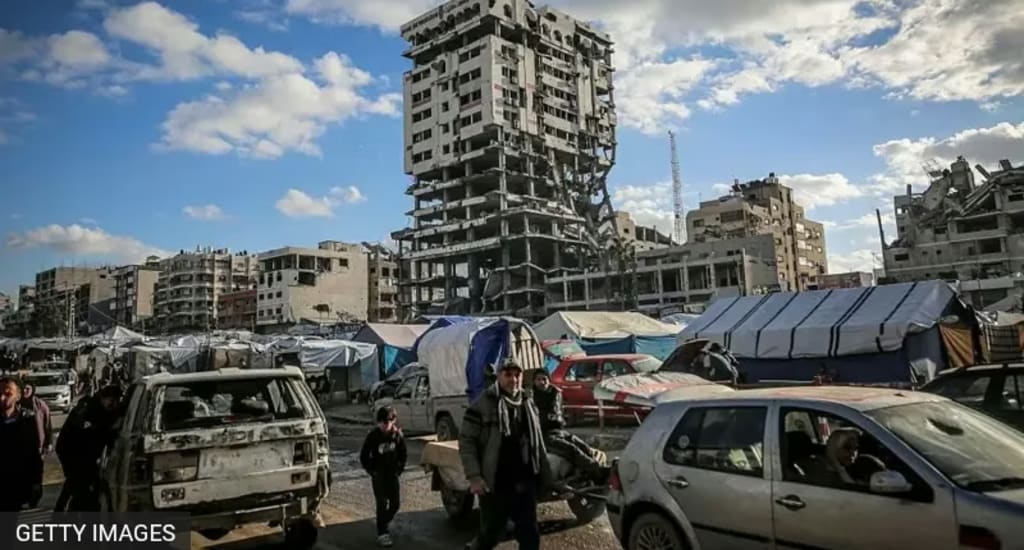
The international spotlight has once again turned toward Gaza following the announcement of a newly formed “Board of Peace”, a body intended to guide the territory through post-conflict recovery, governance reform, and long-term stability. What has made headlines, however, is not just the mission of the board — but who is on it.
Among the most notable names are former UK Prime Minister Tony Blair and U.S. Secretary of State Marco Rubio, alongside several high-profile political and economic figures. The board’s formation signals a new and controversial chapter in international involvement in Gaza’s future, raising both hope and skepticism in equal measure.
What Is the Gaza ‘Board of Peace’?
The Board of Peace is part of a broader diplomatic framework designed to oversee Gaza’s transition from active conflict to reconstruction and civilian governance. The initiative follows a fragile ceasefire and aims to coordinate political oversight, security arrangements, and economic rebuilding during a transitional phase.
According to official statements, the board will operate as an international supervisory body, working alongside a Palestinian technocratic committee responsible for day-to-day administration. While the local committee handles essential services and civil governance, the Board of Peace is expected to focus on long-term planning, investment coordination, and diplomatic engagement.
The concept is ambitious: rebuild Gaza’s infrastructure, stabilize security, attract global funding, and prevent the territory from sliding back into conflict.
High-Profile Names Spark Global Attention
What truly sets the Board of Peace apart is its composition. The inclusion of globally recognized figures has sparked intense debate about influence, legitimacy, and political intent.
Tony Blair: A Controversial Appointment
Tony Blair’s name immediately drew strong reactions. As former British Prime Minister and a past Middle East peace envoy, Blair brings extensive diplomatic experience. Supporters argue that his long involvement in international negotiations makes him a valuable asset.
Critics, however, see his appointment as deeply problematic. Blair’s legacy in the Middle East — particularly related to Iraq and Western interventionism — remains contentious. For many Palestinians and regional observers, his inclusion symbolizes external control rather than local empowerment.
Marco Rubio’s Strategic Role
U.S. Secretary of State Marco Rubio’s presence reinforces the board’s strong American influence. Rubio is expected to play a central role in diplomatic coordination, security planning, and negotiations with regional allies.
His involvement suggests that the United States intends to maintain a leading hand in shaping Gaza’s political future. While some see this as a stabilizing factor, others fear it limits the possibility of an independent Palestinian-led process.
Who Else Is on the Board?
Beyond Blair and Rubio, the Board of Peace includes a mix of political advisors, economic leaders, and international envoys:
Jared Kushner, former senior U.S. advisor with deep ties to Middle East policy
Steve Witkoff, U.S. special envoy
Ajay Banga, President of the World Bank, overseeing financial and development strategies
Marc Rowan, CEO of Apollo Global Management, representing private investment interests
Senior U.S. national security officials, tasked with coordination and oversight
The board also includes advisers and a designated high representative responsible for liaising with Palestinian authorities and international institutions.
Goals and Responsibilities
The Board of Peace has outlined several key priorities:
Reconstruction and infrastructure rebuilding
Economic revitalization and job creation
Attracting international and private investment
Security coordination and demilitarization efforts
Supporting the formation of stable civil institutions
In theory, the board is designed to operate temporarily, guiding Gaza toward self-governance once stability is restored. In practice, the timeline and limits of its authority remain unclear.
Growing Criticism and Concerns
Despite its stated goals, the Board of Peace has faced immediate criticism.
Lack of Palestinian Representation
Perhaps the most significant concern is the absence of Palestinian voices on the executive board. While a local committee exists, the main decision-making body is dominated by Western and American figures. Critics argue that this undermines the board’s legitimacy and risks repeating past failures of externally imposed governance.
Questions of Sovereignty
Human rights groups and political analysts have raised concerns about sovereignty and self-determination. Who ultimately decides Gaza’s future — its people or international actors? Without clear mechanisms for accountability and local participation, skeptics fear the board could deepen resentment rather than foster peace.
Implementation Challenges
Even supporters acknowledge that success will depend on cooperation from multiple actors, including Israel, regional governments, international donors, and local communities. Security conditions, political divisions, and economic constraints pose significant obstacles.
What This Means for Gaza’s Future
The formation of the Gaza Board of Peace represents a bold — and risky — experiment. If successful, it could lay the groundwork for meaningful reconstruction and long-term stability. If it fails, it may reinforce skepticism toward international intervention and deepen existing political fractures.
For now, the board exists more as a symbol of intent than a proven solution. Its credibility will ultimately depend not on the fame of its members, but on whether it can deliver real improvements for Gaza’s population — safer streets, functioning institutions, and a genuine path toward self-determination.
Final Thoughts
The inclusion of figures like Tony Blair and Marco Rubio on the Gaza Board of Peace underscores the scale of international involvement shaping the territory’s future. While the initiative promises coordination, investment, and diplomacy, it also revives long-standing debates about power, representation, and trust.
About the Creator
Keep reading
More stories from Aqib Hussain and writers in The Swamp and other communities.
Canada, China Set for ‘Historic’ Gains From New Partnership, Carney Says
Canada and China may be standing at the edge of a major turning point in their diplomatic and economic relationship. According to Canadian Prime Minister Mark Carney, a newly announced partnership between the two nations could unlock “historic gains” and reshape how both countries engage with each other — and the world.
By Aqib Hussain2 months ago in The Swamp
The Forsyth House Fire
Since 1851, Forsyth House has stood on the corner of Union Street and Gordon Street in the heart of Glasgow. Its iconic, or was... because on Sunday 8th of March, 2026, a fire broke out in a small, seemingly un-named shop in the building and tore all that history down. As I write, the rubble is still unsettled and the street is still blocked off. Central Station is quiet on the upper level, and around 30 small businesses have quite literally gone up in smoke.
By S. A. Crawford3 days ago in The Swamp



Comments
There are no comments for this story
Be the first to respond and start the conversation.