
Beyond Ukraine: Four Shocking Ways Europe's Security Crisis Just Hit Home
The sudden appearance of mysterious drones over Denmark, forcing civilian airports to shut down and grounding tens of thousands of travellers, brought a chilling new reality into sharp focus


For many, the war in Ukraine has remained a brutal but distant conflict—a crisis contained within its borders. But in recent weeks, that perception has been shattered. The sudden appearance of mysterious drones over Denmark, forcing civilian airports to shut down and grounding tens of thousands of travellers, brought a chilling new reality into sharp focus. The front line is no longer somewhere else; it is here.
These developments reveal a continent grappling with a dual crisis: a radical external threat forcing unprecedented military innovation, and a profound internal fracture threatening the very mechanisms of its response. From high-tech defences to high-stakes political gambles, the consequences are profound.
The ‘Hybrid War’ Is No Longer a Theory—It’s a Reality
The abstract concept of “hybrid warfare” has officially entered the realm of political mainstream discourse. European leaders are now openly declaring that Russia is waging a hybrid war against the continent, a conclusion prompted by a spate of alarming events. In September 2025, a wave of unexplained drone incursions swept across Europe, with UAVs spotted over civilian airports and military bases in Denmark, Poland, Estonia, and Romania.
The impact was immediate and calculatedly disruptive, demonstrating an ability to paralyse critical civilian infrastructure with minimal military investment. In Denmark, the drone sightings forced airports to close, interrupting travel for tens of thousands of people. These overt disruptions mark a new, more dangerous phase of the conflict, escalating beyond previous, more ambiguous cyber-attacks and signalling Russia’s heightened risk tolerance as plausible deniability erodes. Underscoring the gravity of the situation, Danish Prime Minister Mette Frederiksen issued a stark warning:
“I hope that everybody recognises now that there is a hybrid war and one day it’s Poland, the other day it’s Denmark, and next week it will probably be somewhere else that we see sabotage or we see drones flying.”
This declaration signifies a crucial shift. The conflict has moved beyond traditional battlefields and is now manifesting as direct, disruptive actions designed to sow chaos within EU and NATO territory.
Europe’s Biggest Roadblock May Be an Insider
As Europe scrambles to form a united front, its biggest challenge may come from within. Hungarian Prime Minister Viktor Orbán has positioned himself as a central figure of dissent, clashing with other leaders and obstructing the bloc’s otherwise unified response. At a recent summit in Copenhagen, he publicly decried the EU’s “aggressive push” toward militarisation and openly quarrelled with German Chancellor Friedrich Merz.
Orbán’s opposition is rooted in a clear, nationalist calculus: he has vowed to block any “legal tricks” to speed up Ukraine’s membership, arguing that its entry would do nothing less than “bring war into the EU and Europeans’ money to Ukraine.” Having consistently used his veto to block sanctions against Russia, he articulated his unyielding position in no uncertain terms:
“For Ukraine, we are asking for a strategic agreement; it is right to support it, but membership is too much.”
This deep internal division presents a critical challenge to the EU’s ability to act decisively. As leaders work to counter external threats, they are simultaneously forced to contend with intractable political battles inside the bloc, slowing momentum and exposing cracks in European unity.
A High-Tech ‘Drone Wall’ Is Now on the Table
In response to the escalating drone threat, EU leaders are giving broad support in principle to a defence initiative that sounds like something out of science fiction: a “drone wall.” The proposal signals a paradigm shift in European defence thinking, but it is not without contention; the European Commission’s specific plan has already received a “lukewarm response” from some quarters, signalling significant political hurdles ahead.
The concept involves creating “a network of sensors and weapons around the European border to detect, track and neutralise unmanned UAVs”—a coordinated network of anti-drone systems and surveillance capabilities. This initiative is part of a larger security package including an “Eastern Flank Watch” for real-time monitoring and a comprehensive “Air Defence Shield.” As European Commission President Ursula von der Leyen stated, the goal is absolute security.
“Every European citizen and every square centimetre in Europe has to be safe.”
The true significance of this proposal lies in its representation of a monumental step toward EU strategic autonomy. It marks a potential pivot away from total reliance on the US-led NATO security umbrella and toward developing an independent, continent-wide defence infrastructure to counter 21st-century threats.
Brussels May Bend Its Own Rules to Overcome a Veto
In direct response to the kind of persistent obstructionism demonstrated by leaders like Viktor Orbán, Brussels is now contemplating a political ‘nuclear option’: changing its own long-standing rules. European Council President António Costa is reportedly lobbying member states to bypass Hungary’s veto on Ukraine’s accession talks, a move that could fundamentally alter how the bloc makes decisions.
The proposed mechanism would allow negotiation clusters with Ukraine to be opened by a “qualified majority” vote instead of the traditional requirement for unanimous agreement. This attempt to sideline a lone dissenter is highly contentious. Hungarian EU Affairs Minister János Bóka warned that such a decision would “clearly contradict EU treaties and past practice.”
This isn’t just about Ukraine; it’s a fundamental stress test of the EU’s core operational model—the tension between an intergovernmental union of sovereign states and a more federalised body that can act decisively. Proponents view it as a necessary tool to prevent a single state from hijacking the majority’s will in a crisis, but critics see a “dangerous precedent” that could destroy the “institutional balance” and sideline smaller nations.
A Defining Moment for Europe
Europe is at a critical juncture. It is simultaneously scrambling to erect new technological defences against novel hybrid threats while confronting deep internal fractures over its political future and fundamental rules. The continent is being forced to innovate at a breakneck pace, not just its military capabilities with concepts like the “drone wall,” but also its very system of governance.
The pressure is immense, pushing the European Union into uncharted territory on multiple fronts. Will this unprecedented pressure forge a stronger, more integrated Europe, or will it expose divisions that are too deep to overcome?
About the Creator
The INFORMER
Source for in-depth news, investigations, whistleblower leaks, and insightful analysis you won't find anywhere else, produced by independent journalists exploring the fringes of society, technology, and culture.
Keep reading
More stories from The INFORMER and writers in The Swamp and other communities.
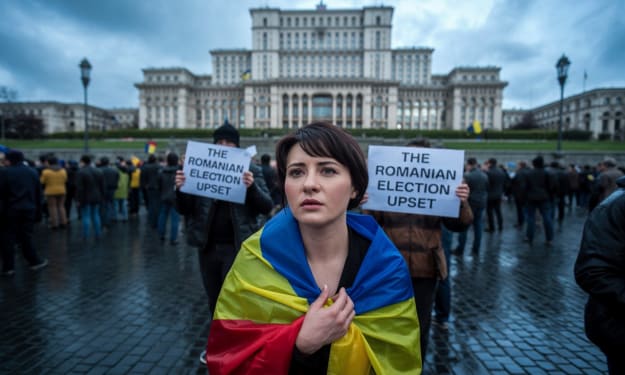
The Romanian Election Upset: A Deeper Analysis
In a surprising turn of events that has captured international attention, Bucharest Mayor Nicușor Dan has secured victory in Romania's presidential election, defeating far-right candidate George Simion by a significant margin. While the mainstream narrative portrays this as a simple triumph of pro-EU centrism over populist nationalism, the reality is more complex and nuanced.
By The INFORMER10 months ago in The Swamp
The Forsyth House Fire
Since 1851, Forsyth House has stood on the corner of Union Street and Gordon Street in the heart of Glasgow. Its iconic, or was... because on Sunday 8th of March, 2026, a fire broke out in a small, seemingly un-named shop in the building and tore all that history down. As I write, the rubble is still unsettled and the street is still blocked off. Central Station is quiet on the upper level, and around 30 small businesses have quite literally gone up in smoke.
By S. A. Crawford3 days ago in The Swamp
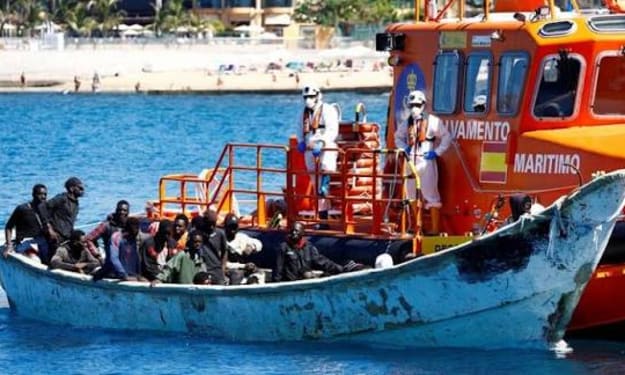
Spain’s New Amnesty Offers Legal Status, Work Rights, and Hope to Hundreds of Thousands of Undocumented Migrants
Madrid — When Spain’s government unveiled a sweeping amnesty plan in late January designed to offer legal status to hundreds of thousands of undocumented migrants, reactions ranged from political controversy to deep relief among the very people the policy aims to help. For many undocumented residents struggling on the margins of Spanish society, the initiative has been described in deeply personal terms as a “gift” and a “lifeline.” The extraordinary regularisation scheme, approved as a Royal Decree by the coalition government of Prime Minister Pedro Sánchez, will open a temporary path to legal residency and work authorisation for foreign nationals who can show they were living in Spain before Dec 31 2025 and have maintained at least five months’ continuous residence. Applicants also must have a clean criminal record to qualify. Once the programme begins in April 2026, beneficiaries will receive a one‑year renewable residence permit that immediately allows them to work legally, access Spain’s public health system, and register for social security. Estimates of the number who could benefit vary: the government cites around 500,000, while some internal police estimates suggest the figure could be as high as 750,000 – 1.1 million. “It’s Going to Help Us in Every Way” For migrants who have lived for years in legal limbo, the news has sparked genuine optimism. Diana, a 40‑year‑old from Peru who spoke with reporters in Madrid, said that life without formal status has been extremely difficult — limited job options, exploitation by employers, and exclusion from basic services have left many struggling. “It will help us in every possible way,” she said, adding that being able to earn a regular wage, pay taxes, and even start a business were among the most meaningful aspects of the amnesty. Before the programme was announced, many undocumented workers laboured in Spain’s informal economy: cleaning, construction, hospitality, agricultural fields and other low‑wage sectors where a lack of legal status left them vulnerable to exploitation and under‑payment. For these workers, the amnesty offers not just legal protection but economic inclusion — an ability to negotiate fair wages and integrate into the formal job market for the first time. Manuel, a Peruvian caregiver, explained that after losing his job when his asylum claim was rejected, he struggled to find regular employment. “Companies don’t want to hire you without residency — and if they do, they pay you less than the minimum wage,” he said. The regularisation, he added, would “allow me to work and contribute to the social security system.” A Policy Rooted in Humanitarian and Economic Logic The Spanish government has defended the measure on both humanitarian and pragmatic grounds. Officials say it acknowledges the reality that hundreds of thousands of people have made lives in Spain, contributing informally to the economy, and deserve a chance to settle with dignity. Elma Saiz, Minister for Inclusion, Social Security and Migration, underlined that foreign workers make up a significant portion of the workforce and have been essential to economic growth — particularly at a time when Spain boasts one of Europe’s lowest unemployment rates. Supporters argue the policy will generate positive economic effects: bringing informal workers into the formal economy expands the tax base, makes labor markets more transparent, and helps reduce labour exploitation. Agricultural groups and major employers have echoed this view, noting that a legalised workforce could stabilise sectors that have faced labor shortages. Political Pushback and Polarisation As expected with a major immigration reform, the amnesty has triggered fierce political debate. Conservative parties such as the People’s Party (PP) have criticised the initiative, suggesting that it rewards “illegality” and could incentivise more irregular migration. The far‑right Vox party has characterised the policy as harmful to public services and national security. Meanwhile, European partners have expressed caution, stressing that while member states can manage immigration autonomously, they must also coordinate within Schengen and the broader European Union framework to avoid policy “pull” effects that could increase migratory pressures elsewhere. A Turning Point for Migrants and Society For beneficiaries, the significance of the legalisation goes beyond economic opportunity. It represents a chance at long‑term stability: eligibility for formal housing markets, access to social services, legal protection against exploitation, and the possibility of eventually pursuing permanent residency or family reunification. “Today’s decision,” said one legal advisor working with migrants, “transforms lives. It’s not just about paperwork — it’s about dignity, safety, and being recognised as part of this society.” In a Europe where migration debates have become increasingly restrictive, Spain’s amnesty stands out as a bold attempt at inclusion — and for those who have lived in uncertainty, it could indeed help in every way.
By Fiaz Ahmed 7 days ago in The Swamp


Comments
There are no comments for this story
Be the first to respond and start the conversation.