
Best Vegetables for Maximum Yield in Organic Farming
List of 10 Vegetables for Organic Farming


Organic farming is a way of growing food using natural things like compost and crop rotation instead of chemical fertilizers and pesticides. Vegetables grown this way are more healthier, tastier, and better for the environment. However, there are some vegetables that grows better than others in organic farming. The reason being: resistance to pests, grown in different types of soil, and using nutrients.
This guide will help you select the most suitable vegetables for cultivation, which will provide high yields, healthier crops, and green cultivation methods.
List of 10 Vegetables for Organic Farming
The following are the top 10 vegetables that grow extremely well in organic farming conditions. They are simple to cultivate, produce a high yield, and require minimal chemical intervention.
1. Spinach
Spinach is a fast-growing and healthy green vegetable. It requires well-drained, rich soil and thrives best in cool weather areas. Adding compost also helps plants to grow better. Mulching keeps the soil moist and stops weeds from growing. This vegetable usually does not attract many pests, but if small bugs appear, farmers can use neem oil or beneficial insects to keep them away.
2. Carrots
Carrots grow best in soft soil that drains water well, and adding compost makes them healthier. To keep the bugs away, plant onions or garlic nearby keep the bugs away. Carrots grown organically are even tastier and contain more nutrients.
For big farms, tractors such as Swaraj 855 assist in ploughing the ground and sowing seeds. It is a sturdy and dependable model that is famous for its efficiency in various farming operations.
3. Tomatoes
Tomatoes are among the most popular vegetables for organic cultivation. They flourish in fertile and well-drained soils that receive regular sunlight. There is a fungus known as blight, but it cannot cause harm when appropriate spacing and mulch have been applied.
4. Beans
Beans are an excellent choice for organic cultivation since they contribute to the health of the soil without requiring additional fertilizer. They require little maintenance; only sufficient water and mulch will do. This vegetable is highly productive and can be harvested several times within a single season. In the case of insects, apply neem oil to repel them.
5. Cabbage
Cabbage does well if farmers shift where they cultivate it every year to avoid insects. Natural compost and mulch make it healthy and also prevent weeds. Tiny worms that eat cabbage can be controlled by planting thyme nearby or covering the plants. This vegetable grows well in cool weather and is full of vitamins C and K, which are good for health.
6. Lettuce
Lettuce grows quickly and is a great choice for organic farming. It needs soil that drains well and stays moist. Natural mulch prevents water from evaporating from the ground and prevents weeds from sprouting. Aphids and slugs are small insects that damage vegetables, but they can be protected by farmers using natural powders such as neem oil or diatomaceous earth.
7. Peppers
Peppers, like bell peppers and chilli peppers, grow very well in organic farming. They need warm weather, rich soil, and good drainage. Peppers are healthy because they have lots of vitamins A and C, making them a good choice for farmers. Organic peppers are often more flavorful than conventionally grown ones, and they are an excellent addition to sustainable farming.
8. Cucumbers
Cucumbers grow in warm weather and need ample moisture and organic compost for healthy growth. They are prone to pests like cucumber beetles, which can be managed using row covers or neem oil. Trellising helps improve air circulation and prevents diseases.
If you are growing it on a large scale, then using a powerful tractor like Swaraj 963 can be helpful for soil preparation, planting, and transportation. It is designed for heavy-duty farming tasks and consumes less fuel, making it a great choice for organic farmers. This tractor is equipped with advanced hydraulics and a strong lifting capacity, making it ideal for various farm operations.
9. Brinjal (Eggplant)
Brinjal, also called eggplant, is a vegetable that grows well in organic farms. It likes warm weather and soil that is rich in nutrients. Adding compost and organic fertilizers helps it grow better. Regular watering is also needed to stay healthy. Farmers need to watch out for insects like aphids and caterpillars, but they can be controlled using neem oil or helpful insects. Since brinjal is used in many dishes, it is a good vegetable for organic farming.
10. Radishes
Radishes are a quick-growing crop for organic farming. They do well in soft, rich soil and don’t need much care. This vegetable also helps keep pests away from other plants. Ready for being harvested in a few weeks, making them a useful vegetable for farmers who want to grow more food while keeping nature healthy.
Conclusion
Organic farming is a natural way to grow vegetables while keeping the environment safe. Choosing vegetables that grow well helps farmers get more production from their land. Using natural methods like composting, mulching, changing crops every season, and keeping pests away without chemicals helps the soil stay healthy. This farming process not only gives us healthy food but also helps nature and makes farming better for the future.
About the Creator
Rajendra_Singh
I'm a agriculture blogger, who loves sharing my knowledge about growing things. On my blog, you'll find practical tips and interesting stories to help you get started!
Keep reading
More stories from Rajendra_Singh and writers in The Swamp and other communities.
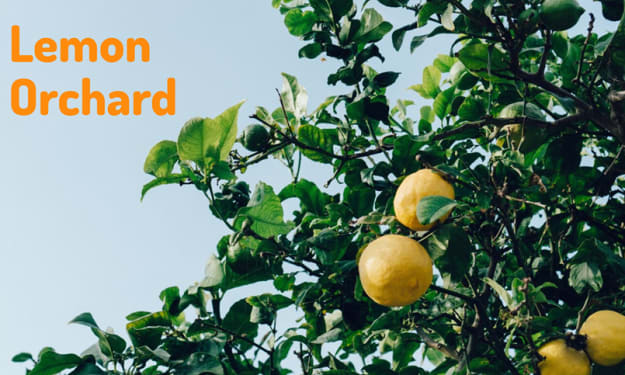
How to Start a Lemon Orchard
Lemon plant cultivation from seeds to full-grown plants is simple to cultivate indoors with sunlight, air movement, and watering. Loamy, sandy soil, which is well-drained and has a balanced pH, will serve to cultivate healthy lemons. Below are thoroughly tested and researched advice on creating a lemon tree from seeds indoors & outdoors.
By Rajendra_Singh11 months ago in The Swamp
A Gathering of Evil Bosses
“I’m the queen of chin jutting while I smooth my hair, attacking, insulting, and deflecting to protect my appointer.” “Oh, please, Blondi, my hair is curled, highlighted, and longer than yours. I feature television commercials telling immigrants that we will give them a free plane ride home, and if they voluntarily turn themselves in, they will be allowed to legally apply for re-entry. It runs everywhere, and I look good in it! You can’t compete because of your blond hair. Mine is nicer, and my lips are prettier than yours.”
By Andrea Corwin 18 days ago in The Swamp
I used to report from the West Bank. Twenty years after my last visit, I was shocked by how much worse it is today – podcast
Two decades ago, I walked the streets of the West Bank as a young journalist, trying to make sense of a conflict that has long defied easy solutions. At that time, I witnessed checkpoints, tensions, and uncertainty, but there was also a sense that dialogue, however fragile, was still possible. Returning twenty years later for a recent visit, I found a landscape and a reality that was far more severe, starkly illustrating how the conflict has deepened over time. The first thing that struck me was the sheer scale of militarization. Israeli checkpoints, once sporadic, now dominate much of the West Bank’s main thoroughfares. Soldiers in armored vehicles and heavily fortified positions are a constant presence. Roads are divided, access restricted, and Palestinian towns and villages are encircled by fences and barriers. What had been a tense but navigable environment in the early 2000s now feels like a territory under occupation in full lockdown. Settlement expansion is another transformation impossible to ignore. Over the past twenty years, Israeli settlements have grown both in number and size, cutting through the Palestinian landscape. Once-contiguous Palestinian communities are now separated by walls, roads reserved for settlers, and security zones, fragmenting society and severely limiting freedom of movement. Farmers I spoke to lamented that land they had cultivated for generations is now inaccessible, reducing both livelihood and morale. The human dimension of these changes is heartbreaking. Palestinians I met spoke of frustration, fear, and despair, and many feel trapped in a system that restricts education, healthcare, and economic opportunity. Youth, in particular, face a future clouded by uncertainty. I heard accounts of families struggling just to move between cities, access hospitals, or attend school. Even basic daily life is complicated by bureaucracy, permit requirements, and the constant threat of military intervention. Violence remains a pervasive and destructive element. I encountered neighborhoods where buildings bore scars from clashes, shootings, or tear gas. Communities are haunted by the memory of lost loved ones, and the cycle of retaliation and suppression continues. Two decades ago, there was still a cautious optimism in some quarters that negotiations and international intervention might stabilize the region. Today, that optimism seems increasingly elusive. One of the most profound changes is the psychological toll. Twenty years ago, I saw resilience, hope, and determination. Now, I saw fatigue, cynicism, and resignation among people who have lived under repeated waves of restriction and conflict. Children have grown up knowing little else than checkpoints and military presence. The pervasive sense of entrapment and lack of agency is palpable, and it is reshaping society in ways that will have long-term consequences. Technology and media have amplified awareness of the situation. Social media now allows Palestinians to document daily hardships, human rights violations, and violent incidents in real time. International attention has increased, yet meaningful political change remains limited. Global actors often respond with statements rather than substantive action, leaving the local population to endure the day-to-day hardships largely on their own. As a journalist, returning to the West Bank has been both sobering and deeply instructive. It reminded me of the human cost behind the headlines, the slow erosion of rights, and the impact of entrenched political structures on ordinary lives. The contrast between my experiences twenty years ago and today illustrates that, despite international diplomacy and countless initiatives, the reality on the ground has worsened. This visit reinforced a vital truth: understanding the West Bank is not merely about politics or borders—it is about people, communities, and their lived experiences under persistent conflict. For anyone interested in the future of the region, it is crucial to recognize that without tangible changes in policy, protection of human rights, and genuine engagement, the West Bank will continue to face escalating hardship. The urgency to act has never been greater.
By Fiaz Ahmed 6 days ago in The Swamp
The BAFTA Awards
By now, in a stunning departure from recent years, most of the world is aware of what happened at the BAFTA film awards. Social Media Headlines will tell you the bare bones: that John Davidson, a Tourette's Syndrome advocate, shouted a racial slur at two Actors of Colour, Michael B Jordan and Delroy Lindo.
By Natasja Rose4 days ago in Psyche



Comments
There are no comments for this story
Be the first to respond and start the conversation.