
Berlin in the Dark: How Climate Activists Left Thousands Without Power
A daring attack on the city’s power grid caused days of blackouts — here’s what happened and why it matters

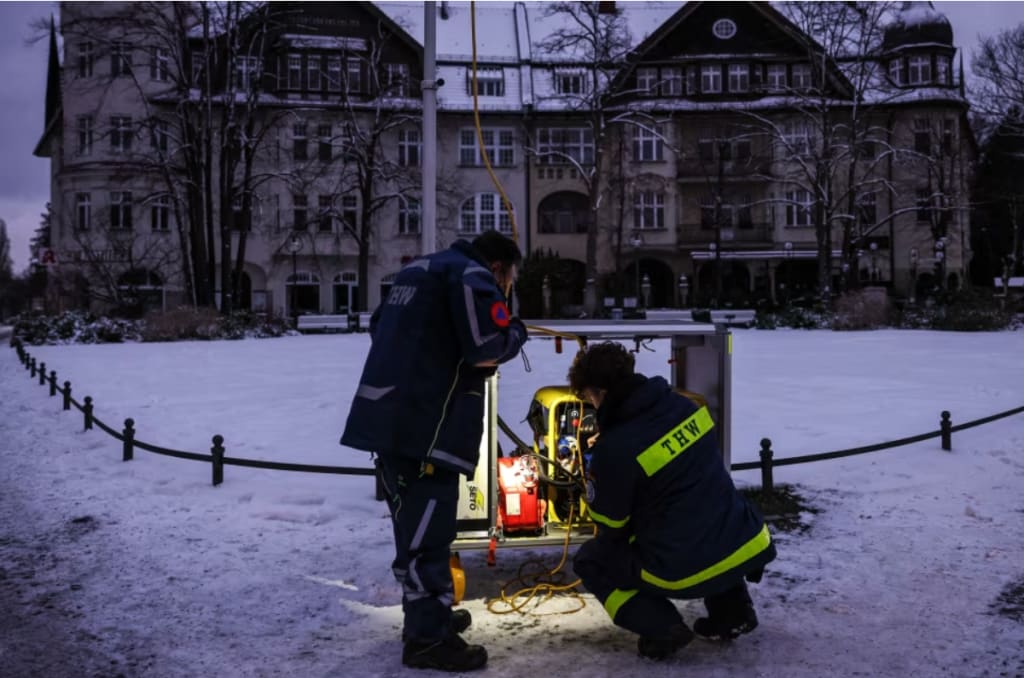
Imagine waking up in the middle of winter in Berlin — the streets are quiet, the heaters are off, your lights don’t work, and your internet is down. That was the reality for tens of thousands of Berliners in early January 2026, after a deliberate attack on the city’s electrical infrastructure.
What was meant to be a provocative protest turned into one of Berlin’s longest blackouts in decades, leaving residents and businesses struggling in the cold and prompting a nationwide discussion on climate activism, public safety, and the vulnerability of modern cities.
The Day Berlin Went Dark
It all started on January 3, 2026, when a fire broke out on a bridge carrying high-voltage cables over the Teltow Canal in southwest Berlin. The blaze severely damaged power lines connected to the Lichterfelde power plant, instantly cutting electricity to large parts of the city.
Around 45,000 households and over 2,200 businesses were affected, leaving roughly 100,000 residents without power across neighborhoods like Nikolassee, Zehlendorf, Wannsee, and Lichterfelde. Schools, hospitals, care homes, and small businesses all faced significant disruption — and with temperatures below -10°C (14°F), the cold nights became a real hazard.
Residents described gathering around candles or battery lamps just to stay warm, and one Berliner recalled that a room in her apartment registered only 4°C (39°F) during the blackout — a chilling reminder of how dependent modern life is on electricity.
Who Was Behind the Attack?
Almost immediately, suspicion fell on political sabotage. Investigators quickly traced the attack to a far-left extremist group known as Vulkangruppe, or the Volcano Group. The group later released a statement claiming responsibility, framing the arson as a protest against fossil fuel reliance and industrial systems harming the planet.
In their own words, the group insisted that the blackout wasn’t their goal — it was meant as a symbolic strike against fossil fuel infrastructure. But for authorities and the public, the human cost was undeniable, and federal prosecutors opened a full investigation into charges ranging from arson to terrorism.
Life Without Power
A blackout in a modern city is more than just an inconvenience — it’s a test of resilience. Berliners faced immediate challenges:
No heating in freezing temperatures, forcing residents to find alternative ways to stay warm.
Transport disruptions, with overground trains halted in affected areas.
Communication issues, as mobile networks and internet services were compromised.
Hospitals relying on backup generators to keep critical systems running.
Businesses losing perishable goods, and many operations coming to a standstill.
For days, the city experienced a glimpse of life without electricity — a reminder that modern urban infrastructure, while efficient, can be surprisingly fragile when attacked.
Restoring the Grid
Repairing the damage was no small task. Cold weather and icy conditions slowed progress, and the high-voltage cables required careful handling to prevent further outages or accidents.
Gradual restoration began after a few days, but it took until the fourth or fifth day for all affected neighborhoods to get power fully restored. Utility crews and emergency services worked tirelessly, highlighting both the complexity of modern infrastructure and the vulnerability it faces in the hands of politically motivated actors.
Political and Social Fallout
The blackout sparked outrage across Germany. Berlin’s mayor called it a “terrorist attack with massive consequences”, emphasizing the risk to public safety. National prosecutors noted that Vulkangruppe had a history of infrastructure attacks, raising questions about the effectiveness of preventive measures.
The incident also triggered wider debates:
How secure is modern infrastructure against ideologically motivated attacks?
Where is the line between peaceful protest and criminal activity?
How can cities ensure resiliency in increasingly complex and digitized systems?
Many experts argue that while activism and environmental advocacy are important, actions that endanger lives or critical services cross a line that society cannot tolerate.
Lessons for the Future
Berlin’s blackout serves as a warning: in an age where cities are heavily dependent on electricity, even symbolic acts can have unintended, dangerous consequences.
Some key takeaways include:
Infrastructure Protection: High-voltage lines, bridges, and power plants must be monitored and secured against sabotage.
Clear Legal Boundaries: Protest is a right, but illegal acts targeting essential services must face consequences.
Emergency Preparedness: Cities need robust plans for extended outages — from backup generators to shelters for vulnerable populations.
Public Awareness: Citizens should understand both how to stay safe and the broader social impact of infrastructure attacks.
The blackout also highlights the tension between activism and responsibility. While climate concerns are urgent, actions that directly harm civilians risk alienating the public and undermining the very cause activists seek to promote.
Berlin Reconnects — But the Debate Continues
As power returned to all neighborhoods, Berliners reflected on a city temporarily thrown back a century, forced to navigate darkness, cold, and disruption. The investigation into the perpetrators continues, and debates over climate activism, civil disobedience, and public safety are more heated than ever.
For urban planners, policymakers, and citizens alike, the blackout is a cautionary tale: in a world that relies on constant electricity, infrastructure is not just technical — it is social, political, and deeply vulnerable.
Berlin’s days in the dark may be over, but the questions it raises about protest, responsibility, and urban resilience are far from resolved.
About the Creator
Muhammad Hassan
Muhammad Hassan | Content writer with 2 years of experience crafting engaging articles on world news, current affairs, and trending topics. I simplify complex stories to keep readers informed and connected.
Keep reading
More stories from Muhammad Hassan and writers in The Swamp and other communities.
Swiss Bar Fire: Could a Simple Foam Check Have Saved Lives
It was supposed to be a night of celebration. New Year’s Eve in Crans‑Montana, a picturesque Swiss ski resort, brought together locals, tourists, and thrill-seekers ready to welcome 2026. But what happened inside a popular bar that night turned a celebration into a tragedy: a devastating fire that claimed at least 40 lives and injured more than 100 people. As authorities investigate, one detail has emerged as particularly shocking: the bar’s soundproofing foam — the material used to absorb sound in the basement — caught fire almost instantly. Officials now say that this foam should have been checked by law as part of regular safety inspections. Let’s take a closer look at what went wrong, why this simple detail became deadly, and what lessons this tragedy holds for the future. When Fun Turns Fatal The fire happened at Le Constellation, a bar known for its lively parties and basement dance floor. Reports suggest the blaze began when sparklers or small fireworks touched the foam on the ceiling. Within minutes, the fire spread faster than anyone could react. What made this incident particularly horrific wasn’t just the blaze itself — it was how quickly it turned deadly. Victims were trapped in narrow stairways, and many were teenagers or young adults celebrating the New Year. Families and friends are now left grappling with a tragedy that could have been prevented. A Legal Blind Spot? Here’s where the story gets complicated. According to Crans‑Montana’s mayor, Nicolas Féraud, the bar hadn’t undergone a safety inspection in over five years, despite laws calling for annual checks. But the mayor also suggested that the law didn’t explicitly require foam checks, implying that inspectors might not have been at fault. Enter Stephane Ganzer, the canton’s head of security. Ganzer disagreed, stating clearly that Swiss regulations cover fire-risk materials, including soundproofing foams. In other words, someone should have noticed the potential hazard — either the bar owners or the authorities. This clash between statements highlights a serious problem: even in a country like Switzerland, known for meticulous safety standards, ambiguities in law enforcement can have deadly consequences. Why Foam Matters Soundproofing foam is common in bars, clubs, and music venues. It absorbs noise, makes parties more enjoyable, and protects neighbors from sound complaints. But most people don’t think of it as a fire hazard. In reality, not all acoustic foam is fire-resistant. Some can ignite easily, especially when exposed to sparks or heat sources. If properly tested and inspected, however, flammable foam can be replaced or treated to reduce risk. At Le Constellation, investigators say the foam wasn’t fire-rated and hadn’t been checked in years — a tiny detail that turned into a deadly flaw. The Aftermath: Accountability and Questions Now, the big questions are legal. Authorities are investigating the bar’s owners for possible negligence. They’re also examining whether regulators failed to enforce safety inspections properly. Key points under investigation: Were annual safety inspections skipped? Should inspectors have checked the foam as part of fire safety compliance? Could stricter enforcement have prevented the disaster? Courts will ultimately decide responsibility, but the case is already shining a light on gaps in safety regulations that many assumed didn’t exist. Lessons for Public Safety This isn’t just a Swiss issue. Around the world, fire safety rules exist on paper, but enforcement can be inconsistent. Tragic events like this remind us that small oversights can have catastrophic consequences. Here are some lessons to take away: Regular Inspections Matter: Safety checks should be thorough and consistent, not just a tick-box exercise. Material Matters: Foam, décor, and finishes in public venues should always be fire-rated. Clear Legal Guidelines: Authorities and business owners need specific rules, not vague suggestions. Public Awareness: Staff and patrons should know emergency exits and safety procedures. It’s a painful truth that in this case, a seemingly minor detail — soundproofing foam — became the difference between life and death. Looking Ahead The Crans‑Montana fire will likely trigger changes in fire safety policy across Switzerland. Expect stricter enforcement, clearer inspection guidelines, and possibly mandatory fire-resistant materials in venues nationwide. For bar owners and event planners, the warning is clear: don’t assume safety compliance is automatic. Regular checks, fire-resistant materials, and staff training aren’t just bureaucratic steps — they’re lifesaving measures. And for the rest of us, the tragedy is a stark reminder: even in countries with strong regulations, vigilance matters. It’s a heartbreaking lesson that fire safety is never just a detail — it can be the difference between a celebration and a catastrophe.
By Muhammad Hassan2 months ago in The Swamp
The Saddest Thing - The Billionaires Who Rule America Aren't Even Enjoying Themselves
This single post says more about our ruling class than a thousand policy papers. The saddest thing about today's system is that the men robbing the rest of us - sabotaging our economic prospects, our pensions, our access to affordable healthcare - are not even happy.
By Scott Christenson🌴27 days ago in The Swamp


Comments
There are no comments for this story
Be the first to respond and start the conversation.