
BBC News: A Trusted Voice in a Rapidly Changing Media Landscape
Exploring how BBC News remains a global leader in journalism amid digital disruption, public scrutiny, and evolving audience needs.

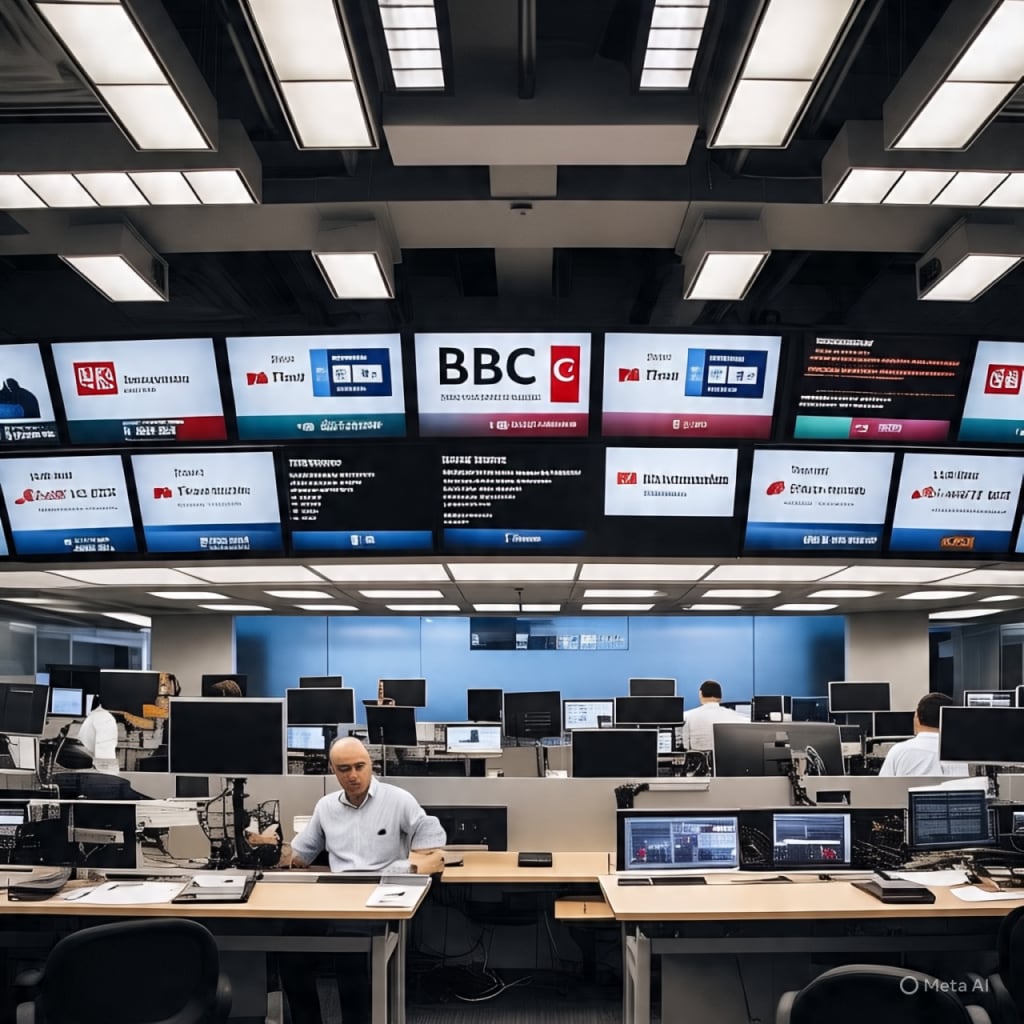
📺 BBC News: A Trusted Voice in a Rapidly Changing Media Landscape
In today’s fast-paced, information-saturated world, finding reliable and balanced news is becoming increasingly difficult. Among the sea of headlines, political bias, and viral content, one name still carries weight across generations and borders: BBC News. Established in 1922, the British Broadcasting Corporation (BBC) has evolved into one of the most respected and widely recognized news outlets in the world.
As we move deeper into the digital age, the BBC continues to adapt. But it also faces questions about trust, funding, and its role in a fragmented media environment. This article explores BBC News' history, strengths, current challenges, and its continued relevance on the global stage.
🕰️ A Brief History of BBC News
BBC News began as a radio broadcast service in the United Kingdom, eventually expanding into television and digital platforms. Over the decades, it built a reputation for neutrality, depth, and journalistic professionalism. During World War II, millions around the world relied on the BBC for accurate information. Even today, in countries with restricted press freedom, BBC News is often viewed as a lifeline to truthful reporting.
With correspondents in over 100 countries, BBC News offers coverage that spans politics, science, culture, health, and world affairs. Its commitment to “inform, educate, and entertain” remains at the heart of its mission.
🌐 Global Reach and Digital Evolution
One of the BBC’s greatest strengths is its global reach. BBC World News and the BBC News website serve millions of viewers and readers outside the UK. The website is available in dozens of languages, including Arabic, Urdu, Hindi, Persian, and Chinese, allowing it to connect with diverse audiences worldwide.
In the digital era, BBC News has transitioned effectively to online platforms:
Its website and mobile apps provide real-time updates.
Its YouTube channel offers documentaries, breaking news, and live coverage.
On social media, BBC News reaches younger demographics through Instagram, TikTok, and X (formerly Twitter).
This evolution ensures that the BBC remains relevant even as traditional media formats face decline.
📰 What Makes BBC News Unique?
BBC News is unique for several reasons:
Publicly Funded:
The BBC is funded primarily through a TV license fee paid by UK households. This model allows it to operate without commercial advertising pressures, ideally ensuring more editorial independence.
Editorial Standards:
BBC News follows strict editorial guidelines to maintain impartiality and factual accuracy. All stories are vetted through multiple layers of review.
Global Perspective:
Unlike some national outlets that focus mostly on domestic affairs, the BBC covers world events extensively, offering context and analysis from a broader viewpoint.
Crisis Reporting:
Whether it’s a war, natural disaster, or health emergency, BBC reporters are often among the first on the ground. Their presence during the COVID-19 pandemic, the Russia-Ukraine conflict, and Middle East tensions has been widely praised.
⚖️ Criticisms and Challenges
Despite its reputation, BBC News is not without controversy. It faces criticism from various political groups who claim it is either too conservative or too liberal. In the UK, debates over the license fee and government influence continue to spark public discussions.
Other ongoing challenges include:
Misinformation: Competing with fake news and conspiracy theories circulating online.
Declining youth viewership: Attracting younger audiences who consume news via social media and influencers.
Financial pressure: Managing costs amid budget cuts and shifting media habits.
Still, the BBC remains committed to its core values—accuracy, independence, and public service.
🧠 Educational and Ethical Impact
Beyond headlines, BBC News has played a key role in public education. Its explainer videos, interactive timelines, and expert interviews help people understand complex issues—from climate change and economics to medical science and global politics.
The BBC also sets industry standards for ethical reporting. Many journalism schools across the world use BBC coverage as a model for teaching objectivity and fairness.
✅ Conclusion
In a world where information is fast but often unreliable, BBC News continues to offer a calm, credible voice. Its legacy, global presence, and adherence to journalistic principles make it a cornerstone of modern media. While it must continue evolving to stay relevant, its foundation of trust and public service remains strong.
For audiences around the globe—whether in the UK, Africa, Asia, or the Americas—BBC News remains more than just a broadcaster. It is a symbol of truth in an age of noise.
About the Creator
Saad
I’m Saad. I’m a passionate writer who loves exploring trending news topics, sharing insights, and keeping readers updated on what’s happening around the world.
“Gaza Is Our Show”: U.S. Pushes Its Plan Over Netanyahu's Objections
The long-standing conflict in Gaza has entered a new and tense chapter. Recent reports indicate that the United States is pushing its own plan for Gaza, despite objections from Israeli Prime Minister Benjamin Netanyahu. The development underscores the complex dynamics between the U.S. and Israel, two countries often seen as close allies, and highlights the challenges of diplomacy in a region marked by decades of conflict, political fragmentation, and humanitarian crises. The phrase “Gaza is our show,” reportedly used by senior U.S. officials, reflects Washington’s determination to assert leadership in shaping the future of Gaza, even when it means overriding the preferences of Netanyahu and his government. What the U.S. Plan Entails Details of the U.S. strategy remain somewhat opaque, but insiders suggest the plan focuses on stabilization, humanitarian aid, and a long-term political framework in Gaza. The goals appear to be: Containing Violence: Reducing rocket attacks, militant activity, and clashes along the Gaza-Israel border. Humanitarian Support: Expanding aid access to Gaza’s population, including food, medical care, and infrastructure rebuilding. Political Engagement: Encouraging a framework for governance that limits Hamas’s influence while supporting civil institutions. Regional Coordination: Working with Egypt, Qatar, and other stakeholders to implement policies on the ground. U.S. officials have emphasized that their approach is not aimed at undermining Israel’s security, but rather at creating conditions that reduce the risk of escalating conflict while promoting long-term stability. Netanyahu’s Objections Israeli Prime Minister Benjamin Netanyahu has reportedly pushed back against Washington’s plan, citing concerns over national security. Key points of objection include: Risk to Israeli Security: Netanyahu’s government argues that loosening restrictions or empowering certain factions in Gaza could embolden Hamas and other militant groups. Sovereignty Issues: There is a sense in Israel that foreign intervention in Gaza management could compromise Israel’s strategic control over its borders. Timing and Approach: Netanyahu believes that some elements of the U.S. plan may be premature or misaligned with Israel’s on-the-ground intelligence. These disagreements highlight the delicate balance between U.S. diplomatic ambitions and Israel’s security priorities, a tension that has existed for decades but is now playing out more publicly. Why Washington Is Asserting Its Role The U.S. push reflects a broader strategy in the Middle East: asserting diplomatic leadership while preventing regional instability from escalating into broader conflict. Several factors motivate this approach: Humanitarian Imperative: Gaza faces acute humanitarian challenges, including water scarcity, electricity shortages, and medical crises. U.S. policymakers argue that proactive engagement can prevent further suffering. Geopolitical Signaling: By asserting control over the plan, Washington demonstrates its influence in the region to allies and rivals alike. Preventing Escalation: With tensions in the Middle East already high, the U.S. aims to manage the situation to avoid broader conflicts that could draw in multiple nations. Senior U.S. officials reportedly view the situation as a “window of opportunity” to implement reforms and stabilization measures before violence spirals out of control. Regional and International Implications The U.S.-Israel tension over Gaza has ripple effects across the region. Several dynamics are worth noting: Egypt and Qatar: Both countries play critical roles in mediating between Israel and Hamas. U.S. involvement may bolster or complicate their efforts, depending on coordination. Palestinian Authority (PA): The PA, which governs parts of the West Bank, has limited influence in Gaza but remains a key stakeholder in U.S. and Israeli calculations. Other Regional Players: Countries like Iran, Turkey, and Saudi Arabia are closely monitoring developments, as shifts in Gaza governance could alter regional alliances and proxy dynamics. Internationally, Washington’s assertive stance signals to the global community that it seeks to shape Gaza’s future rather than leaving it entirely to local actors—a move that may attract both support and criticism. The Humanitarian Angle Beyond politics, the situation in Gaza has a profound human impact. The U.N. reports that the Gaza Strip faces significant challenges: Over 2 million residents live under extreme conditions. Access to clean water and electricity is intermittent. Health facilities are overstretched, particularly amid conflicts and blockades. The U.S. plan reportedly emphasizes increasing humanitarian aid and infrastructure support, signaling that Washington recognizes the urgency of addressing civilian needs alongside political objectives. Risks and Challenges Implementing the U.S. plan is not without obstacles. Key challenges include: Hamas Resistance: The governing faction in Gaza may resist measures perceived as undermining their authority. Israeli Security Concerns: Any perceived weakening of Israel’s control over Gaza could heighten tension and trigger clashes. Regional Skepticism: Neighboring countries may view U.S. intervention as self-serving or biased. Domestic Politics: In both the U.S. and Israel, political divisions may complicate policy implementation. These risks mean that the plan’s success hinges on careful diplomacy, clear communication, and the ability to balance security with humanitarian and political objectives. Why This Matters The U.S.-Israel tension over Gaza reflects broader patterns in Middle East policy: Shifting U.S. Influence: Washington is demonstrating that it still has a central role in mediating regional conflicts, even as local actors push back. Complex Diplomacy: The incident illustrates how humanitarian, security, and political concerns intersect in conflict zones. Future of Gaza: How this plan is implemented could influence Gaza’s governance, the balance of power among Palestinian factions, and long-term stability in the region. For observers, the unfolding situation is a reminder that even close allies like the U.S. and Israel can diverge sharply on strategy, and that civilian populations are often caught in the middle of these disputes. Final Thoughts The phrase “Gaza is our show” underscores the United States’ determination to take the lead in shaping Gaza’s future, even amid objections from Netanyahu. While the plan may aim to stabilize the region and improve humanitarian conditions, it also highlights the challenges of navigating security, politics, and diplomacy simultaneously. As the situation develops, all eyes will be on Washington and Jerusalem, watching how the U.S. asserts its influence, how Israel responds, and whether the plan can achieve its goals without escalating conflict. The stakes are high—not just for political leaders, but for the millions of civilians living under difficult and often dangerous conditions in Gaza.
By Muhammad Hassanabout 3 hours ago in The Swamp


Comments
There are no comments for this story
Be the first to respond and start the conversation.