
Bank of England Expected to Hold Interest Rates
Markets anticipate pause as cost-of-living pressures persist Central bank adopts cautious stance amid economic uncertainty Decision reflects fragile recovery and global monetary trends Mortgage holders and businesses await policy signal Rate cuts unlikely until inflation shows sustained decline

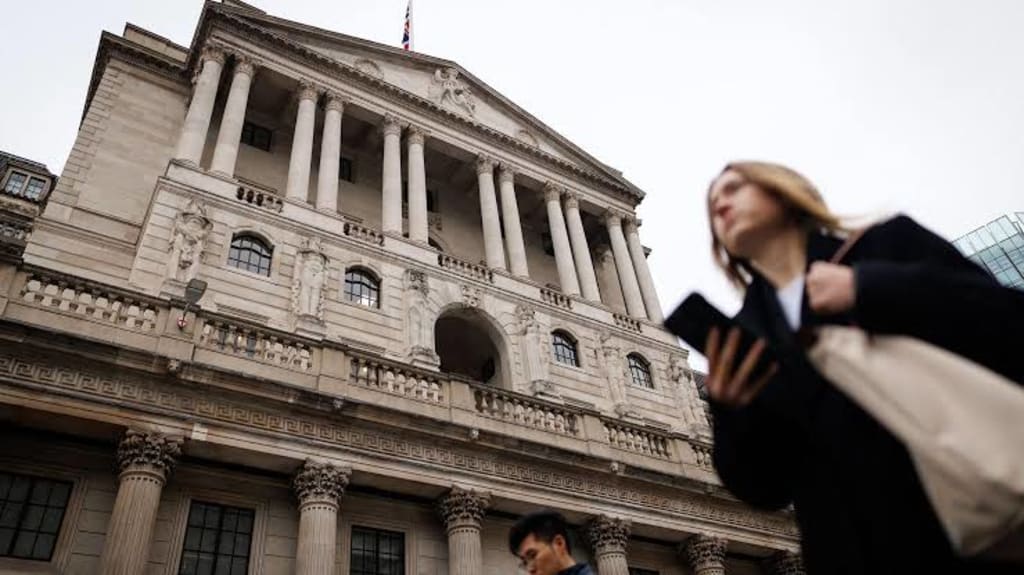
The Bank of England is widely expected to keep its benchmark interest rate unchanged at its upcoming policy meeting, as policymakers weigh stubborn inflation pressures against signs of slowing economic growth and fragile household finances. Financial markets and economists anticipate that the central bank will maintain the current base rate while signaling caution over the timing of any future cuts.
After a series of aggressive rate increases over the past two years to combat inflation, the Monetary Policy Committee (MPC) now faces a more complex challenge: inflation has cooled from its peak but remains above the Bank’s 2 percent target, while economic momentum has weakened and consumer confidence remains subdued.
Inflation Still a Concern
Recent data show that UK inflation has eased compared with last year’s highs, largely due to falling energy prices and easing supply chain disruptions. However, core inflation — which strips out volatile food and fuel costs — remains elevated, driven in part by rising wages and persistent service-sector price pressures.
Officials have repeatedly stressed that it is too early to declare victory over inflation. Governor Andrew Bailey has warned that cutting rates prematurely could reignite price growth and undermine the Bank’s credibility.
“We must be sure that inflation is on a sustainable path back to target,” Bailey said in a recent speech, adding that the Bank would remain “data dependent” in its decisions.
Economic Growth Under Pressure
At the same time, the UK economy is showing signs of strain. Growth has been weak, and several sectors, including manufacturing and construction, have reported declining output. High borrowing costs have hit businesses and households, particularly those with variable-rate mortgages or loans due for refinancing.
Retail sales have been uneven, and consumer spending remains cautious as families grapple with higher food, housing, and utility costs. Analysts warn that keeping rates too high for too long could push the economy into a deeper slowdown.
“The Bank is stuck between a rock and a hard place,” said an economist at a London-based investment firm. “Inflation is not fully under control, but growth is clearly fragile. Holding rates steady is the safest option for now.”
Markets Expect a Pause
Financial markets have largely priced in a rate hold, with traders expecting the Bank to keep the base rate unchanged while offering limited guidance on when cuts might begin. Some investors anticipate the first reduction later this year if inflation continues to fall and wage growth moderates.
However, there is little consensus within the MPC itself. In previous meetings, members have been split between those advocating for tighter policy to ensure inflation is crushed and others arguing that the peak has already been reached.
Minutes from the last meeting showed growing concern about the impact of high rates on employment and business investment. While unemployment remains relatively low, job vacancies have declined and some firms have begun reducing hiring plans.
Impact on Households
For millions of UK households, the decision is deeply personal. Mortgage holders have already faced sharp increases in monthly payments over the past year. A continued pause would provide some stability but little immediate relief.
“I was hoping for a cut by now,” said Sarah Mitchell, a homeowner in Manchester who recently renewed her mortgage at a much higher rate. “Everything else is more expensive too. We’re just trying to get by.”
Renters have also been affected, as landlords pass on higher borrowing costs through increased rents. Housing charities warn that prolonged high interest rates could worsen affordability and homelessness issues.
Government Pressure and Political Context
The Bank of England’s decision comes amid political pressure as the government seeks to boost economic confidence ahead of key policy announcements and elections. While the central bank is formally independent, its actions have major political consequences.
Chancellor Jeremy Hunt has said he supports the Bank’s cautious approach but acknowledged the strain on households. “We want inflation down, but we also want growth to return,” he said recently. “Those two goals must be balanced carefully.”
Opposition figures have accused the government of mismanaging the economy and leaving the Bank with few good options. They argue that tighter fiscal policy combined with high interest rates has deepened the cost-of-living crisis.
Global Factors at Play
The Bank’s decision also reflects global trends. Central banks in the United States and Europe are similarly debating when to begin easing policy after historic tightening cycles. Any move by the Federal Reserve or the European Central Bank could influence the pound and affect the Bank of England’s strategy.
Energy markets, geopolitical tensions, and currency fluctuations remain key risks. A spike in oil or gas prices could quickly feed back into inflation and force the Bank to reconsider its stance.
Looking Ahead
While a hold appears almost certain, attention will focus on the Bank’s statement and projections for clues about future policy. Investors and households alike want to know whether this pause marks the peak of rates or merely a temporary break.
Most economists believe that meaningful rate cuts are unlikely until inflation shows consistent improvement and wage growth cools further. Until then, the Bank is expected to maintain a cautious tone.
“The message will likely be: we’re not raising rates, but we’re not cutting yet either,” said the London-based economist. “It’s a waiting game.”
As the UK navigates a delicate economic recovery, the Bank of England’s decision underscores the difficult balance between fighting inflation and protecting growth. For now, stability appears to be the priority — even as uncertainty remains over what comes next.
About the Creator
Fiaz Ahmed
I am Fiaz Ahmed. I am a passionate writer. I love covering trending topics and breaking news. With a sharp eye for what’s happening around the world, and crafts timely and engaging stories that keep readers informed and updated.
Keep reading
More stories from Fiaz Ahmed and writers in The Swamp and other communities.
Turkish Shipbuilder to Launch ARES Naval in Saudi Arabia With Two Shipyards, CEO Says
Start writing...A leading Turkish defense shipbuilder is preparing to expand its footprint in the Middle East by launching a new company, ARES Naval, in Saudi Arabia, with plans to construct and operate two shipyards in the Kingdom. The move reflects growing defense and industrial cooperation between Turkey and Saudi Arabia and highlights Riyadh’s push to localize military manufacturing under its Vision 2030 economic diversification strategy.
By Fiaz Ahmed 4 days ago in The Swamp
Why Black History Matters in America?
The United States of America is celebrating their 250th anniversary in 2026. I'm proud to be an American and as someone who was born here, I wouldn't imagine myself living anywhere else. This is a country where opportunities are possible. Where anyone can be successful in anything they desire to do. Equality, community, and togetherness are the backbones of what America is and should be about. However, we have an administration who wants to erase and disregard those who have made positive, meaningful impacts in our country, specifically Black figures, such as Martin Luther King, Jr., Rosa Parks, and Maya Angelou. President Trump and his administration have been constantly complaining and fighting against what they call the "Woke agenda". They use this excuse as a distraction from other issues they refuse to address, such as the high cost of living, climate change, and inflation. That equality is dividing America, when in reality, it's bringing us together. Being woke is not tied to a specific political party. No matter where you stand on the political spectrum, you can still care about other people and their plights. Compassion and empathy for others isn't tied to a political party, either. We were taught as children to treat others the way we want to be treated and not judge others because they're different from us. Caring about others isn't a personal attack on your beliefs. It doesn't make you any less of a person. People who are easily offended over African American figures, past or present, or anything related to it, are grasping at straws. Current and future generations need to know who people like Harriet Tubman and Shirley Chisholm were, especially in the classroom. Black History is part of American History. It should be recognized, not hidden or forgotten. Besides, you can't shield children from everything, just because your feelings are easily hurt.
By Mark Wesley Pritchard 7 days ago in The Swamp
Silver (XAG) Forecast: Will the Market Reverse After Dropping to $64.06?
Silver has always been more than just a shiny metal. Beyond its use in jewelry and electronics, it serves as a key financial asset, a hedge against uncertainty, and a barometer of market sentiment. Recently, silver’s price has captured the attention of investors around the world. On February 5, 2026, the white metal dipped to $64.06 per ounce, marking one of the lowest points in months. But this drop might not be the end of the story—it could actually signal the start of a reversal pattern that sets the stage for the next market move.
By Sajida Sikandarabout 9 hours ago in The Swamp



Comments
There are no comments for this story
Be the first to respond and start the conversation.