
Bangladesh’s Big Question: Will Khaleda Zia’s Son Build on Her Legacy?
As Khaleda Zia’s political era fades, all eyes turn to Tarique Rahman and whether he can revive the BNP, overcome controversy, and shape Bangladesh’s future
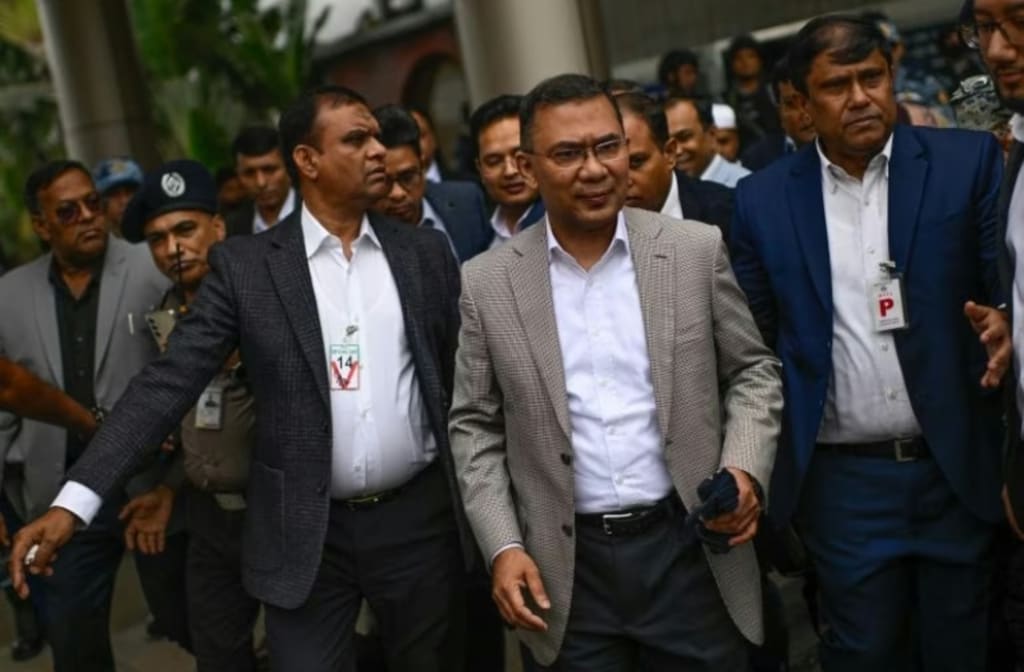
In the political landscape of Bangladesh, few names resonate as strongly as that of Khaleda Zia, the former Prime Minister and leader of the Bangladesh Nationalist Party (BNP). As a figurehead of the party and a central force in the country’s politics, Khaleda Zia shaped the nation’s direction for decades. However, with her advancing age, health issues, and the political tides shifting, the question on the minds of many is: Can her son, Tarique Rahman, continue to build on her legacy? Tarique, who has been an influential figure in the BNP for years, faces the monumental task of leading a divided party, navigating a changing political environment, and confronting the challenges that come with the heavy burden of a legacy as significant as his mother's.
A Legacy Built on Power and Controversy
Khaleda Zia, the first woman to hold the office of Prime Minister in Bangladesh, is a polarizing figure. Her tenure was marked by both achievements and controversies. As the leader of the BNP, she steered Bangladesh through various challenges, including economic reforms, natural disasters, and international relations. However, her time in office was also marred by accusations of corruption, authoritarianism, and conflicts with the opposition, most notably the Awami League (AL), the BNP's main political rival.
Her legacy, therefore, is a double-edged sword. On one hand, she is revered by many for her leadership during tumultuous times and for representing the interests of the working class and rural populations. On the other hand, her political career has been clouded by allegations of corruption, including the infamous Zia Charitable Trust corruption case, which led to her imprisonment.
Khaleda’s personal brand of politics, which combined populism with a tough stance against the opposition, gained her significant support among a large portion of the electorate. Her ability to navigate political crises, along with her status as a woman in a male-dominated political environment, earned her respect both nationally and internationally. However, as her health deteriorated and her political influence waned, the question arose: who would take the reins of the BNP and continue her work?
The Rise of Tarique Rahman
Tarique Rahman, Khaleda Zia’s eldest son, has long been groomed to take over the leadership of the BNP. Having been involved in politics from a young age, Tarique quickly ascended the ranks within the party. He served as the party’s Senior Vice Chairman and played a crucial role in strategizing during the BNP’s reign. Tarique was seen by many as the natural successor to his mother, given his deep involvement in the party and his ability to command respect within its ranks.
However, Tarique's political career has been fraught with challenges. In 2007, during a military-backed interim government, Tarique was arrested and faced charges of corruption, leading to his exile in the United Kingdom. Since then, he has remained in London, and while he continues to lead the party from abroad, his absence from the country has raised questions about his ability to connect with the Bangladeshi populace.
Challenges Ahead for Tarique Rahman
Tarique Rahman’s journey to cementing his leadership within the BNP is far from straightforward. His first challenge is the perception of him as the heir apparent. For many within the BNP, the idea of a leader who inherits power from his mother lacks the political legitimacy that comes with a fresh mandate from the people. While Tarique has the backing of key party leaders, his leadership is often viewed as being imposed, rather than earned through a democratic process.
Moreover, the political dynamics in Bangladesh have shifted dramatically since Khaleda Zia's time in power. The rise of Sheikh Hasina, the current Prime Minister and leader of the Awami League, has dramatically altered the political landscape. Hasina’s government has managed to consolidate power, and her leadership is seen as a counterbalance to the BNP’s influence. Tarique Rahman faces the daunting task of revitalizing his party and rebuilding it to challenge Hasina’s political dominance.
One of the most significant challenges Tarique faces is reuniting a divided BNP. The party, which once thrived under his mother’s leadership, is now a fractured entity. Internal power struggles, defections, and disputes over leadership succession have weakened the party's ability to function as a cohesive unit. Tarique must navigate these divisions, ensuring that the party remains united while also revitalizing its base of support, especially among young voters who may not have the same attachment to his mother's legacy.
The Role of Corruption Allegations
Another major hurdle Tarique must overcome is the shadow of corruption allegations that have long hung over his family. The accusations, many of which involve mismanagement of party funds, bribery, and illegal financial dealings, have significantly tarnished the Zia family's reputation. These allegations continue to dog Tarique, who is seen by many as emblematic of the corruption associated with his mother’s regime.
Tarique’s ability to distance himself from these allegations while maintaining his credibility as a leader will be crucial to his success. If he is to build on Khaleda Zia’s legacy, he must first address the negative perceptions surrounding his family and find a way to reinvent the BNP as a clean, transparent political force.
Public Perception and the Youth Vote
In Bangladesh, politics is often driven by the youth vote, which makes up a significant portion of the electorate. To build on his mother’s legacy, Tarique must connect with the younger generation, who may view the Zia family’s politics as outdated or corrupt. The BNP must find a way to present a vision that resonates with the youth, addressing issues such as employment, education, and economic development.
Tarique’s charisma and ability to engage with young voters will play a crucial role in his political future. He must offer a clear vision for the country that moves beyond the shadow of his mother’s legacy while maintaining the core values of the BNP.
Conclusion
Tarique Rahman’s potential to build on Khaleda Zia’s legacy is a question that will shape Bangladesh’s political future. While he possesses the political acumen and party support necessary for leadership, the road ahead is fraught with challenges. From overcoming corruption allegations to uniting a divided party and connecting with the younger electorate, Tarique has much work ahead of him. Whether he can successfully carry forward his mother’s legacy and challenge the dominance of Sheikh Hasina and the Awami League will depend on his ability to navigate these challenges and present a compelling vision for Bangladesh’s future. Only time will tell if Tarique can live up to the monumental task before him and fulfill the expectations of both the BNP and the people of Bangladesh.
About the Creator
Keep reading
More stories from Aqib Hussain and writers in The Swamp and other communities.
Australian Fighter Killed in Ukraine Just Days Before His Wedding
The ongoing war between Ukraine and Russia has seen many sacrifices, and among those is the tragic death of an Australian volunteer fighter, who was killed just days before he was set to marry the love of his life. His story, which highlights the devastating effects of the war, also serves as a reminder of the personal toll the conflict has taken on individuals across the globe. This Australian hero's story is one of courage, love, and heartbreaking loss.
By Aqib Hussain10 days ago in The Swamp
First Person Charged Under New Crossing Law: A Turning Point in Border Enforcement
The charging of the first individual under the newly introduced crossing law marks a significant moment in the government’s approach to border control and irregular migration. Designed to deter unauthorized crossings and strengthen enforcement, the new legislation represents a sharper legal response to a problem that has long dominated political debate, public concern, and humanitarian discourse. While officials describe the charge as a necessary step toward restoring control, critics warn it may signal deeper legal and moral challenges ahead. Understanding the New Crossing Law The new crossing law was introduced to address the growing number of people attempting to enter the country through irregular routes, particularly via dangerous sea crossings and unauthorized land entry. Under the legislation, individuals who knowingly enter the country without permission or assist others in doing so can face criminal charges, fines, or imprisonment. Supporters of the law argue that it closes loopholes in previous immigration frameworks that allowed repeat crossings with limited legal consequences. The government insists the law targets organized smuggling networks and discourages perilous journeys that have resulted in injuries, fatalities, and large-scale rescue operations. However, the wording of the law has raised questions about how broadly it can be applied—and who ultimately bears its consequences. The First Charge: What We Know So Far Authorities confirmed that the first person charged under the new crossing law was detained shortly after entering the country through an unauthorized route. Officials allege the individual knowingly violated immigration rules under the provisions set out in the legislation. Details of the case remain limited, but early reports suggest it will serve as a test case for how courts interpret the law. Legal experts expect the proceedings to set important precedents regarding intent, vulnerability, and the distinction between asylum seekers and deliberate lawbreakers. For the government, the charge demonstrates that the law is operational and enforceable. For critics, it raises concerns about whether the legislation risks criminalizing people fleeing war, persecution, or economic collapse. Political Significance and Government Messaging Politically, the timing of the charge is significant. Immigration remains one of the most divisive issues in modern politics, and the government has faced mounting pressure to show tangible action. Officials have framed the charge as evidence that enforcement mechanisms are finally matching political promises. Statements from senior ministers emphasize deterrence, claiming that visible consequences will discourage future unauthorized crossings and reduce pressure on border infrastructure. The government also maintains that safe and legal routes remain available for those genuinely in need of protection. Yet opposition figures argue that symbolism is driving policy, warning that headline-grabbing charges may do little to address the root causes of irregular migration. Human Rights and Legal Concerns Human rights organizations have reacted with alarm to the first charge. Advocacy groups argue that asylum seekers often have no choice but to use irregular routes due to limited legal entry options. Criminalizing their arrival, they say, risks violating international refugee protections. Legal analysts also point out potential conflicts with existing asylum laws, which protect the right to seek refuge regardless of the method of entry. The case may prompt judicial scrutiny over whether the new crossing law aligns with international obligations. There is also concern about selective enforcement. If the law is applied unevenly, critics fear it could disproportionately affect the most vulnerable while leaving organized criminal networks untouched. Public Reaction: Divided Opinions Public response to the charge has been sharply divided. Some citizens welcome stricter enforcement, arguing that border integrity is essential for national security and public trust in the immigration system. Others express discomfort at seeing individuals criminalized for actions driven by desperation rather than malice. Social media reactions reflect this split, with supporters praising decisive action and critics questioning whether punishment alone can solve a complex global issue. What This Means Going Forward The first charge under the new crossing law is likely just the beginning. If courts uphold the prosecution, authorities may pursue further cases, fundamentally reshaping how irregular migration is handled. Conversely, legal challenges could force revisions or clarifications to the legislation. Much will depend on how judges interpret intent, vulnerability, and proportionality. The case may also influence international perceptions of the country’s commitment to human rights and refugee protection. Conclusion The charging of the first individual under the new crossing law represents a pivotal moment in immigration enforcement. While the government views it as a long-awaited assertion of control, critics warn it may deepen humanitarian and legal tensions. As the case unfolds, it will test not only the strength of the law itself but also the balance between border security and compassion. In an era of global displacement and political polarization, how this law is enforced may shape the country’s immigration landscape—and moral standing—for years to come.
By Fiazahmedbrohi 4 days ago in The Swamp
The steps to losing a child
Step One: Lose a child. Not what anyone wants to happen and nothing you can do to change it, but you can go through steps to becoming happy again. You can go through steps to loving again. You can go through steps to become a new you because after losing a child you will never be the same person you once were.
By Tabitha Hinkley3 days ago in Fiction


Comments
There are no comments for this story
Be the first to respond and start the conversation.