
Australia Coal Market: Mining Output, Exports & the Future of Thermal and Metallurgical Coal
How global demand, export markets and policy shifts are shaping Australia’s coal industry


In 2024, the Australia coal market produced 190.0 Million Tons. Looking ahead to 2033, the market is forecast to reach 221.3 Million Tons, reflecting a CAGR of 1.71% during 2025–2033. Even with growing global scrutiny of fossil fuels and shifts toward renewables, coal remains a major export commodity and energy source — supported by its established mining infrastructure, export capacity, and ongoing demand from global steel and power sectors.
Why is the Australia Coal Market Still Growing?
Strong Reserve Base & Global Export Capacity
Australia is among the world’s top producers and exporters of coal. The country has substantial black- and brown-coal reserves, making large-scale production and export infrastructure economically viable for decades.
Continued Demand for Metallurgical and Thermal Coal in Key Markets
While global demand patterns evolve, metallurgical coal (used in steelmaking) and thermal coal (for power generation) remain essential for many emerging and developing countries. Australia’s high-quality coal continues to find buyers — especially in regions where coal remains central to industrialization and electricity supply.
Mining Cost Competitiveness & Export Infrastructure Strength
Australian coal mining benefits from relatively efficient mining costs and well-established port/export logistics. Investments in mining technology and infrastructure, along with competitive labor and regulatory frameworks, help sustain export volumes despite global pressures.
Resilience Through Segmentation: Thermal & Metallurgical Coal
The market structure allows flexibility: as demand for thermal coal fluctuates with energy-transition trends, metallurgical coal — used in steel production — helps stabilize demand. Firms can pivot between segments depending on global market demand and pricing, providing resilience to changing global energy landscapes.
Short-Term Market Dynamics: Seasonal Demand & Supply Shocks
Coal demand — especially thermal — remains sensitive to global supply/demand shifts, weather-related demand surges (e.g. winter heating needs), and energy shortages. Such volatility can temporarily boost demand and exports from Australia, offering periodic support even while long-term demand trends face headwinds.
Market Structure & Segmentation:
Coal Type: Bituminous coal (black coal), Sub-bituminous coal, Lignite, Anthracite.
End Use / Application: Power generation (thermal coal), Steel production & metallurgical uses (met coal), Cement and other industrial applications, Residential/commercial uses where applicable (smaller share).
Mining Technology / Method: Surface mining and underground mining — depending on coal type and geography.
Export vs Domestic Consumption: A sizable portion of coal output is destined for overseas markets (exports), while domestic consumption supports power generation and industrial use.
This segmentation gives a clear view: Australia serves both global demand (exports) and domestic energy/industrial needs, offering multiple revenue streams despite volatility.
Key Industry Dynamics & Competitive Landscape
Australia remains among the top global coal exporters, supported by large reserves and efficient mining infrastructure.
Major coal-producing firms and mining operators continue to expand export capacities and streamline operations to remain competitive — including investments in mining technology, logistics, and port export facilities.
However, global trends are increasingly challenging coal’s dominance. Rising renewable-energy adoption, policy pressure on coal emissions, and shifting demand — especially in major importers — are imposing headwinds. For example, recent analyses warn that thermal coal growth markets are “stalling,” threatening long-term demand stability.
For metallurgical coal, demand remains more resilient — but even here, global steel production volatility, competition, and price fluctuations pose risks.
Coal’s future in Australia thus depends on balanced strategies: export diversification, cost-efficient operations, flexibility between coal types, and navigating global energy-transition pressures carefully.
July 2025: According to the most recent national energy forecast: Australian metallurgical coal export volumes — weakened in 2024–25 due to supply disruptions — are expected to rebound. Forecasts show export volumes rising from ~147 million tonnes (Mt) back to ~160 Mt in 2025–26, and further to ~169 Mt in 2026–27.
October 2025: A recent coal-industry outlook noted that while thermal-coal volumes remain relatively stable, export earnings are under pressure due to weakening demand and lower prices globally. Thermal coal export earnings are forecast to decline through 2026–27 as seaborne demand softens.
November 2025: An updated market forecast from IMARC confirms the baseline coal output at 190 Million Tons (2024) with a projected increase to 221.3 Million Tons by 2033 (1.71% CAGR), signaling sustained albeit modest growth — a reflection of ongoing global demand, export infrastructure, and export-oriented mining investments.
Why Should You Know About the Australia Coal Market?
Because coal remains a strategic asset for Australia’s economy — in exports, energy security, and industrial supply — even as the global energy transition gathers pace.
For investors and mining firms, the forecasted growth to 221.3 Million Tons by 2033 presents opportunity — especially in metallurgical coal and export infrastructure, where demand remains more stable.
For policymakers and energy planners, the coal market’s trajectory offers both risks and manageability: balancing demand, export revenues, and climate commitments will require careful regulation, diversification, and strategic transition plans.
For global buyers and industrial users — especially in steelmaking, cement, heavy industry and power generation — Australia’s coal supply remains one of the most reliable, high-quality sources, particularly for metallurgical coal needed for steel and major infrastructure projects.
However — and importantly — the coal industry is under increasing pressure from climate change targets, renewable energy adoption, and shifting global demand. Recent forecasts project coal/gas export earnings to fall significantly over the next five years under strong emissions-reduction scenarios.
About the Creator
Kevin Cooper
Hi, I'm Kavin Cooper — a tech enthusiast who loves exploring the latest innovations, gadgets, and trends. Passionate about technology and always curious to learn and share insights with the world!
Keep reading
More stories from Kevin Cooper and writers in The Swamp and other communities.
Australia Cigarette Market: Consumption Trends, Regulation & the Future of Tobacco Products
In 2024, the Australia cigarette market was valued at USD 22.87 Billion. Over the period 2025–2033, the market is expected to grow to USD 27.14 Billion, at a modest CAGR of 1.92%. Despite public-health efforts and regulatory push, the market remains significant — driven by consumer demand, segment shifts, and evolving product variants.
By Kevin Cooper2 months ago in The Swamp
First French FDI Frigate Begins Long-Duration Deployment
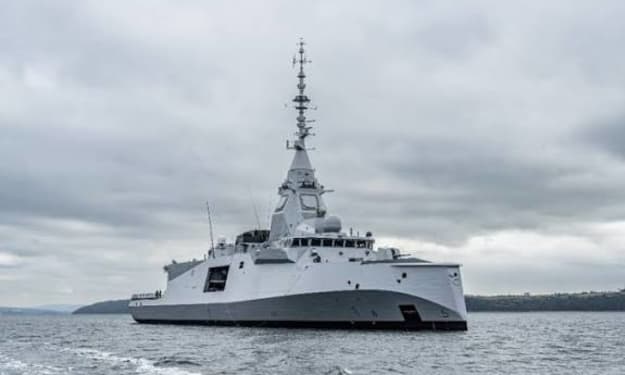
The French Navy has officially commenced the long-duration deployment of its first FDI (Frégate de Défense et d’Intervention) frigate, marking a significant milestone in France’s maritime defense capabilities. Designed for multi-mission roles, the FDI class frigates are intended to replace older vessels in the French fleet while delivering advanced technological capabilities for both national defense and international operations. This deployment signals France’s commitment to maintaining a robust naval presence in strategic waters amid rising global maritime tensions. The FDI frigate, equipped with state-of-the-art sensors, stealth features, and advanced weapons systems, is expected to perform a variety of missions during its deployment. These include maritime surveillance, anti-submarine warfare, protection of sea lanes, and supporting international coalition operations. The ship’s design incorporates modern combat systems, including the Sea Fire 500 radar and Aster missile systems, allowing it to track and neutralize aerial, surface, and underwater threats. French naval officials emphasize that the FDI frigate is capable of operating autonomously or as part of a larger naval task force, enhancing operational flexibility. The deployment represents not only a technological achievement but also a strategic statement. France has been actively expanding its naval influence in key regions, including the Indo-Pacific, the Mediterranean, and the Atlantic. With global security challenges evolving rapidly, particularly in contested maritime zones, the FDI frigate’s extended deployment demonstrates France’s readiness to project power and safeguard maritime interests. Officials have highlighted that this deployment will involve extensive exercises, joint maneuvers with allied navies, and operational patrols in areas critical to international trade and security. The FDI program itself has been a centerpiece of French naval modernization efforts. These frigates are smaller and more cost-effective than larger destroyers, but they do not compromise on firepower or technological sophistication. The construction of the first FDI frigate involved advanced shipbuilding techniques to improve stealth capabilities, reduce maintenance costs, and ensure long-term sustainability. By integrating cutting-edge electronics, propulsion systems, and automated operations, these frigates exemplify a new generation of naval engineering that blends efficiency with combat readiness. French defense experts note that the FDI frigate’s deployment is part of a broader plan to reinforce Europe’s maritime security posture. As geopolitical tensions rise in areas such as the South China Sea, the Eastern Mediterranean, and the North Atlantic, France aims to maintain a credible naval presence that can respond swiftly to emerging threats. The FDI frigate’s ability to integrate with multinational naval forces, including NATO operations, enhances its role as a versatile instrument of both national defense and international cooperation. During the upcoming deployment, the frigate will participate in exercises designed to test its combat systems under realistic conditions. These exercises are expected to include anti-air, anti-ship, and anti-submarine operations, providing valuable operational data and refining crew readiness. Furthermore, the deployment will involve diplomatic visits to friendly ports, reinforcing France’s role as a strategic partner in global maritime affairs. This dual focus on operational capability and international cooperation underscores the strategic importance of the FDI program. The successful launch and deployment of the FDI frigate also have broader implications for France’s domestic defense industry. The program supports high-tech manufacturing jobs, fosters innovation in shipbuilding, and strengthens the country’s strategic independence. The integration of advanced weaponry and electronics demonstrates France’s capability to produce cutting-edge military technology domestically, reducing reliance on foreign suppliers. In conclusion, the long-duration deployment of the first French FDI frigate marks a major milestone in both naval modernization and strategic maritime presence. Its advanced capabilities, versatility, and readiness to operate in diverse scenarios highlight France’s commitment to safeguarding its interests and contributing to international maritime security. As the FDI frigate begins its mission, it not only showcases France’s technological achievements but also signals its enduring commitment to maintaining a credible and agile naval force on the global stage.
By Fiaz Ahmed Brohi4 days ago in The Swamp



Comments
There are no comments for this story
Be the first to respond and start the conversation.