
Australia Announces Gun Buyback Scheme in Wake of Bondi Attack
How Australia’s new gun buyback program aims to prevent future tragedies after the Bondi attack

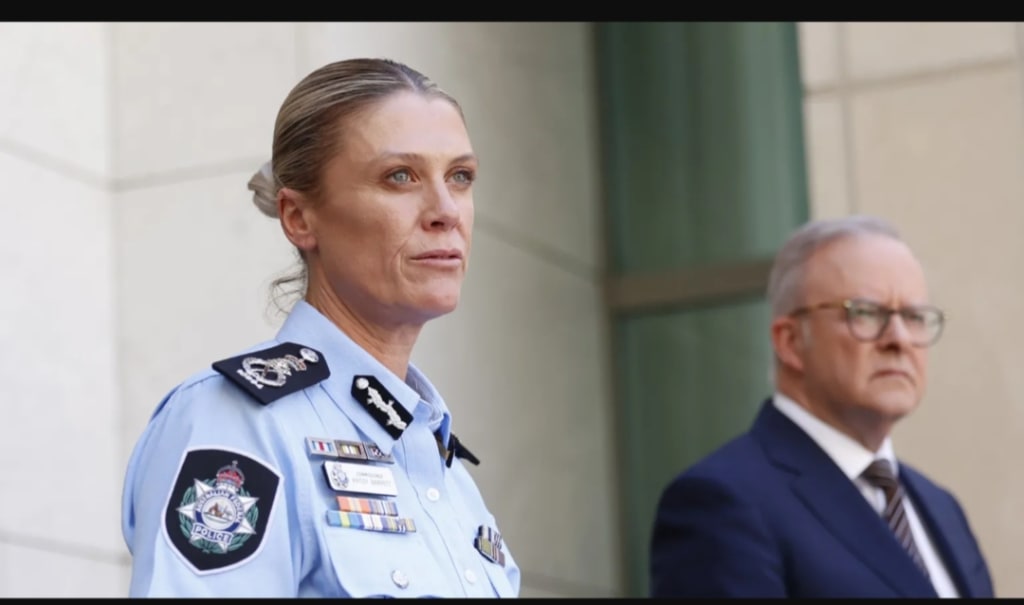
Australia has announced a new gun buyback scheme following the deadly attack in the Bondi area, a move that has reignited national and international discussions about public safety, gun regulation, and the country’s long-standing approach to firearms control. The decision reflects Australia’s readiness to respond decisively to acts of mass violence, even in a nation already known for having some of the world’s strictest gun laws.
While details of the scheme are still being finalized, the announcement signals a renewed commitment by Australian authorities to limit access to dangerous weapons and prevent similar tragedies in the future.
The Bondi Attack and National Shock
The Bondi attack sent shockwaves across Australia. Occurring in a densely populated public area, the incident left multiple people dead and injured, prompting an outpouring of grief and anger. Vigils were held nationwide, and political leaders faced immediate pressure to respond with meaningful action.
Australians have long taken pride in their country’s low rate of gun violence compared to other nations. As a result, incidents of mass violence resonate deeply and often trigger calls for renewed safeguards. The Bondi attack was no exception, becoming a catalyst for swift political and policy responses.
What the Gun Buyback Scheme Involves
The newly announced gun buyback scheme is designed to remove specific categories of firearms from civilian circulation by offering owners financial compensation in exchange for surrendering their weapons. While authorities have not yet released a comprehensive list, the program is expected to focus on high-risk firearms that are deemed unnecessary for civilian use.
Buyback schemes are voluntary but incentivized, allowing gun owners to comply without facing penalties. The government has framed the program as a preventative measure rather than a punitive one, emphasizing cooperation over enforcement.
Officials have stated that the goal is simple: reduce the number of weapons capable of causing mass harm and lower the likelihood of similar attacks in public spaces.
Australia’s History with Gun Buybacks
Australia’s decision to pursue a buyback is not without precedent. Following the 1996 Port Arthur massacre, the country introduced sweeping gun reforms, including a nationwide buyback that removed hundreds of thousands of firearms from circulation.
Those reforms are widely credited with dramatically reducing gun-related deaths and preventing mass shootings for decades. Public support for strict gun control has remained strong ever since, making buybacks a politically viable tool in moments of national crisis.
The Bondi response builds on that legacy, reinforcing the idea that firearm access should be continually reassessed as social conditions evolve.
Political Reactions and Public Opinion
Political leaders across party lines have largely supported the buyback announcement, though debates continue around its scope, cost, and long-term effectiveness. Supporters argue that even one prevented attack justifies the investment, especially when public safety is at stake.
Critics, however, question whether additional gun restrictions address the root causes of violence, such as mental health challenges, social isolation, and failures in early intervention systems. Some gun owners have expressed concerns about fairness and compensation, while others support the initiative as a responsible safeguard.
Public opinion polling suggests that a majority of Australians favor stricter gun measures following the Bondi attack, reflecting the country’s collective trauma and desire for prevention.
Balancing Safety and Rights
One of the central challenges facing policymakers is striking a balance between public safety and individual rights. Australia’s gun laws already require licensing, background checks, and legitimate reasons for firearm ownership, such as farming or sport shooting.
The buyback scheme is framed as an extension of these principles rather than a departure from them. Authorities argue that certain weapons pose an unacceptable risk in civilian settings, regardless of existing regulations.
By focusing on removal rather than punishment, the government aims to maintain trust while prioritizing safety.
International Attention and Comparisons
Australia’s response has drawn attention from around the world, particularly from countries grappling with high levels of gun violence. Advocates of stricter gun laws often point to Australia as a successful example of decisive action following tragedy.
The Bondi buyback announcement reinforces that image, showcasing a willingness to act quickly rather than allowing political gridlock to stall reform. Critics abroad, however, argue that Australia’s approach may not be easily replicated elsewhere due to cultural and legal differences.
Nevertheless, the policy adds to Australia’s reputation as a case study in firearm regulation.
Looking Ahead
As implementation details emerge, the effectiveness of the buyback will depend on participation rates, enforcement mechanisms, and complementary policies. Experts emphasize that gun control alone cannot prevent all acts of violence and must be paired with improved mental health services, community support systems, and early warning interventions.
The government has indicated that further reviews of public safety measures may follow, suggesting that the Bondi attack could lead to broader reforms beyond firearms policy.
Conclusion
Australia’s announcement of a gun buyback scheme in the wake of the Bondi attack reflects a familiar national pattern: respond to tragedy with action rather than hesitation. While debates will continue over scope and effectiveness, the move underscores a collective belief that reducing access to lethal weapons saves lives.
In moments of crisis, Australia has repeatedly chosen prevention over complacency. The Bondi response serves as a reminder that public safety remains a shared responsibility — one that demands difficult decisions in the face of devastating loss.
About the Creator
Asad Ali
I'm Asad Ali, a passionate blogger with 3 years of experience creating engaging and informative content across various niches. I specialize in crafting SEO-friendly articles that drive traffic and deliver value to readers.
The Forsyth House Fire
Since 1851, Forsyth House has stood on the corner of Union Street and Gordon Street in the heart of Glasgow. Its iconic, or was... because on Sunday 8th of March, 2026, a fire broke out in a small, seemingly un-named shop in the building and tore all that history down. As I write, the rubble is still unsettled and the street is still blocked off. Central Station is quiet on the upper level, and around 30 small businesses have quite literally gone up in smoke.
By S. A. Crawford3 days ago in The Swamp
Germans Protest Against Russia on Paralympic Podium
During a medal ceremony at the 2026 Winter Paralympic Games in Milano‑Cortina, Italy, two German cross‑country skiers made a quiet but powerful political statement by turning their backs on Russian gold medalists as the Russian national anthem played on the podium. Their action highlighted deep tensions surrounding the controversial decision to allow Russian athletes to compete under their own flag and with their national symbols for the first time in over a decade. The protest occurred after Russian skier Anastasiia Bagiian and her guide Sergei Siniakin won gold in the women’s sprint classic for vision‑impaired athletes. As the anthem began, German silver medalist Linn Kazmaier and her guide Florian Baumann turned away from the Russian victors, visibly distancing themselves during the podium protocol. Kazmaier explained to German media that their decision was not personal toward the Russian athletes, whom they don’t know, but rather a response to the broader political context. “That it is so totally overshadowed by politics is simply a complete shame,” she said, noting they kept their hats on and refused to face the flag as a sign of protest. This moment reflects wider controversy at the Paralympics over the inclusion of athletes from Russia and Belarus under their own flags and anthems — a departure from bans imposed after Russia’s state‑sponsored doping scandal and subsequent sanctions following its 2022 invasion of Ukraine. Previously, Russian athletes had been barred or required to compete under neutral status; however, the International Paralympic Committee (IPC) lifted those restrictions in late 2025, prompting protests and boycotts. Ahead of the Games, several countries, including Germany, joined a boycott of the opening ceremony in protest of Russia and Belarus being allowed full national representation. Eleven countries along with the European Union chose not to participate in the event as a symbolic stand against the IPC’s decision, although they remained committed to competing in the sporting events themselves. The sight of German athletes turning away on the podium added another layer to that protest, occurring in the midst of competition rather than before it. Baumann emphasized that their gesture was about solidarity with Ukrainian athletes and opposition to what they saw as a decision that diminishes the integrity of international sport. “It’s not about the Russian athletes themselves… but the IPC’s decision to have Russia here under its own flag… while the Ukrainians are also here is simply not correct,” he said. The restart of Russia’s full national presence at the Paralympics represents a significant shift. Russia won its first gold medal at the Winter Paralympics under its own flag since 2014 at these Games, a moment marked by the playing of the Russian national anthem on the podium — a sight not seen at the Paralympics in many years. While the Moscow Times and other outlets celebrated this return, it sparked backlash elsewhere in the Paralympic community and among fans and officials alike. Critics argue that allowing full national symbols validates Russia’s sporting presence despite ongoing geopolitical conflicts and human rights concerns. Supporters of the IPC’s decision counter that excluding athletes penalizes individuals for the actions of their governments. This debate mirrors broader clashes in sport over whether and how to isolate nations during political crises without unfairly impacting athletes. The German protest also echoes a more general trend of political statements at international sporting events. In recent years, athletes and teams have used their platforms to draw attention to global conflicts and social issues, from kneeling protests to symbolic gestures that reverberate well beyond the field of play. The Paralympics, which celebrates courage, resilience and inclusion, has not been immune to these broader tensions. Despite the symbolism, German athlete Kazmaier acknowledged the complexity of the situation, noting that she and her guide could personally have respect for individuals from other nations while still disagreeing with broader political decisions. “Perhaps they are really nice people, whom we could be friends with,” she said, underscoring the distinction between individuals and the political systems they represent. As the Milano‑Cortina Games continue, similar moments may arise, especially as athletes from different countries confront the emotional and political realities tied to the Russian presence. The episode on the podium serves as a reminder that international sport often intersects with global affairs, and that even events meant to bring people together can reflect the fractures of the wider world.
By Fiaz Ahmed 5 days ago in The Swamp


Comments
There are no comments for this story
Be the first to respond and start the conversation.