
At Davos, a European Backlash to Trump
Why Donald Trump’s Return to the Global Stage Is Reviving Old Fears Among European Leaders

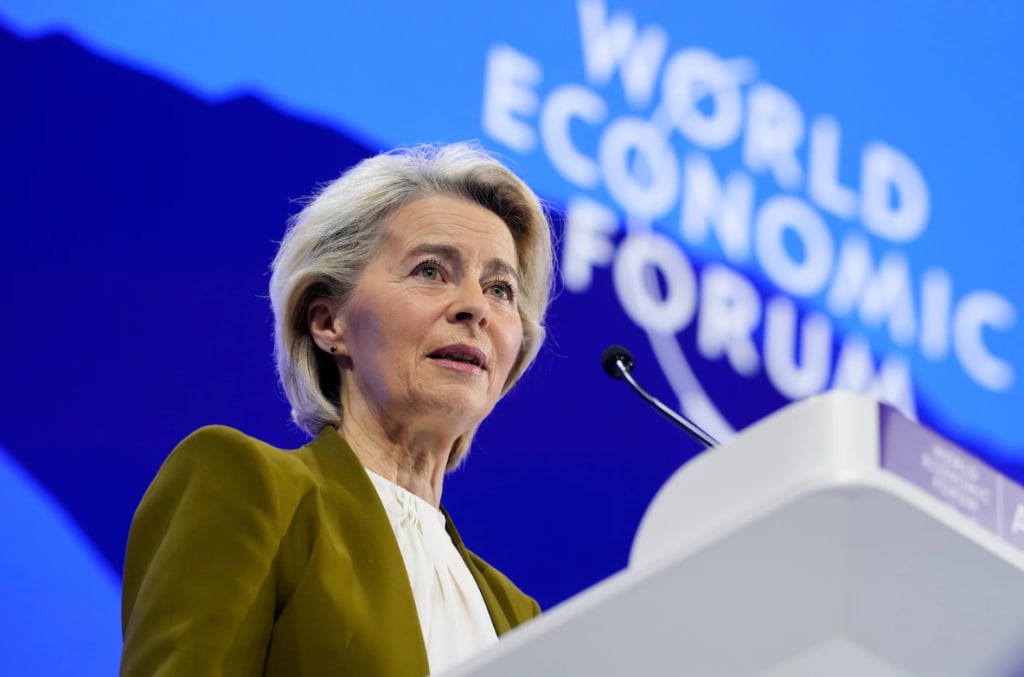
Every January, the Swiss town of Davos becomes the unofficial capital of global power. Political leaders, business executives, and policy thinkers gather at the World Economic Forum (WEF) to debate the future of the world economy, climate action, security, and geopolitics. This year, however, one topic overshadowed many others: the growing European backlash to Donald Trump and the possibility of his return to power in the United States.
Although Trump was not physically present at Davos, his influence was impossible to ignore. From panel discussions to private meetings behind closed doors, European officials openly voiced concerns about what a second Trump presidency could mean for transatlantic relations, global trade, NATO, and support for Ukraine. For many in Europe, Davos became less about optimism and more about preparing for disruption.
Trump’s Shadow Over Davos
Donald Trump’s first term as U.S. president left deep scars on Europe’s political leadership. His “America First” doctrine challenged long-standing alliances, questioned NATO commitments, and introduced aggressive trade policies that unsettled European economies. At Davos, those memories resurfaced sharply.
European leaders expressed anxiety that Trump’s potential return could bring renewed tariffs, weakened cooperation on climate change, and a transactional approach to diplomacy. Several officials warned that Europe cannot assume the United States will remain a predictable partner if Trump wins the next election.
The concern is not merely ideological. For Europe, stability in U.S. foreign policy is essential to economic planning, defense coordination, and global crisis management. Trump’s unpredictability, many argue, makes long-term cooperation difficult.
Trade Tensions and Economic Fears
One of the strongest points of backlash at Davos focused on trade. Trump has repeatedly threatened tariffs on European goods, particularly targeting automobiles, steel, and green technologies. European business leaders at the forum warned that renewed trade wars could slow economic recovery already strained by inflation, energy transitions, and geopolitical conflicts.
Executives stressed that protectionism on either side of the Atlantic would harm consumers and disrupt global supply chains. Many fear that Trump’s economic nationalism could undermine the rules-based trade system that Europe heavily relies on.
At Davos, European policymakers emphasized the need to strengthen internal markets and diversify trade partners, signaling that Europe is preparing for a less cooperative Washington.
NATO and Security Concerns
Security issues dominated many conversations at Davos, especially in the context of Russia’s ongoing war in Ukraine. Trump’s past skepticism toward NATO and his comments suggesting that the U.S. might not defend allies who fail to meet defense spending targets alarm European leaders.
Several European officials warned that any weakening of NATO unity would embolden adversaries and destabilize Eastern Europe. While Europe has increased defense spending since Russia’s invasion of Ukraine, many countries still depend heavily on U.S. military support.
At Davos, the message was clear: Europe must prepare for greater strategic autonomy if American commitment becomes uncertain. Trump’s rhetoric has accelerated discussions about building a stronger, more independent European defense framework.
Climate Policy at Risk
Climate change is another area where Trump’s influence loomed large at Davos. European leaders see climate action as both a moral responsibility and an economic opportunity. Trump’s previous withdrawal from the Paris Climate Agreement remains a symbol of U.S. disengagement in this area.
At the forum, European officials worried that a Trump comeback could slow global climate efforts just as momentum is building for green investment and renewable energy transitions. Business leaders also expressed concern that policy reversals in the U.S. could disrupt green supply chains and climate-focused financial strategies.
Europe, by contrast, is doubling down on climate commitments, positioning itself as a global leader even if the U.S. steps back again.
Europe’s Strategic Wake-Up Call
Perhaps the most important takeaway from Davos is that Europe is no longer waiting passively. The backlash to Trump reflects a broader realization that the continent must take greater responsibility for its own future.
Discussions at the forum highlighted plans to boost defense cooperation, invest in critical technologies, and strengthen economic resilience. While Europe still values its alliance with the United States, leaders are increasingly focused on reducing dependence on any single partner.
Trump’s possible return has acted as a catalyst, pushing Europe to confront uncomfortable questions about sovereignty, unity, and global influence.
What Comes Next?
Davos revealed not just fear, but determination. European leaders are preparing for multiple scenarios, including a renewed Trump presidency. The backlash is less about personal dislike and more about structural concerns over predictability, cooperation, and shared values.
If Trump returns to power, Europe may respond with greater unity and assertiveness. If he does not, the lessons learned at Davos will still shape European policy for years to come.
In the end, Davos served as a reminder that global politics is entering a more fragmented era. Europe’s reaction to Trump underscores a shifting balance of power—one where old assumptions no longer hold, and strategic independence is no longer optional.
About the Creator
Muhammad Hassan
Muhammad Hassan | Content writer with 2 years of experience crafting engaging articles on world news, current affairs, and trending topics. I simplify complex stories to keep readers informed and connected.
Keep reading
More stories from Muhammad Hassan and writers in The Swamp and other communities.
Netflix Stock Is Falling: What’s Behind the Market’s Reaction Despite an Earnings Beat
Netflix recently released its latest quarterly earnings report, exceeding analysts’ expectations in several key areas. The streaming giant reported higher-than-anticipated revenue and profits, signaling resilience amid a highly competitive market. Yet, despite the strong results, Netflix stock has fallen, leaving investors puzzled and analysts debating the reasons behind the market’s reaction.
By Muhammad Hassanabout 17 hours ago in The Swamp
Suppliers: The Backbone of Global Trade, Communities, and Modern Economies
Suppliers are the often unseen backbone of modern economies, connecting raw materials to finished products and linking local communities to global markets. From small family-owned businesses to multinational corporations, suppliers play a critical role in ensuring that goods and services reach consumers efficiently and reliably.
By Aarif Lashari6 days ago in The Swamp
EU Mandates Buy‑European Preference in New Ukraine Assistance Package
The European Union has taken a significant new step in how it supports Ukraine’s war effort—by formally including a “buy‑European preference” clause in its latest assistance package. Under the proposed €90 billion support plan for 2026–27, Ukraine is being asked to prioritise purchases of military equipment and supplies from European manufacturers or those in associated countries when possible, rather than sourcing them from global suppliers. � Defense News This condition, pushed by a number of EU member states and endorsed by European Commission President Ursula von der Leyen, aims not only to bolster Ukraine’s defence capabilities but also to strengthen Europe’s own defence industrial base, while creating jobs, encouraging research and sparking industrial growth across the bloc. � Defense News A New Clause with Strategic Purpose The “buy‑European” element is one of the most striking elements of the latest EU loan proposal for Ukraine and reflects shifting priorities in Brussels. Of the €90 billion, approximately €60 billion is set aside for military assistance and €30 billion for general budget support. Under the preference clause, when Ukraine uses military aid for procurement, it should first seek equipment produced within EU member states, European Free Trade Association (EFTA) countries like Norway and Iceland, or locally within Ukraine itself. � Defense News Von der Leyen has framed this approach not just as a way to help Ukraine defend itself, but as strategic investment in Europe’s own industrial and technological future. “These are billions being invested, and these investments should have a return in creating jobs and research and development,” she said, emphasising that European industry should be at the forefront of spending. � Defense News Economic and Political Dimensions The EU’s decision comes at a time of renewed debate about Europe’s role in global security and defence. For years, the bloc has sought greater strategic autonomy—reducing reliance on defence imports from outside Europe, such as major weapons systems from the United States. By prioritising European suppliers in Ukraine’s equipment purchases, the EU hopes to keep defence spending within its economic ecosystem, supporting domestic production lines and technological innovation. � Defense News This move also highlights tensions within the bloc. Not all member states support strict procurement conditions. Germany has expressed reservations, arguing that limiting Ukraine’s options could slow down deliveries and hamper Kyiv’s ability to respond to urgent battlefield needs. The Netherlands has also advocated for flexibility, noting that rigid requirements might leave gaps in Ukraine’s supply requirements. � Defense News France, however, has been particularly vocal in backing the buy‑European clause, seeing it as essential to protecting and energising the EU’s defence industrial base at a time when global suppliers—especially U.S. firms—dominate the market. The debate reflects broader strategic and economic priorities, with defence industry health becoming a key consideration in foreign policy decisions. � Defense News The Cascade Principle In recognition of these concerns, the EU’s approach is not a hard ban on non‑European equipment. The proposal includes what officials describe as a “cascade principle”: Europe first, and if specific capabilities are not available within the bloc or associated partners, then Ukraine may procure supplies from other international sources. This ensures Ukraine retains access to the full range of equipment it needs while still steering the majority of spending toward European firms. � Defense News Broader Implications for EU‑Ukraine Support The preference clause is part of a broader EU strategy to sustain Ukraine through an extended period of conflict while reinforcing the continent’s industrial and defence capabilities. Alongside long‑term economic and budget support, the EU continues funding other initiatives, including infrastructure reconstruction, energy security, and joint procurement efforts under mechanisms such as the European Peace Facility. � consilium.europa.eu One of the goals behind this strategy is to ensure Ukraine remains in a position of strength when it comes to potential negotiations around ending the war. According to von der Leyen, a robust defence effort, supported by reliable supply chains and strengthened by European industry, can improve Kyiv’s position both on the battlefield and at the negotiating table. � Defense News Challenges and Future Outlook The buy‑European preference clause may face hurdles as it moves through the European Parliament and the Council, where member states will debate its final shape and conditions. Negotiators must strike a balance between strengthening European industries and giving Ukraine the flexibility it needs in an unpredictable war environment. If implemented, this policy could mark a new era in EU–Ukraine cooperation—one where economic and strategic priorities are deeply intertwined. It underscores a shift toward reinforcing European industrial base resilience while simultaneously supporting a frontline partner in a major geopolitical conflict. This dual objective reflects both internal EU ambitions and the complex realities of long‑term support in a protracted war. �
By Fiaz Ahmed Brohi5 days ago in The Swamp



Comments
There are no comments for this story
Be the first to respond and start the conversation.