
Astronomers Detect a Mysterious Seven-Hour Space Signal — And They May Finally Know What It Was
A slow, rhythmic beacon deep in the cosmos had scientists puzzled for years. A new explanation could change how we understand dead stars.
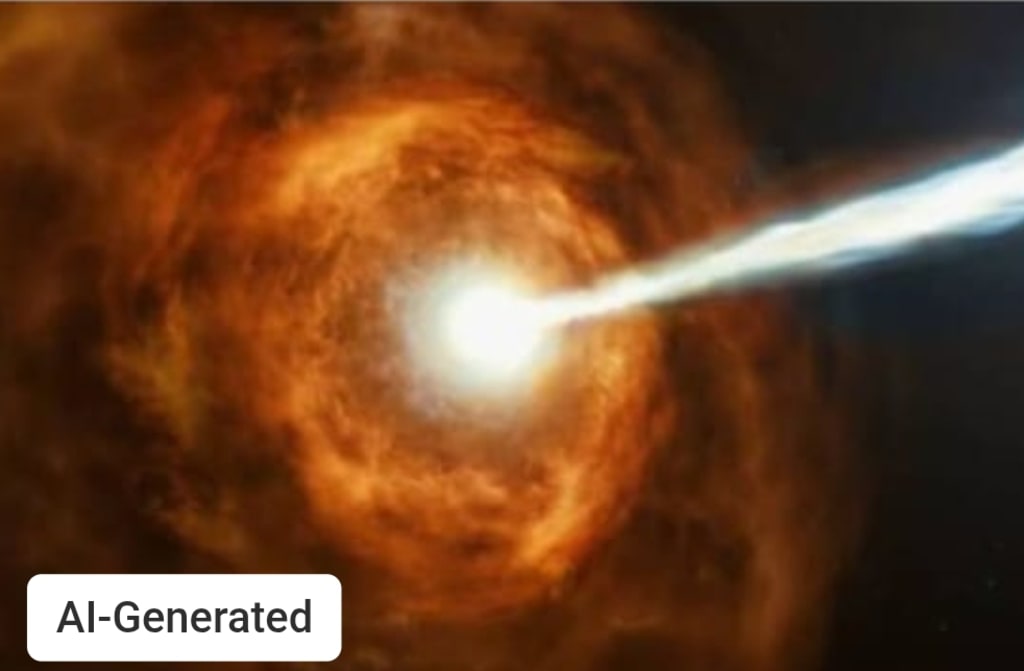
For decades, astronomers have grown used to the universe sending strange signals our way. Some are bursts of energy that last only milliseconds. Others flicker like cosmic lighthouses, spinning steadily as they cross our line of sight. But in early observations that resurfaced recently, scientists noticed something very unusual—a radio signal pulsing once every seven hours.
This was not normal.
Most cosmic radio sources pulse rapidly, sometimes dozens or even hundreds of times per second. A signal that fired off only once every seven hours felt almost impossible. Even stranger: the mysterious object powering it seemed too energetic to be completely dead, yet too slow to fit into any known category.
For years, astronomers had more questions than answers. What could possibly create such a slow, steady beat across the cosmos? Was it a star? Something collapsing? Something interacting? Or was it an entirely new type of object?
Now, scientists believe they finally have an explanation—one that expands our understanding of how extreme the universe can be, even in the quietest corners of space.
A Cosmic Mystery Begins
The signal was first detected by radio telescopes scanning the sky for transient events—short-lived flashes or pulses that appear unexpectedly. These surveys are often used to search for fast radio bursts (FRBs), some of the universe’s most powerful and short-lived explosions of energy.
But this new signal didn’t behave like an FRB at all.
Instead of being a one-time burst lasting milliseconds, the object flashed repeatedly, always at the same interval: every seven hours. It was like a heartbeat—slow, steady, and strangely precise.
Astronomers originally believed no known object could produce such a pulse rate. Usual suspects like pulsars and magnetars spin far too fast. Their strong magnetic fields cause them to rotate rapidly, producing radio emissions in tight intervals. A pulse every few seconds is normal. Even a minute between pulses is rare.
But seven hours?
That was unheard of.
The Object That Shouldn’t Exist
The odd signal likely came from a compact object—either a white dwarf or neutron star—both of which form after a star runs out of fuel and collapses. These stellar remnants are extremely dense, often holding a Sun’s worth of mass in an object the size of a city or a planet.
Normally, neutron stars spin incredibly fast because they conserve angular momentum when collapsing. Think of an ice skater spinning faster as they pull their arms inward.
This is why pulsars pulse quickly.
To get a neutron star to rotate once every seven hours, it would need to be extraordinary—either extremely old, extremely weak, or affected by an outside force.
The long pulse period was such a problem that some researchers wondered if the signal was even coming from a compact star at all.
But after years of analysis, astronomers now believe the culprit might be something far stranger: a highly magnetic, slowly rotating white dwarf, or possibly a magnetically powered neutron star in a unique evolutionary stage.
Both possibilities open new doors in astrophysics.
A Magnetic Monster With a Slow Spin
The leading hypothesis today is that scientists may have discovered a magnetically active white dwarf acting like a pulsar. This would make it part of a very rare and unusual class of objects—ones that blur the line between pulsars and stars once thought to be inert.
White dwarfs are usually quiet, slowly cooling remains of stars like our Sun. They don’t typically pulse in radio frequencies, and they don’t usually have intense magnetic fields strong enough to act like a beaming lighthouse.
But if a white dwarf somehow retained or amplified a powerful magnetic field, it could theoretically emit stable pulses just like a neutron-star pulsar—only at a far slower rate.
This idea, once considered nearly impossible, gained support when astronomers discovered other unusual white dwarfs with bizarre magnetic activity. The seven-hour signal might be the clearest example yet.
If true, this would be the first strong evidence of a white dwarf pulsar—a type of object astronomers long suspected could exist but had almost no observational proof of.
Or… a Neutron Star in Disguise?
The second explanation is that the source could be a neutron star after all—but one in a rare evolutionary phase where its magnetic field is interacting with surrounding material in a way that slows its rotation dramatically.
Some neutron stars can slow down over millions of years, especially magnetars with extremely strong magnetic fields. If one were old enough and isolated enough, its pulse rate might stretch into hours.
This would make it a transition object, one that helps scientists understand the lifespan and aging process of neutron stars.
Why a Slow Signal Matters
To the average person, a star pulsing every seven hours might not sound like much. But to astronomers, it's important because it:
Expands the known limits of stellar behavior
Challenges existing models of how compact objects evolve
Suggests new categories of slow, magnetically active stars
Proves the universe still holds surprises in even its quietest corners
The discovery also demonstrates how much we still don’t know. Even dead stars—objects that should have burned out long ago—can surprise us with new behaviors.
The Universe Still Whispers Secrets
The seven-hour pulse underscores something scientists love most about space: every time we think we’ve seen everything, the universe delivers something new, mysterious, and awe-inspiring.
What began as an odd signal transformed into evidence for a whole new type of stellar activity. Whether the culprit is a slow, magnetic white dwarf or an aging neutron star, astronomers have gained valuable insight into cosmic evolution.
And somewhere in the depths of space, the signal continues—steady, rhythmic, and patient—reminding us that the universe still has stories to tell, one pulse at a time.
About the Creator
The Saddest Thing - The Billionaires Who Rule America Aren't Even Enjoying Themselves
This single post says more about our ruling class than a thousand policy papers. The saddest thing about today's system is that the men robbing the rest of us - sabotaging our economic prospects, our pensions, our access to affordable healthcare - are not even happy.
By Scott Christenson🌴7 days ago in The Swamp
Senators Clash Over Immigration Enforcement, Risking a D.H.S. Shutdown
A bitter standoff in the United States Senate over immigration enforcement policy has pushed the Department of Homeland Security (DHS) closer to a potential shutdown, intensifying political tensions just weeks before critical budget deadlines. Lawmakers from both parties are locked in disagreement over how strictly immigration laws should be enforced and whether funding should be tied to new restrictions at the southern border. The dispute centers on a budget package required to keep DHS operating. Without an agreement, key agencies responsible for border security, disaster response, and immigration services could face partial closure, affecting millions of Americans and thousands of federal workers. A Deepening Political Divide Republican senators have demanded tougher enforcement measures as a condition for approving DHS funding. Their proposals include expanding detention capacity, limiting the use of humanitarian parole, and increasing deportations of migrants who cross the border illegally. They argue that the Biden administration’s policies have encouraged record levels of migration and overwhelmed border communities. Democratic senators, meanwhile, insist that immigration enforcement should be balanced with humanitarian protections for asylum seekers and migrants fleeing violence and poverty. They accuse Republicans of using DHS funding as leverage to force through policies that would undermine due process and international obligations to protect refugees. “This should be about keeping the government running and protecting national security, not turning migrants into political bargaining chips,” one Democratic senator said during a heated floor debate. High Stakes for National Security DHS oversees critical agencies such as Customs and Border Protection (CBP), Immigration and Customs Enforcement (ICE), and the Federal Emergency Management Agency (FEMA). A shutdown would disrupt training, delay processing of immigration cases, and strain border operations already under pressure. Security analysts warn that a prolonged shutdown could weaken the government’s ability to respond to natural disasters, cyber threats, and border emergencies. While essential personnel would continue working, many employees could be furloughed or required to work without pay, further damaging morale. Union leaders representing DHS workers have urged Congress to act swiftly, saying frontline officers should not become victims of political gridlock. Immigration at the Center of the Debate At the heart of the dispute is how the U.S. should handle the surge in migrants arriving at its southern border. Republican lawmakers say the administration’s rollback of previous restrictions has contributed to rising crossings and has strained local resources. They are pushing for measures that would automatically close the border when crossings exceed certain thresholds and make it easier to remove migrants without lengthy court proceedings. Supporters of these policies argue they are necessary to restore order and deter illegal entry. Democrats counter that such proposals would block legitimate asylum claims and place vulnerable families at risk. They argue that Congress should focus instead on modernizing the immigration system, expanding legal pathways, and addressing the root causes of migration in Central and South America. Budget Deadline Looms With the deadline for passing DHS funding rapidly approaching, negotiators are scrambling to reach a compromise. Senate leaders have held closed-door meetings in an effort to find common ground, but progress has been slow. Some moderate lawmakers have floated the idea of a short-term funding extension to prevent an immediate shutdown while broader immigration talks continue. However, hardliners in both parties remain resistant, seeing the moment as a rare opportunity to force concessions. Political observers say the conflict reflects deeper divisions in Congress over immigration, one of the most polarizing issues in American politics. Public Reaction and Economic Impact The possibility of a DHS shutdown has drawn criticism from business groups and local governments, particularly in border states. Companies dependent on cross-border trade fear delays at ports of entry, while city officials worry about reduced federal support for shelters and emergency services. Public opinion remains sharply divided. Polls show that many Americans support stronger border controls, but also favor humane treatment of migrants and protection for asylum seekers. The inability of lawmakers to reconcile these views has fueled frustration with Washington’s repeated budget crises. Immigrant advocacy organizations have staged protests outside the Capitol, urging senators not to sacrifice vulnerable communities for political gain. At the same time, conservative groups have rallied in support of stricter enforcement, arguing that national security and rule of law must come first. Broader Political Consequences The standoff carries significant political risks for both parties. A shutdown could damage public trust in government and highlight congressional dysfunction during an election year. Analysts warn that voters may punish lawmakers perceived as responsible for disrupting essential services. For the Biden administration, the conflict underscores the challenge of managing border policy while navigating a divided Congress. For Republicans, it represents a chance to push immigration to the forefront of national debate, but also a gamble that could backfire if the shutdown causes widespread disruption. Looking Ahead As negotiations continue, the future of DHS funding remains uncertain. Senate leaders have signaled that talks will intensify in the coming days, but there is no guarantee of a breakthrough. Without a deal, the department could be forced to scale back operations, adding pressure to an already strained immigration system. Many experts argue that the crisis highlights the urgent need for comprehensive immigration reform, something Congress has failed to achieve for decades. Until lawmakers address the structural flaws in the system, budget battles tied to immigration enforcement are likely to recur. Conclusion The clash between senators over immigration enforcement has placed the Department of Homeland Security on the brink of shutdown, exposing deep political divisions over how the nation should manage its borders. With national security, humanitarian responsibilities, and public trust at stake, the coming days will test whether Congress can set aside partisan battles and keep the government functioning. For now, millions of Americans — including federal workers and migrant families — wait anxiously as lawmakers argue over the future of immigration policy and the stability of one of the government’s most critical agencies.
By Fiaz Ahmed 8 days ago in The Swamp



Comments
There are no comments for this story
Be the first to respond and start the conversation.