
Ashes Between Two Rivers
When Jerusalem and Tehran collide, ordinary lives become the collateral in a war that defies borders—and hope becomes the rarest currency.


On June 12, 2025, long before sunrise, the horizon above the Zagros Mountains glowed with the earliest embers of another Middle Eastern firestorm. Alerts crackled across intelligence networks. Israeli drones and aircraft had begun Operation Rising Lion, a sweeping aerial campaign aimed at halting Iran’s quest for nuclear capacity. Does it count as premature revenge or desperate defense? The debate would be fought later—right now, the sky was ablaze.
Chapter 1: Dawn of the Strike
In a covert command center deep in Tehran, engineers and military officers scrambled as alarms echoed through reinforced walls. Their screens flickered. Fordow. Natanz. Qom. One by one, those heavily fortified nuclear sites were hit with pinpoint accuracy. The tremors shook the facility at Natanz so forcefully that beams cracked, floors splintered, and several senior scientists were killed instantly. Among them were key figures in uranium enrichment—a blow so deep the world was forced to take notice.
The planners in Tel Aviv watched the confirmation feeds—minutes of destructive beauty. They knew the cost would come, and soon.
Chapter 2: Iron Defender
By midday, Israel’s sirens began their mournful chant. Communities from Tel Aviv to Haifa stirred with panic. Families bolted for refuges. Mothers clutched children. The air vibrated with the signature hum of incoming missiles.
Yet the Iron Dome roared to life. Explosions brightened the skies but never reached the ground. The system faltered just once, above Holon, and one projectile breached a schoolyard perimeter. Two children fell—their laughter cut short.
In hospitals, emergency lights blinked incessantly. Doctors and nurses pivoted from treating accident-induced fractures to administering burn first aid. Among the casualty list were both a Jewish boy and an Arab father—lifelines crossing sectarian lines in their fragility.
Chapter 3: Tehran Responds
Across the border, Iran was not idle. Their elite aerospace division had unleashed hundreds of ballistic missiles and suicide drones aimed at Israeli military bases and urban centers. The first wave, though intercepted, rattled windows, shook café tables, and fractured calm.
In Isfahan, an elderly woman emerged from her flat only to find it reduced to debris. She wept as firefighters dug through shards of concrete. Next door, a teenage boy cradled his injured puppy—his tears mingling with dust.
In Tel Aviv, a grandmother sat in her shelter, clutching a photo of her grandson serving in Golani Brigade. “God, bring him home,” she whispered, her prayer merging with the dull roar of rockets overhead.
Chapter 4: Fires Ignite Elsewhere
When borders crack, so too do the fault lines of proxy alliances. In Lebanon, Hezbollah opened fire along the Blue Line. Northern Israel shuddered under rocket barrages. Elsewhere, Yemen’s Houthis dispatched drones toward Eilat. In Gaza, local militant groups issued veiled threats.
Jordan’s skies lit with flares as Patriot missiles intercepted Iranian weaponry. American naval vessels in the Red Sea deployed missile-defence systems. Riyadh and Abu Dhabi issued emergency alerts for low-flying drones spotted near Persian Gulf shipping lanes.
The world watched from behind screens and news channels. Here was the Middle East reinvented. Here was war, rebirthed.
Chapter 5: The Human Thread
War is brutal, but it thrives in abstraction. Numbers. Strategy. Victory. Yet in Holon, paramedics loaded victims into ambulances. In Tehran, volunteers shoveled rubble outside hospitals. In Jerusalem’s Old City, a rabbi turned his synagogue into a shelter. His congregation—Jewish, Arab, foreign—found unexpected refuge under stained glass lamps.
A young Iranian artist tweeted, “I used to draw sunsets. Now I draw shelters.” Across social media, an Israeli teacher posted, “My classroom door is closed. But our message must remain open.”
In Oman, diplomats whispered in back-channel conference rooms. Representatives from the U.S., UK, France, and Russia circled the table. Their words danced around ceasefire proposals and prisoner exchanges, but consensus remained fragile.
In a dim café in Beirut, an Arab grandmother sat with displaced Palestinians from Gaza. They shared tea and tears—anallyzing the world’s indifference with righteous fury.
Chapter 6: Flames of Propaganda
State TV in Tehran broadcast rolling coverage of damage inflicted on Israel—images of rocketed-out intersections and ruined grain stores. In Tel Aviv, billboards displayed maps of Iran’s nuclear complexes with animated strike paths. Each side painted itself as the righteous defender, each as a victim.
Elite commanders recited speeches: Israel swore to eliminate threats. Iran vowed revenge. And yet, for both, the gravity of civilian harm was real. Children who would now grow up only knowing shelters instead of playgrounds.
Chapter 7: Diplomatic Tightrope
The UN convened an emergency Security Council meeting on June 13. Ambassadors voiced condemnation and restraint. Russia called for an immediate halt. The U.S. defended Israel’s right to self-defend. China urged calm. But no resolution emerged.
On the ground in Oman, shadow envoys quietly met. Time was critical. Iran demanded withdrawal and a rollback of sanctions. Israel demanded dismantling of nuclear infrastructure. Concessions seemed impossible.
In Baghdad, a dissident cleric called for restoration of Iraq’s canals and reconstruction of its schools before taking sides. “Our children should inherit irrigation, not rockets,” he said. The statement echoed across mosque loudspeakers—but found few easing hands in Tehran’s corridors of power.
Chapter 8: The Regional Web
The war’s tremors spread outwards. Turkish investors feared Red Sea instability. Oil futures spiked overnight as tankers rerouted via longer passages. Civilians in Istanbul and Cairo stocked up. Sudan’s peacekeepers prepared contingencies.
Humanitarian organizations mobilized. Doctors Without Borders prepared field hospitals. The Red Crescent assembled aid packages. UN agencies counted refugee contingencies—anticipating thousands fleeing border towns in Iran and Israel alike.
Chapter 9: Glimmers of Humanity
Amid the chaos, compassion flickered. A famed Israeli band broadcast a virtual concert for Tehran’s hospitals. A popular Iranian novelist tweeted: “In every destroyed façade I see someone’s childhood.”
In Tel Aviv’s Mahane Yehuda market, an Arab shop-owner quietly delivered fresh bread to a nearby evac shelter. In Shiraz, Jewish Iranians lay roses at the gates of bombed mosques—even as photographers captured every moment.
The war’s rhetoric remained cold, but the people’s pulse was warm and undeniable. Each gesture chipped away at the veneer of hate, if only for a moment.
Chapter 10: At the Precipice
As night returned on June 13, neither Israel nor Iran claimed total victory. Yet both asserted strategic wins—Israel pushing Iran’s nuclear ambitions back years, Iran claiming it had inflicted meaningful damage on military infrastructure.
The world exhaled—but remained tense.
Ceasefire rumors drifted out of Oman. Israel was said to condition it on Iran’s withdrawal from regional theaters. Iran insisted Israel first end the campaign of targeted strikes. Neither side blinked.
Epilogue: Between Rivers
By dawn on June 14, the noise had dimmed, but the tremors remained. A fragile veil fell over Gaza’s skies. Lebanon smoldered in parts. Iranian factories were in rubble. Israeli ambulances still ran.
And the survivors? They tended their dead. They built new shelters. They tried to mother hope in rubble-covered schools. In Basij-run shelters, children in Iran taught each other English in case “we ever need it,” one teacher joked. In Tel Aviv, dentists volunteered at clinics for damaged teeth and damaged sanity. Humanity looked uninvited into the abyss—and decided not to look away.
The region stands today between two rivers—literal and metaphorical. Between the Jordan and the Euphrates. Between paths of war and the peace that demands real, terrifying compromise.
What comes next is uncertain.
But in the echoes of explosion and the hush of shelters, one truth endures: war wounds not only nations, but souls. And until the infrastructure of diplomacy is rebuilt—bricks turned into trust and ceasefire lines into reliable scaffolding—we remain on the edge.
About the Creator
Saqib Ullah
Saqib Ullah is a content creator and writer on Vocal.media, sharing SEO-friendly articles on trending news, lifestyle, current affairs, and creative storytelling. Follow for fresh, engaging, and informative reads.
Keep reading
More stories from Saqib Ullah and writers in The Swamp and other communities.
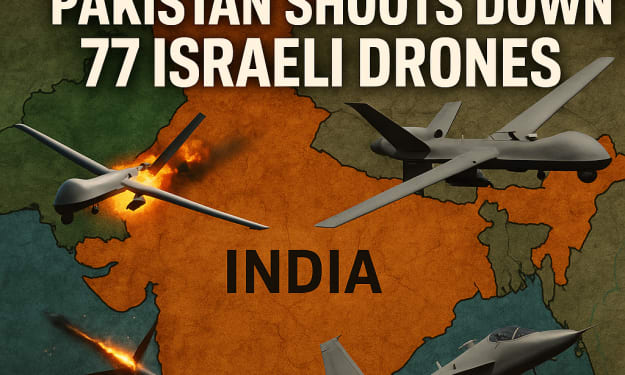
India vs Pakistan War 2025: Pakistan Shoots Down 77 Israeli Drones, Claims Air Superiority
India vs Pakistan Conflict 2025: Pakistan Downs 77 Israeli Drones, Claims Major Military Victory The India-Pakistan war continues to escalate in 2025 with dramatic claims and counterclaims from both sides. The latest reports reveal that Pakistan has successfully shot down 77 Israeli-made drones allegedly launched by India. According to Pakistani military sources, none of these drones returned to Indian airspace.
By Saqib Ullah10 months ago in The Swamp
A Gathering of Evil Bosses
“I’m the queen of chin jutting while I smooth my hair, attacking, insulting, and deflecting to protect my appointer.” “Oh, please, Blondi, my hair is curled, highlighted, and longer than yours. I feature television commercials telling immigrants that we will give them a free plane ride home, and if they voluntarily turn themselves in, they will be allowed to legally apply for re-entry. It runs everywhere, and I look good in it! You can’t compete because of your blond hair. Mine is nicer, and my lips are prettier than yours.”
By Andrea Corwin 16 days ago in The Swamp
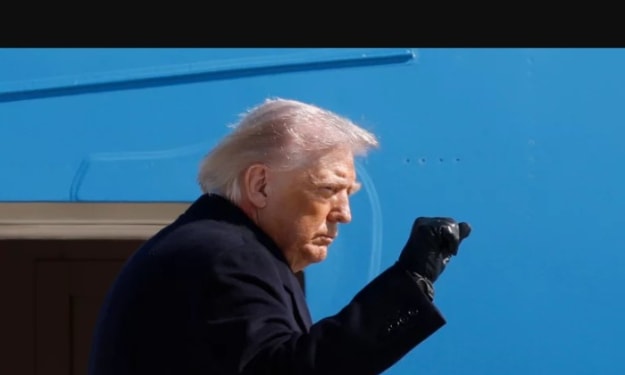
Trump Says He Is ‘Not Happy’ With Iran Nuclear Talks but Signals More Time for Diplomacy
Tensions surrounding Iran’s nuclear ambitions have once again taken center stage as former U.S. President Donald Trump publicly expressed dissatisfaction with ongoing negotiations while signaling a willingness to allow more time for diplomacy. His remarks highlight the delicate balance between pressure and patience that continues to define relations between the United States and Iran.
By Jameel Jamali6 days ago in The Swamp
📢 Raise Your Voice Thread: 03/05/2026
Our “Raise Your Voice Threads” are hosted most alternating Thursdays at 12PM ET to offer creators more avenues to uncover exceptional stories on Vocal. As we are continuously searching for fresh creators and inspiring stories, this thread provides an opportunity to exchange and discuss the stories that have moved and motivated us on Vocal.
By Raise Your Voice by Vocalabout 12 hours ago in Resources

Comments
There are no comments for this story
Be the first to respond and start the conversation.