
Army Seeks to Award Self-Propelled Howitzer Contract by July, Prototype Request Coming Soon
New program focuses on speed, survivability, and precision on future battlefields Pentagon invites industry to compete for advanced artillery system Lessons from Ukraine shape the Army’s next howitzer design Prototype phase to determine the future of U.S. mobile artillery Modernization drive highlights importance of long-range fires Contract decision could reshape Army firepower strategy From testing to deployment: Army’s roadmap for new howitzers

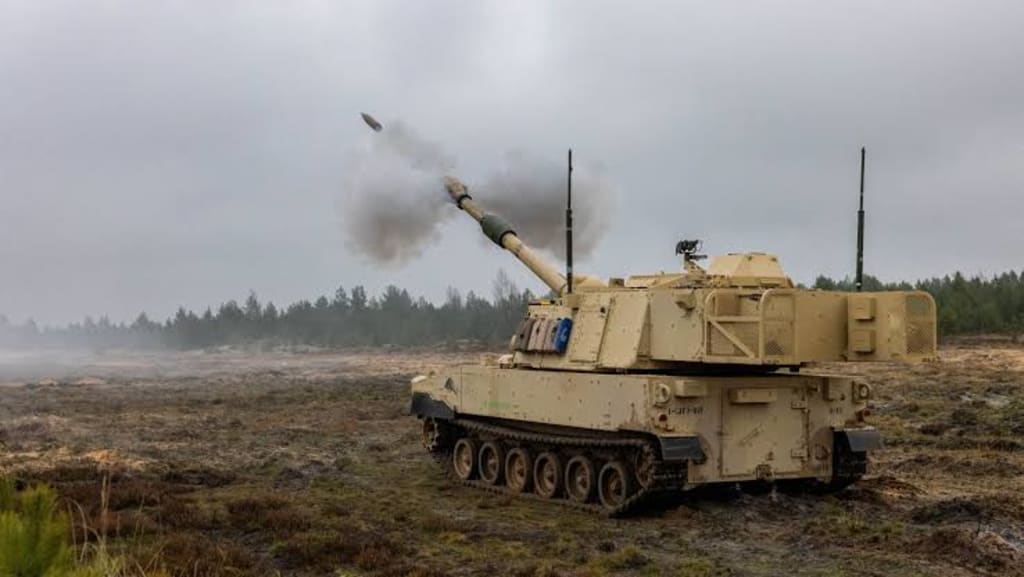
The U.S. Army is moving closer to awarding a long-anticipated contract for a new self-propelled howitzer, aiming to modernize its artillery forces and improve battlefield mobility and firepower. Defense officials say a formal request for prototype systems will be released in the coming weeks, with the service targeting July as the deadline to select a winning contractor.
The program is part of the Army’s broader modernization strategy to replace aging artillery platforms and ensure its forces can operate effectively in high-intensity conflicts. Lessons drawn from recent wars, particularly in Ukraine, have underscored the critical role of long-range artillery in shaping the outcome of ground operations.
A Push for Modern Artillery
Self-propelled howitzers combine heavy firepower with mobility, allowing artillery units to reposition quickly after firing. This “shoot-and-scoot” capability is increasingly important as modern battlefields are saturated with drones, sensors, and counter-battery radar systems that can rapidly locate and target firing positions.
Army officials have emphasized that the next-generation howitzer must be faster, more survivable, and capable of integrating with advanced targeting networks. The platform is expected to feature improved automation, enhanced protection for crews, and compatibility with future precision-guided munitions.
“This is about ensuring our artillery remains relevant in a contested environment,” said one Army acquisition officer. “We need systems that can move quickly, communicate seamlessly, and deliver accurate fire when it matters most.”
Prototype Phase and Industry Competition
The upcoming prototype request will invite defense contractors to submit candidate designs that meet the Army’s technical requirements. These prototypes will then undergo testing and evaluation before a final contract is awarded.
Major defense firms are expected to compete for the project, including companies with experience producing tracked and wheeled artillery systems. Some may adapt existing platforms, while others could propose entirely new designs tailored to the Army’s needs.
Industry analysts say the competition is likely to focus on reliability, ease of maintenance, and the ability to integrate with existing Army vehicles and logistics networks. Cost will also be a key factor, as the Army faces budget constraints while trying to modernize multiple weapon systems simultaneously.
Lessons from Global Conflicts
Recent conflicts have highlighted both the strengths and vulnerabilities of artillery systems. In Ukraine, self-propelled howitzers have proven vital for striking enemy positions while avoiding counterattacks. However, they have also been targeted by drones and precision weapons, forcing militaries to rethink protection and camouflage strategies.
The Army’s new howitzer program reflects these lessons. Officials want a system that can operate in environments where electronic warfare, cyber threats, and satellite surveillance are constant concerns.
“Artillery is no longer just about firing shells,” said a defense expert at a Washington-based think tank. “It’s about being part of a networked battlefield where speed and data matter as much as range and firepower.”
Technology and Capabilities
The new self-propelled howitzer is expected to include digital fire-control systems, automated loading mechanisms, and improved communications equipment. These features would allow crews to receive targeting data in real time and reduce the time required to prepare and fire rounds.
Automation could also reduce crew size and physical strain, improving operational efficiency. Some proposed designs may incorporate hybrid or more fuel-efficient engines, addressing logistical challenges associated with long deployments.
Additionally, the system is likely to be compatible with extended-range artillery shells and precision-guided munitions, enabling strikes at greater distances with higher accuracy. This aligns with the Army’s push toward long-range precision fires as a central element of its combat doctrine.
Budget and Timeline Challenges
While the Army aims to award the contract by July, officials acknowledge that timelines could shift depending on testing results and funding availability. Defense procurement programs often face delays due to technical issues, regulatory reviews, or changes in congressional priorities.
The cost of the program has not been publicly disclosed, but estimates suggest it could reach several billion dollars over the life of the contract, including production, training, and maintenance.
Members of Congress have expressed interest in the program, viewing it as essential to maintaining U.S. military readiness. However, some lawmakers have also called for careful oversight to prevent cost overruns and ensure that taxpayer money is spent efficiently.
Strategic Importance
The new howitzer is intended to support Army units deployed in Europe and the Indo-Pacific, where potential conflicts would require rapid movement and sustained firepower. In these regions, terrain and infrastructure vary widely, making versatility a crucial design requirement.
Military planners believe the platform will strengthen deterrence by demonstrating that U.S. forces can deliver precise and powerful artillery support in any environment.
“This system sends a message that the Army is serious about adapting to modern warfare,” said a retired artillery commander. “It’s not just about replacing old equipment—it’s about redefining how artillery operates in the future.”
Looking Ahead
The prototype request marks a significant step forward in the Army’s effort to modernize its artillery forces. Over the next year, competing designs will be evaluated for performance, survivability, and integration with existing command systems.
If the program stays on schedule, production could begin shortly after the contract award, with the first operational units receiving the new howitzers within the next few years.
Conclusion
As the Army prepares to release its prototype request and move toward a July contract award, the self-propelled howitzer program represents a critical investment in future combat capability. By combining mobility, advanced technology, and increased firepower, the new system aims to ensure that U.S. artillery remains a decisive force on tomorrow’s battlefield.
In an era of rapidly evolving threats, the push for a modern self-propelled howitzer reflects a broader effort to adapt military tools to the realities of twenty-first-century warfare—where speed, precision, and survivability are paramount.
About the Creator
Fiaz Ahmed
I am Fiaz Ahmed. I am a passionate writer. I love covering trending topics and breaking news. With a sharp eye for what’s happening around the world, and crafts timely and engaging stories that keep readers informed and updated.
Keep reading
More stories from Fiaz Ahmed and writers in The Swamp and other communities.
Two Arrested Over Attempted Sabotage of German Naval Vessels
German authorities have arrested two individuals suspected of attempting to sabotage naval vessels in what officials describe as a serious threat to national security and maritime defense. The arrests come amid heightened concerns across Europe about the protection of critical military and infrastructure assets following a series of suspicious incidents targeting ports, energy facilities, and transportation networks. According to Germany’s federal prosecutor’s office, the suspects were detained after an investigation uncovered plans to damage or interfere with operational readiness at a naval base in northern Germany. While officials have not publicly disclosed the full identities of the individuals, they confirmed that both are being questioned on suspicion of acting on behalf of foreign interests. A Growing Security Concern The case is being handled jointly by Germany’s domestic intelligence service (BfV), federal police, and military counterintelligence. Investigators believe the suspects intended to disrupt key naval operations by targeting equipment and logistical systems used to maintain German warships. Prosecutors stated that the attempted sabotage could have significantly impacted Germany’s ability to meet its NATO obligations, particularly at a time when the alliance has increased its naval presence in the Baltic and North Seas due to tensions with Russia following the war in Ukraine. “This incident shows how vulnerable critical military infrastructure can be,” a senior German security official said. “We are facing new and complex threats that go beyond traditional espionage.” Details of the Alleged Plot While authorities have not revealed technical specifics, sources familiar with the investigation say the suspects attempted to access restricted areas of a naval dockyard and tamper with machinery essential for ship maintenance. The plot was reportedly uncovered after intelligence agencies intercepted communications suggesting coordination with individuals outside Germany. No ships were damaged and no injuries were reported. Officials emphasized that the attempt was stopped before it could pose an immediate danger to personnel or vessels. The suspects are believed to have acted deliberately and with planning, rather than as part of a random or spontaneous act. German media reports suggest the investigation had been ongoing for several weeks before the arrests were made. European Context of Sabotage Fears The arrests come amid a wider European debate over the security of military and industrial infrastructure. Since the outbreak of war in Ukraine, several countries have reported incidents involving suspected sabotage or espionage targeting railways, energy pipelines, data cables, and military facilities. In recent months, NATO officials have warned of a rise in “hybrid warfare,” where hostile actors use covert tactics such as cyberattacks, disinformation campaigns, and physical sabotage to weaken adversaries without direct military confrontation. Germany, as Europe’s largest economy and a major supplier of military aid to Ukraine, has become a focal point for security services seeking to prevent such actions. Defense Minister Boris Pistorius has repeatedly stressed the need to protect armed forces installations from both cyber and physical threats. “We must assume that hostile actors will try to exploit vulnerabilities wherever they find them,” he said in a recent speech. Legal and Political Implications The suspects now face possible charges related to sabotage, espionage, and endangering national security. Under German law, such offenses carry severe penalties, including lengthy prison sentences. Lawmakers across party lines have called for a review of security protocols at naval bases and other sensitive facilities. Members of the Bundestag’s defense committee said the case demonstrates the need for tighter access controls and improved coordination between civilian police and military intelligence services. “This is not just about two individuals,” said one committee member. “It is about ensuring that Germany’s armed forces are protected against modern forms of attack.” The case may also have diplomatic consequences if investigators confirm that the suspects were acting on behalf of a foreign government or intelligence agency. German officials have not yet named any country involved, saying the inquiry is still ongoing. Public Reaction and Media Attention The arrests have drawn significant public attention, particularly in coastal regions where naval bases are major employers and symbols of national defense. Residents expressed concern that their communities could become targets in geopolitical conflicts. Security experts appearing on German television warned that such incidents should not be viewed as isolated events but as part of a broader pattern of unconventional threats facing Europe. At the same time, authorities have urged the public to remain calm, emphasizing that the situation was handled quickly and professionally. “There was no immediate danger to civilians,” police said in a statement. “Our systems worked as intended.” Strengthening Defenses In response to the incident, the German Navy is reportedly reviewing security procedures at its shipyards and ports. Measures under consideration include increased surveillance, more rigorous background checks for contractors, and expanded cooperation with intelligence agencies. NATO officials welcomed Germany’s swift action and reiterated the alliance’s commitment to protecting shared infrastructure. “This is a reminder that security today is multidimensional,” said a NATO spokesperson. “Defending against sabotage is just as important as preparing for conventional military threats.” Conclusion The arrest of two suspects over the attempted sabotage of German naval vessels highlights the evolving nature of modern security challenges. As Europe navigates an era of geopolitical tension, the line between war and covert action has become increasingly blurred. For Germany, the case serves as a warning that protecting military assets now requires constant vigilance against unseen threats. While the immediate danger has passed, the investigation continues, and authorities remain focused on preventing similar attempts in the future. The outcome of this case is likely to shape future policies on military security, intelligence cooperation, and the defense of critical infrastructure—not only in Germany but across Europe as a whole.
By Fiaz Ahmed about 8 hours ago in The Swamp
Weak Dollar Drives Gold Over $5,500 an Ounce for the First Time
Gold prices have surged to an unprecedented $5,500 per ounce, marking a historic milestone for the precious metal as a weakening US dollar, rising geopolitical tensions, and deepening fears of currency debasement send investors rushing toward safe-haven assets. The dramatic rally underscores growing unease in global markets and signals a potential shift in how investors protect wealth during periods of economic uncertainty.
By Aarif Lashari6 days ago in The Swamp
Dead and Wearing Green
She was wearing that green dress when I first saw her, five years ago to the day. Flowing meadow fabric draped over long legs, thick auburn hair flowing down her back. That smile. Of course, she is still beautiful now. But now she is no longer alive.
By Karen Cave7 days ago in Fiction




Comments
There are no comments for this story
Be the first to respond and start the conversation.