
Armenian and Azerbaijani Leaders Sign Agreement and Shake Hands at White House Peace Summit
The generations-long dispute involving Armenia and Azerbaijan mostly about the Nagorno-Karabakh region has characterized South Caucasus geopolitics for decades.


Introduction: A Turning Point in a Decades-Old Conflict
The generations-long dispute involving Armenia and Azerbaijan — mostly about the Nagorno-Karabakh region — has characterized South Caucasus geopolitics for decades. The two nations have fought, experienced tense ceasefires, and endured recurring cycles of violence since the late 1980s. Now, in 2025, there is a historic development: the leaders of the two nations shook hands in Washington, D.C., and signed a landmark peace agreement under American auspices.
The White House Ceremony
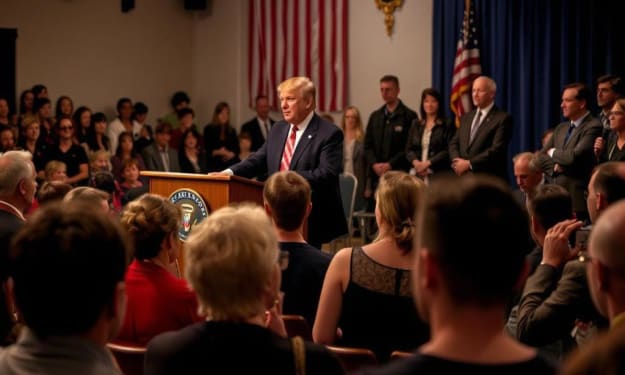
The ceremony for the signing was on August 8, 2025, at the White House. United States President Donald Trump was responsible for bringing the two parties to the negotiating table, as he invited Azerbaijani President Ilham Aliyev and Armenian Prime Minister Nikol Pashinyan. The ceremony marked the official beginning of a peace process that could end decades of hostility and create a new era of peace and collaboration.
The summit was not symbolic. It was the culmination of months of behind-the-scenes diplomacy, shuttle negotiations, and strategic discussions to bring to a close one of the longest and most intractable wars in post-Soviet history.
The "Trump Route" — A Corridor for Peace and Prosperity
Among the most significant terms of the peace accord is the creation of a new transit corridor, which has been formally named the Trump Route for International Peace and Prosperity (TRIPP). The corridor will connect Azerbaijan's mainland with its Nakhchivan exclave through Armenian territory — a connection that historically could only be made by passing through Armenia under tense conditions.
The corridor will also be more than a highway. It is hoped to have railway links, energy pipelines, and fiber-optic cables, which will boost trade and connectivity not only between the two nations but across the wider region. By linking Central Asia, the Caucasus, and Europe, the TRIPP can become a principal economic artery, boosting commerce and opening new avenues of investment.
America considers this a strategic project, reducing the influence of regional actors Russia, Iran, and China and putting Washington at the lead of South Caucasus stability.
Leaders' Statements
Armenian Prime Minister Nikol Pashinyan called the peace deal "a significant milestone" in the region's history, stating:
- "We are laying the foundation for a future where our nations can write a better story than our past."
Azerbaijan President Ilham Aliyev praised President Trump's leadership during the negotiations and said:
- "President Trump did in six months what others were not able to do for decades."
President Trump himself, in his typical immodest style, said:
- "They fought for 43 years, and now they are friends — and they will be friends for a very long time."
When questioned about the corridor being named after him, Trump went on:
- ''It's a great honor, but I didn't ask for it."
Geopolitical Significance
The signing of this agreement is reflective of the shift in the balance of power in the region. For decades, Russia was the prevailing power in both Armenia and Azerbaijan, as mediator and power broker. However, with Moscow's attention diverted by the war in Ukraine, the United States has stepped in to play a more active role in the Caucasus.
The TRIPP corridor may serve as a strategic counterbalance to China's Belt and Road Initiative, providing a rival trade conduit between Asia and Europe. Additionally, it supports the U.S.'s position in ensuring that peace is maintained through economic interdependence rather than military deterrence.
Economic and Regional Impact
The upside of the deal reaches far beyond the cessation of hostilities. The corridor is likely to stimulate economic development, create employment, and attract foreign investment in both Azerbaijan and Armenia. Improved infrastructure will render the transportation of goods more convenient, internet faster, and energy cooperation larger.
For Armenia, the agreement offers a chance to lift its economy from decades of isolation and shuttered borders. For Azerbaijan, it offers strategic depth and better access to trade networks.
Proper realization of the TRIPP would also encourage neighboring countries — Georgia, Turkey, and Iran — to be included in broader regional cooperation initiatives.
Criticism and Concerns
Despite the festive atmosphere, not everyone is celebrating. Critics, particularly among the Armenian diaspora community, worry that the agreement jeopardizes Armenia's security and does not sufficiently address issues such as the rights of displaced people, prisoners of war, and the protection of cultural heritage in Nagorno-Karabakh.
Some experts also warn that without robust monitoring mechanisms, old tensions can resurface. The history of collapsed ceasefires in this part of the world is a reminder that words on paper do not automatically translate into peace on the ground.
A Way Forward
The White House peace summit and the inking of the Armenia–Azerbaijan agreement represent a South Caucasus historic moment. Though there are still issues to be resolved, the deal indicates a readiness on both sides to opt for dialogue rather than fighting.
The "Trump Route" can someday become a symbol of how infrastructure and economic cooperation can bring stability to nations long in conflict. If peace holds, the deal will not only revolutionize the relationship between Azerbaijan and Armenia but potentially reshape the geopolitical facts on the ground in the entire region.
Conclusion
Peace between Armenia and Azerbaijan has been elusive for over three decades. The meeting at the White House has given too much promise that the long-term accord is possible. The next couple of years will ascertain the durability of this agreement, but for now, the handshake between Pashinyan and Aliyev is a powerful image — one that can encourage other conflict-ridden regions of the globe to believe that things can change.
About the Creator
By Dumping Tonnes of Sand into the Ocean for 12 Years, China Has Created Brand New Islands from Scratch
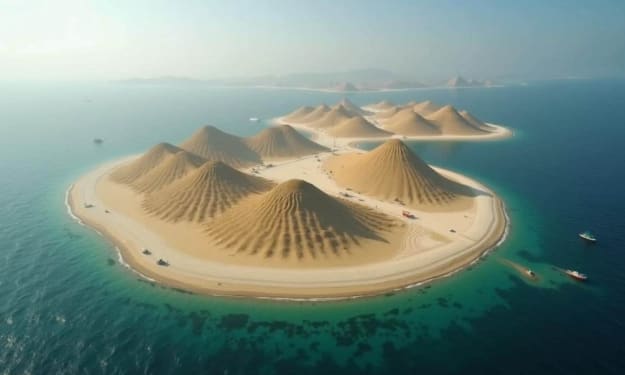
Imagine looking out over the South China Sea and seeing islands that weren’t there a decade ago. That’s exactly what’s happening. For 12 years, China has been dredging millions of tonnes of sand from the seabed and dumping it onto shallow reefs. The result? Massive artificial islands with runways, harbors, and even radar systems — entirely built from scratch. It’s an extraordinary engineering achievement. But it’s also a deeply controversial story that touches on geopolitics, environmental damage, and international law. How Do You Build an Island From the Ocean? The process is intense, complicated, and massive in scale. Specialized ships called cutter-suction dredgers scoop up sand and crushed coral from the seabed. That slurry is pumped through pipelines onto reefs, layer by layer, until the area rises above the high-tide line. Once land starts forming, engineers reinforce it with rock and concrete to protect it from storms. Roads, runways, and harbors soon appear, along with radar and communication systems. What was once just a coral reef becomes a fully functional island capable of hosting military aircraft and ships. From a technical standpoint, it’s impressive. From an environmental and geopolitical standpoint, it’s far more complex. Why These Islands Matter The South China Sea is one of the most strategic waterways in the world. About one-third of global maritime shipping passes through here every year, and the sea is rich in oil, gas, and fish. Several countries — including Vietnam, the Philippines, Malaysia, Brunei, and Taiwan — have claims in the region. China, however, claims almost the entire South China Sea under the so-called “nine-dash line.” Artificial islands give China a physical presence in contested waters, turning submerged reefs into military and logistical hubs. Once an island has a runway or a port, it changes the balance of power. It’s no longer just sand; it’s a foothold that can influence maritime traffic, regional security, and international diplomacy. From Coral Gardens to Concrete Islands There’s a darker side to this story. These islands are built on coral reefs — ecosystems that took thousands of years to form. Dredging and dumping sand destroys these reefs almost instantly. Sediment plumes cloud the water, smothering coral and blocking sunlight. Fish nurseries vanish, and entire marine ecosystems collapse. Nearby fishing communities in countries like the Philippines and Vietnam report lower catches as fish populations decline. What was once a thriving marine environment becomes, for many species, a barren landscape. Geopolitical Tensions Artificial islands aren’t just about sand and concrete; they’re about power projection. Once they host ports, airstrips, and radar systems, they act like permanent military outposts in the middle of contested waters. Even after a 2016 international tribunal ruled that China’s expansive claims were legally invalid, Beijing continued construction. Its neighbors are responding: Vietnam has built its own artificial islands, and the U.S. conducts freedom-of-navigation operations to challenge China’s dominance. These islands are flashpoints for tension, with ships and planes moving constantly to assert influence. What began as an engineering project has become a high-stakes geopolitical chessboard. Legal Questions According to the United Nations Convention on the Law of the Sea (UNCLOS), artificial islands do not generate territorial waters or exclusive economic zones. So technically, China cannot claim surrounding seas just because it built land there. But in practice, perception matters. Once an island is equipped with infrastructure and personnel, it becomes a de facto presence that is difficult to ignore. Countries, ships, and planes start operating around it, effectively shifting influence without officially changing borders. International law is struggling to keep up with technological possibilities. Creating new land from the ocean wasn’t something lawmakers imagined when defining maritime rights. Environmental and Strategic Impacts The environmental consequences are serious: coral reefs, fish populations, and coastal ecosystems are destroyed. Yet these islands also reshape the geopolitical map. They allow China to extend its reach in the South China Sea, assert military presence, and strengthen supply chains across contested waters. This raises a broader question: how should the world balance technological innovation with environmental protection and international norms? Artificial islands like these may be an engineering triumph, but they come with costs that ripple across oceans and generations. The Takeaway China’s decade-long project to create islands from the sea is more than a feat of engineering. It’s a story about power, ambition, and the lengths nations will go to secure influence. These islands are now military bases, geopolitical tools, and environmental scars all at once. As technology advances, creating land where none existed will become easier. But the lessons of the South China Sea are clear: reshaping the earth may give a country strategic advantages, but it also disrupts ecosystems, challenges international law, and sparks regional tension. Sand and sea may seem endless, but the consequences of building on top of them will last for generations.
By Muhammad Hassan4 days ago in The Swamp
Center Stage with Paul Stewart
*** I'm keen to republish the interviews I did for my series with Vocal creators. It's been a few years and I thought it might be nice to revisit these wonderful conversations. I'll be releasing them one at a time for a few weeks/months.
By Heather Hubler4 days ago in Interview


Comments
There are no comments for this story
Be the first to respond and start the conversation.