
Are Labour set for victory in 2024?
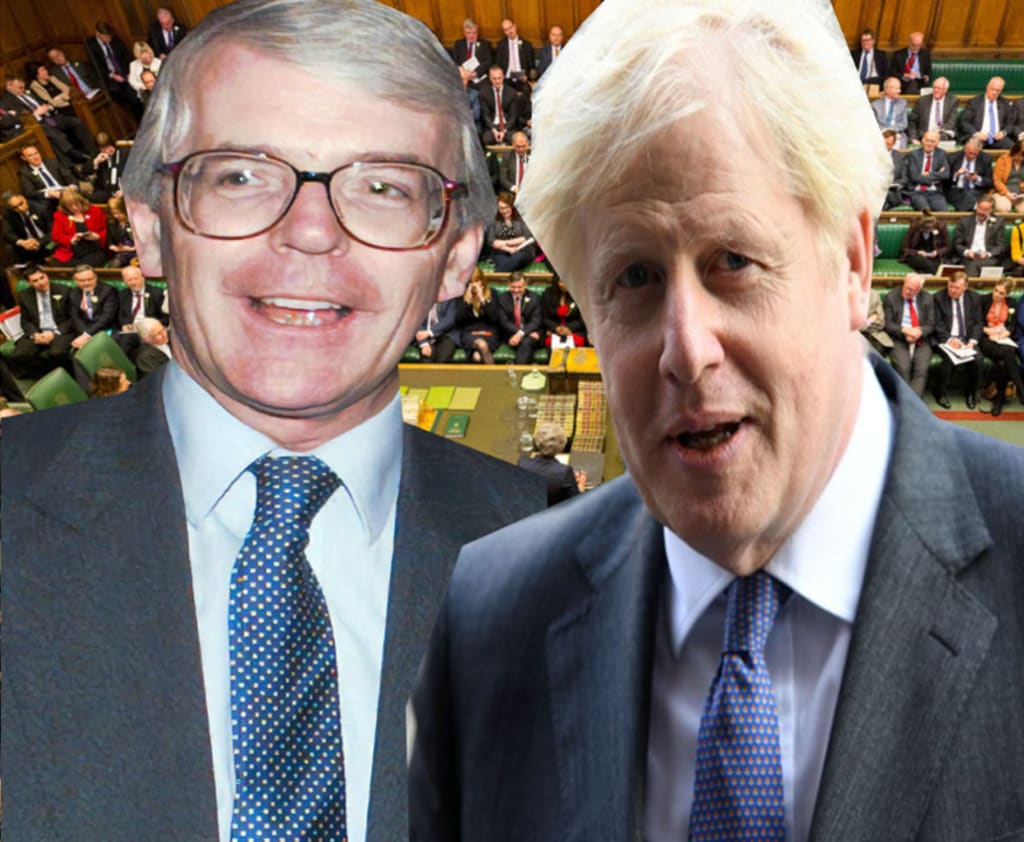
With comparisons being made between Keir Starmer and Tony Blair, perhaps, it's worthwhile comparing Boris Johnson to one of his predecessors, John Major, the Prime Minister who ultimately lost to Blair.
Boris Johnson began the year from a position of seemingly unassailable strength. His party had just secured an 80-seat majority in the December general election, the largest majority his party has won since 1987. The Labour Party had just suffered its fourth consecutive loss, and its worst since 1935. They were in the midst of what could have been a bitter leadership election and were 20% behind the Conservatives in the polls. Yet, several months later, and the two parties are neck-and-neck in the polls, and the new Labour leader, Sir Keir Starmer, is positively being compared to Tony Blair, the most successful Labour leader in the parties history.
Whilst Starmer has only been leader for six months, and has yet to lay out his vision for the country, he has proven himself to be a competent and shrewd political tactician. Labour historian Greg Rosen praised Starmer for "substantially [restoring] his party's electability" in such a short period of time. Like Blair, Starmer's main task is to restore the electability of the party after a substantial period of time out of power. The polls indicate his strategy is working. A recent poll conducted by Ipsos MORI found that Starmer is ahead of Johnson on a range of leadership attributes, including "sound judgement" and being a good representative for Britain on the global stage. A recent YouGov poll found that he is, in fact, the most popular leader since Blair.
With such comparisons being made between Blair and Starmer, perhaps, it's worthwhile comparing Johnson to one of his predecessors, John Major, the Prime Minister who ultimately lost to Blair.
Ostensibly, Alexander Boris de Pfeffel Johnson and John Roy Major could not be more different. One of them came from a privileged background, having studied at Eton and Oxford while one came from a working-class background and attended a comprehensive school in South-west London. One of them, through a family connection, became a graduate trainee at The Times, while the other left school with just three O-levels, and went to work in a variety of jobs, even enduring a period of unemployment. When John Major was elected leader, it was because he was a respectable and respected figure, who was seen as a safe transitional leader. Boris Johnson, however, was seen as a "gamble", who was going to take the party "on a wild ride".
Despite these glaring differences in personality, there are some similarities between their premierships. One similarity is that both men had notably short honeymoon periods after their respective electoral victories, with both governments being hit by crises within months of winning re-election.
For Boris Johnson, that crisis came in the form of a global pandemic, the likes of which the world has not faced since the Spanish flu of 1918.
Johnson was very slow to respond to the coronavirus pandemic. It was revealed that he had missed five consecutive emergency meetings in the build-up to the coronavirus crisis. Professor Neil Ferguson insisted that the number of coronavirus deaths in the UK could have been halved if the government had introduced the lock-down a week earlier. Despite these scandalous revelations, the public largely supported the Prime Minister. When Boris first announced a national lock-down, more than 90% of Britons supported these restrictions and the Prime Minister enjoyed a huge surge in his approval ratings. And the lock down seemed to work. The number of confirmed cases fell.
However, seven months later, the disease is surging again, hospital admissions have overtaken their March levels, and the government may well be forced into another national lock-down. Whereas Boris Johnson had the public support at the start of the crisis, that has completely dissipated, with his government’s inept handling of the pandemic eroding the public’s trust in his administration.
Hubris has played a significant part in the public's declining perception of the Johnson government. In May, it was revealed that the Prime Minister's chief advisor, Dominic Cummings, broke his own lock-down rules by travelling to Durham, despite the Prime Minister explicitly forbidding people from travelling and demanding that they stay home. In spite of the public outcry, and the consternation of his own backbenchers, Johnson refused to sack, or even criticise, his advisor. This was the moment the public support begun to wither away. There have been other instances like this. Most recently, the Health Secretary, allegedly, spent his Monday night drinking and joking in a Commons bar, despite there being a 10pm curfew on pubs across the country. Both of these incidents demonstrate to the public that there is one rule for Westminster politicians, and another for normal citizens.
The main reason, however, people have lost trust in the government's Covid response is their sheer incompetence. Some of the restrictions have been confusing, with different regions having to follow different rules. There have been instances where cabinet ministers contradicted one another in interviews. Even the Prime Minister seemed confused, stuttering and stammering his way through a recent press conference. There have been some incredible moments of incompetence over the past months. Most notably there was the A-level and GCSE fiasco, where an algorithmic bias assigned thousands of students, many of them from poorer backgrounds, with unfair grades which they did not deserve. More recently, there was a technical glitch that lost 16,000 positive cases of COVID-19, raising serious concerns about the effectiveness of the UK's test and trace system. This meant tens of thousands of people who may have come into contact with a confirmed coronavirus case were not told for up to a week, and who may have perhaps spread the virus onto other people. Most tragically, however, is the amount of elderly and vulnerable people who died in care homes. Between 2nd of Mach and 12th June, 28,186 "excess deaths" were recorded in care homes in England, with over 18,500 care home residents confirmed to have died with COVID-19 during this period. Amnesty wrote a 50-page report, titled As If Expendable: The UK Government's Failure to Protect Older People in Care Homes during the COVID-19 Pandemic, found that care homes were essentially abandoned in the early stages of pandemic.
John Major's crisis was Black Wednesday. This was the culmination of several months of wildly fluctuating interest and exchange rates as the government tried to beat currency speculators while bring the economy into line with the European Exchange Rate Mechanism (ERM). This was extremely damaging to industry and commerce, particularly the manufacturing industry. Companies bidding for export contracts could not guess how much they would receive several months later and if they got it wrong they could go bust. This severely damaged the Conservative Party's standing. They had just won the general election in April, and the Gallup poll for September showed a small lead of 2.5%. A month later, their share of the intended vote in the poll plunged from 43% to 29%. Black Wednesday severally damaged the Conservative Party's reputation for economic excellence, and was a major factor in why the Conservatives ultimately lost the 1997 election.
This should be very worrying for the current Conservative government. Major's government never recovered from the Black Wednesday affair. The coronavirus pandemic is considerably worse than Black Wednesday. 42,000 Britons have died as a result of the virus. The unemployment is raising, particularly among young people (it's up 76,000 for 16-24 year-olds compared to last year), and the UK economy is 9.2% smaller than it was last year. Boris Johnson may struggle to regain the public's trust, and, perhaps more importantly, their forgiveness for his government's ineptitude.
In addition to their mishandling of important crises, both their cabinets were involved in a number of scandals during their periods in government. John Major had the Arms-to-Iraq affair, where it was uncovered that the government supported the sale of arms by British companies to Iraq, which was then under the rule of Saddam Hussein. Another prominent scandal was the cash-for-questions controversy, which involved two Conservative MP's being bribed into asking parliamentary questions and perform other tasks on behalf of the Egyptian owner of Harrods department store, Mohamed Al-Fayed. There were also a number of sex scandals involving his cabinet ministers and backbenchers. All of these scandals contributed to the growing dissatisfaction with the Major government and the atmosphere of sleaze that contributed to the electoral landslide for Tony Blair's Labour Party.
Boris Johnson has only been Prime Minister for fifteen-months, and there have already been a series of scandals rocking his government. Firstly, he misled the Queen over the prorogation of Parliament, something which was later deemed unlawful by the Supreme Court. In May, his Secretary of State for Housing, Robert Jenrick, was involved in controversy when he overruled the Planning Inspectorate and approved a £1 billion luxury housing development for Richard Desmond, a party donor and former porn publisher. Jenrick's decision saved Desmond's company up to £50 million in tax. A few months later, the "Russia report" was published, which found that Russian interference in British politics was commonplace, and consecutive government's had done very little to tackle the problem. The report was originally scheduled to be released in December, during the time general election, but after an intervention by Downing Street, was delayed until the new year. Many speculated that the intervention was made because it contained embarrassing details for the Conservatives, which could damage their electoral prospects. It was indeed embarrassing. Six members of Johnson's cabinet, including his Chancellor, as well as eight of his junior ministers, have all received donations, either personally or through their constituency parties from individuals or companies linked to Russia. A Lubov Chernukhin, the wife of a finance minister to Putin, paid £160,000 for a game of tennis with Johnson and then-Prime Minister David Cameron. She paid a further £30,000 for a dinner with the current Education Secretary Gavin Williamson. These scandals all reflect badly on the party. Despite their rousing rhetoric declaring themselves a "people's government", all this all stinks of classic corruption.
It is also worth stating, however, that Boris Johnson is a unique politician. He has survived many scandals. When he was Mayor of London, he blew £43 million of public money on his ultimate vanity project, the Garden Bridge. He has also made numerous offensive comments, including calling black people 'piccaninnies', Muslim women 'letterboxes', and gay men 'tank-topped bum boys'. These objectionable comments would have resulted in the end of any other politicians career. He may yet survive these scandals and controversies.
Another politician who is not afraid to stir up controversy is Nigel Farage, who continues to snipe from the wings. His Brexit Party may have helped the Tories win the 2019 general election, but Nigel Farage has continually criticised Boris Johnson over his response to the coronavirus pandemic, the migrant "crisis", and, of course, Brexit. There are also rumours that actor and musician Laurence Fox is set to start his own political party to take on the "woke" liberal elite. If Boris Johnson does not come forward a solution considered satisfactory by Nigel Farage, then his Brexit Party, which may possibly be renamed as the Reform Party, could be a problem in the next election. Whilst the Brexit Party failed to win any seats in the December election, and smaller parties tend to have little effect during elections, they can have a serious effect. After the 1997 election, psephologists found that James Goldsmith's Referendum Party deprived Conservative candidates of victory in somewhere between four and sixteen parliamentary seats.
The final nail, however, in John Major's political coffin was the rejection of the right-wing press. Traditional conservative newspapers gave Major a hard time during his premiership. In 1995, Major met with media tycoon Rupert Murdoch in an attempt to woo the media baron and gain his endorsement for the upcoming election. At the time Murdoch's newspapers had been calling for a Conservative party leadership change and were giving generous coverage to the Labour leader, Tony Blair. The meeting clearly did not go well, as The Sun ultimately endorsed Blair, proudly declaring "The Sun Backs Blair" and urging the British public to give change a chance.
Whilst the right-wing press have not entirely abandoned Boris yet, and they remain very unlikely to endorse Starmer's Labour, there has been a change in tone in their coverage of the government. For instance recently in The Spectator, a newspaper Boris once edited, asked the questions "Where's Boris?". The front cover image was of a distant blond dot sailing on a tiny boat bobbing rudderless in a stormy sea. The message was emphatic. Similarly, Toby Young, a prominent and vocal conservative said: "What on earth happened to the freedom-loving, twinkly-eyed, Rabelaisian character I voted for? Oliver Hardy has left the stage, replaced by Oliver Cromwell". The Daily Mail were more even more blunt in their coverage. "Boris: We Failed". If Boris is going to survive the next election, he is going to have to regain the support of the press.
Now, of course, it is important to point out, that the next election will not be for another four years, and that things will hopefully have improved by then. But the coronavirus crisis is a once in a generation crisis that is going to have a long-lasting economic and psychological effect on the country. Many people have lost their jobs and many people have lost loved ones. And we're not through the worst of it just yet. The numbers of confirmed cases are rising and parts of the country are once more being plunged into lockdown. Many of these people who have suffered the most because of the coronavirus crisis may struggle to forgive Boris Johnson and the conservative party. There is also the small matter of Brexit to deal with, but that is a topic for another day.
Whilst Keir Starmer may not be as charismatic as Boris Johnson, or as skilled as of an orator as Tony Blair, he has proven himself to be a calm and commendable leader. And that is all the country wants right now, a strong and stable leader, and, unfortunately, we have Boris Johnson, who has taken the country "on a wild ride".
About the Creator
Keep reading
More stories from Joseph Brown and writers in The Swamp and other communities.
The Crown Furore
Two weeks ago, The Crown returned to Netflix for its fourth season. The new series covers the years between 1977 and 1990, and inevitably depicts the premiership of Margaret Thatcher, as well as the marriage of Prince Charles to Princess Diana. Olivia Coleman returns for her final outing as Queen Elizabeth before she is superseded by Imelda Staunton. Tobias Menzies, Helena Bonham Carter and Josh O’Connell reprise their respective roles from the previous season. They are joined by Gillian Anderson and Emma Corrin, who play Prime Minister Thatcher and Lady Diana Spencer respectively.
By Joseph Brown5 years ago in Geeks
You Can’t Have Guns”: What Is Donald Trump’s Real Stance on the Second Amendment
Donald Trump has long branded himself as one of the strongest defenders of the Second Amendment in modern American politics. On the campaign trail and at conservative gatherings, he has repeatedly warned supporters that Democrats want to “take away your guns” and positioned himself as the last line of defense against federal overreach. Yet moments when Trump has said things like “You can’t have guns” have fueled debate and confusion about where he truly stands on gun rights. An examination of his rhetoric, policy decisions, and political alliances shows a stance that is both firmly pro-gun in principle and surprisingly flexible in practice.
By Salaar Jamali3 days ago in The Swamp
When Hope and Horror Collide: Gaza Under Fire as a Ceasefire Inches Forward
A Ceasefire Shadowed by Bloodshed In Gaza, hope rarely arrives alone. It usually comes carrying grief. As international mediators speak in careful language about ceasefire progress, families in Gaza bury their dead. On a day when the world expected calm to grow stronger, Israeli airstrikes killed at least 30 Palestinians, including children. The timing was brutal, the symbolism unavoidable. While talks moved forward on paper, violence surged on the ground. For the people of Gaza, this contradiction is not new. Ceasefires have come and gone before, often collapsing under the weight of mistrust, retaliation, and unresolved injustice. Yet each announcement still sparks a fragile optimism — a belief that maybe this time, the bombs will stop. This time, they didn’t. A Deadly Day in Gaza The strikes hit multiple locations across the Gaza Strip. Residential buildings, a police station, and areas sheltering displaced families were among the targets. Hospitals quickly filled with the wounded, while doctors struggled with limited supplies, overcrowded wards, and exhausted staff. Among the dead were women and children — names added to a growing list that has become tragically long. For many families, there was no warning, no time to escape, and no safe place left to run. Parents searched hospital corridors for their children. Survivors described explosions that tore through sleeping neighborhoods. Tents meant for refuge became sites of mourning. Each casualty represented not just a number, but a life interrupted: a student who would never return to school, a child whose favorite toy lay buried under rubble, a parent whose role as protector ended in helplessness. The Ceasefire That Exists — and Doesn’t Officially, a ceasefire has been in place. Unofficially, Gaza has remained under constant threat. Ceasefires in this conflict are rarely absolute. They are fragile understandings, often broken by accusations from both sides. Israel claims it strikes in response to security threats. Palestinian groups accuse Israel of violating truces with disproportionate force. This creates a deadly loop: one side claims defense, the other calls it aggression, and civilians pay the price. For Gaza’s residents, the term “ceasefire” has lost much of its meaning. It does not guarantee safety. It does not ensure electricity, clean water, or medical access. And it certainly does not promise that children will sleep through the night without fear. Children Caught in a War They Did Not Choose Perhaps the most devastating aspect of this latest violence is the loss of young lives. Children in Gaza are born into siege, raised under drones, and educated amid ruins. Many have never experienced a day without the sound of aircraft overhead. Psychologists warn of widespread trauma, anxiety, and emotional numbness among Gaza’s youth. When children are killed during ceasefire talks, it sends a painful message: even moments of supposed peace are unsafe. For parents, the fear is constant. Do you send your child outside to play? Do you let them sleep near a window? Do you hope, or do you prepare for the worst? In Gaza, parenting has become an act of courage. Rafah Crossing: A Gate of Survival One of the most discussed elements of the ceasefire negotiations is the reopening of the Rafah border crossing with Egypt. For Gaza, Rafah is more than a checkpoint — it is a lifeline. Its reopening would allow: Medical evacuations for critically ill patients Entry of humanitarian aid Movement for families trapped inside the strip Yet even this hopeful step remains uncertain. Past openings have been limited, temporary, and heavily controlled. Each delay costs lives, especially for patients needing urgent treatment unavailable inside Gaza. The strikes came just as optimism around Rafah was growing, raising questions about whether political progress can truly protect civilians. The International Response: Words Without Weight Global reactions followed a familiar pattern. Statements of concern. Calls for restraint. Renewed emphasis on negotiations. But for Gazans, words without action feel hollow. Human rights organizations continue to warn that repeated civilian casualties may violate international humanitarian law. Aid groups stress that Gaza’s healthcare system is near collapse. Journalists document destruction, yet accountability remains elusive. The international community’s inability to enforce lasting peace has bred deep cynicism. Many in Gaza believe the world sees their suffering but lacks the will to stop it. Israel’s Perspective: Security Above All Israel maintains that its military actions are necessary to protect its citizens. Officials argue that militant groups exploit ceasefires to regroup and that strikes target threats, not civilians. From Israel’s viewpoint, security concerns are immediate and non-negotiable. Rocket fire, tunnels, and armed groups remain central to its justification for military operations. However, critics argue that overwhelming force in densely populated areas inevitably leads to civilian deaths — regardless of intent. The line between security and collective punishment remains heavily contested. Life in Gaza: Survival as Routine Beyond headlines and death tolls, life in Gaza continues — not because it is easy, but because stopping is not an option. People queue for bread. Families ration water. Children attend makeshift schools. Fishermen risk their lives at sea. Doctors perform surgeries by generator light. Resilience has become a necessity, not a choice. Yet resilience should not be mistaken for acceptance. Beneath daily survival lies exhaustion, anger, and grief. Many Gazans feel trapped in a cycle they did nothing to create and cannot escape. The Psychological Toll of Endless Conflict Wars do not end when bombs stop falling — especially when they never truly stop. Mental health professionals report soaring cases of post-traumatic stress disorder, depression, and anxiety in Gaza. Children reenact airstrikes in their games. Adults struggle with survivor’s guilt. Each broken ceasefire deepens psychological wounds. Each loss reinforces a sense of abandonment. Peace, when it comes, will need to heal minds as much as rebuild homes. A Future Held Hostage The tragedy of Gaza is not only what is happening now, but what it steals from the future. Education is disrupted. Economic development is impossible under blockade. Dreams shrink to basic survival. A generation grows up knowing checkpoints better than playgrounds and sirens better than lullabies. Every child killed is not just a life lost, but a future erased. Can Peace Ever Be More Than a Pause? History suggests that ceasefires without justice are temporary. Without addressing root causes — occupation, blockade, security fears, political division — violence returns. True peace requires more than silence in the sky. It demands accountability, dignity, and equal value for all human lives. Until then, ceasefires will remain fragile pauses in an ongoing tragedy. Conclusion: Between Diplomacy and Destruction The latest Israeli strikes in Gaza, killing dozens including children, expose the painful reality behind diplomatic language. Ceasefires may inch forward, but peace remains distant. For Gaza’s civilians, the question is no longer when peace will come, but whether it ever will. Until the world moves beyond statements and toward solutions, hope in Gaza will continue to arrive hand-in-hand with grief — fragile, fleeting, and heartbreakingly incomplete.
By Zahid Hussainabout 13 hours ago in The Swamp



Comments
There are no comments for this story
Be the first to respond and start the conversation.