
Andrew Should Testify to US Congress, Starmer Suggests After New Photos
Labour Leader Calls for Accountability Amid Renewed Scrutiny
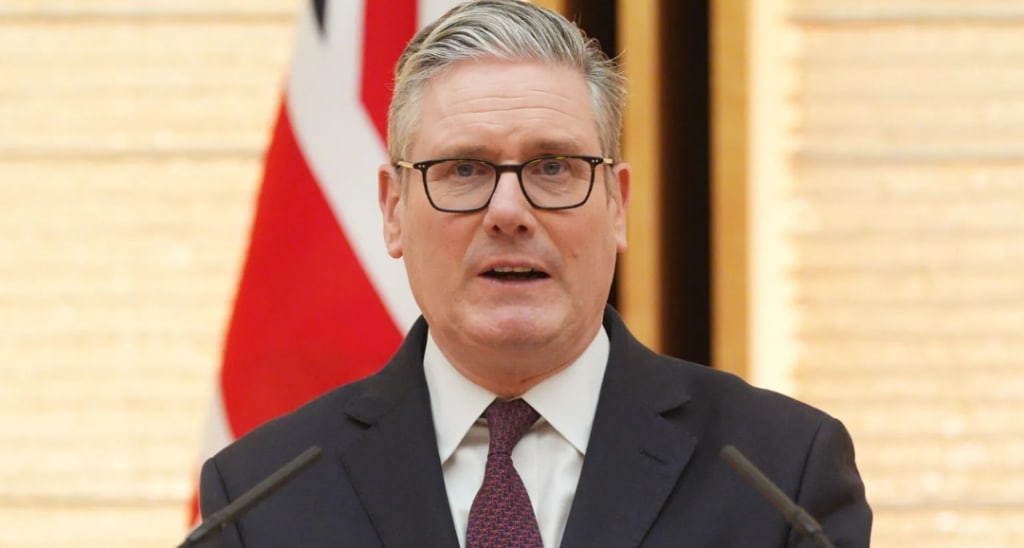
Sir Keir Starmer, the leader of the UK Labour Party, has suggested that Prince Andrew, Duke of York, should testify before the US Congress regarding his past dealings with convicted sex offender Jeffrey Epstein. The comments follow the release of new photographs that have once again brought Andrew’s association with Epstein into the public spotlight.
Starmer’s remarks have reignited discussions about accountability, transparency, and the responsibilities of public figures, particularly members of the royal family, when faced with allegations of serious misconduct.
The Background: Andrew and Epstein
Prince Andrew’s relationship with Jeffrey Epstein has been controversial for many years. Epstein, who was convicted of sex offenses, had extensive connections with high-profile individuals, including politicians, celebrities, and members of royalty.
Andrew has faced accusations of inappropriate conduct in connection with Epstein, though he has consistently denied wrongdoing. A civil case brought by one of Epstein’s accusers was settled in 2022, but public interest remains high, particularly regarding whether Andrew has fully cooperated with investigative authorities.
The release of new photographs allegedly showing Andrew with Epstein has prompted renewed calls for scrutiny and formal testimony.
Starmer’s Call for Congressional Testimony
Speaking in Parliament and to the media, Sir Keir Starmer emphasized the importance of transparency and accountability. He stated that Andrew should cooperate fully with investigations, including providing testimony to US authorities where necessary.
Starmer argued that such testimony is critical for several reasons:
Ensuring that victims’ voices are heard.
Clarifying Andrew’s interactions with Epstein.
Maintaining public confidence in justice systems.
Setting a precedent that no individual is above scrutiny, regardless of status.
The Labour leader stressed that these measures are about justice and accountability, rather than personal attacks.
Public and Media Reaction
The suggestion that Andrew testify to US Congress has generated widespread media coverage. Public opinion remains divided:
Some argue that Andrew must fully cooperate with all legal authorities to demonstrate accountability.
Others view this as an intrusion into the affairs of the royal family.
Human rights advocates and victim support groups largely welcome Starmer’s call as a step toward transparency.
Social media has seen renewed discussion, with hashtags and trending topics emphasizing both the demand for accountability and debate over jurisdictional limits between the UK and US legal systems.
Legal Implications and Challenges
If Andrew were to testify before US Congress, there are several legal and procedural factors to consider:
Jurisdictional Issues: As a UK royal, Andrew is not a US citizen, and legal mechanisms for compelling testimony could be complex.
International Cooperation: Any formal testimony would require coordination between UK and US authorities.
Potential Impact on Civil or Criminal Cases: While civil matters related to Epstein have largely concluded, testimony could provide further insight into ongoing investigations or policy discussions.
Precedent for High-Profile Figures: This situation highlights broader questions about how public figures should respond to allegations involving criminal networks or misconduct.
Legal experts note that while voluntary testimony is possible, enforcing mandatory participation would require navigating diplomatic protocols and existing legal agreements.
Royal Family Context and Public Perception
The royal family has historically maintained a policy of limited public comment on legal matters. Prince Andrew’s past statements, including a widely criticized BBC interview, have drawn scrutiny and affected public perception of the monarchy.
Observers note that Starmer’s call places additional pressure on the royal household to demonstrate accountability, balancing legal obligations with institutional confidentiality. The monarchy faces the challenge of maintaining public trust while navigating complex international legal matters involving one of its members.
International Attention
The story has also attracted international media coverage, with US outlets reporting on potential Congressional inquiries and UK outlets analyzing political implications. The global focus underscores the high-profile nature of the case and the ongoing scrutiny of Epstein-related networks.
Congressional committees in the US, while primarily focused on broader investigations into criminal networks, have historically sought testimony from witnesses who may provide insight into high-profile associations. Prince Andrew’s potential testimony would therefore have significant international attention.
Next Steps and Possible Outcomes
Should Andrew agree to testify, several outcomes are possible:
Clarification of Events: Providing factual accounts of interactions with Epstein.
Closure for Victims: Testimony could help address lingering questions for those affected by Epstein’s crimes.
Political and Institutional Implications: Both the UK government and royal family could face new scrutiny depending on the content of testimony.
Public Perception: Cooperative engagement could improve public trust; refusal might fuel further criticism.
Observers emphasize that voluntary cooperation is often viewed more favorably than forced testimony, highlighting the delicate balance Andrew must consider.
Conclusion: Accountability in the Spotlight
The suggestion by Sir Keir Starmer that Prince Andrew testify before US Congress reflects ongoing concerns about transparency, justice, and public accountability. The combination of past controversies, new photographic evidence, and international attention ensures that this issue remains highly visible.
While legal, diplomatic, and procedural complexities remain, the core message is clear: public figures, regardless of status, may be called upon to cooperate fully with investigations into serious allegations. How Andrew responds could influence public perception, international relations, and the broader conversation about accountability among the global elite.
The debate over royal responsibility, transparency, and the lessons from the Epstein network will continue to unfold in the coming months, as both media and the public watch closely for updates.
About the Creator
South Africa Orders Expulsion of Israeli Envoy, Declares Him Persona Non Grata
South Africa has taken a dramatic diplomatic step by ordering the expulsion of Israel’s envoy and declaring him persona non grata, marking one of the strongest actions yet by Pretoria in response to Israel’s military campaign in Gaza. The decision underscores South Africa’s increasingly confrontational stance toward Israel and reflects broader geopolitical fractures as governments reassess alliances amid the ongoing Middle East conflict.
By Salaar Jamali2 days ago in The Swamp
Silver Price Analysis – Silver Falls Apart Early on Friday
Global silver prices experienced a dramatic collapse early on Friday, marking one of the most violent sell-offs in the precious metals sector in recent memory. After weeks of sustained gains and record-breaking highs, silver — often dubbed the “white metal” — abruptly fell apart on Friday, triggering broad market reactions, steep losses for investors, and renewed debate about the metal’s short-term prospects.
By Salaar Jamali2 days ago in The Swamp
Not Just For Clean Up: A History Of The MCU's Department of Damage Control
Initially an organisation that seemed to exist to help the heroes of the Marvel Cinematic Universe, from Phase Four onwards, the Department of Damage Control has shifted into a more antagonistic role. Most recently seen in the Wonder Man series, the current incarnation of Damage Control seems to target superpowered individuals, regardless of whether that person poses an active or intentional threat.
By Kristy Anderson2 days ago in Geeks




Comments
There are no comments for this story
Be the first to respond and start the conversation.