
An Open Letter to the Guy Wearing a Second Amendment Shirt the Day After the Day After the Santa Fe Shooting:
Do you wear that shirt after every school shooting? It looked pretty worn out.

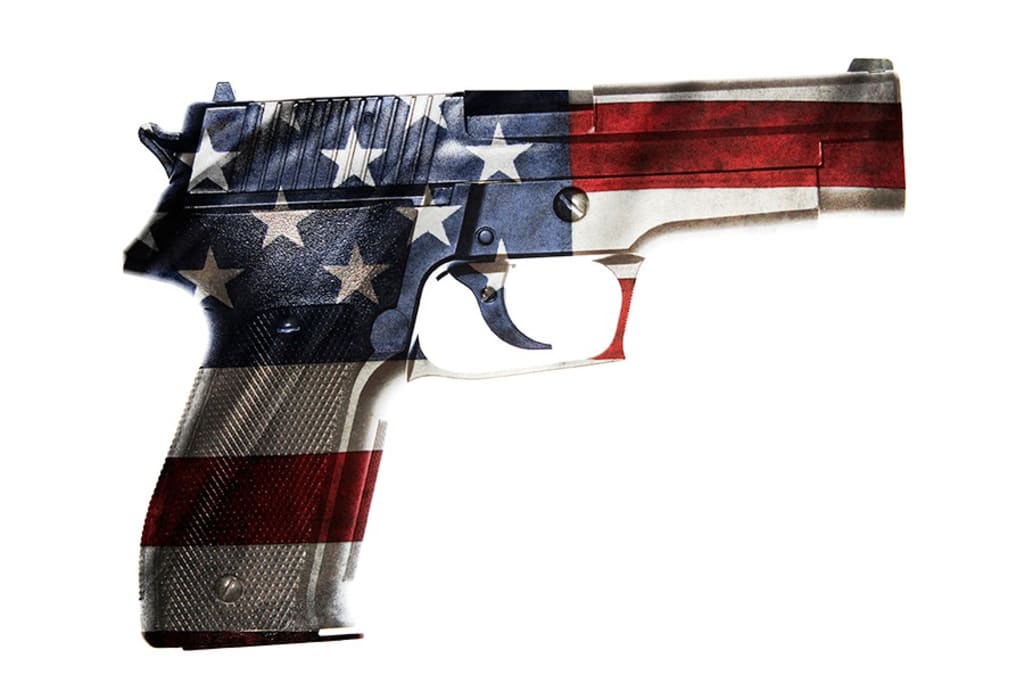
Lebron James did it when he wore his "I Can't Breathe" shirt after the murder of Eric Garner. Lady Gaga did it when she sported a "Love Trumps Hate" shirt the day after the 2016 Presidential election. Even my high school did it by collectively wearing yoga pants the day after our school decided to ban them. Using clothing to make political and social statements is something becoming more and more common in this modern era. It's a more visually-impactful way of practicing freedom of speech, and it's awesome.
However, while it may be within your Constitutional right to do so, wearing a shirt with the Second Amendment written across it—as the country mourns the loss of the ten people slain by the amendment you proudly display on your chest—is not only morally wrong, but shameful. It means that you saw the news of another school shooting and decided that your "Second Amendment right" was more important than somebody else's right to life. You wouldn't wear a shirt with a picture with Osama bin Laden on it on 9/11, or a pin with Hitler's face on it during Hanukkah, so why would you wear this?
The point of this open letter is not divide people who may agree or disagree with your clothing choice, but simply to shed light on a debate that has lived through countless mass shootings and increases in intricacy with each one.
To begin with, nobody is going to take away your beloved Second Amendment. However, seeing as it was written by the same people who thought owning slaves was a God-given right too, it needs some updating.
During that time, semi and fully automatic rifles were not in existence. Muskets and flintlock pistols were what was commonly being used. So lets take a musket, for example: these had one round magazine capacities; which—even in the hands of an experienced gunman—could only fire about three rounds per minute and was horribly inaccurate compared to a modern-day weapon. Now, lets compare this to the modern AR-15, a seemingly popular choice among mass-shooters. These guns ave a magazine capacity of 30 rounds, can fire 45 rounds per minute, and are far more accurate with a longer range.
Musket balls were incredibly heavy compared to our modern bullets. They began pulling downward almost as soon as they were fired, and their weight contributed to the horrible accuracy range that muskets offered.
Another important thing to note are the reasons people owned guns and needed to "bear arms" during this time. Most people didn't hang out with their buddies and shoot empty beer cans in their backyards. Many used their guns simply to hunt for food. There were no police stations or army yet, and violent disagreements with Native Americans were still quite common. And, as mentioned before, people owned slaves, so having a firearm helped prevent any sort of uprising from them. The Second Amendment is pretty vaguely written ("A well regulated Militia, being necessary to the security of a free State, the right of the people to keep and bear Arms, shall not be infringed."), but it's common belief that these factors are what the Founding Fathers had in mind when they wrote it.
Changing times aren't the only good reason to change this Amendment. This country lacks the common sense gun laws as other countries with lower rates of gun violence have.
For example, in 1996, Australia experienced its largest mass shooting in history, with 35 people dead and dozens more injured. Less than two weeks after this happened, fully automatic and semi automatic rifles were banned, the government implemented a gun buyback program of 650,000 weapons, and safety courses and a "genuine need" for a gun were requirements for those seeking one. These measures were taken by their conservative-led party. Another shooting in 2002 sparked stricter handgun laws as well, and there hasn't been a gun-related mass killing since.
Similarly, Japan has its own set of gun reform laws. There are 13 steps to obtaining a gun there. You need to join a hunting or shooting club, pass a written exam (which may have to be taken up to three times a year), get a legitimate doctor's note proving you have no history of mental illness or drug abuse, apply for a permit to attend firing training, describe why you need a gun in an interview conducted by police, pass a review (this looks at criminal history, relationships with family members and friends, employment, debt, etc.), apply for a special gunpowder permit, take a training class and pass a firing test, get a certificate from a gun dealer entailing what kind of gun you want, buy a regulated gun safe and ammunition locker, allow officials to inspect your gun storage, pass an *additional* review, and finally, buy your gun. The process takes most people months, and is most-likely the reason Japan has the lowest rate of gun homicide in the world.
So let's compare this with the United States. There are two steps to obtaining a gun here: have a gun store run a state/federal check on you and buy your gun. In 33 states, private sellers are allowed to sell firearms without any sort of background check being performed. This is probably why the U.S owns about 35-50 percent of the world's civilian-owned guns, despite only making up less than 5 percent of the world's population.
More children have been killed by guns since Sandy Hook than U.S, soldiers in combat since 9/11, so why aren't these laws changing. Do we love guns so much that we're willing to sacrifice our own children to them?
One cause of this is the influence the NRA has on Capitol Hill. The NRA is a non-profit gun rights organization with over 5 million members. In addition to advocating for gun rights, they love to line the pockets of our lawmakers. According to Fortune, "In the 2016 election, the NRA spent $11,438,118 to support Donald Trump—and another $19,756,346 to oppose Hillary Clinton." John McCain, Marco Rubio, Ted Cruz, and countless other politicians have received thousands—even millions—from the NRA. Of the 535 members of the House and Senate, 307 have benefited from NRA money. This is why after each shooting, "thoughts and prayers" tweets from our lawmakers come more quickly than gun reform.
So what about everyone's favorite go-to argument, "Criminals will just find a way to get them anyways?" While this may be true, we have to keep in mind that these actions would still be *illegal* People will still be incarcerated or have to pay fines for violating these laws, as is the case with every other law. If we assumed that every law was useless because it would be broken, why would we have laws in the first place? Why outlaw child pornography if pedophiles get their hands on it anyways? Why make rape illegal if people are still going to be raped? Why make driving while intoxicated illegal if Lindsay Lohan is still going to get countless DUIs? We aren't going to shut down all our hospitals just because we can't save everyone inside; but if we can save even just one life, we've made a difference.
Gun control isn't about taking away rights, it's about saving lives. Yes, with stricter regulations, it may be harder and more time-consuming for you to add to your gun collection; but if you aren't willing to make these sacrifices for the safety of others, you probably shouldn't own a gun in the first place.
So, guy at the mall wearing his Second Amendment shirt, I only ask two things of you: the first is that you iron your shirt before wearing it out in public, the second is that you educate yourself about the Second Amendment so both sides of the issue can work together to fix something that has, undeniably, broken our country.
About the Creator
Alexa Dickenson
Just a college kid that likes to write.
Keep reading
More stories from writers in The Swamp and other communities.
Trump Signals Tariffs on Nations That Oppose Greenland Goal
Former U.S. President Donald Trump has once again placed himself at the center of a global controversy — this time by signaling that tariffs could be imposed on countries opposing his ambition to bring Greenland under U.S. influence. The statement has ignited debate not only about international trade but also about sovereignty, alliances, and the future of Arctic geopolitics.
By Aqib Hussain2 days ago in The Swamp


Comments
There are no comments for this story
Be the first to respond and start the conversation.