
Americans believe that Adolf Hitler killed more than Josef Stalin
Young Americans are showing a growing interest in socialism

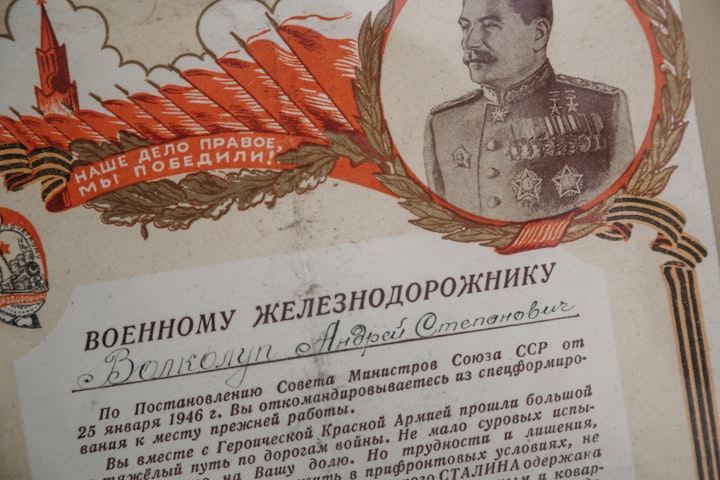
68% of all Americans believing that Adolf Hitler killed more people than Josef Stalin. Half of all the Millennials consider communism a problem, and with young Americans recently showing an interest in socialism, public opinion has undergone significant shifts. in recent years.
I believe it is worth examining the impact of communism—on arts and culture today and throughout history—to better understand these developments.
Probably the most disastrous effect of Marxist communism on cultural life arose from its epistemology. Communism makes ad hominem argumentation—attacking the person rather than arguing against his position—the primary form of inquiry, thus denying the possibility of human freedom and rationality itself. Therefore, for Vladimir Lenin, the most important question has always been who does what with whom. It all comes down to a question of power.
In “A contribution to the critique of political economy”, Karl Marx said that “it is not men’s conscience that determined their being, but, on the contrary, their social being that determines their conscience”. And he also said that your social being is determined by your economic interests. In other words, men always think about what is in their economic interest: they are just mouthpieces for their money (or lack thereof). Tell me what a man has, and I’ll tell you what he thinks.
There are two interpretations of Marx’s dictum: that it is contingently true or that it is necessarily true.
Whether taken as a sociological or psychological statement, there is an element of truth to it. People seek to defend their interests by rationalizations (although they also have other economic interests to defend).
If taken as a necessary truth about human thought, it will have disastrous implications. Disagreement necessarily turns into enmity—indeed, of the worst kind—for the class is irreconcilable until all classes are abolished or subsumed by the working class. Once this happy state is reached, there will be no more disagreements, because they will eliminate the social basis of disagreement.
This is absurd nonsense, of course. It certainly does not explain how two archetypal bourgeois, Marx and Friedrich Engels, one of them a factory owner, came to believe this. But once accepted as true, it inevitably lowers the tone of all speech and, when it becomes official doctrine, leads to mass murder.
Everyone loves ad hominem arguments, which are an intellectualized form of gossip; but the intellectually scrupulous are aware of their danger. Marx, however, made any other kind of argument impossible. For those influenced by him, person X can believe proposition Y only because it is in his best interest to do so. Therefore, Marx also thought that it was wrong for philosophers to have only sought to understand the world when it was necessary to change it.
Well, his followers changed everything—as the tens of millions of dead attest. They were victims of epistemology.
Anthony Daniels is a physician, psychiatrist and author. His last book is “In Praise of Prejudice”.
Communism is estimated to have killed around 100 million people, but its crimes have not been fully compiled and its ideology still persists. We seek to expose the history and beliefs of this movement, which has been a source of tyranny and destruction since its inception.
Like the Katyn Massacre example show us.
The Katyn massacre
The term “Katyn Massacre” originally referred to the massacre in the Katyn Forest, near the villages of Katyn and Gnezdovo, located about 19.5 km west of Smolensk, of Polish army officers held in the prison camp of Kozelsk war.
This was the largest of the simultaneous executions carried out against Polish prisoners. Other executions took place in outlying camps in Starobelsk and Ostashkov, in NKVD headquarters in Smolensk, in prisons in Kharkov, Kalinin, Moscow and in sites in Belarus and western Ukraine, based on prisoner execution lists prepared by the NKVD especially for these regions. Several post-war Polish organizations investigated not only forest massacres but also those that took place in these regions, and consider Polish victims from regions other than Katyn to be part of the massacre in general.[1]
In 1943, nearly two years after Operation Barbarossa, the invasion of the USSR by Nazi troops, the German government announced the discovery of the dead bodies in Katyn Forest. The Polish government-in-exile in London immediately asked the International Red Cross to open investigations, prompting Stalin to sever relations with the Polish expatriates. The Soviet Union claimed the Nazis had committed that genocide and continued to deny responsibility for the massacres. This until 1990, when Mikhail Gorbachev’s government officially recognized the massacre and condemned the crimes carried out by the NKVD in 1940, as well as its subsequent cover-up.
The following year, Boris Yeltsin made public documents dated half a century earlier that authorized the genocide.
Investigations by the Attorney General’s Office of the Soviet Union (1990-1991) and the Russian Federation (1991-2004) confirmed Soviet responsibility for the massacres and the killing of 1,803 Polish citizens. The USSR still refused to classify the action as a crime of war or an act of genocide.
The investigation was closed because those responsible were all dead and as the Russian government did not classify the dead as victims of Stalinist repression, they ruled out formal posthumous rehabilitation.
Russian non-governmental human rights organization Memorial issued a statement that the end of investigations was inadmissible and that the government’s confirmation that only 1,803 people had been killed “needed an explanation because more than 14 are known to be 500 prisoners were executed”. In November 2010, the Russian State Duma approved a statement blaming Stalin and other Soviet leaders for ordering the massacre.
Follow our profile for more content about Anti-Communism, Brazil, and South America!
About the Creator
Borba de Souza
Writer and business founder that enjoys writing about history and culture.
Founder of Small Business Hacks https://www.youtube.com/c/SmallBusinessHacks and https://expatriateconsultancy.com. My published books: https://amzn.to/3tyxDe0
Keep reading
More stories from Borba de Souza and writers in The Swamp and other communities.
US Says Canada Will Regret Decision to Allow Chinese EVs Into Their Market
The global electric vehicle (EV) race is heating up, and Canada has just made a move that has caught the attention — and criticism — of its closest ally. The United States has warned that Canada may “regret” its decision to allow Chinese-made electric vehicles into its domestic market, a statement that underscores rising trade tensions, geopolitical rivalry, and fears over the future of North America’s auto industry.
By Aqib Hussaina day ago in The Swamp


Comments
There are no comments for this story
Be the first to respond and start the conversation.