
Airspace Closure in Iran Disrupts International Flights From India — What Travelers Should Know
Geopolitical tensions force reroutes, cancellations, and growing uncertainty for international travelers


In mid-January 2026, travelers and airlines alike faced significant disruption after Iran temporarily closed its airspace, affecting several international flights originating from India and bound for Europe and the United States. The sudden move, linked to rising geopolitical tensions and internal unrest in Iran, forced reroutes, cancellations, delays, and a wave of uncertainty among passengers and carriers. �
business-standard.com +1
Why Did Iran Close Its Airspace?
On January 14, 2026, Iran announced the temporary closure of its airspace to most flights, a decision communicated through a Notice to Air Missions (NOTAM). While Tehran did allow international flights to and from Iran with prior authorization, regular overflights were prohibited for several hours. �
Reuters
Authorities did not provide a detailed explanation for the move, but analysts suggest it was tied to escalating tensions between Iran and the United States, as well as ongoing internal protests across Iranian cities. Amid concerns of possible military confrontation or unexpected aerial threats, the airspace restriction was seen as a precautionary step to ensure civilian flight safety. �
business-standard.com
Impact on Indian Flights
The closure had a direct impact on major Indian carriers such as Air India, IndiGo, and SpiceJet, which typically rely on Iranian airspace for efficient routes to Western destinations. Airlines were forced to reroute or cancel several flights, particularly those bound for Europe and the United States. �
The Week
Air India took a particularly hard hit:
At least three flights from India to the U.S. — including services from Delhi to New York (JFK), Delhi to Newark, and Mumbai to New York — were cancelled after the aircraft could not complete their planned routes. �
The Times of India
Flights that did take off were rerouted to avoid Iranian and neighboring Iraqi airspace, resulting in longer travel durations, increased fuel consumption, and cascading scheduling issues. �
India Today
IndiGo also reported disruptions on routes to CIS countries, Europe, and Turkey, although some flights managed to clear Iranian airspace just before the shutdown took effect. �
Business Today
SpiceJet, though reporting fewer cancellations initially, advised passengers to stay updated on flight statuses as contingencies continued to unfold. �
business-standard.com
Why the Reroutes Matter
Airspace closures like this one have consequences far beyond individual flights. Iranian airspace serves as a key aerial corridor for airlines flying between South Asia and Western destinations. When that corridor is unavailable, aircraft must take longer detours — typically over Saudi Arabia, the Arabian Sea, and the Persian Gulf — adding both distance and fuel cost to trips that would normally be more direct. �
India Today
Longer flights mean:
Increased ticket prices due to higher fuel consumption
Added stress on airline scheduling and crew rotations
Greater logistical complexity for passenger connections at transit hubs
For passengers, what might have been a straightforward flight becomes a journey marked by delays, uncertainty, and inconvenience.
Airlines Respond to the Crisis
In response to the disruptions, Indian carriers issued travel advisories urging travelers to check their flight statuses before arriving at airports. They also reassured passengers that safety remained the top priority. �
The Indian Express
Air India tweeted that flights overflying Iran would use alternative routing, though cancellations were inevitable where rerouting was unfeasible. �
www.ndtv.com
IndiGo and SpiceJet similarly issued advisories, offering flexible rebooking options, refunds, and customer support for those whose travel plans were affected. �
www.ndtv.com
Passengers in Limbo
For many travelers, this sudden disruption turned routine travel planning into a logistical headache. Some passengers found themselves stranded in transit hubs, while others had to rearrange connecting flights, accommodations, and work schedules.
One common complaint among affected passengers was the lack of advance warning about the closure. Because the NOTAM came at short notice, many flights were already en route or preparing for departure when the restriction took effect. This left both airlines and passengers scrambling to adjust quickly. �
business-standard.com
Geopolitical Backdrop and Future Implications
The airspace closure came at a time when Iran was facing intense internal protests and international pressures. While the restriction was lifted after several hours, the disruption underscored how regional geopolitics can ripple outward to affect global economies, industries, and ordinary citizens. �
L'Orient Today
Some analysts warn that continued tensions could lead airlines to permanently avoid Iranian airspace, much like past cases where carriers chose alternative routes for months after similar closures. This would further reshape international travel patterns, pushing airlines to rethink their long-haul strategies. �
India Today
What Travelers Should Know Next
If you’re planning international travel involving routes over the Middle East, here are some practical tips:
Check flight status regularly before arrival at the airport
Confirm rebooking policies with your airline first
Prepare for longer flights and possible delays on peak routes
Stay informed about geopolitical developments that can impact airspace access
Even short-lived airspace closures can create lasting effects on global aviation, reminding travelers that much of modern travel depends on stability in far-off regions.
About the Creator
Fiaz Ahmed Brohi
I am a passionate writer with a love for exploring and creating content on trending topics. Always curious, always sharing stories that engage and inspire.
Keep reading
More stories from Fiaz Ahmed Brohi and writers in The Swamp and other communities.
Palestine Action-Linked Protesters End Their Weeks-Long UK Hunger Strike
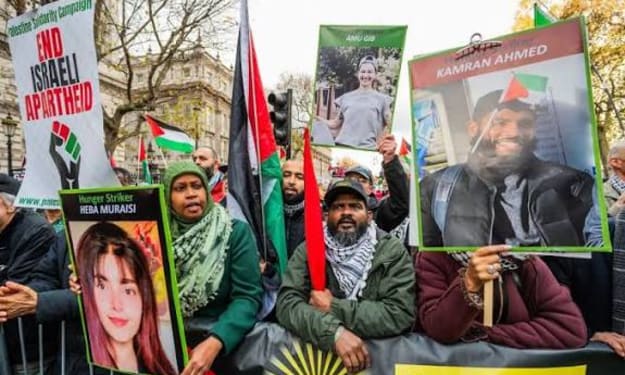
After weeks of physical sacrifice and public attention, protesters linked to the pro-Palestinian activist group Palestine Action have officially ended a hunger strike that had been underway across several locations in the United Kingdom. The strike, which drew support from human rights advocates and criticism from government officials, was intended to pressure authorities over arrests, legal actions, and the UK’s relationship with Israel’s defense industry. The Origins of the Hunger Strike The hunger strike began as a response to the detention and prosecution of activists associated with Palestine Action, a direct-action movement that campaigns against companies it says are complicit in Israeli military operations. Protesters argued that legal measures taken against their members were politically motivated and designed to silence dissent. Participants refused food for weeks, some consuming only water or electrolytes, to highlight what they described as systemic repression of pro-Palestinian activism in the UK. Demonstrations, vigils, and solidarity fasts were held outside courts, prisons, and government buildings, amplifying the message beyond the hunger strikers themselves. Health Concerns and Growing Pressure As the strike continued, concerns over the protesters’ health intensified. Medical professionals and family members warned that prolonged starvation posed serious risks, including organ damage and long-term health complications. Several participants reportedly required medical supervision as their physical condition deteriorated. Human rights organizations urged authorities to engage in dialogue rather than allowing the situation to escalate further. Meanwhile, public debate grew sharper, with supporters framing the hunger strike as a nonviolent act of resistance, while critics argued that it was a form of coercion that undermined the rule of law. Why the Protesters Ended the Strike The decision to end the hunger strike followed what organizers described as a reassessment of both health risks and strategic goals. While protesters acknowledged that not all of their demands had been met, they claimed the strike succeeded in drawing attention to their cause and forcing a broader public conversation. In statements released by supporters, activists emphasized that ending the strike did not signal defeat. Instead, they framed it as a tactical shift, arguing that survival and recovery were necessary to continue campaigning through legal challenges, public outreach, and further demonstrations. Palestine Action’s Broader Campaign Palestine Action has become one of the UK’s most controversial protest movements in recent years. Known for targeting arms manufacturers and defense contractors, the group uses direct action—such as building occupations and property damage—to disrupt operations it believes support Israeli military actions in Palestinian territories. Authorities have accused the group of criminal activity and public disorder, while supporters argue that such tactics are justified in the face of what they describe as human rights violations. This tension has placed the movement at the center of a wider debate about the limits of protest, civil disobedience, and state power in democratic societies. Government and Public Response The UK government has maintained that the law applies equally to all activists, regardless of political cause. Officials have stressed that arrests and prosecutions are based on alleged criminal acts rather than political views. However, critics counter that heavy-handed policing and legal measures risk chilling free expression and peaceful protest. Public opinion remains divided. Some view the hunger strikers as courageous individuals willing to risk their lives to spotlight injustice. Others see the protest as extreme and counterproductive, arguing that it alienates potential supporters and complicates legitimate advocacy for Palestinian rights. The Impact and What Comes Next Although the hunger strike has ended, its impact is likely to continue. Media coverage brought renewed focus to Palestine Action’s activities and to the broader issue of how Western governments respond to pro-Palestinian activism. Legal proceedings involving activists are ongoing, ensuring the movement remains in the public eye. Activists have indicated that future efforts will focus on court cases, fundraising for legal defenses, and peaceful demonstrations. The hunger strike, they argue, was one chapter in a longer struggle rather than a final stand. A Symbolic End, Not a Conclusion The conclusion of the weeks-long hunger strike marks a pause rather than an endpoint. For supporters, it stands as a symbol of sacrifice and moral urgency. For critics, it raises questions about protest tactics and responsibility. Either way, the episode underscores how deeply polarizing the Israel-Palestine issue remains—both internationally and within the UK. As debates over activism, free speech, and foreign policy continue, the story of the hunger strike serves as a reminder that protest movements often evolve, adapting their strategies while keeping their core message alive.
By Fiaz Ahmed Brohi4 days ago in The Swamp
Trump Renews Threat on Greenland Before Meeting at White House
When it comes to bold headlines, few U.S. presidents rival Donald Trump. In recent days, the former president has once again put Greenland in the spotlight, reigniting debates over international diplomacy, natural resources, and the strategic importance of the Arctic. With a scheduled meeting at the White House on the horizon, Trump’s renewed comments about Greenland have left allies and critics alike scrambling to interpret his intentions. Greenland in the Global Spotlight Greenland, the world’s largest island, has long fascinated global powers due to its strategic location between North America and Europe. Beyond its geopolitical relevance, the island is rich in untapped natural resources, including rare earth minerals, oil, and gas reserves. These factors make Greenland not only a significant strategic interest for the United States but also a sensitive subject for Denmark, which administers the island as part of its kingdom. Trump’s comments have once again drawn attention to this icy territory, sparking questions about what the U.S. might gain from closer engagement—or, as some speculate, potential acquisition efforts. The History Behind Trump’s Greenland Interest This is not the first time Donald Trump has expressed unusual interest in Greenland. In 2019, during his presidency, Trump famously suggested purchasing the island from Denmark—a proposal that Denmark quickly rejected. Critics at the time dismissed the idea as improbable, while supporters argued it was a bold assertion of U.S. influence in the Arctic. Fast forward to today, Trump’s remarks hint at a continuing fascination with the Arctic region. Analysts suggest that this renewed attention is not just political theater; the Arctic is increasingly central to global security, trade, and climate discussions. Strategic Importance of Greenland Greenland’s importance extends far beyond its icy landscapes. The island sits atop key shipping lanes that could become critical as melting ice opens new maritime routes. Moreover, its proximity to the Arctic Circle makes it an essential location for military and intelligence operations. The U.S. already maintains a presence at Thule Air Base, one of the northernmost military installations in the world, highlighting the island’s strategic relevance. Trump’s comments, therefore, resonate within a broader geopolitical context. They underscore the U.S.’s enduring interest in Arctic security, particularly in an era of rising competition with Russia and China. Environmental and Climate Considerations Greenland is also a focal point for climate change discussions. The island’s ice sheet is melting at alarming rates, contributing to rising global sea levels. This environmental transformation has sparked international scientific attention, as well as debates over how to balance strategic interests with the urgent need for climate action. Trump’s rhetoric, however, tends to prioritize strategic and economic opportunities over environmental concerns. Critics argue that this approach risks sidelining urgent climate considerations at a time when Greenland’s ice melt is not just a local issue but a global threat. Denmark’s Reaction Denmark, which governs Greenland, has consistently emphasized that Greenland is not for sale and that the island’s future decisions should be made by its people. Following Trump’s renewed comments, Danish officials have reiterated their stance, stressing the importance of cooperation and respect for Greenland’s autonomy. In response, Greenland’s government has also emphasized self-determination. While U.S. engagement in Arctic research, defense, and trade is welcome, any attempt to influence sovereignty would be met with resistance. Public and Political Reactions in the U.S. Within the United States, Trump’s comments have elicited a range of reactions. Supporters argue that a strong U.S. presence in Greenland is a strategic necessity, particularly given the global competition for Arctic influence. Critics, however, see the remarks as a distraction from pressing domestic issues, framing the Greenland discourse as yet another example of Trump’s unconventional approach to foreign policy. Political analysts note that Trump’s pattern of making provocative statements ahead of key meetings is often a calculated move, designed to dominate headlines and frame the agenda on his terms. The upcoming White House meeting could provide further clarity—or more surprises. The Global Implications Beyond U.S.-Denmark relations, Trump’s Greenland comments reverberate globally. Nations like Russia, Canada, and China are increasingly active in Arctic affairs, making Greenland a potential flashpoint in international diplomacy. How the United States approaches this issue could shape Arctic policy, military positioning, and resource negotiations for years to come. Additionally, the environmental stakes are enormous. As melting ice opens new shipping lanes and exposes valuable minerals, the international community faces the challenge of balancing economic ambitions with sustainability. Trump’s remarks signal a prioritization of strategic and economic opportunities, potentially complicating cooperative efforts on climate action. Looking Ahead: What to Expect As the White House meeting approaches, all eyes will be on Trump’s statements and the reactions they provoke. Will this renewed Greenland focus result in concrete policy proposals, or is it another headline-grabbing maneuver? Observers agree that the Arctic will remain a key geopolitical arena, with Greenland at its center. For Americans and international audiences alike, understanding Greenland’s importance is crucial. This island may seem remote and icy, but its strategic, economic, and environmental significance makes it a place where global interests converge—often contentiously. Trump’s renewed threat or interest, therefore, is not just a political quip; it is a reminder of how central the Arctic is to 21st-century geopolitics. Conclusion Trump’s renewed comments on Greenland have once again thrust the island into international headlines. While the rhetoric may be polarizing, the underlying issues—strategic positioning, natural resources, climate implications, and sovereignty—are profoundly serious. As the world watches the upcoming White House meeting, one thing is clear: Greenland, a vast icy land, is far more than a distant territory. It is a linchpin in global politics, and any U.S. action there will have far-reaching implications. In the end, Trump’s Greenland remarks serve as a reminder that even the most remote parts of the world can capture the attention of the most powerful leaders—and that in today’s interconnected world, no territory is too far away to matter.
By Muhammad Hassan5 days ago in The Swamp


Comments
There are no comments for this story
Be the first to respond and start the conversation.