
Afghan Opium Crop Plummets After Taliban Ban – UN Report
The UN reveals a dramatic fall in Afghanistan’s opium production, sparking debate over the nation’s economy, livelihoods, and global drug markets.

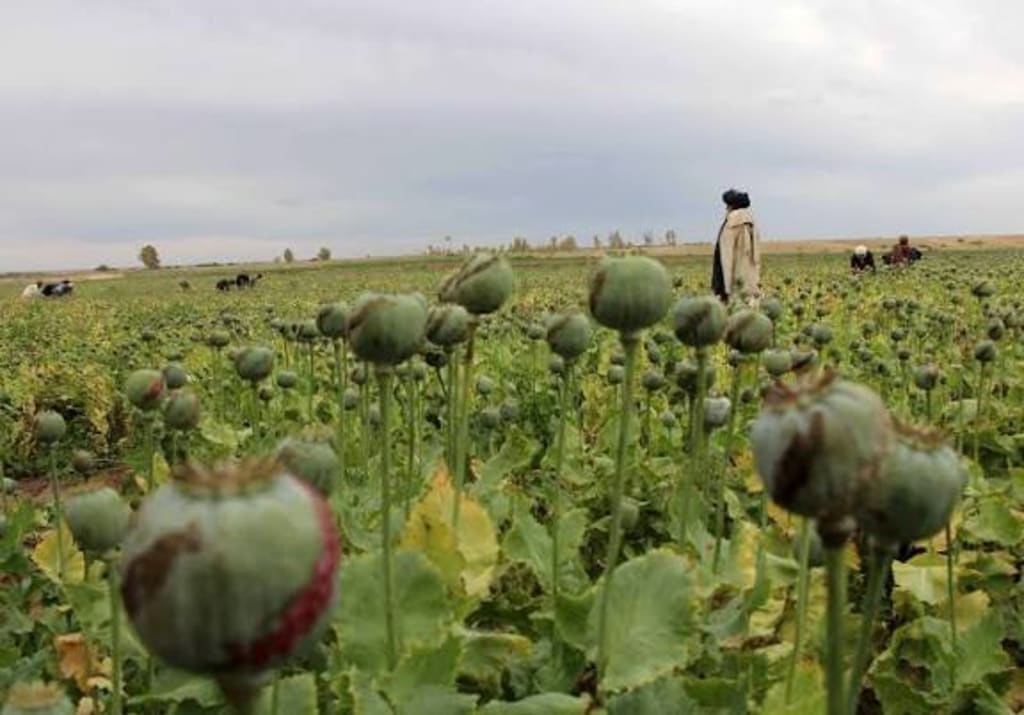
Afghanistan, long known as the world’s largest producer of opium, has seen an unprecedented collapse in its opium crop after the Taliban’s nationwide ban on poppy cultivation, according to a new United Nations report. The findings reveal a 95% drop in production compared to previous years — a dramatic shift with far-reaching consequences for Afghanistan’s economy, its farmers, and the international drug trade.
The UN Office on Drugs and Crime (UNODC) described the decline as “historic,” marking the most significant reduction in opium output since global monitoring began. But while the Taliban has celebrated the drop as a victory for morality and governance, experts warn that millions of Afghans who depend on poppy farming for survival now face economic despair.
---
A Drastic Decline in Poppy Cultivation
According to the UNODC’s 2025 Opium Survey, Afghanistan’s opium cultivation area fell from over 230,000 hectares in 2022 to less than 10,000 hectares this year. The ban, announced by Taliban leader Hibatullah Akhundzada in 2022, prohibited the planting, harvesting, and trade of poppies — the plant used to produce opium, the raw material for heroin.
For years, Afghanistan produced more than 80% of the world’s opium, fueling a multi-billion-dollar global drug market. But the Taliban’s strict enforcement — including field inspections, crop destruction, and arrests — has brought that industry to a near standstill.
UNODC officials described the change as “a rare and massive policy impact,” noting that satellite imagery and on-ground data confirm the dramatic scale of the drop.
> “This is one of the most significant reductions ever recorded in any drug-producing country,” said Ghada Waly, Executive Director of UNODC. “However, it comes at a heavy human cost.”
---
Economic Collapse for Farmers
While the Taliban’s leaders portray the ban as a moral and religious achievement, the policy has left hundreds of thousands of farmers without income. In rural Afghanistan, poppy cultivation was not just a livelihood — it was a lifeline.
Before the ban, a hectare of poppies could earn a farmer more than ten times the income of growing wheat or corn. With limited access to markets, irrigation, or government support, farmers say alternative crops simply cannot sustain their families.
> “We are hungry,” said Ahmad, a farmer from Helmand province, in an interview with Reuters. “The poppy was the only thing that fed my children. Now the fields are empty, and so are our stomachs.”
The UN report echoes these concerns, warning that the ban risks deepening Afghanistan’s humanitarian crisis, already worsened by drought, unemployment, and international sanctions.
---
A Political and Religious Move
The Taliban’s decision to ban poppy cultivation is rooted in their interpretation of Islamic law, which prohibits intoxicants. The group also sees the ban as a step toward international legitimacy, hoping to prove to global powers that it can enforce laws and fight narcotics trafficking.
During their previous rule in the early 2000s, the Taliban implemented a similar ban that briefly reduced opium production, though it quickly rebounded after their government fell in 2001.
This time, enforcement appears more consistent and widespread. Taliban security forces have raided opium markets, destroyed processing labs, and targeted smugglers. Officials have even used religious leaders to promote anti-drug messages in mosques and communities.
> “We are cleaning our country of this evil,” said a Taliban spokesperson. “Opium brings sin, addiction, and destruction — both here and abroad.”
Yet, critics argue the move is less about morality and more about control — cutting off independent sources of income for rural communities and centralizing economic power under Taliban authority.
---
Ripple Effects on the Global Drug Trade
The UN report warns that Afghanistan’s opium collapse could have significant global implications. Heroin prices are expected to rise sharply in Europe and Asia as supplies dwindle, potentially driving traffickers to seek new production areas in Myanmar, Pakistan, or parts of Africa.
Already, some international agencies report a shift toward synthetic drugs such as methamphetamine. Afghanistan itself has seen a growing number of makeshift labs producing “meth,” which is cheaper to make and easier to transport than heroin.
> “This could mark a turning point in the global drug economy,” said researcher David Mansfield, an expert on Afghanistan’s illicit trade. “If opium is no longer viable, both traffickers and farmers may turn to synthetics, which could create even greater long-term challenges.”
---
Humanitarian Concerns Grow
Humanitarian organizations are sounding the alarm over the fallout of the opium ban. With the country’s economy already fragile, the loss of opium income could push millions of Afghans deeper into poverty and hunger.
The UN estimates that nearly 90% of Afghans live below the poverty line, and poppy cultivation had been one of the few sources of cash income in rural areas.
> “Afghanistan needs alternatives, not punishments,” said Richard Bennett, the UN’s Special Rapporteur on Human Rights in Afghanistan. “Farmers should not be forced to choose between obeying the law and feeding their families.”
The UNODC has urged the international community to support alternative livelihood programs, such as infrastructure projects, irrigation systems, and microfinance for farmers. But with limited foreign aid and no formal recognition of the Taliban government, implementing such initiatives remains difficult.
---
The Road Ahead
The UN report concludes that Afghanistan’s success in reducing opium cultivation is both historic and fragile. Without economic alternatives, the country risks trading one crisis for another.
The Taliban, for their part, remain committed to the ban, despite the backlash. But as poverty deepens and food insecurity spreads, experts warn that desperation may drive some farmers back to illegal cultivation, especially if enforcement weakens over time.
> “The Taliban can destroy fields, but they can’t destroy hunger,” said a local elder in Kandahar. “When people have nothing, they will return to what they know.”
---
A Nation at a Crossroads
Afghanistan now stands at a critical juncture. The Taliban’s anti-opium campaign has won them praise from the UN and some international observers — but at home, it has brought widespread suffering.
The question remains whether the world will step in to help rebuild Afghanistan’s rural economy or whether the country will once again fall into a cycle of poverty, desperation, and illicit trade.
For now, the fields of Helmand and Nangarhar lie barren — a symbol of both moral victory and human loss.
About the Creator
Fiaz Ahmed
I am Fiaz Ahmed. I am a passionate writer. I love covering trending topics and breaking news. With a sharp eye for what’s happening around the world, and crafts timely and engaging stories that keep readers informed and updated.
Keep reading
More stories from Fiaz Ahmed and writers in The Swamp and other communities.
Louvre Prioritised Art Over Security in Years Before Heist, French Report Finds
The Louvre Museum in Paris — home to some of the world’s most treasured artworks, including the Mona Lisa and Venus de Milo — is now at the center of controversy following a French government report that claims the institution prioritized art preservation and visitor experience over security in the years leading up to its recent high-profile heist.
By Fiaz Ahmed 4 months ago in The Swamp
The Forsyth House Fire
Since 1851, Forsyth House has stood on the corner of Union Street and Gordon Street in the heart of Glasgow. Its iconic, or was... because on Sunday 8th of March, 2026, a fire broke out in a small, seemingly un-named shop in the building and tore all that history down. As I write, the rubble is still unsettled and the street is still blocked off. Central Station is quiet on the upper level, and around 30 small businesses have quite literally gone up in smoke.
By S. A. Crawford2 days ago in The Swamp




Comments
There are no comments for this story
Be the first to respond and start the conversation.