
Louvre Prioritised Art Over Security in Years Before Heist, French Report Finds
A shocking investigation reveals how the world’s most famous museum left its treasures vulnerable to one of the biggest thefts in recent history.

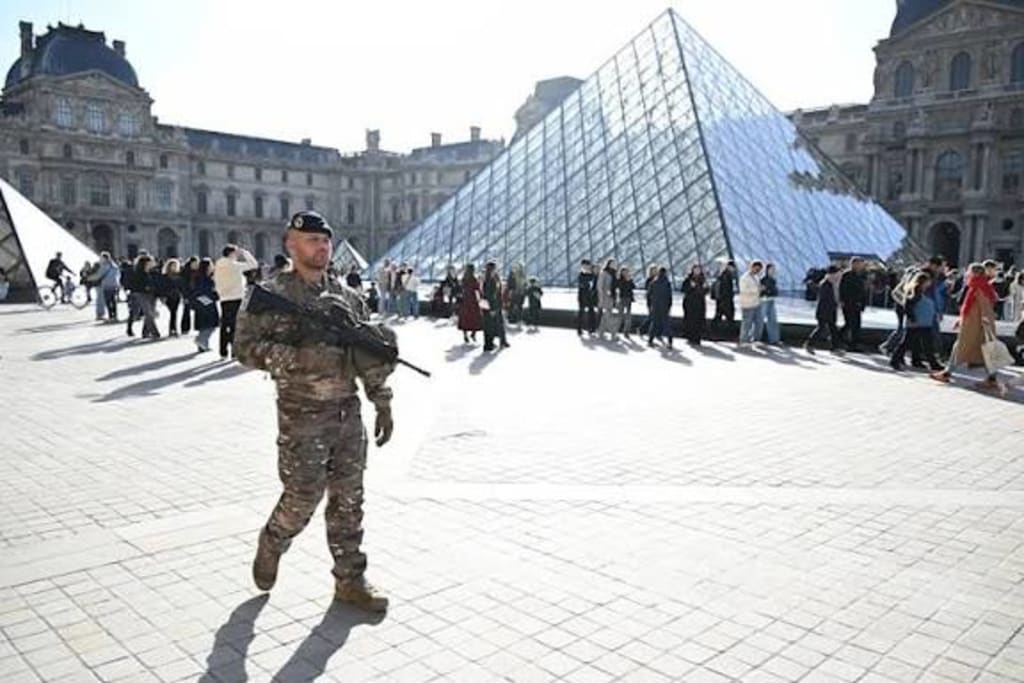
The Louvre Museum in Paris — home to some of the world’s most treasured artworks, including the Mona Lisa and Venus de Milo — is now at the center of controversy following a French government report that claims the institution prioritized art preservation and visitor experience over security in the years leading up to its recent high-profile heist.
The findings have stunned art lovers and cultural authorities alike. The Louvre, a symbol of France’s artistic heritage, has long been seen as an impenetrable fortress of culture. But the report reveals a troubling picture of budget cuts, outdated surveillance systems, and ignored warnings — all of which may have paved the way for one of the boldest museum thefts in decades.
---
The Heist That Shook the Art World
The Louvre heist, which occurred earlier this year, saw thieves make off with several priceless crown jewels and rare artifacts, some dating back to the 17th century. Despite tight security and 24-hour surveillance, the robbers managed to enter a restricted area undetected for nearly two hours before the theft was discovered.
Investigators have since recovered some of the stolen pieces, but others remain missing. French police described the theft as “carefully planned and professionally executed,” suggesting the perpetrators had insider knowledge of the museum’s layout and security routines.
In the aftermath, public outrage grew as people demanded to know how such an incident could happen at one of the most secure cultural institutions in the world.
---
The Report: Security Warnings Ignored
According to the official government audit, which was commissioned shortly after the heist, multiple internal memos had warned about security weaknesses in the museum’s systems over the past five years. These included outdated CCTV cameras, understaffed night patrols, and faulty motion detectors in several wings of the museum.
The report revealed that museum administrators had diverted much of the budget toward restoration projects and exhibition upgrades, leaving little funding for modernizing its aging security network.
One section of the report reads:
> “The Louvre placed disproportionate emphasis on artistic display and conservation while underestimating the growing risk of sophisticated theft operations.”
A former Louvre employee, who spoke to Le Monde on condition of anonymity, said that staff shortages had been a recurring issue:
> “We were told to focus on the visitor experience — keeping the museum beautiful, not necessarily secure. Some alarms didn’t work for weeks, but fixing them wasn’t seen as urgent.”
---
Leadership Under Fire
The museum’s director, Laurence des Cars, has come under intense scrutiny since the report’s release. Although she has defended the institution’s overall performance, she acknowledged that “security infrastructure had not kept pace with modern threats.”
In a public statement, Des Cars said:
> “Our first priority has always been the protection and preservation of art, but it is clear that our systems and strategies must evolve. We will fully cooperate with the government’s recommendations to ensure this never happens again.”
Cultural officials within the French Ministry of Culture have vowed to restructure the Louvre’s security operations and implement new technology, including facial recognition systems and AI-driven monitoring tools.
---
A Wake-Up Call for Global Museums
The scandal has sparked a broader debate about museum security worldwide. Experts warn that as art values continue to rise, high-profile institutions have become prime targets for organized crime.
Dr. Isabelle Fontaine, an art crime researcher at the Sorbonne, told reporters:
> “The Louvre is not alone. Many museums, especially in Europe, focus on presentation and preservation. But criminals are evolving faster than our security systems.”
Fontaine noted that smaller cultural institutions across France and Italy are also at risk, with limited budgets and aging facilities making them easy targets.
---
Balancing Beauty and Protection
The report also highlights a long-standing tension within the museum world: how to balance accessibility and protection. The Louvre welcomes more than 8 million visitors every year, making it one of the busiest museums on Earth.
Increasing security often means limiting access or creating barriers between art and audiences — something curators have long resisted.
> “Museums are meant to be open, inspiring spaces,” said historian Alain Girard. “But when art becomes vulnerable, we must rethink what openness means.”
In response to the heist, the Louvre has already begun implementing new measures, including restricted visitor zones and enhanced background checks for staff. However, these changes have sparked concern among employees and unions, who fear they could make the workplace more rigid and surveillance-heavy.
---
France’s Cultural Reputation on the Line
For France, the scandal represents more than just a case of missing jewels — it’s a national embarrassment. The Louvre is not only a museum but also a symbol of France’s identity and pride. Any breach of its security feels like an attack on the country’s cultural soul.
President Emmanuel Macron has called for a “comprehensive review” of museum security nationwide, urging that “France must protect its artistic treasures as fiercely as it protects its borders.”
Meanwhile, Interpol has joined the search for the missing artifacts, fearing that some pieces may have already been trafficked into the black market for stolen art, a billion-dollar global industry.
---
The Future of the Louvre
As the dust settles, the Louvre faces a difficult road ahead. Restoring public trust will require not just improved security but also transparency and accountability.
Experts believe this scandal could lead to long-term reforms across the museum sector, blending modern technology with traditional preservation values.
As Dr. Fontaine concluded:
> “Art deserves both admiration and protection. The Louvre’s lesson is clear — beauty alone isn’t enough; vigilance must be part of the masterpiece.”
About the Creator
Fiaz Ahmed
I am Fiaz Ahmed. I am a passionate writer. I love covering trending topics and breaking news. With a sharp eye for what’s happening around the world, and crafts timely and engaging stories that keep readers informed and updated.
Keep reading
More stories from Fiaz Ahmed and writers in The Swamp and other communities.
South Africa Launches Investigation into 17 Citizens Fighting in Ukraine
In a move that has drawn international attention, South Africa has launched an official investigation into 17 of its citizens who are allegedly fighting in the ongoing Russia-Ukraine war. The country’s government has expressed deep concern over reports that South Africans may have joined the conflict, despite national laws prohibiting citizens from engaging in foreign military activities without authorization.
By Fiaz Ahmed 2 months ago in The Swamp
Diesel Generator Market Size and Forecast 2025–2033
Introduction The global energy ecosystem is undergoing rapid transformation, driven by rising electricity demand, expanding industrial activity, and the urgent need for power reliability. In this context, diesel generators—often regarded as traditional power solutions—continue to play a vital and irreplaceable role across industries and geographies. Despite the accelerating transition toward renewable energy, diesel generators remain a cornerstone of backup and off-grid power systems due to their reliability, scalability, and operational efficiency.
By Marthan Sir4 days ago in The Swamp



Comments
There are no comments for this story
Be the first to respond and start the conversation.