
ADF India Hosts Religious Freedom Conference With UN Special Rapporteur
Conference Hosted To Promote Religious Freedom

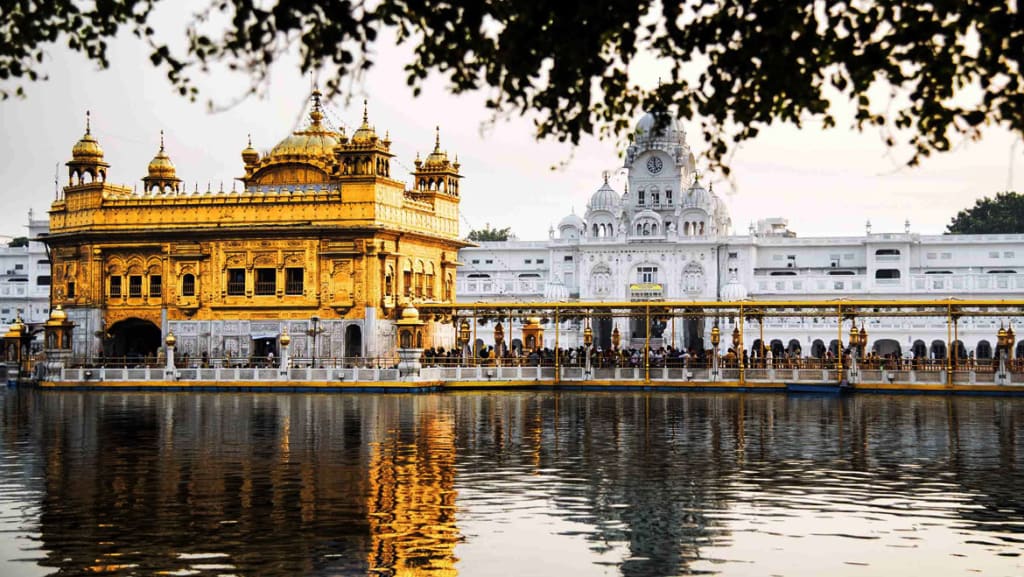
The citizens of India have the right to practice and preach which ever religion they choose to follow. The country. The country has an estimated 1,380,004,385 people at mid year according to UN data. These people habitate a large country which has many, many religions which are practised in it. While 94% of the world's Hindus live in India, there also are substantial populations of Muslims, Christians, Sikhs, Buddhists, Jains and adherents of folk religions.
"The United Nations designated 22 August as a day of solidarity with victims of violence based on religion or belief, through a resolution two years ago, and invited everyone to observe the day in an appropriate manner. Therefore, people are grateful to all, also to organizations like ADF India, for observing this important occasion to demonstrate solidarity with victims. Freedom of religion is a human right. It is vitally important to pay attention to solidarity with victims, to secure them remedies, to enable them access to justice, and to provide guarantees of non-recurrence."
Amidst the COVID-19 crisis in India and a time when attacks and violence against religious minorities in India are on the rise, ADF International’s partner organization, ADF India, organized a high-profile online conference on the fundamental right to religious freedom, featuring the UN Special Rapporteur on Freedom of Religion or Belief.
The event is part of the ongoing campaign “No One Should Be Targeted for Their Faith”, addressing religious persecution in India and beyond. The campaign seeks to promote religious freedom and the inherent dignity of all people and has gained support from Hindu, Muslim, Christian, and Sikhs leaders. The campaign leads up to 22 August, which is the International Day Commemorating the Victims of Acts of Violence Based on Religion or Belief.
“Freedom of religion is a human right. It is vitally important to pay attention to solidarity with victims, to secure them remedies, to enable them access to justice, and to provide guarantees of non-recurrence.”
Thousands targeted for their faith
“Nobody should be persecuted, let alone murdered for their faith. “The constitution of India holds a promise for the liberty of thought, expression, belief, faith, and worship for all. Yet, across the country, thousands of people are targeted for their faith. The hopes and dreams of families are shattered due to the senseless loss of lives, livelihood, and property. This is not the promise of the constitution and this is not the ethos of India.
India’s history is replete with examples of religious traditions finding space to flourish and grow. India is a garden of many flowers, the sweet fragrance of which fills our culture,” said Tehmina Arora, Director of ADF India.
Since 2019, violence against Christians in India has risen significantly. The United Christian Forum has documented over 100 incidents of harassment and mob violence against Christians in 2020 alone. The attacks usually take a similar shape and often the police fail to take action against the mobs. A mob will arrive at a prayer meeting or Christian gathering, shout abuse and harassment and beat up those in attendance including women and children. Then, the pastors or priests are usually arrested under false allegations of forced conversions.
While the lock-down measures around the COVID-19 outbreak in India had brought brief relief from religious persecution to Indian minorities, violence targeting faith groups now seems to be back for the worse.
Radical Hindu nationalists view followers of Jesus as alien to the nation, all Christians in India are suffering persecution. Driven by a desire to cleanse their country from Islam and Christianity, nationalists do not shy away from using extensive violence to achieve their goals.
Anti-Christian violence in India is religiously-motivated violence against Christians in India. Violence against Christians has been seen by the organization Human Rights Watch as a tactic used to meet political ends. The acts of violence include arson of churches, conversion of Christians by force and threats of physical violence, sexual assaults, murder of Christian priests and destruction of Christian schools, colleges, and cemeteries.
In August 2017, the US Commission on International Religious Freedom (USCIRF) ranked India’s persecution severity at “Tier 2” along with Iraq and Afghanistan.[3] Over the past seven years, India has risen from No. 31 to No. 10 on Open Doors' World Watch List, ranking just behind Iran in persecution severity.
As of 2020, USCIRF placed India as Tier-1 in minority persecution along with countries like North Korea and Pakistan.[6]
Religious violence in India includes acts of violence by followers of one religious group against followers and institutions of another religious group, often in the form of rioting.[1] Religious violence in India has generally involved Hindus and Muslims.
Despite the secular and religiously tolerant constitution of India, broad religious representation in various aspects of society including the government, the active role played by autonomous bodies such as National Human Rights Commission of India and National Commission for Minorities, and the ground-level work being done by non-governmental organisations, sporadic and sometimes serious acts of religious violence tend to occur as the root causes of religious violence often run deep in history, religious activities, and politics of India.
Along with domestic organizations, international human rights organisations such as Amnesty International and Human Rights Watch publish reports on acts of religious violence in India. Over 2005 to 2009 period, an average of 130 people died every year from communal violence, or about 0.01 deaths per 100,000 population.[citation needed] The state of Maharashtra reported the highest total number of religious violence related fatalities over that five-year period, while Madhya Pradesh experienced the highest fatality rate per year per 100,000 population between 2005 and 2009. Over 2012, a total of 97 people died across India from various riots related to religious violence.
The US Commission on International Religious Freedom classified India as Tier-2 in persecuting religious minorities, the same as that of Iraq and Egypt. In a 2018 report, USCIRF charged Hindu nationalist groups for their campaign to "Saffronize" India through violence, intimidation, and harassment against non-Hindus, Dalits (untouchable outcastes)& Adivasis (indigenous tribes and nomads). Approximately one-third of state governments enforced anti-conversion and/or anti-cow slaughter laws against non-Hindus, and mobs engaged in violence against Muslims or Dalits whose families have been engaged in the dairy, leather, or beef trades for generations, and against Christians for proselytizing. "Cow protection" lynch mobs killed at least 10 victims in 2017.
About the Creator
Keep reading
More stories from Ashish Prabhu and writers in The Swamp and other communities.
UK Enters Deepest Recession In History
It has been revealed that the UK has entered the deepest recession in it's history following two consecutive quarters of negative economic growth. This was further exacerbated following the period of time that the country spent in lock down due to the Covid 19 pandemic. The government is only now starting to try and ease lock down measures and avoid a second spike in the virus which it is feared could cause measures to be tightened again.
By Ashish Prabhu6 years ago in The Swamp
The Forsyth House Fire
Since 1851, Forsyth House has stood on the corner of Union Street and Gordon Street in the heart of Glasgow. Its iconic, or was... because on Sunday 8th of March, 2026, a fire broke out in a small, seemingly un-named shop in the building and tore all that history down. As I write, the rubble is still unsettled and the street is still blocked off. Central Station is quiet on the upper level, and around 30 small businesses have quite literally gone up in smoke.
By S. A. Crawford2 days ago in The Swamp




Comments
There are no comments for this story
Be the first to respond and start the conversation.