
A Warning Not an Insult”: US Doubles Down on Criticism of Europe
Washington urges Europe to act decisively on global challenges, framing criticism as a cautionary call rather than an insult.”


In a statement that has reignited transatlantic debate, the United States has doubled down on its criticism of Europe, insisting that its remarks were a cautionary warning rather than an insult. Amid rising geopolitical tensions, economic uncertainties, and differing strategic priorities, Washington’s pointed words have highlighted growing strains in the transatlantic alliance, provoking reactions from European capitals and prompting discussions about the future of U.S.-Europe relations.
The Context Behind the Criticism
The controversy stems from remarks made by a senior U.S. official during a recent diplomatic briefing. While the official emphasized that the U.S. values its longstanding relationship with Europe, they noted concerns over what they perceive as a lack of coordinated action on global challenges. These challenges include energy security, defense spending, and responses to international crises in regions such as Eastern Europe, the Middle East, and the Indo-Pacific.
U.S. policymakers have expressed frustration that Europe, in certain cases, is not acting with the speed or decisiveness they believe is necessary to address threats and maintain global stability. According to the statement, the remarks were intended to prompt reflection and policy recalibration rather than to offend.
“A Warning, Not an Insult”
In doubling down on the statement, U.S. officials were careful to clarify that their criticism should be interpreted as a strategic warning, not a personal attack on European leaders. The official highlighted that global crises, such as the ongoing conflicts in Eastern Europe, energy supply vulnerabilities, and cyber threats, demand unity and timely action.
“The United States has no desire to undermine our European partners,” the official said. “We are issuing a warning because coordinated action is crucial. Failure to act decisively could have real consequences for global security, economic stability, and transatlantic solidarity.”
European Response
European reaction has been mixed, reflecting both sensitivity to public criticism and recognition of the importance of the transatlantic alliance. Some leaders have expressed disappointment, stressing that Europe has been actively engaging with global issues and investing in its own defense capabilities. Others have called for private diplomatic channels to address differences rather than public admonishments.
Analysts note that while the remarks were firm, they also signal that the U.S. remains committed to cooperation and sees Europe as an essential partner in confronting shared challenges. However, the public nature of the criticism has fueled debates about communication strategy and the optics of alliance management.
Underlying Strategic Tensions
The tension reflects broader strategic dynamics in the international arena. The U.S. has been focusing on great-power competition, particularly in response to challenges from China and Russia, while Europe has sometimes prioritized regional concerns, economic policy, and social issues. These differing priorities can create friction in terms of defense spending, supply chain coordination, and foreign policy alignment.
Energy security has also emerged as a critical flashpoint. The U.S. has encouraged Europe to diversify energy sources and reduce dependence on certain regions, while European countries have been balancing this advice with domestic economic realities and public opinion. Washington’s criticism can thus be seen as a push for more decisive alignment on security and energy policy.
Implications for Transatlantic Relations
Despite the sharp tone, experts emphasize that the U.S.-Europe alliance remains strong. Both sides share common interests in defending democratic institutions, countering global threats, and fostering economic prosperity. The public criticism, while notable, is framed as a tool for driving reflection and ensuring that shared objectives are achieved efficiently.
Analysts suggest that this episode could lead to renewed discussions on strategic planning, defense spending commitments, and coordinated responses to crises. In essence, the U.S. warning may serve as a catalyst for deeper engagement, forcing European governments to assess whether their policies align with broader transatlantic goals.
Looking Ahead
As diplomatic exchanges continue, observers will be watching how Europe responds in both public statements and behind-the-scenes negotiations. Will the criticism lead to meaningful policy adjustments, or will it exacerbate tensions? The answer may define the trajectory of transatlantic relations in the coming years, particularly as global challenges such as climate change, energy security, and regional conflicts intensify.
In the meantime, U.S. officials have reiterated their commitment to collaboration. “We remain partners and allies,” one statement concluded. “This is a warning aimed at strengthening our joint efforts, not a critique of our shared values or long-standing friendships.”
About the Creator
Fiaz Ahmed Brohi
I am a passionate writer with a love for exploring and creating content on trending topics. Always curious, always sharing stories that engage and inspire.
Keep reading
More stories from Fiaz Ahmed Brohi and writers in The Swamp and other communities.
Stay at Home’ During Cold Snap: Why Authorities Are Urging the Public to Limit Movement
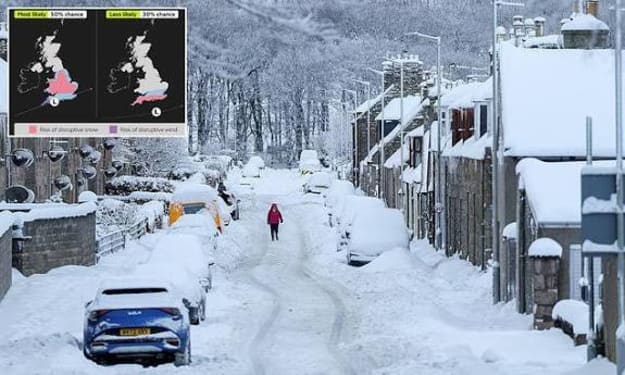
As a severe cold snap tightens its grip across large parts of the country, public authorities are urging people to stay at home unless travel is absolutely necessary. With plunging temperatures, icy roads, and increased strain on emergency services, the message is clear: limiting movement could save lives. A Cold Snap Unlike the Usual Winter Chill Winter weather is nothing new, but meteorologists warn that this cold snap is particularly dangerous. Arctic air masses have driven temperatures far below seasonal averages, with some regions experiencing record-breaking lows. Overnight frost, freezing rain, and heavy snowfall have combined to create hazardous conditions, especially on untreated roads and pavements. Weather agencies say that even short periods outdoors can pose risks during such extremes. Hypothermia and frostbite can develop quickly, particularly among children, older adults, and those with underlying health conditions. Authorities emphasize that this is not merely an inconvenience—it is a serious public safety issue. Why Officials Are Saying “Stay at Home” Emergency planners stress that staying home reduces the risk of accidents and allows essential services to operate more effectively. Icy roads dramatically increase the likelihood of vehicle crashes, while blocked routes can delay ambulances, fire crews, and utility repair teams. Hospitals are already reporting a rise in cold-related injuries, including slips, falls, and exposure-related illnesses. By limiting non-essential travel, the public helps ease pressure on healthcare systems that are often stretched during winter months. Energy networks are also under strain. Demand for heating typically spikes during cold snaps, increasing the risk of power outages. Fewer people traveling means reduced pressure on transport infrastructure and more resources available to restore services quickly if disruptions occur. Who Is Most at Risk? Health officials warn that cold weather does not affect everyone equally. Elderly individuals, people experiencing homelessness, and those living in poorly insulated housing face heightened risks. Even indoor temperatures can drop to dangerous levels if heating systems fail or are used improperly. Authorities recommend checking on vulnerable neighbors, friends, and relatives—preferably by phone rather than in person unless necessary. Community support networks play a crucial role during extreme weather events, helping to ensure no one is left isolated or without assistance. The Hidden Dangers of “Quick Trips” Many people underestimate the risk of short journeys during severe cold. A brief drive to the shops or a quick walk outside can quickly become dangerous if conditions worsen or if someone slips on ice. Vehicles can break down, leaving occupants exposed to freezing temperatures while waiting for help. Public safety officials note that a significant number of winter rescues involve people who assumed they would only be out for a few minutes. The advice is simple: if a trip can be postponed, it should be. Practical Advice for Staying Safe Indoors Staying home does not mean ignoring safety. Authorities recommend keeping indoor spaces adequately heated while ensuring proper ventilation. Using ovens or barbecues for warmth is strongly discouraged due to the risk of carbon monoxide poisoning. Residents are advised to keep emergency supplies on hand, including blankets, torches, batteries, drinking water, and basic food items. For those with medical needs, ensuring access to essential medications is critical. Pet owners are also reminded that animals feel the cold too. Keeping pets indoors, providing warm bedding, and limiting outdoor exposure can prevent illness or injury. Economic and Social Impacts While staying home protects public safety, it also has economic consequences. Businesses, especially in retail and hospitality, may see reduced foot traffic. Schools and workplaces may shift to remote operations where possible, highlighting the growing role of digital infrastructure in maintaining continuity during extreme weather. However, authorities argue that short-term disruption is preferable to long-term harm. Accidents, injuries, and infrastructure damage can have lasting economic and social costs far greater than temporary closures. Climate Change and Extreme Cold Scientists caution that extreme cold snaps are becoming more unpredictable as climate patterns shift. While global temperatures are rising overall, changes in atmospheric circulation can lead to sudden and intense cold spells. This paradox underscores the importance of preparedness and public awareness. Cold weather planning, experts say, must be taken as seriously as heatwave responses. Clear communication, early warnings, and community cooperation are essential tools in reducing harm. Conclusion The call to “stay at home” during this cold snap is not about restriction—it is about protection. By limiting travel, checking on vulnerable people, and preparing homes for extreme conditions, communities can reduce risk and save lives. As freezing temperatures continue, authorities urge everyone to take the warning seriously. Staying indoors today could prevent emergencies tomorrow, proving once again that small collective actions can make a powerful difference during times of crisis.
By Fiaz Ahmed Brohi2 months ago in The Swamp
The Forsyth House Fire
Since 1851, Forsyth House has stood on the corner of Union Street and Gordon Street in the heart of Glasgow. Its iconic, or was... because on Sunday 8th of March, 2026, a fire broke out in a small, seemingly un-named shop in the building and tore all that history down. As I write, the rubble is still unsettled and the street is still blocked off. Central Station is quiet on the upper level, and around 30 small businesses have quite literally gone up in smoke.
By S. A. Crawford3 days ago in The Swamp
Military targets on Iran’s key oil export island ‘totally obliterated’, Trump says
U.S. President Donald Trump announced on Friday that American forces had conducted a significant military operation targeting Iranian defenses on Kharg Island, a crucial center for Iran’s oil exports. In a statement shared on social media, Trump said that the strikes “totally obliterated every military target” on the island, which has been at the center of rising tensions in the ongoing conflict between Tehran and the United States and its allies. The operation marks one of the most dramatic escalations in the 2026 Iran war, which has already seen repeated missile, drone, and air strikes across the Middle East. According to Trump, the decision to strike Kharg Island was made after repeated actions by Iranian forces — including attacks on regional shipping and threats to close the Strait of Hormuz, one of the world’s most vital oil transit routes. Targeted Strike, Strategic Message In his announcement, Trump emphasized that the U.S. deliberately avoided attacking Iran’s oil infrastructure despite the island’s strategic importance. Kharg Island is the main terminal through which most of Iran’s crude oil exports flow — handling an estimated 90 % of shipments — making it a critical artery in the global energy system. “Our weapons are the most powerful and sophisticated that the world has ever known,” Trump wrote, “but for reasons of decency, I have chosen not to wipe out the oil infrastructure on the island.” He warned, however, that future strikes could target energy facilities should Iran continue to interfere with maritime traffic. The president’s comments were accompanied by a video he described as “unclassified,” purporting to show the bombing raids on the island’s military installations. Trump framed the attack as a demonstration of U.S. military might and resolve, asserting that the United States retains the capacity to inflict significant damage if provoked. Regional and Global Ramifications Iranian officials have offered differing accounts of the battle’s outcome. State news agencies reported smoke rising from the island and claimed that some defensive operations continued despite the U.S. attack, suggesting that not all targets were neutralized as described by U.S. officials. Independent confirmation is limited due to restricted access to the region. Strategists warn that even if oil infrastructure was spared in this strike, the mere threat of targeting Iran’s energy assets could send shock waves through global markets. With Kharg Island’s facilities central to Iran’s oil economy — and with about 20 % of the world’s crude flowing through the Strait of Hormuz — any significant disruption here could have immediate effects on prices and supply stability. Market analysts were already observing increases in oil prices as news of the strike spread, driven by fears that future attacks on Iran’s energy infrastructure could reduce output or prompt retaliatory action. Tehran has repeatedly warned that targeting its oil industry would trigger repercussions against U.S.-linked facilities in the region. Broader Conflict Context The assault on Kharg Island comes amid a broader intensification of conflict across the Middle East, including missile and drone exchanges involving Iran-backed groups, Israeli forces, and U.S. military assets. Recent incidents include attacks on U.S. diplomatic and military installations in nearby countries and a steady campaign of Iranian strikes against regional neighbors over the past weeks. U.S. military officials also announced the deployment of additional forces to the region, signaling Washington’s intention to maintain a strong presence and deter further escalation. These reinforcements include naval assets and ground units positioned to respond rapidly to potential threats. Diplomatic and Humanitarian Concerns Diplomats around the world have expressed concern that the latest strike could destabilize efforts to de-escalate the conflict. While the U.S. maintains that its actions are defensive — aimed at protecting international shipping and discouraging interference in global oil commerce — observers warn that heightened military actions risk triggering a wider confrontation. Humanitarian organizations have also highlighted the potential impact on civilians in Iran and the broader region, where conflicts have already displaced thousands and disrupted essential services due to ongoing strikes and counterattacks. What’s Next? With global eyes on the Persian Gulf, the situation remains highly volatile. Trump’s announcement is likely to intensify diplomatic pressure for a ceasefire or negotiations, but it may also harden positions on both sides. Iran’s response in the coming days will be closely watched by world leaders, traders, and military strategists alike. Whether this latest escalation marks a turning point toward broader conflict or serves as leverage for diplomatic talks remains uncertain. For now, Kharg Island has become more than a strategic economic asset — it stands at the center of a geopolitical confrontation with worldwide implications.
By Fiaz Ahmed 3 days ago in The Swamp
The First Rainbow Baby
Pitter-patter, pitter-patter. The rain fell in rhythmic splatters, slowly slowing, but still constant. Mira rolled onto her side pulling the blanket tight against her ears, but still she could hear chitter-chatter and scurrying feet of the creatures that refused to sleep in the lower decks.
By A. J. Schoenfeld3 days ago in Fiction


Comments
There are no comments for this story
Be the first to respond and start the conversation.