
A Russian City Gets a Taste of the Cold Devastation to Ukraine’s Power Grid
Blackouts and freezing temperatures hit a Russian city, showing how Ukraine’s power crisis can ripple across borders"

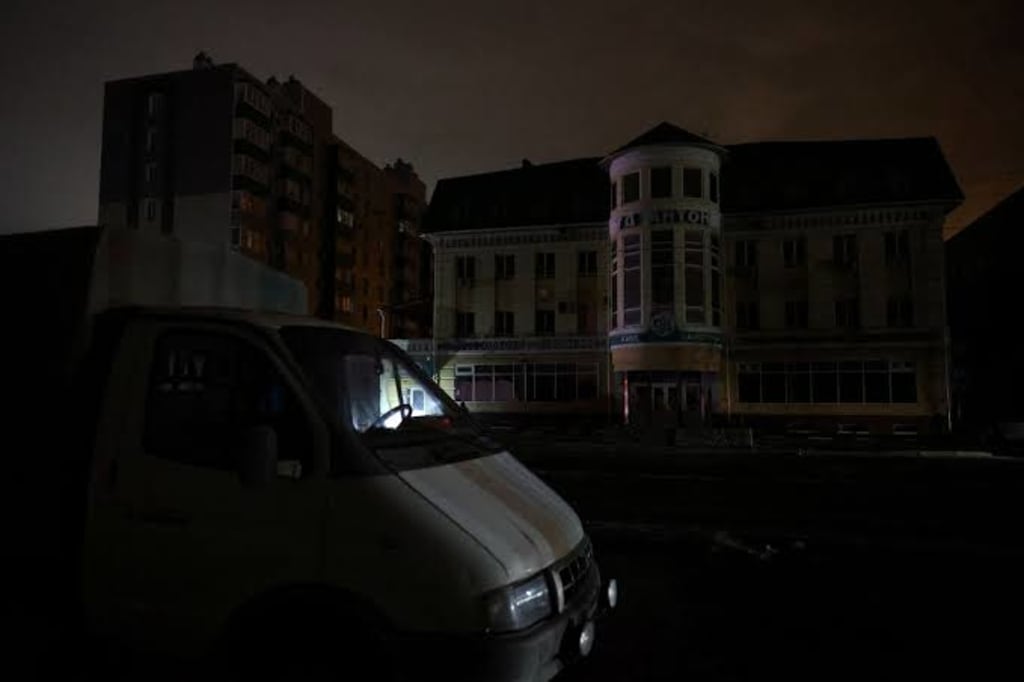
As winter tightens its icy grip across Eastern Europe, a stark reminder of the vulnerability of modern infrastructure has emerged—not in Ukraine, where the focus has long been, but in a Russian city now feeling the ripple effects of the conflict next door. Residents in this unnamed city are experiencing firsthand the cold devastation that Ukraine’s power grid has endured during ongoing military hostilities, as blackouts and rolling power cuts disrupt daily life and strain public services.
For months, Ukraine has been grappling with deliberate and systematic attacks on its energy infrastructure, leaving millions of households without electricity, heat, and water in the dead of winter. These attacks have showcased the fragility of interconnected power systems in modern warfare, where a single strike can ripple across borders and cause unintended consequences far from the original target. Russia, despite having a larger, more robust energy grid, is now beginning to experience similar vulnerabilities due to strained supply lines, cyber vulnerabilities, and dependence on regional energy networks.
In the affected Russian city, temperatures have plummeted to below -15°C, turning streets into ice rinks and creating hazardous conditions for commuters. Hospitals report intermittent power failures, forcing them to rely on backup generators, while schools have been forced to shorten hours, and residents are scrambling to secure alternative heating methods. For many, the blackout is more than an inconvenience; it is a serious threat to life and health, especially for the elderly and those with chronic illnesses.
Experts argue that these developments highlight the interconnectedness of energy infrastructure in Eastern Europe. “Electricity grids don’t respect borders,” said one energy analyst. “When one country experiences sustained attacks or failures, neighboring regions can see disruptions. What’s happening in Ukraine is a case study in how energy systems, if not properly protected, can propagate crises across regions.”
The Russian government, usually quick to tout its technological and infrastructural prowess, has admitted to experiencing “localized challenges” in the city, but official statements stress that the situation is under control. Nevertheless, social media posts and local news reports paint a grimmer picture: families huddled under blankets, traffic snarled due to non-functioning signals, and emergency services stretched thin as cold-related health incidents surge.
This situation also underscores the broader strategic dimension of energy in contemporary conflicts. Ukraine’s power grid has been deliberately targeted as a means to weaken civilian morale and disrupt industrial and military operations. By extension, disruptions in Russian territories—even those unintended—serve as a reminder that energy infrastructure is now as much a weapon as it is a utility. As one resident put it: “We always felt insulated from the chaos in Ukraine, but today it feels like the war is at our door.”
Analysts warn that climate conditions exacerbate these vulnerabilities. Harsh winters mean that even short-term outages can have cascading consequences, from water supply interruptions to increased hospitalizations due to cold exposure. In Ukraine, similar conditions have already forced the government to implement emergency rationing, highlighting the severe human cost of power disruptions. Russian authorities now face the challenge of preventing a similar humanitarian fallout.
The unfolding situation also raises questions about energy policy and infrastructure investment. While Russia maintains a significant energy surplus nationally, regional networks can be overstretched, and maintenance has reportedly lagged in some areas. Experts suggest that improving grid resilience, investing in distributed energy resources, and implementing advanced monitoring technologies are essential to prevent future crises.
Meanwhile, residents have taken matters into their own hands. Community groups are distributing fuel, blankets, and portable heaters, while some neighborhoods have organized informal warming centers in schools and public buildings. These grassroots responses reflect both resilience and the urgent need for systemic solutions.
As the winter deepens, the experience of this Russian city serves as a cautionary tale. The devastation inflicted on Ukraine’s power grid is no longer a distant headline—it is a tangible reality felt beyond its borders. It underscores the urgent need for nations to prioritize infrastructure resilience, emergency preparedness, and cross-border energy security, especially in conflict-prone regions.
In a world where energy grids are increasingly viewed as both lifelines and potential targets, this incident may prompt governments across Eastern Europe to reevaluate not only their defensive capabilities but also the human consequences of infrastructural vulnerabilities. For the residents enduring blackouts and freezing temperatures, the lesson is immediate, harsh, and personal: the power grid is no longer just a convenience—it is a frontline in modern warfare.
About the Creator
Fiaz Ahmed Brohi
I am a passionate writer with a love for exploring and creating content on trending topics. Always curious, always sharing stories that engage and inspire.
Keep reading
More stories from Fiaz Ahmed Brohi and writers in The Swamp and other communities.
A New American Missile-Mounted Buggy Has Already Scored Over 20 Kills Against Russian Shaheds in Ukraine, Crew Says
In the ever-evolving battlefield of Ukraine, innovation has often been the deciding factor between survival and catastrophe. The latest addition to this ongoing conflict is a small but remarkably lethal weapon: an American-built missile-mounted buggy, designed to hunt and destroy Russian Shahed drones. According to the crew operating the vehicle, it has already recorded more than 20 confirmed kills, marking a significant milestone in Ukraine’s defensive capabilities.
By Fiaz Ahmed Brohi5 days ago in The Swamp
Orange Cat’s Gentle Pats for His Newborn Human Sister Are the Sweetest Welcome Home Greeting
Bringing a newborn home is one of life’s most emotional milestones. The house fills with new sounds, unfamiliar routines, and an overwhelming sense of love. But sometimes, the most heart-melting moment comes from an unexpected place—like an orange cat gently patting his newborn human sister as if to say, “Welcome home, little one.”
By Aarif Lashariabout 10 hours ago in The Swamp
The Devil's Cut
“Comrade, finally you’re awake.” The voice was smooth, sensual. A flickering incandescent bar was all that lit the white, sterile room. All Vladimir remembered was everything going black. He tried to move his arms and found them strapped to the gurney.
By Matthew J. Fromm5 days ago in Fiction


Comments
There are no comments for this story
Be the first to respond and start the conversation.