
A newly discovered dinosaur species is capturing global attention after researchers revealed a predator unlike any seen before — a fish-eating dinosaur armed with a massive horn. The find is offering fresh insight into how diverse prehistoric ecosystems were and how specialized some dinosaurs became in their survival strategies
The horned predator that hunted fish is reshaping what scientists know about dinosaur evolution
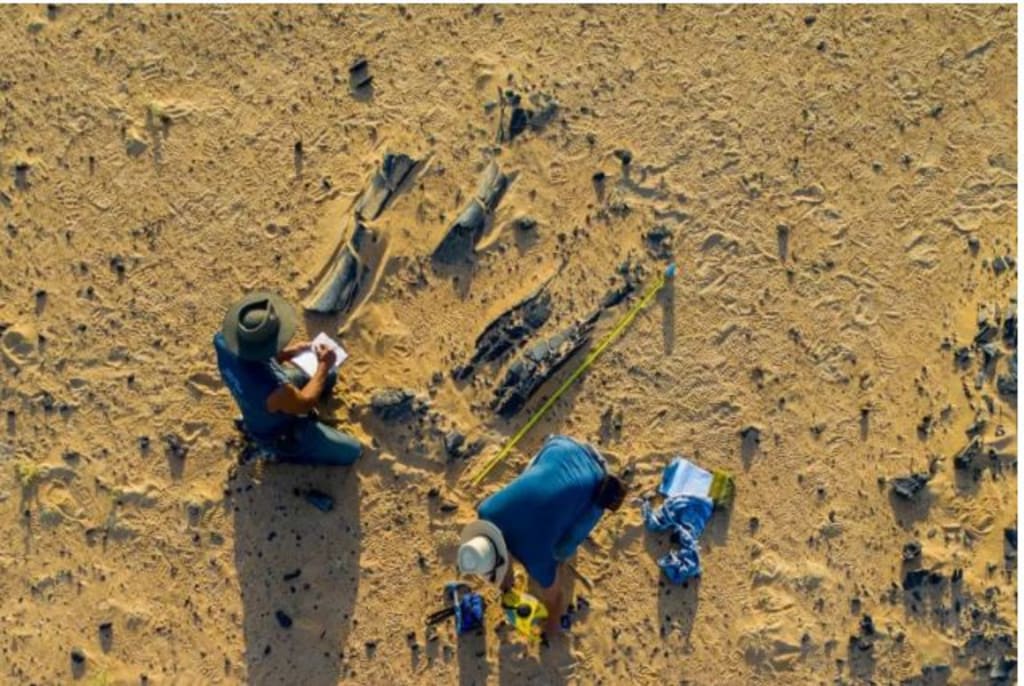
Unearthed in fossil-rich rock layers, the creature appears to combine traits rarely seen together: a horned skull typically associated with plant-eating dinosaurs and the elongated jaws and teeth of aquatic hunters. Scientists say the unusual mix suggests evolution experimented far more boldly than previously believed.
The discovery is not just about identifying a new species; it is about rewriting assumptions regarding how dinosaurs lived, hunted, and adapted to their environments.
A Predator Built for Water
According to researchers, the dinosaur’s most striking feature is its large horn positioned prominently on its skull. While horns are often linked to defense or display, scientists suspect this one may also have helped with species recognition, territorial behavior, or even stabilizing the head while snapping at slippery prey.
The fossilized jaw tells another story. Long, narrow, and lined with conical teeth, it resembles modern fish-eating animals such as crocodiles. This suggests the dinosaur spent significant time near rivers, lakes, or coastal wetlands, waiting for fish to pass before striking with precision.
The combination of aquatic feeding adaptations and dramatic cranial ornamentation indicates a predator occupying a highly specialized ecological niche — one that blurred the line between land hunter and semi-aquatic ambush predator.
Where the Fossils Were Found
The remains were discovered in sedimentary layers that once formed lush waterways millions of years ago. Regions of the Sahara Desert, now arid and harsh, were once home to vast river systems teeming with life. These environments supported giant fish, crocodile-like reptiles, and a wide variety of dinosaurs.
Fossil beds in Morocco have become particularly important in recent decades. They provide rare windows into mid-Cretaceous ecosystems, revealing species adapted to watery habitats rather than the dry plains often depicted in popular media.
The horned fish-eater adds to a growing list of discoveries suggesting that North Africa was one of the most dynamic dinosaur landscapes on Earth.
A Puzzle for Paleontologists
Researchers studying the fossil faced an immediate challenge: the dinosaur did not fit neatly into known categories. Horned dinosaurs are usually herbivores, while fish-eating predators typically belong to entirely different evolutionary branches.
This mismatch forced scientists to examine the skeleton carefully. Subtle features of the skull, spine, and limb structure indicate the species represents a unique evolutionary experiment rather than a simple variation of a known group.
The horn itself is especially intriguing. Its shape suggests it may have been covered in keratin, similar to modern animal horns, making it even larger and more visually dramatic in life than the fossil alone reveals.
Such features highlight how display structures may have played a bigger role in predator evolution than previously thought.
Life Along Prehistoric Rivers
The dinosaur likely lived along riverbanks, moving between land and shallow water. Its body structure suggests it could walk efficiently on land but was comfortable hunting in aquatic settings. Instead of chasing prey across open terrain, it probably relied on patience — waiting near water before launching quick attacks.
This strategy mirrors modern predators such as herons and crocodiles, showing that ecological roles seen today were already established millions of years ago.
The discovery reinforces the idea that dinosaur ecosystems were complex networks of specialists rather than collections of generalized giants.
What the Horn Might Mean
Horns in dinosaurs served many purposes: defense, competition, and visual signaling. In this species, researchers suspect the horn may have been used in mating displays or dominance battles. A large, prominent structure would have made individuals more visible, potentially influencing social behavior.
Another possibility is species differentiation. In crowded prehistoric ecosystems, distinctive physical features helped animals recognize members of their own species — crucial for reproduction.
If confirmed, this would support growing evidence that visual communication played a major role in dinosaur evolution.
Museums and Scientific Collaboration
The fossil is now being studied by international teams, with specimens analyzed in institutions such as the Natural History Museum, London. Advanced imaging technology allows scientists to examine internal bone structures without damaging fragile remains.
These collaborations are increasingly important as new discoveries emerge faster than ever. Improved field techniques, satellite mapping, and local partnerships in fossil-rich regions are accelerating the pace of paleontology.
Each discovery adds another piece to the puzzle of how dinosaurs diversified across different environments.
Changing the Dinosaur Narrative
For decades, public imagination focused on massive land predators and long-necked herbivores roaming open landscapes. But discoveries like this horned fish-eater paint a different picture — one of ecological experimentation, niche specialization, and surprising anatomical combinations.
Semi-aquatic dinosaurs are no longer considered rare exceptions. Instead, they appear to represent a significant branch of evolutionary innovation, particularly in regions dominated by river systems.
The presence of display structures in such predators also challenges assumptions that ornamentation was primarily a herbivore trait.
The Bigger Picture
Beyond its unusual appearance, the new species highlights how much remains unknown about prehistoric life. Fossil records are incomplete, and each find has the potential to shift scientific understanding.
This horned fish-eater suggests that dinosaur evolution was not a straightforward progression but a dynamic process shaped by environment, competition, and opportunity. Adaptations could emerge in unexpected combinations when ecosystems encouraged experimentation.
For scientists, that uncertainty is exciting rather than frustrating.
A Reminder of Evolution’s Creativity
Millions of years ago, along lush waterways that would one day become desert, a horned predator waited patiently for fish beneath the surface. Its existence — now revealed through stone — demonstrates how evolution can produce creatures that defy modern expectations.
The discovery reminds us that prehistoric life was not just bigger than today’s world but often stranger. As fossil exploration continues, more species will likely challenge assumptions about how dinosaurs lived.
The newly discovered horned fish-eater stands as a symbol of that ongoing revelation — proof that even after centuries of study, the age of dinosaurs still holds surprises waiting to emerge from the rock
About the Creator
A Gathering of Evil Bosses
“I’m the queen of chin jutting while I smooth my hair, attacking, insulting, and deflecting to protect my appointer.” “Oh, please, Blondi, my hair is curled, highlighted, and longer than yours. I feature television commercials telling immigrants that we will give them a free plane ride home, and if they voluntarily turn themselves in, they will be allowed to legally apply for re-entry. It runs everywhere, and I look good in it! You can’t compete because of your blond hair. Mine is nicer, and my lips are prettier than yours.”
By Andrea Corwin 6 days ago in The Swamp
SHEESH War Incoming? Trump Warns Iran "Bad Things Will Happen" If They Fail To Make A Meaningful Deal!
Beyond all his ramblings and empty rhetoric, President Donald Trump needs to send a clear message. It needs to be an unmitigated announcement to the Iranian regime and the Supreme Leader that unless they remove themselves from power, the full might of the United States Armed Forces will rain down on them.
By Skyler Saunders5 days ago in The Swamp
Boundless
A geographical map could take you there. To the places I've been, to the sights I've seen, to the landscapes I've climbed. But no compass could point you in the direction of my memories. To the experiences I've lived, to the happiness I've felt, to the wonder I've held so close to my heart.
By Alyssa Musso2 days ago in Writers




Comments
There are no comments for this story
Be the first to respond and start the conversation.