
How Bookbinders Used Old Records to Help the Nazis Find Their Victims
When everyday craftsmanship and archived records became tools in a system of surveillance, persecution, and genocide under Nazi rule.
This story is not simply about craft or bureaucracy. It is about how information, when weaponized, can become as dangerous as any weapon.
The Power of Records in a Surveillance State
When Adolf Hitler rose to power in 1933, the Nazi regime quickly understood the importance of documentation. Modern states rely on records: birth certificates, tax files, school registers, synagogue membership lists, census data, and business ledgers. For the Nazis, these were not administrative tools — they were instruments of control.
Jewish communities across Europe had long maintained meticulous records for religious, cultural, and civic purposes. These archives documented marriages, births, property ownership, and community membership. When persecution began, such information made identification easier.
The Nazis needed organized, accessible files. That is where bookbinders entered the picture.
The Role of Bookbinders and Archival Workers
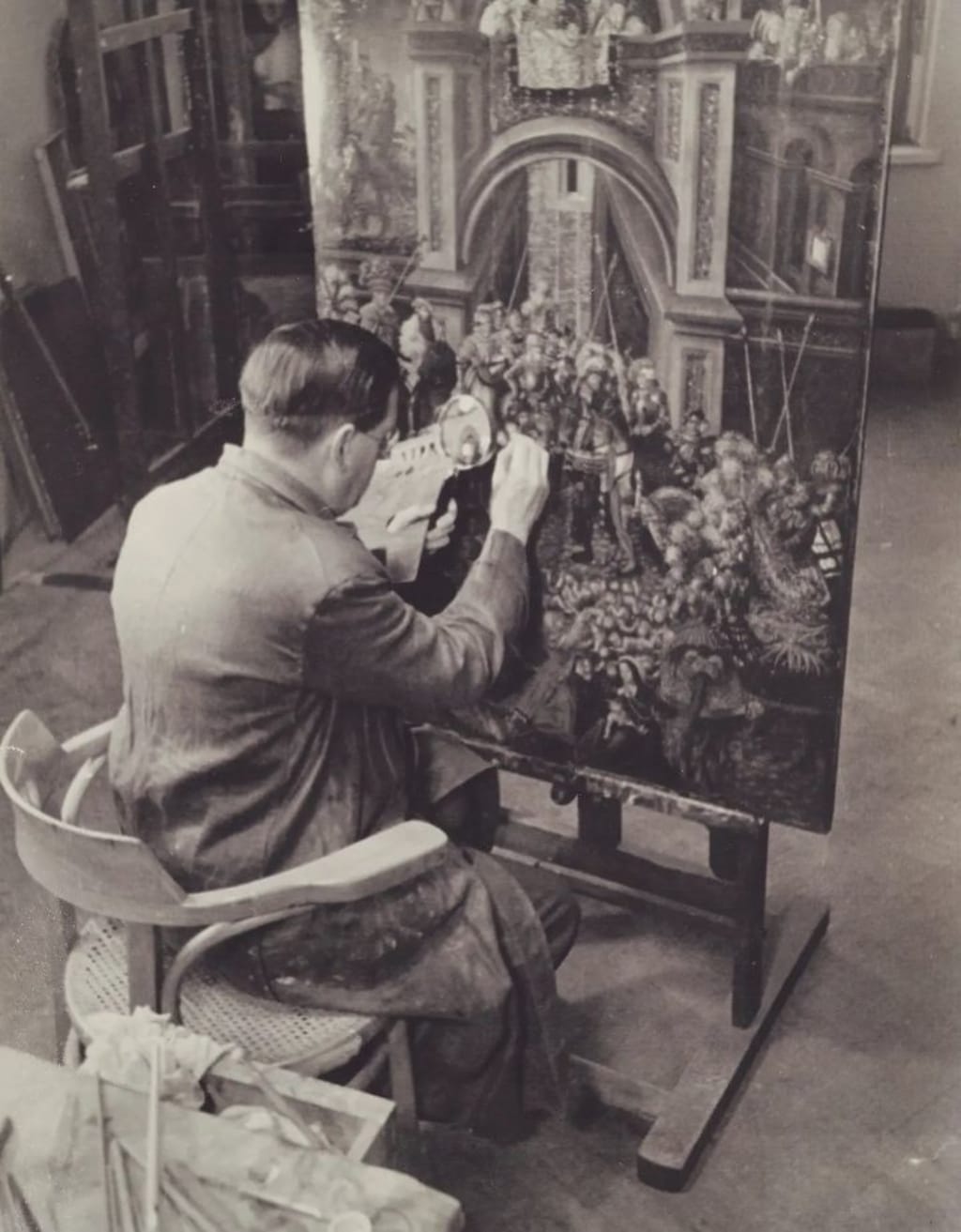
Bookbinding may seem far removed from state violence. Traditionally, bookbinders repaired manuscripts, bound newspapers into volumes, and preserved municipal archives. But during the Nazi period, these professionals were often tasked with reorganizing vast amounts of confiscated material.
Synagogue libraries, community offices, and Jewish organizations were raided. Documents were seized in bulk. The material was frequently damaged, scattered, or stored poorly. Bookbinders were asked to sort, reassemble, label, and bind these records into usable formats.
What might appear as routine archival work effectively turned fragmented information into searchable intelligence.
Once bound into structured volumes, authorities could quickly locate names, addresses, and family connections. Bureaucrats could trace entire networks of people with alarming efficiency.
Bureaucracy as a Tool of Persecution
The Nazi system relied heavily on paperwork. Deportations required lists. Confiscation required ownership records. Identification required proof of ancestry. Every step depended on organized information.
Institutions such as the Gestapo and other administrative bodies used these compiled files to locate individuals who might otherwise have remained hidden.
Bookbinders did not create the ideology behind persecution, but their work sometimes enabled the logistical side of it. By restoring damaged registries and consolidating loose documents, they made it easier for officials to conduct searches, verify identities, and coordinate arrests.
This illustrates a broader reality: genocides are often carried out through paperwork as much as force.
Confiscated Knowledge and Cultural Erasure
Beyond tracking individuals, the seizure and rebinding of records contributed to cultural destruction. Jewish archives represented centuries of history — community debates, religious scholarship, personal stories, and economic life.
By absorbing these materials into state systems, the Nazis both exploited and erased them. Information about victims was preserved for control, while the cultural meaning behind that information was stripped away.
In some cases, bound archives were transported to research institutes that sought to study — and justify — antisemitic ideology. Documents intended to preserve identity were turned into tools that undermined it.
Complicity, Coercion, and Moral Complexity
The role of bookbinders raises difficult ethical questions. Not every craftsman willingly supported Nazi policies. Some worked under pressure, fearing job loss, punishment, or worse. Others may not have fully understood how their work would be used.
However, history shows that large-scale atrocities often depend on layers of indirect participation. Many individuals perform small tasks that seem neutral but collectively sustain harmful systems.
The bookbinder’s table became one of many places where ordinary labor intersected with extraordinary violence.
This does not mean all bookbinding professionals were complicit in the same way. Some resisted quietly, hid materials, or sabotaged processes. Yet the broader system demonstrates how professional skills can be repurposed by authoritarian regimes.
Information as Infrastructure of Genocide
One of the most disturbing lessons from this period is how modern administration can enable targeted violence. The Nazis did not rely solely on chaos or brute force; they relied on order.
Lists, indexes, folders, and bound volumes created infrastructure. Once people were reduced to entries in a registry, they could be categorized, tracked, and removed with efficiency.
Bookbinding — a craft associated with preservation — became intertwined with selection.
The transformation of archives into instruments of persecution foreshadows contemporary concerns about data privacy, surveillance, and digital record-keeping. Today, information is even more powerful and easier to organize than in the 1930s and 1940s.
Postwar Recovery and Historical Memory
After World War II, many of the same bound records that enabled persecution became crucial for justice. Survivors used documentation to reclaim property, prove identity, and trace missing relatives. War crime investigators relied on paperwork to reconstruct events and establish accountability.
Archivists and historians now work to preserve these materials with a different purpose: remembrance.
The existence of detailed records means that denial becomes harder. Names, dates, and locations form an undeniable historical trail.
Ironically, the administrative precision that aided persecution also helped preserve evidence of it.
Lessons for the Present
The story of bookbinders in Nazi Europe highlights a broader truth: professions are not isolated from politics. Skills that appear neutral can be shaped by the systems in which they operate.
It also underscores the importance of ethical responsibility in information work — whether in archives, libraries, technology, or government. Organizing data is never purely technical; it carries social consequences.
Understanding how ordinary labor contributed to extraordinary harm helps societies recognize warning signs earlier.
Genocide does not begin with violence alone. It often begins with classification, documentation, and the quiet transformation of information into control.
Conclusion
The history of how bookbinders helped organize records used by Nazi authorities reveals a sobering reality about the mechanics of persecution. Atrocities depend not only on ideology and leadership but also on systems — and the people who maintain them.
By examining these lesser-known roles, we gain a clearer picture of how the Holocaust unfolded and why vigilance around data, bureaucracy, and professional ethics remains essential today.
Preserving history means confronting uncomfortable truths. Among them is this: even the act of binding books can become part of a story far larger — and far darker — than the craft itself.
About the Creator
A Gathering of Evil Bosses
“I’m the queen of chin jutting while I smooth my hair, attacking, insulting, and deflecting to protect my appointer.” “Oh, please, Blondi, my hair is curled, highlighted, and longer than yours. I feature television commercials telling immigrants that we will give them a free plane ride home, and if they voluntarily turn themselves in, they will be allowed to legally apply for re-entry. It runs everywhere, and I look good in it! You can’t compete because of your blond hair. Mine is nicer, and my lips are prettier than yours.”
By Andrea Corwin 6 days ago in The Swamp
EL MENCHO KILLED Mexico Is Turning Into A War Zone After Cartel Leader El Mencho Was Killed... Now They're Threatening To Storm Hotels With U.S. Tourists Inside!
El Mencho literally means a person of ill repute or bad manners. The response to Nemesio Ruben Oseguera Cervantes’ death sparked widespread outrage. Burnt cars, murders, canceled flights, and a Costco set ablaze ruined the vacations for people from all over the world.
By Skyler Saundersa day ago in The Swamp




Comments
There are no comments for this story
Be the first to respond and start the conversation.