
A Liar”: Trump Official Accidentally Traps White House Press Secretary Over ‘Verbal Stumbles’
A viral exchange turns routine press corrections into a political flashpoint over credibility and truth
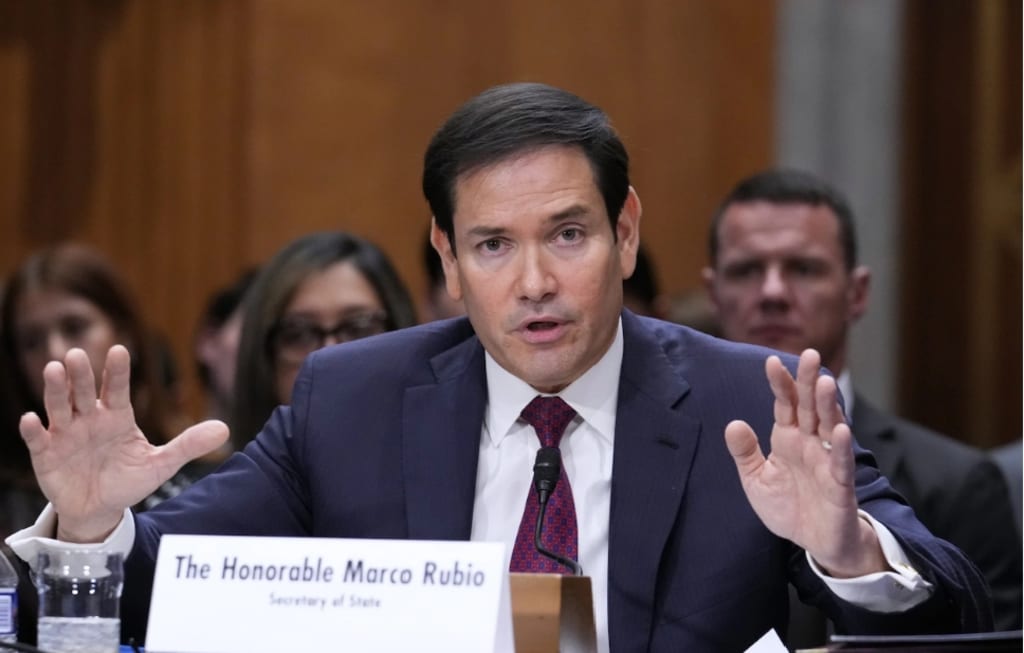
aIn modern American politics, few spaces are as tightly choreographed—and as unforgiving—as the White House press briefing room. Every word is scrutinized, replayed, and dissected in real time. That reality was on full display this week when a former Trump administration official seized on what critics are calling “verbal stumbles” by the current White House press secretary, setting off a viral moment that quickly escalated into accusations of dishonesty and political theater.
What began as a seemingly routine exchange over policy messaging turned into a rhetorical trap—one that reignited debates over credibility, media accountability, and the increasingly combative relationship between political operatives and the press.
How the Moment Unfolded
The controversy erupted after a Trump-aligned official appeared on conservative media to critique recent statements made by the White House press secretary during a briefing. The press secretary had offered clarifications on a sensitive policy issue after initially misstating certain details. While such corrections are not unusual in press briefings, critics were quick to pounce.
The Trump official replayed clips of the press secretary’s remarks side by side—one from the initial briefing and another from a later clarification—arguing that the differences amounted to more than a simple slip of the tongue. During the segment, the official labeled the explanations contradictory and went so far as to call the press secretary “a liar,” suggesting that the administration was intentionally misleading the public.
Ironically, media analysts noted that in attempting to expose dishonesty, the official may have unintentionally highlighted how press briefings actually work: rapid-fire questioning, evolving information, and the near impossibility of absolute precision in real time.
“Verbal Stumbles” or Standard Press Practice?
At the center of the debate is a familiar political question: when does a verbal stumble become a lie?
White House press secretaries routinely operate under intense pressure, fielding questions on breaking developments where facts can change by the hour. In many cases, early statements are later updated as more information becomes available. Supporters of the press secretary argue that this is transparency—not deception.
Critics, however, contend that repeated corrections erode public trust. They argue that even minor inconsistencies can fuel skepticism, especially in an era when misinformation spreads faster than official clarifications.
The Trump official’s critique tapped directly into that skepticism, framing the press secretary’s remarks not as human error but as deliberate obfuscation. That framing resonated strongly with partisan audiences already inclined to distrust the current administration.
The Rhetorical Trap
What made this episode stand out was how quickly the narrative turned back on the accuser.
Journalists and commentators pointed out that the Trump official selectively edited clips, removing context and ignoring follow-up explanations provided during the same briefing. In doing so, critics argue, the official set a trap that relied less on factual analysis and more on rhetorical framing—presenting complexity as contradiction.
Some observers noted the irony: an official from an administration frequently accused of misleading statements was now positioning himself as an arbiter of truth. That contrast became a focal point in subsequent media coverage, with commentators accusing the Trump official of bad-faith argumentation.
The Role of Media Amplification
Social media played a decisive role in amplifying the controversy. Short video clips, stripped of nuance, spread rapidly across platforms, accompanied by captions accusing the press secretary of dishonesty. Within hours, the phrase “verbal stumbles” was trending, weaponized by political influencers on both sides.
Cable news segments followed, often framing the incident as evidence of broader dysfunction in White House messaging. Some networks emphasized the accusation of lying, while others focused on the dangers of turning routine corrections into scandal.
This fragmented coverage underscores a larger issue in modern media: context often loses to conflict. The more incendiary the claim, the more attention it receives—even if the underlying facts are far less dramatic.
Why This Matters Beyond One Briefing
While the exchange may seem like just another Washington spat, its implications are broader.
First, it highlights the fragile state of public trust in official communications. When every misstatement is treated as evidence of deceit, meaningful dialogue becomes harder. Officials may grow more guarded, offering less information to avoid being caught in semantic traps.
Second, the episode reflects the continued influence of Trump-era political strategies. Aggressive media confrontation, personal attacks, and the blurring of fact and opinion remain powerful tools for mobilizing supporters—even years after leaving office.
Finally, it raises questions about accountability standards. If verbal precision becomes the sole measure of honesty, are politicians and spokespeople being judged by impossible standards? Or is heightened scrutiny a necessary corrective in an age of spin?
The White House Response
The White House pushed back against the accusation, emphasizing that the press secretary clarified statements as soon as updated information was available. Officials accused critics of manufacturing outrage and argued that transparency includes acknowledging when initial information is incomplete.
Privately, aides acknowledged that messaging discipline remains a challenge—but one compounded by the hostile media environment and relentless partisan attacks.
A Symptom of a Larger Political Climate
Ultimately, the “liar” accusation says as much about America’s political climate as it does about any individual press briefing. In a landscape defined by distrust, even minor verbal missteps can be weaponized into narratives of corruption or incompetence.
For audiences, the challenge is discerning substance from spectacle. Not every stumble is a scandal—and not every accusation is rooted in good faith.
Final Thought
The clash between a Trump official and the White House press secretary over so-called “verbal stumbles” is less about one exchange and




Comments
There are no comments for this story
Be the first to respond and start the conversation.