
A Large Mass Grave From the Early Iron Age Reveals Selective Violence Against Women and Children in the Carpathian Basin
Archaeological discovery reshapes understanding of ancient conflict, power, and social vulnerability

Introduction
Archaeologists working in Central Europe have uncovered a remarkable mass grave dating back more than 2,500 years, offering a rare and unsettling glimpse into violence during the Early Iron Age. The discovery, located in the Carpathian Basin, suggests that conflict in ancient societies may have disproportionately targeted women and children.
Rather than evidence of a typical battlefield burial, the grave presents signs of selective violence — a pattern that is reshaping how historians interpret warfare, migration, and social hierarchy in prehistoric Europe. The findings highlight that even in distant past societies, violence could be structured, intentional, and deeply tied to community dynamics.
The Discovery
The burial site was uncovered during an excavation linked to settlement research across the region. Archaeologists identified a large pit containing dozens of human remains, many of which belonged to non-adult individuals and adult women.
Preliminary dating places the grave in the Early Iron Age, a transformative period marked by expanding trade networks, shifting settlements, and increased competition for resources. Analysis of skeletal injuries indicates that many individuals suffered violent trauma around the time of death rather than natural causes.
Unlike formal cemeteries, the burial lacked ritual care, suggesting the victims were deposited quickly — possibly after a raid or massacre.
Understanding the Early Iron Age Context
The Early Iron Age in Europe saw technological change driven by the widespread use of iron tools and weapons. Societies became more interconnected but also more competitive, leading to conflicts between emerging cultural groups.
The Carpathian Basin — spanning parts of modern Hungary, Slovakia, Romania, and surrounding regions — served as a crossroads of migration and trade. Its strategic location made it both prosperous and vulnerable.
Archaeological cultures such as the Hallstatt culture illustrate how wealth accumulation, fortified settlements, and regional power structures were developing during this period. With these changes came evidence of warfare, but mass graves remain relatively rare, making this discovery particularly significant.
Evidence of Selective Violence
What sets this site apart is the demographic pattern. Researchers observed a striking absence of adult males compared with the high number of women and children. This imbalance suggests the victims were not a fighting force but a civilian population.
Skeletal analysis revealed:
Blunt force trauma consistent with close-range attacks
Cut marks that may indicate execution or ritualized violence
Signs of hurried burial without funerary practices
Such evidence points toward targeted violence, possibly during a settlement raid in which adult men were killed elsewhere, captured, or absent.
The findings challenge earlier assumptions that prehistoric warfare primarily involved male combatants and instead highlight the vulnerability of entire communities.
What the Mass Grave Tells Us About Ancient Conflict
Mass graves provide a unique window into moments of crisis that ordinary burials cannot reveal. In this case, the site suggests that violence could function as a strategy aimed at destabilizing rival groups by targeting their most vulnerable members.
This pattern aligns with broader archaeological evidence showing that raids often focused on:
Resource acquisition
Population displacement
Social intimidation
Territorial expansion
By attacking non-combatants, aggressors could weaken future resistance and reshape regional power balances.
Researchers emphasize that such violence does not necessarily reflect constant warfare but rather episodic events with lasting consequences.
New Insights From Scientific Techniques
Modern scientific methods are transforming how archaeologists interpret discoveries like this one. Techniques such as DNA analysis, isotope testing, and forensic anthropology allow researchers to reconstruct origins, diets, and kinship relationships among the victims.
Preliminary studies suggest some individuals may not have been local to the immediate settlement, raising questions about migration, captivity, or multi-community interaction.
Comparisons with other European sites indicate that while violence was present across the continent, demographic targeting varies widely — making this grave a key case study.
Broader Implications for Social Structure
The discovery also provides clues about gender roles and family organization in Early Iron Age societies. The concentration of women and children suggests communities were structured around extended family units whose survival depended on collective stability.
When violence disrupted these units, the impact extended beyond immediate loss — affecting labor, cultural transmission, and population continuity.
This perspective encourages historians to view ancient warfare not just as military activity but as social transformation.
Ethical and Emotional Dimensions of Archaeology
Excavating mass graves carries emotional weight for researchers, who must balance scientific analysis with respect for the individuals involved. Although the events occurred millennia ago, the human story remains tangible.
Sites like this challenge the romanticized image of ancient Europe and instead reveal experiences of trauma, displacement, and resilience that echo modern conflicts.
Many archaeologists stress that these discoveries serve as reminders of the long history of civilian vulnerability during periods of instability.
Why the Carpathian Basin Matters
The Carpathian Basin has long been a focal point for understanding European prehistory due to its geographic diversity and cultural intersections. Discoveries here often influence broader interpretations of migration patterns and technological change.
This mass grave adds a new dimension by highlighting how violence shaped demographic landscapes. It suggests that population shifts observed in archaeological records may sometimes result from targeted attacks rather than gradual movement alone.
As research continues, the site could refine timelines of regional interaction and conflict.
Conclusion
The Early Iron Age mass grave uncovered in the Carpathian Basin offers a powerful insight into the human cost of ancient conflict. By revealing evidence of selective violence against women and children, the discovery challenges traditional narratives that focus primarily on warriors and battles.
Instead, it paints a more complex picture — one in which warfare affected entire communities and reshaped social structures in lasting ways. Through advanced scientific analysis and careful interpretation, archaeologists are uncovering stories that bridge thousands of years yet remain deeply relevant.
Ultimately, the site reminds us that the consequences of violence — displacement, loss, and transformation — are not modern phenomena but enduring aspects of human history.
About the Creator
A Gathering of Evil Bosses
“I’m the queen of chin jutting while I smooth my hair, attacking, insulting, and deflecting to protect my appointer.” “Oh, please, Blondi, my hair is curled, highlighted, and longer than yours. I feature television commercials telling immigrants that we will give them a free plane ride home, and if they voluntarily turn themselves in, they will be allowed to legally apply for re-entry. It runs everywhere, and I look good in it! You can’t compete because of your blond hair. Mine is nicer, and my lips are prettier than yours.”
By Andrea Corwin 6 days ago in The Swamp
Five More H145M Helicopters for Belgian Internal Security
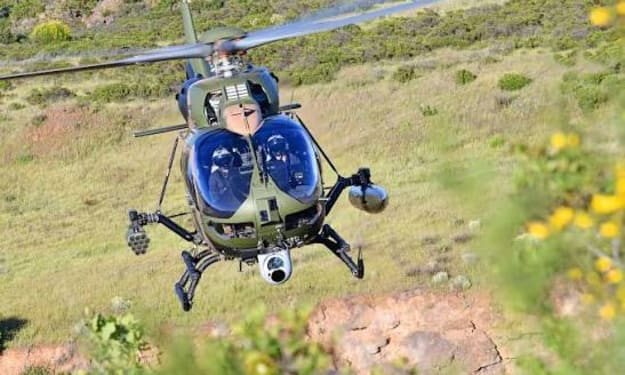
The Belgian government has approved the purchase of five additional Airbus H145M helicopters to strengthen its internal security and defence capabilities, a move that underscores both ongoing military modernisation and heightened focus on domestic emergency response. The decision follows earlier orders of H145M rotorcraft and comes amid broader strategic reviews of Belgium’s air mobility and national security priorities. The expanded fleet — which adds to the existing group of H145Ms already planned for the Belgian Armed Forces and Federal Police — reflects a dual mission profile: supporting military operations and improving response capacity to crises such as natural disasters, civil unrest, and critical infrastructure protection. Under the latest plan, three of the five new helicopters will go to the Defence Component, while two will serve the Federal Police, enhancing cooperation across security services. Strategic Context and Capability Gaps Belgium’s decision fits within a larger trajectory of modernising its military aviation assets. In 2024, Belgium signed a contract to procure a fleet of 15 H145M helicopters for its army and two for the federal police via the NATO Support and Procurement Agency (NSPA), aiming to replace ageing platforms like the Agusta A109 and some older rotary‑wing assets. The H145M is a light multirole helicopter designed to perform a wide range of missions. It can be rapidly reconfigured for troop transport, medical evacuation, reconnaissance, tactical lift, and support operations — qualities that make it suitable for both armed forces and law enforcement requirements. The platform’s flexibility has helped it gain traction across European militaries, with several countries adopting it for a variety of missions. Belgium’s emphasis on the H145M also aligns with broader trends in European defence procurement. Germany, for example, has ordered dozens of H145Ms and variants to expand its own rotary‑wing capabilities, while other nations such as Cyprus and Ireland have added the aircraft to their fleets, highlighting the model’s growing footprint on the continent. Enhancing Internal Security and Civil Support Beyond military missions, the additional H145Ms will play a critical role in domestic security operations. In recent years, Belgian authorities have been investing in capabilities that strengthen national responsiveness to emergencies, including natural disasters, search‑and‑rescue operations, and large‑scale public safety events. The Federal Police’s expanded access to these helicopters will support aerial surveillance, rapid deployment of specialized units, and coordination during crises. Defence Minister Theo Francken has described the expansion as “an efficient and forward‑looking choice,” arguing that it not only increases the armed forces’ operational flexibility but also reinforces Belgium’s capacity to safeguard its citizens at home. Government officials have repeatedly noted that modern, versatile helicopters are vital tools for both everyday security tasks and extraordinary situations, such as severe weather responses or urgent medical transport. Budget, Deliveries and Operational Timeline While the precise cost of the additional five helicopters has not been publicly detailed, the acquisition builds on earlier investment frameworks that accounted for the initial H145M orders. Typically, such procurements include not only the airframes but also associated training, support services, and logistical arrangements to ensure effective operational use. armyrecognition.com Deliveries of the new helicopters are expected to occur over the next few years, with integration into existing fleets planned to begin as earlier H145Ms are delivered and enter service. Belgium’s air bases and supporting infrastructure are already being adapted to host the expanding helicopter fleet, reflecting a long‑term commitment to improving air mobility and security operations across the country. Broader Defence and Regional Implications Belgium’s move to expand its H145M fleet also occurs against the backdrop of evolving NATO and European defence strategies. With heightened focus on collective security and readiness following geopolitical shifts across the continent, investments in flexible, multirole platforms like the H145M contribute to both national capability and alliance interoperability. Default Furthermore, the expanded fleet may help alleviate capacity gaps caused by the retirement of older helicopters and align Belgium’s air capabilities with those of several neighbouring countries, fostering deeper cooperation in joint operations and training exercises.
By Fiaz Ahmed 6 days ago in The Swamp



Comments
There are no comments for this story
Be the first to respond and start the conversation.