
Mojtaba Khamenei Named Supreme Leader; Israel Bombs Tehran
Iran’s leadership transition unfolds amid escalating Israeli airstrikes and a widening regional conflict.

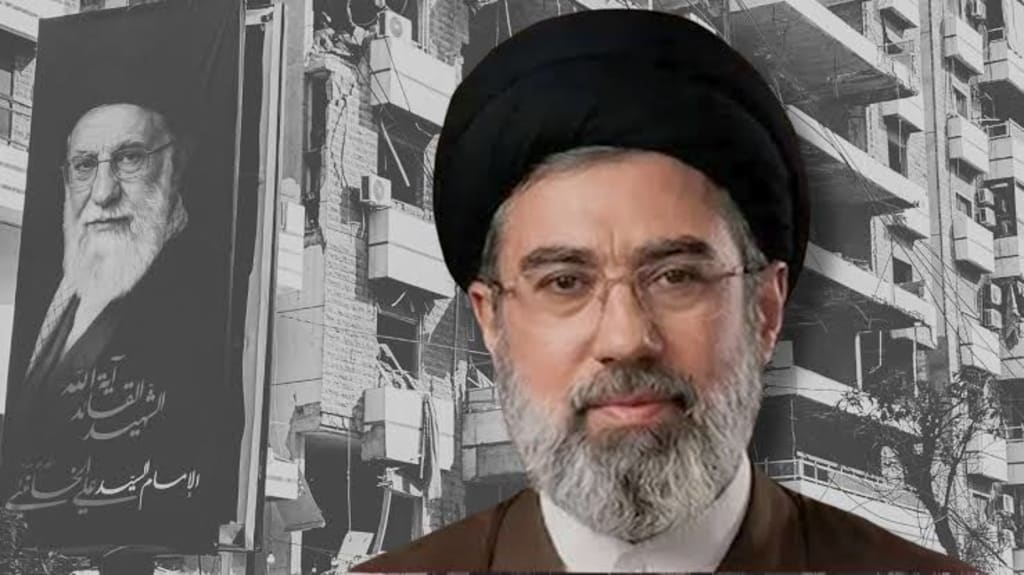
Iran has entered a new and uncertain political chapter after clerical authorities named Mojtaba Khamenei as the country’s new supreme leader, even as Israeli airstrikes struck strategic targets in the capital, Tehran. The appointment follows the death of his father, Ali Khamenei, during the early days of the ongoing conflict involving Israel, Iran, and allied forces.
The decision was made by the powerful clerical body known as the Assembly of Experts, which is responsible under Iran’s constitution for selecting the supreme leader. After several days of uncertainty and the establishment of an interim leadership council, the assembly announced that Mojtaba Khamenei would assume the country’s highest religious and political office.
The appointment comes at one of the most volatile moments in Iran’s modern history. Israeli fighter jets reportedly carried out a series of strikes on energy infrastructure and strategic sites in Tehran overnight, sending large plumes of smoke into the sky and raising fears of further escalation. The attacks were part of a broader campaign targeting Iranian facilities and military leadership in response to missile and drone attacks launched by Tehran and its allies.
A Controversial Succession
Mojtaba Khamenei, a mid-ranking cleric long believed to wield influence behind the scenes, has rarely appeared in public or held major official positions. However, analysts say he maintained close ties with the powerful Islamic Revolutionary Guard Corps (IRGC), which has played a decisive role in Iranian politics and security.
His elevation to supreme leader is significant because it marks the first time in the history of the Islamic Republic that power has effectively passed from father to son. Critics inside and outside Iran have argued that such a transition resembles a hereditary system rather than the revolutionary model established after the 1979 Islamic Revolution.
Supporters of the new leader, however, argue that continuity is essential during wartime. Iranian state media described the decision as necessary to preserve stability and ensure unified leadership as the country faces external threats. Senior political figures and military commanders quickly pledged allegiance to Mojtaba following the announcement.
Israeli Strikes Intensify
At the same time, Israel intensified its air campaign against Iranian targets. Military officials in Israel said the strikes were aimed at degrading Iran’s military and energy infrastructure, including fuel depots and facilities believed to support missile operations.
Residents in several districts of Tehran reported hearing multiple explosions overnight. Emergency services were deployed to affected areas, while authorities attempted to assess damage and secure critical infrastructure. Images circulating on social media showed large fires burning at industrial sites across the capital.
The Israeli government has argued that the attacks are necessary to prevent Iran from expanding its military capabilities and threatening Israeli territory. However, the strikes have also heightened fears that the conflict could spiral into a broader regional war.
Regional Tensions Rising
The crisis has already spread beyond Iran and Israel. Missile and drone attacks linked to the conflict have targeted facilities in Gulf states, while Hezbollah forces in Lebanon have exchanged fire with Israeli troops along the border. The growing confrontation has raised alarms among international observers, who warn that the Middle East could face one of its most dangerous periods in decades.
Meanwhile, Iran has vowed retaliation. Officials in Tehran warned that attacks on its territory would trigger responses against Israeli and allied interests across the region. Early reports indicated that Iran launched new waves of missiles and drones shortly after Mojtaba Khamenei’s leadership was announced.
The international community has reacted with concern as the conflict escalates. Governments across Europe, Asia, and the Gulf have urged restraint and called for diplomatic efforts to prevent further violence. Energy markets have also reacted nervously, as any prolonged disruption in the region could affect global oil supplies.
Analysts say the combination of leadership transition and military confrontation makes the situation particularly unpredictable. Mojtaba Khamenei now assumes power at a moment when Iran faces both internal uncertainty and external military pressure.
A Defining Moment for Iran
For Iran, the selection of Mojtaba Khamenei represents a defining political moment. The Islamic Republic must navigate the challenge of maintaining internal cohesion while confronting intensifying military pressure from Israel and its allies.
Whether the new leader will pursue confrontation or attempt diplomatic engagement remains unclear. What is certain, however, is that his leadership begins amid war, economic strain, and deep geopolitical tensions.
As Israeli airstrikes continue and Iran vows retaliation, the coming weeks may determine not only the future of Iran’s leadership but also the stability of the entire Middle East.
About the Creator
Fiaz Ahmed
I am Fiaz Ahmed. I am a passionate writer. I love covering trending topics and breaking news. With a sharp eye for what’s happening around the world, and crafts timely and engaging stories that keep readers informed and updated.
Keep reading
More stories from Fiaz Ahmed and writers in The Swamp and other communities.
Iranian Soccer Team Exits Women’s Asian Cup and Faces Tricky Prospect of Return Home
The Iranian women’s national football team’s campaign at the 2026 AFC Women’s Asian Cup came to a somber end on Sunday with a 2–0 defeat to the Philippines on the Gold Coast in Queensland, Australia, condemning them to an early exit from the tournament. The loss, following earlier defeats to South Korea and Australia, leaves the squad reflecting not only on their performance on the pitch but also on the profound uncertainty that awaits them as they prepare for the journey back to their homeland — where political tensions, war and allegations of persecution now loom large. The team had arrived in Australia last month ahead of the tournament, mere days before a significant escalation of conflict in the region triggered by U.S. and Israeli air strikes on Iran on February 28. That conflict has only heightened anxieties about what players — especially those visible on the international stage — might face on their return. Silence, Anthem Controversy, and the Backlash Iran’s campaign became politically charged from the outset. Before their opening match against South Korea, the team stood in silence during the national anthem, a gesture interpreted by many international commentators and human rights activists as a possible act of protest, mourning, or dissent given the wartime backdrop. That moment reverberated back home: Iranian state media branded the players “wartime traitors”, a designation with serious implications in a legal system where charges of treason can carry grave penalties. In subsequent matches — including the final group game against the Philippines — the players did sing and salute the anthem. But the damage in the eyes of state media and hardline commentators had already been done, and the controversy continued to cast a long shadow. Protesters, Petitions, and Concerns on the Gold Coast As the Iranian squad prepared to depart Australia following their exit from the tournament, dramatic scenes unfolded outside Gold Coast Stadium. Supporters and activists surrounded the team bus, chanting slogans such as “let them go” and “save our girls,” and briefly impeding its movement. Police intervened to disperse crowds of up to around 200 people in what was described as chaotic scenes. Locally based Iranian community organisations and human rights advocates have called on Australian authorities to ensure the team’s safety and to provide the players with the opportunity to seek protection if they fear persecution when returning home. One widely circulated online petition, supported by tens of thousands of people, urges Australian officials to guarantee independent legal counsel, interpreter support, and safe, private interviews for any player who expresses fear about going back to Iran. Government Response and Asylum Debate The emotional and political complexities of the situation have prompted responses at the highest levels of Australia’s government. Foreign Minister Penny Wong expressed public solidarity with the Iranian players and acknowledged the broader oppression faced by women in Iran, but stopped short of detailing any specific protection plans or whether government officials had communicated directly with the players. Advocates for the team argue that Iran’s current wartime environment — and the punitive rhetoric broadcast by state-controlled media — create credible risks of persecution, imprisonment, or worse for players labelled “disloyal” upon their return. Several former athletes and civil society groups have called on football’s governing bodies, including FIFA and the Asian Football Confederation (AFC), to intervene and uphold their obligations to protect athletes’ safety during and after competition. Some Australian lawmakers — including opposition figures — have gone further by urging the government to offer temporary protection or even asylum to team members, arguing that humanitarian commitments should take precedence in such an extraordinary case. Yet officials have reiterated that any such actions would need to adhere to standard immigration and visa processes unless players themselves formally request protection. The Road Ahead: Homecoming in Limbo For the players themselves, emotions are mixed. Iran’s coach Marziyeh Jafari has publicly stated that the squad wants to return home and be reunited with family and compatriots, emphasizing their eagerness to go back despite the tumultuous backdrop. Others within the team have voiced concern for their loved ones still in Iran, where widespread social unrest and wartime tensions persist. As arrangements for their departure from Australia are finalised, many questions remain unanswered: Will they return to a warm welcome, or face suspicion and reprisals? Does international sport carry a responsibility to protect athletes beyond the pitch? And what does this saga mean for the future of women’s sport in Iran amid a deeply polarized political climate? The answers — and the fate of these players — are still very much to be determined.
By Fiaz Ahmed about 15 hours ago in The Swamp
Parallel Protests
I haven't written for quite some time, but I have A LOT of thoughts about yesterday's protest rally against our government's involvement and complicity in America's war on Iran, on the harbourside of my home city Bristol, and I need to put them somewhere. My gorgeous girlfriend is always a loving and listening ear and sharing it all with her will always be a healthy and happy way of processing the mental and emotional weight, but getting it straight in my brain to share means writing it all down in straight lines, so, here we are and thanks for being here.
By Steph Cole6 days ago in The Swamp
A More Human Vocal
When we launched Vocal nearly a decade ago, the world was a very different place. LLMs did not exist, and stories were created one at a time by people sitting down to write, revise, and share something personal. Many of our assumptions about publishing, trust, and participation were built for a world where effort and output were inseparable.
By Justin @ Vocal4 days ago in Resources



Comments
There are no comments for this story
Be the first to respond and start the conversation.