
3 Reasons That You As An American Should Care About Global Poverty
And What You Can Do About It

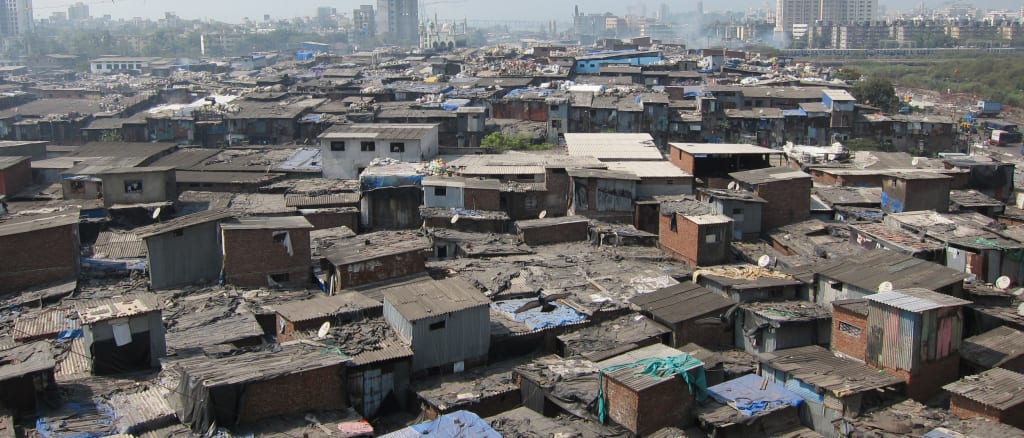
"There are starving children in Africa. Eat your food!"
Almost every American has heard this phrase used by their parents. It is meant to invoke feelings of gratitude, but it holds a grain of truth; there are children starving in Africa, and Asia, and Central and South America. Anywhere you go, there is, at some level, poverty. Many of you reading may be thinking to yourself something along the lines of "Why should I care about poverty abroad when the U.S. has its own problems?" This article seeks to answer that very question by providing 3 reasons that Americans should care about global poverty and support foreign aid for developing nations.
1.) It is the right thing to do.
When I describe poverty, I don's simply mean skipping a meal or two or wearing hand-me-downs. The kind of poverty that exists in some places abroad is truly horrendous. As of 2017, 43.6% of the worlds population lives on less than $5.50 a day, 24.1% lives on less than $3.20 a day, and 9.2%, or a shocking 689 million people, live on less than $1.90 a day, according to the World Bank. When we delve further into the issue and look at starvation rates, we reach an even more grim set of statistics. Each year, approximately 9 million people die of starvation. The issue of hunger is so bad in the developing world in fact that 45% of deaths for children under 5 world wide are caused by malnutrition. With all of these statistics in mind, it might seem as if the issue of global poverty is unsolvable. Well, it is not.
How is it we can end poverty? According to Jeffrey Sachs, an expert on poverty and Director of the Center for Sustainable Development at Columbia University, it would cost $175 billion per year for the next 20 years to solve global poverty. While this may seem like a huge amount of money, in actuality it would represent less than 1% of the total world GDP. Additionally, the spending would be worth it, even if you look at it entirely from a financial standpoint. This brings me to my second point.
2.) It would significantly grow the global economy, as well as grow the U.S. domestic economy and create jobs.
Yes, you heard that right. Ending world poverty would help the U.S. economy and create jobs, and large employers know this. In 2017, over 200 major companies signed a letter to congress urging them to protect the foreign aid budget. Why? The largest consumers of U.S. produced goods and the 10 fastest growing economies, Libya, Rwanda, Bangladesh, Ethiopia, Côte D’Ivoire, Cambodia, India, Tajikistan, and the Dominican Republic are all developing countries that would benefit from increased U.S. foreign aid. In other words, when the U.S. sends foreign aid to other countries in the form of education, technology, medicine, and supplies, those communities grow. When the wealth of these communities and the people that live within them grow, they are able to buy U.S. made goods and services, thus increasing U.S. wealth and creating jobs. "But what about corruption and terrorism? Wouldn't sending money to authoritarian regimes and state sponsors of terrorism make the issue worse?" As it turns out, foreign aid would actually have the reverse effect. This brings me to my third and argument.
3.) Foreign Aid increases U.S. security and helps to reduce violence and terrorism abroad.
Anyone who has been paying attention will tell you that the poorest parts of any city also tend to have the highest levels of crime. The same applies on the international stage. The 10 most dangerous nations are also some of the poorest: Afghanistan, Iraq, Nigeria, Syria, Pakistan, Somalia, India, Yemen, the Philippines, and the Democratic Republic of the Congo. Why is this? First, people who live in poverty are resentful, especially when the U.S. or other Western nations are in part to blame for destabilization in the area. Furthermore, terror groups often promise stability and rebuilding of poor areas. This is attractive to individuals who are use to nothing but misery. Second, people in poor areas, especially the Middle East, have to send their children to the most affordable schools they can, often times religious schools. It is here that children are often times indoctrinated into radical perversions of Islam, and are funneled into terror groups. If you don't believe me when I say that solving poverty can reduce terrorism, then don't take my word for it. Take the word of someone with first hand counter-terrorism expertise. Lieutenant General John Allen, Commander of U.S. Forces in Afghanistan, has said foreign aid "can do as much- over the long term- to prevent conflict as the deterrent effect of a carrier strike group or a marine expeditionary force". Foreign aid works. Additionally, foreign aid is relatively shielded from corrupt governments when it comes in the form of direct aid. Sure, dictatorial governments may be inclined to misuse monetary funds, but aid that comes in a form like education or malaria prevention mosquito nets aren't very useful to these governments. Even when aid comes in the form of money, countries usually have to prove that corruption is being actively fought and that funds are going towards the intended recipients.
Now, for the big question: What can you at home do to help increase foreign aid to those in need?
It might not seem like there is a lot you can do on the individual level, but that isn't actually true. There are a few things you can do even from the comfort of your home! First, you can share this article to spread awareness and can help others to become more educated on the subject of global poverty. Second, you can call your Representative and your Senators. Each call should only take about 30 seconds and doesn't require anything fancy. Just say something like "Hello, my name is ____, I am a constituent, and I support increasing U.S. foreign aid." They may ask for your zip code but other than that you won't be quizzed, so no pressure! You can find out more about how to obtain your congress members' info in a minute or less by watching this useful video: https://www.youtube.com/watch?v=KlNNKGRrp5A
If you want to take it a step further, I would recommend looking into the Borgen Project, a non-profit NGO dedicated to pressuring congress to pass legislation that will fight global poverty. If you wish to help the Borgen Project, please consider donating to my fundraiser for them here: https://borgenproject.org/colby-mathe/
Global poverty is truly terrible, but it is totally combatable. It is within our reach to make a meaningful difference, all we have to do is take the opportunity. Doing so is the right thing to do, can help the U.S. economy, and can help make the world a safer place. Thank you for reading!
Additional Resources:
https://borgenproject.org/how-much-does-it-cost-to-end-poverty/
https://borgenproject.org/wp-content/uploads/Business-Letter-Tillerson-May-22-1.pd
https://www.worldbank.org/en/topic/poverty/overview
https://www.npr.org/sections/coronavirus-live-updates/2020/05/05/850470436/u-n-warns-number-of-people-starving-to-death-could-double-amid-pandemic
https://www.mercycorps.org/blog/quick-facts-global-hunger
https://www.un.org/en/chronicle/article/losing-25000-hunger-every-day
https://www.visionofearth.org/economics/ending-poverty/how-much-would-it-cost-to-end-extreme-poverty-in-the-world/
https://www.statista.com/statistics/272473/us-military-spending-from-2000-to-2012/#:~:text=U.S.%20military%20spending%20from%202000%20to%202019&text=In%202019%20the%20United%20States,when%20adjusted%20to%202018%20dollars).
https://borgenproject.org/global-poverty-u-s-jobs/
https://borgenproject.org/national-security-and-global-poverty/
About the Creator
Colby Mathe
Student of Political Science at UC Merced.
Keep reading
More stories from Colby Mathe and writers in The Swamp and other communities.
I Object
“We live in a free country!” This is something you have likely heard if you live anywhere in the U.S. other than under a rock. Even with all its flaws, the United States is at least more free than most other countries (cato.org). We are a constitutional republic, a representative democracy in which the government is bound to a written constitution. One feature of our constitution that some say lends to our freedom is our system of checks and balances. Each of the three branches of government works to counter and balance each other out so that no one branch becomes too powerful. This system works in several ways, among the most notable being the presidential veto power. The veto power allows presidents to overrule congressional decisions, forcing congress to re-vote and requiring the vetoed bill to pass with a two-thirds majority in both the House and Senate to bypass the veto. This power, though great, is rarely used and instead presidents often choose to use alternative methods of dissuading congress from taking certain action. Three veto alternatives that presidents have used are signing statements, issuing veto threats, and the line-item veto. Should the president use these methods though, or do they represent executive overreach?
By Colby Mathe5 years ago in The Swamp


Comments
There are no comments for this story
Be the first to respond and start the conversation.