
What You Need to Know About Non-Fungible Tokens
How will blockchain technologies affect the world of digital collectables? In this guide, we’ll go over all you need to know about non-fungible tokens (NFTs) and how they will disrupt the gaming, film, and art industries. Here’s what you’ll learn: what NFTs are, why their benefits can improve your business strategy, how their market value works and much more! Let’s start with the basics: what are NFTs?
When should I use an NFT?
Non-fungible tokens have a variety of applications, from collectables to in-game items. For example, crypto kitties are virtual cats that can be bought and sold on cryptocurrency exchanges. NFTs are also used for betting and prediction markets like Augur’s platform, where you can bet on anything from who will win an Oscar to who will die next. The most obvious use case is as unique digital assets.
For example, imagine if every diamond was tracked with its own token or if every piece of art was given its own identity through blockchain technology. This would make it easy to track ownership and prevent fraud—not only when buying diamonds or art but also when selling them. It would make it easy to prove their authenticity because they could be traced back to their origin through blockchain technology (which tracks each transaction made with cryptocurrency). Any asset can be represented by an NFT: real estate, cars, gold bars—anything that has value and a specific owner.
How do NFTs differ from cryptocurrencies?
If you’re asking Are NFTs a cryptocurrency? you need to do some additional research into how these two exciting technologies work. Cryptocurrencies like Bitcoin and Ethereum use blockchain technology and rely on fungibility, meaning each token can be freely exchanged for another token of equal value. There are endless possibilities when it comes to what makes tokens unique, which is why they are called non-fungible or unique tokens.
For example, if I own an orange and someone else owns an orange that looks exactly like mine, we both have an orange. However, if I own an orange with a specific number written on it in permanent marker and someone else owns one with 42 written on it in permanent marker, we both have something unique that cannot be exchanged for one another because there is no way to prove that our oranges are worth exactly the same amount.
One could argue that my orange is worth more than their orange because it has a number on it; however, they could also argue that their orange is actually more valuable than mine due to its higher numerical value. Because of these differences in what makes tokens unique, cryptocurrencies rely on fungibility while NFTs don’t necessarily require it.
While NFTs may not be fungible by nature, that doesn’t mean they aren’t interchangeable. It just means their values will fluctuate depending on their attributes and perceived rarity.
Understanding fungibility
Fungibility means that one unit of a currency is exactly like any other unit. So, if I give you a dollar bill and you give me another dollar bill in return, we are both no worse off. This is clearly true of U.S. dollars since each is interchangeable with all others in commerce, but digital currencies do not typically have these properties because every token has a unique ID that links it to its owner which can potentially be used to block its use by other users who might otherwise want it.
For example, if your token was stolen it would probably become useless to everyone else (including you). As such, fungibility remains an open question for most cryptocurrencies. Many have tried to address it through mixing services that try to obscure ownership records and tokens on various blockchain networks. However, most coins remain non-fungible because they’re attached to their owners and there’s no way around that limitation without compromising their decentralized nature.
While there are many reasons why having non-fungible tokens could be useful in some contexts, right now it appears most applications don’t require them yet so they may not get much traction going forward unless some critical need arises.

Why are individuals prepared to pay millions of dollars on something that can be readily screenshotted or downloaded for free?
To put it another way, when you advertise your NFT on a marketplace, you pay a gas cost (transaction fee) to use the Blockchain, after which your digital art is registered on the Blockchain, indicating that you (your address) own the specific NFT. This provides you complete control over your content, which no one, even the marketplace owner, may change or modify. That's why there is so much craze today for NFTs.
To get exclusive ownership rights, an NFT is constructed, or as crypto aficionados refer to it, "minted." At any given moment, NFTs can only have one owner. NFT owners may also digitally sign their artwork and record particular information in the metadata of their NFTs, in addition to having exclusive ownership. Only the person who purchased the NFT will be able to see this.
Risk of buying NFTs
It is known to all at least some of the tech enthusiasts by now that NFTs are the future. With so much craze for it around the world, NFTs, like each different creature, have their personal darkish side. Several examples of NFT frauds have lately been documented, which include the established order of bogus markets, unverified carriers imitating real artists and promoting half-priced reproductions in their artworks.
CryptoBatz, the NFT series of popular culture legend Ozzy Osbourne, went stay lately. People involved approximately the artist's viable phishing hyperlink depleting their cryptocurrency wallets. The phoney NFT task has attracted a minimum of 1,330 visitors. On January 20, an Ethereum pockets deal related to the fraudsters obtained a sequence of inbound transactions totalling 14.6 ETH ($40,895).
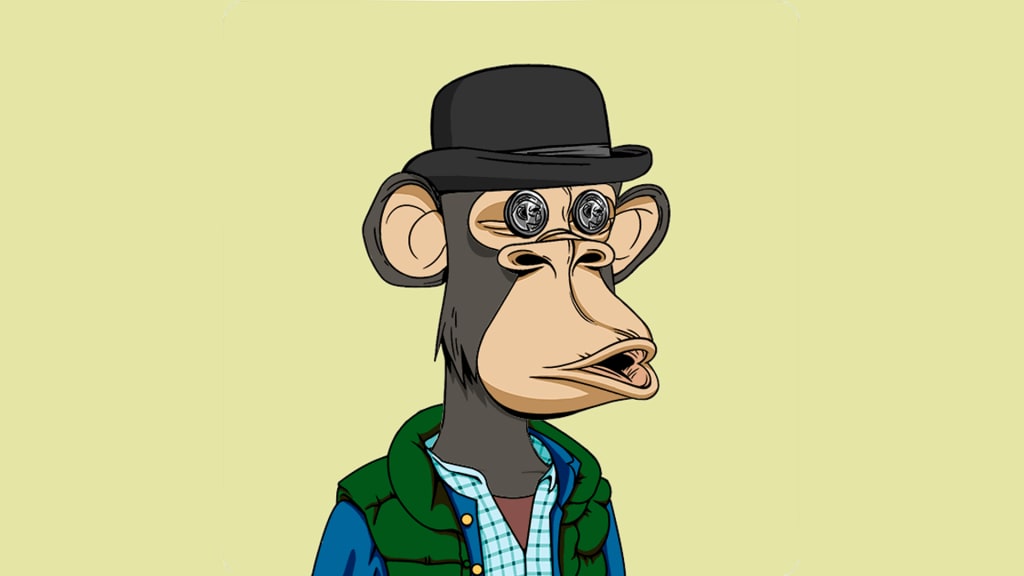
Todd Kramer, a New York-primarily based totally NFT collector, claimed that his series of 16 Bored Ape Yacht Club (BAYC) NFTs, valued at $2.28 million (approximately Rs 16. ninety-four crore), had been "hacked. Todd Kramer, the proprietor of the NFTs, said that the NFT market OpenSea had "frozen" the belongings for him, which covered one Clonex, seven Mutant Ape Yacht Club, and 8 BAYC NFTs are really well worth kind of 615 Ether.
Another trouble connected with NFTs that can't be omitted is their undeniably extreme environmental effect. Crypto mining is used to validate transactions, which necessitates using excessive-powered computer systems that run at a totally excessive capacity, in the end hurting the environment.
About the Creator
Keep reading
More stories from Aritra Dutta and writers in The Chain and other communities.
You might not know it, but the Blockchain is changing your life.
The most common definition of blockchain is a shared, immutable ledger of data that is distributed across a network of computers. But even this very basic definition has far-reaching implications for the way we live our lives. From tracking food from farm to table to ensuring the accuracy of medical records, blockchain is quickly moving from the fringe to the centre in the world of business and technology.
By Aritra Dutta4 years ago in The Chain
Ethereum Mining: What It Was, Why It Ended, and What to Do Now
Introduction Ethereum mining was once one of the most popular ways Americans earned crypto. From home GPU rigs to large mining farms, thousands of people across the U.S. mined Ethereum as a side hustle, a business, or a long-term bet on crypto.
By saif ullah3 days ago in The Chain
Atomic Wallet: A Complete Guide to Features, Security, Pros & Cons
Atomic Wallet is one of the most talked-about non-custodial cryptocurrency wallets in the market today. It is designed for users who want full control over their crypto assets without relying on centralized exchanges. With support for hundreds of cryptocurrencies, built-in exchange features, and staking options, Atomic Wallet has attracted beginners and experienced crypto users alike.
By saif ullah7 days ago in The Chain
The Devil's Cut
“Comrade, finally you’re awake.” The voice was smooth, sensual. A flickering incandescent bar was all that lit the white, sterile room. All Vladimir remembered was everything going black. He tried to move his arms and found them strapped to the gurney.
By Matthew J. Fromm5 days ago in Fiction


Comments
There are no comments for this story
Be the first to respond and start the conversation.