

A Multi-Party Computation (MPC) wallet is a type of cryptocurrency wallet that uses advanced cryptographic techniques to distribute the control of a private key across multiple parties. Unlike traditional wallets, where a single private key controls access to the funds, MPC wallets divide the key into several parts, each held by different entities. These parts work together to authorize transactions without ever being combined or revealing the full key. This approach significantly enhances the security of the wallet by ensuring that no one party holds full control over the assets.
How MPC Wallets Work
In an MPC wallet, the private key is split into shares using cryptographic algorithms, such as Shamir's Secret Sharing or other multi-party computation techniques. Each share is distributed among multiple participants, which could include the wallet owner, a custodian, or even a network of computers. When a transaction is initiated, these participants collaborate to generate a valid signature without ever exposing their individual key shares.
This process ensures that a compromised participant cannot jeopardize the security of the assets, as they only hold a fragment of the key. The transaction is signed using a collaborative process, meaning the private key never has to be fully reconstructed or exposed at any point, making it extremely secure.
Key Features of an MPC Wallet
Decentralized Control: MPC wallets decentralize control by splitting the private key into parts, preventing any single entity from having complete control over the wallet. This is particularly beneficial for institutions or businesses where multiple approvals are needed for transactions.
Enhanced Security: The cryptographic splitting of the private key ensures that even if one party's key share is compromised, the funds remain secure. Hackers would need to compromise all key shares to gain access, which is much more difficult than breaching a traditional wallet with a single private key.
Flexibility in Usage: MPC wallets can be used in both hot and cold wallet setups, offering flexibility for different use cases. They can be integrated into various platforms and are suitable for individuals, institutions, and businesses looking for advanced security solutions.
No Single Point of Failure: With traditional wallets, losing the private key means losing access to the funds. In an MPC wallet, no single party or key share has enough power to move the assets, effectively eliminating a single point of failure.
Benefits of Using an MPC Wallet
Institutional-Grade Security: For institutions handling large sums of cryptocurrency, security is paramount. MPC wallets offer enterprise-level security by distributing control and minimizing the risk of internal or external theft.
Elimination of Key Loss Risk: In traditional wallets, losing the private key can result in irrecoverable losses. MPC wallets prevent this issue by allowing multiple parties to hold different parts of the key, meaning the loss of one part doesn’t compromise the entire wallet.
Multi-Signature Alternative: MPC wallets serve as a more advanced alternative to multi-signature wallets, where multiple signatures are needed for transactions. Unlike multi-sig wallets, which are limited to a fixed number of participants and often require manual processes, MPC wallets are more flexible, allowing dynamic participant management and automated approval processes.
Improved Compliance: Businesses and institutions often need to meet regulatory standards that require oversight and accountability for transactions. MPC wallets allow for distributed control, providing a transparent method for approving and tracking transactions, making it easier to comply with regulations.
MPC Wallet vs. Multi-Signature Wallet
While both MPC and multi-signature (multi-sig) wallets aim to enhance security by distributing control, there are key differences between the two. In a multi-sig wallet, a transaction can only be approved if a certain number of participants sign off, typically through fixed thresholds. MPC wallets, on the other hand, use advanced cryptographic algorithms to share the private key and allow the participants to collectively approve a transaction without predefined thresholds.
MPC wallets provide more flexibility and security as the key shares are never combined, unlike in multi-sig wallets where signatures are gathered and processed in one place. Additionally, MPC wallets are often more scalable, easier to integrate with other systems, and can support more complex approval processes than multi-signature wallets.
Use Cases for MPC Wallets
Institutional Investors: Large financial institutions managing cryptocurrency portfolios benefit from MPC wallets because they allow multiple parties within the organization to jointly control assets, reducing the risk of internal fraud or unauthorized access.
Crypto Exchanges: Exchanges dealing with high volumes of transactions can use MPC wallets to secure customer funds, allowing for faster transaction approval while maintaining strong security protocols.
Decentralized Finance (DeFi): In DeFi, where decentralized control is key, MPC wallets offer a way to securely manage funds without trusting a single party, making them ideal for complex decentralized applications and platforms.
Family Offices and High-Net-Worth Individuals: High-net-worth individuals and family offices managing significant amounts of cryptocurrency can use MPC wallets to ensure that multiple stakeholders, such as family members or financial advisors, are involved in the asset management process, ensuring security and oversight.
Challenges of MPC Wallets
Complexity: Implementing an MPC wallet can be more complex than using traditional wallets or even multi-signature wallets. The cryptographic processes involved require specialized knowledge and often more sophisticated infrastructure, which may not be easily accessible for smaller businesses or individual investors.
Cost: Due to the advanced technology involved in MPC wallets, they can be more expensive to set up and maintain compared to traditional solutions. However, this is often outweighed by the security benefits for larger institutions.
Limited Adoption: While MPC technology is gaining traction, it is still relatively new in the crypto space. As a result, there are fewer providers offering MPC wallets compared to traditional or multi-sig solutions, which can limit accessibility for some users.
The Future of MPC Wallets
As the cryptocurrency market continues to grow, the need for more secure, flexible, and scalable solutions will increase. MPC wallets are likely to become a key part of this evolution, particularly for institutional investors, businesses, and DeFi platforms. Advances in cryptographic research and increased adoption of MPC technology will likely lead to more user-friendly, cost-effective solutions, making them accessible to a wider range of users.
Conclusion
MPC wallets represent a cutting-edge solution for securing cryptocurrency assets by decentralizing control and minimizing the risks associated with private key management. Whether you're an individual investor looking for enhanced security or an institution handling millions in crypto, MPC wallets provide a highly secure, flexible, and scalable option. As adoption increases and the technology matures, MPC wallets will likely play a critical role in the future of digital asset security.
About the Creator
Bitcoin Dominance Explained: What It Is & Why It Matters for Crypto Traders
Introduction Bitcoin dominance is one of the most watched indicators in the crypto market. It shows how much of the total cryptocurrency market value belongs to Bitcoin compared to all other cryptocurrencies combined. Traders, long-term investors, and analysts track this metric because it helps explain capital rotation, market sentiment, and risk appetite across crypto cycles.
By saif ullaha day ago in The Chain
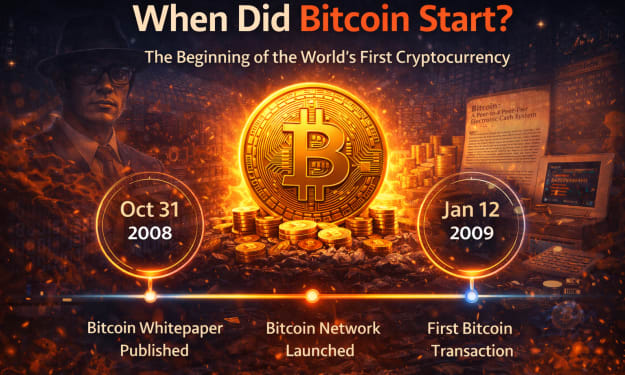
When Did Bitcoin Start? A Simple History of Bitcoin’s Beginning
Introduction Many people use Bitcoin today, but few know exactly when Bitcoin started and how quietly its journey began. Bitcoin did not launch with hype, investors, or advertisements. Instead, it emerged during a time of global financial uncertainty, offering a new idea: money without banks.
By saif ullah3 days ago in The Chain



Comments
There are no comments for this story
Be the first to respond and start the conversation.