
The Rise of Cryptocurrency: Understanding the Future of Digital Currency
Exploring the technology behind blockchain, the history of Bitcoin and the potential impact of cryptocurrency on the global economy

Cryptocurrency, digital currency that utilizes cryptography for security, has been gaining more and more attention in recent years. The most well-known and widely used cryptocurrency is Bitcoin, but there are now thousands of different coins and tokens available. The technology behind these digital currencies is called blockchain, which is a decentralized and distributed digital ledger that records all transactions on a network. This article will explore the technology behind blockchain, the history of Bitcoin and the potential impact of cryptocurrency on the global economy.
Blockchain technology is the backbone of all cryptocurrencies. It is a decentralized and distributed digital ledger that records all transactions on a network. Instead of relying on a central authority to validate transactions, blockchain uses a network of nodes to validate and record transactions. Each node has a copy of the entire blockchain, which is updated and verified every time a new transaction is made. This makes the blockchain virtually tamper-proof, as any attempt to change the record of a past transaction would be immediately apparent to the entire network.
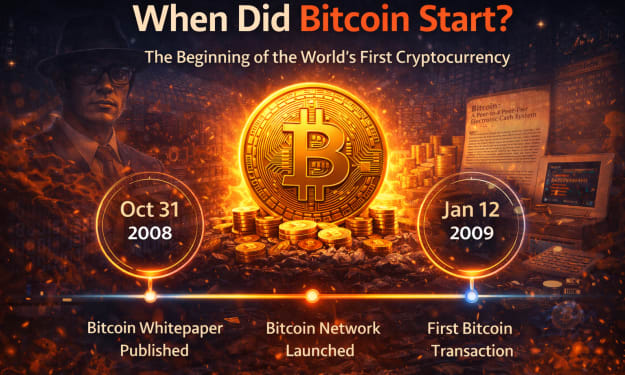
Bitcoin, the first and most well-known cryptocurrency, was created in 2009 by an individual or group using the pseudonym Satoshi Nakamoto. In a white paper published in 2008, Nakamoto described a decentralized digital currency that uses a blockchain to record transactions. The first bitcoins were mined in 2009, and the currency has since grown to become the largest cryptocurrency by market capitalization. Bitcoin operates on a peer-to-peer network, and transactions are validated and recorded on the blockchain using a proof-of-work consensus mechanism.
Since the creation of Bitcoin, thousands of other cryptocurrencies have been created. These are called altcoins, or alternative coins. Some of these altcoins, such as Ethereum, Litecoin, and Ripple, have gained significant traction and have large market capitalizations. However, there are also many small, niche coins and tokens that have been created for specific purposes.
The potential impact of cryptocurrency on the global economy is a topic of much debate. On one hand, proponents argue that cryptocurrency has the potential to revolutionize the financial industry by providing a decentralized and more secure alternative to traditional banking systems. Cryptocurrency could also provide financial services to the unbanked population, who currently do not have access to traditional banking services.
On the other hand, critics argue that the volatility of cryptocurrency prices and the lack of regulation make it a risky investment. Additionally, the anonymity provided by cryptocurrency has led to concerns about money laundering and other illegal activities.
In conclusion, cryptocurrency and blockchain technology are still relatively new and the full extent of their impact on the global economy is yet to be seen. However, it is clear that these technologies have the potential to revolutionize the way we think about money and financial transactions. As more and more businesses and individuals begin to adopt cryptocurrency, it will be interesting to see how it continues to shape the global economy in the future. It's important to mention that the blockchain technology has uses beyond the financial sector and could be used for other purposes such as supply chain management, voting systems, and identity verification.
In any case, as the adoption of cryptocurrency and blockchain technology continues to grow, it is important to stay informed and understand the potential implications of these technologies on the global economy.
Another potential benefit of cryptocurrency is the ability to bypass traditional financial intermediaries and reduce transaction costs. With cryptocurrency, individuals and businesses can make transactions directly with each other without the need for a bank or other intermediary. This can lead to lower transaction fees, faster transactions, and greater financial freedom.
The decentralized nature of cryptocurrency also means that it is not subject to the same geopolitical risks as traditional currencies. For example, if a country's government collapses or its currency becomes worthless, cryptocurrency can be a safe haven for individuals to store their wealth.
However, it's worth to mention that despite the benefits of cryptocurrency, it also has its downsides. One of the main concerns is the lack of regulation in the cryptocurrency market. This lack of oversight has led to a number of scams and fraudulent activities in the market, which has resulted in some investors losing their money.
Another concern is the environmental impact of cryptocurrency mining. The proof-of-work consensus mechanism used by most cryptocurrencies requires a significant amount of computational power, which consumes a lot of energy. This has led to concerns about the high energy consumption and carbon footprint of the cryptocurrency industry.
Despite these concerns, the trend of cryptocurrency adoption continues to grow. More and more businesses and individuals are starting to accept cryptocurrency as a form of payment, and governments and financial institutions are beginning to explore the potential of blockchain technology. It is likely that we will see more widespread adoption of cryptocurrency and blockchain technology in the future.
In addition, Central Banks and governments are also exploring the possibility of issuing their own digital currencies, commonly known as Central Bank Digital Currencies (CBDC). This would be a digital version of the fiat currency, issued and backed by the central bank. This could bring the benefits of digital currencies to the traditional financial system and could reduce the need for physical cash.
In conclusion, cryptocurrency and blockchain technology are still relatively new and their full potential is yet to be seen. However, it is clear that these technologies have the potential to revolutionize the way we think about money and financial transactions. As more and more businesses and individuals begin to adopt cryptocurrency, it will be interesting to see how it continues to shape the global economy in the future. While it's important to be aware of the potential risks and downsides, it's worth considering the benefits that these new technologies could bring to the financial sector and beyond.
About the Creator
Keep reading
More stories from yash Sojitra and writers in The Chain and other communities.
Cryptocurrency for e-Commerce: How it is Changing Online Shopping
Click here to learn more about cryptocurrency. The rise of cryptocurrencies has sparked a revolution in the way we think about money, online shopping, and financial transactions. The decentralized nature of cryptocurrencies like Bitcoin and Ethereum, combined with their secure and fast transaction processing, has made them an attractive alternative to traditional payment methods like credit cards, PayPal, and bank transfers. As a result, more and more e-commerce businesses are beginning to embrace cryptocurrencies as a payment option for their customers.
By yash Sojitra3 years ago in The Chain
Bitcoin Dominance Explained: What It Is & Why It Matters for Crypto Traders
Introduction Bitcoin dominance is one of the most watched indicators in the crypto market. It shows how much of the total cryptocurrency market value belongs to Bitcoin compared to all other cryptocurrencies combined. Traders, long-term investors, and analysts track this metric because it helps explain capital rotation, market sentiment, and risk appetite across crypto cycles.
By saif ullah2 days ago in The Chain
When Did Bitcoin Start? A Simple History of Bitcoin’s Beginning
Introduction Many people use Bitcoin today, but few know exactly when Bitcoin started and how quietly its journey began. Bitcoin did not launch with hype, investors, or advertisements. Instead, it emerged during a time of global financial uncertainty, offering a new idea: money without banks.
By saif ullah4 days ago in The Chain
Miss Persephone's Manual to a Seemingly Ordinary Life
Miss Persephone was found at the dining table, her blue eyes swollen, her tears arriving and retreating like the tides of the ocean. Earlier that day, her family had visited her in the retirement home where she had lived for eight years. It was her eightieth birthday.
By Imola Tóth4 days ago in Fiction



Comments
There are no comments for this story
Be the first to respond and start the conversation.