
The Mystery of Satoshi Nakamoto: The Ghost Who Invented Bitcoin
A Silent Revolution

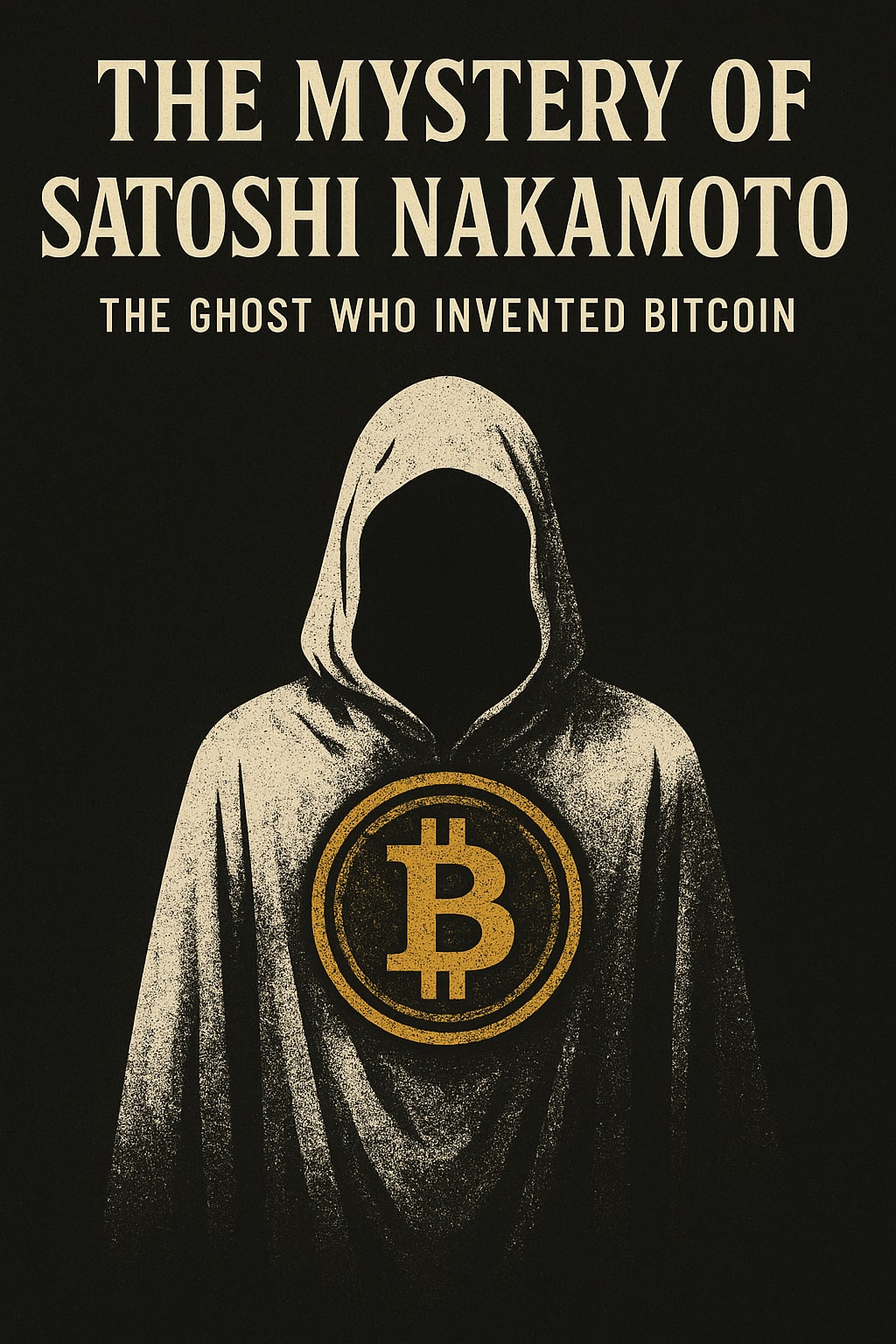
In the shadows of the 2008 global financial collapse, when trust in the banking system was at its lowest and citizens worldwide were questioning the foundations of capitalism itself, an anonymous figure—someone who would become a legend—whispered into the void. The whisper was not spoken aloud, but rather written, encoded into a whitepaper. That whisper would eventually become a global roar: Bitcoin.
No one saw Satoshi Nakamoto arrive. No one saw them leave. But what they left behind was a tool that could change the financial world forever.
Chapter 1: The Birth of an Idea (2008)
The year was 2008. Banks were failing, economies were in turmoil, and regular people were suffering. The world was waking up to the fact that the system was flawed—and it was in that chaos that a quiet figure stepped forward.
On October 31, 2008, a paper titled "Bitcoin: A Peer-to-Peer Electronic Cash System" was published on a cryptography mailing list. It was signed by a name no one had ever heard before: Satoshi Nakamoto.
At first glance, it seemed like just another technical proposal. But those who read closely realized it proposed something radical: a digital currency that required no banks, no governments, and no middlemen. It was decentralized, anonymous, and entirely peer-to-peer. In a world of centralized control, this was rebellion cloaked in code.
Few took it seriously. Even fewer understood the technical brilliance behind it. But for those who did, it was the beginning of something world-changing.
Chapter 2: The Genesis Block (2009)
On January 3, 2009, the Bitcoin network came alive. Satoshi mined the first block, now famously known as the Genesis Block. Embedded in the block was a message:
"The Times 03/Jan/2009 Chancellor on brink of second bailout for banks."
It wasn’t just a timestamp—it was a statement. It was protest. The world had failed the people, and Satoshi was offering a new path.
With no fanfare, no press conference, and no known identity, Satoshi continued to develop Bitcoin alone. They wrote code. They interacted with early adopters on cryptography forums. They explained the system patiently to skeptics and advocates alike.
In those early months, Bitcoin had no monetary value. It was an experiment—a gift from an invisible coder to a broken world.
Chapter 3: Partners in Code
In late 2009 and early 2010, a small community began to grow around Bitcoin. One of the first to join was Hal Finney, a well-known cryptographer. He was the first person—other than Satoshi—to run the Bitcoin software.
Finney received the first Bitcoin transaction ever made. From Satoshi. Just ten BTC. But it was historic.
More contributors joined: Gavin Andresen, Mike Hearn, and others. They helped improve the code, spread the idea, and imagine new applications.
Through emails and forums, Satoshi guided them all. But always from behind a screen. No voice. No video. Just text and brilliant code.
Chapter 4: The Disappearance
In April 2011, just as Bitcoin began gaining real attention, Satoshi sent his last known email to developer Mike Hearn:
"I’ve moved on to other things. Bitcoin is in good hands with Gavin and everyone."And then—nothing.
The email address went dark. Forum posts ceased. Satoshi Nakamoto, the most mysterious figure in modern technology, had vanished.
But why?
Chapter 5: The Suspects
Over the years, the hunt for Satoshi’s true identity became a digital detective game. Journalists, programmers, governments, and conspiracy theorists all joined in.
Nick Szabo A brilliant cryptographer who had written about a precursor to Bitcoin called "Bit Gold." His writing style matched Satoshi’s. His code resembled Satoshi’s. But he denied being the creator.
Hal Finney
Some believed he was Satoshi—at least part of the team. He was the first to use the software and lived near someone named Dorian Nakamoto. But Hal denied it before his death in 2014. He never used the massive amount of BTC Satoshi mined.
Craig Wright
An Australian entrepreneur who claims to be Satoshi. But every attempt he’s made to prove it has fallen apart. Documents have been questioned. Code has been inconsistent. And the community largely rejects his claims.
Dorian Nakamoto
Outed by Newsweek in 2014, this Japanese-American man was bombarded by the press. He denied involvement, saying he’d never heard of Bitcoin until journalists showed up.
Still, the mystery remains.
Chapter 6: The Reasons for Silence
Satoshi’s decision to disappear wasn’t just mysterious—it may have been essential.
Bitcoin is built on decentralization. If Satoshi remained public, their influence could threaten the system.
There are also legal dangers. Governments might see Satoshi as a threat. Bitcoin could be linked to crime, tax evasion, and money laundering. The creator could become a target.
Then there’s safety. Satoshi’s known wallets hold around 1 million BTC. That’s over $60 billion. A fortune that’s never been moved. If someone discovered their identity, they could become a target of theft or even assassination.
Perhaps the greatest power Satoshi had was knowing when to walk away.
Chapter 7: The Impact
Bitcoin started a revolution. In the years following Satoshi’s disappearance:
Cryptocurrencies exploded into a $2.5 trillion industry.
Ethereum, Litecoin, Dogecoin, and thousands more followed.
Blockchain began reshaping finance, art (via NFTs), and global tech infrastructure.
Satoshi’s idea no longer belonged to them—it belonged to the world.
Chapter 8: Dead or Watching?
Some believe Satoshi is dead—perhaps Hal Finney, perhaps someone else who wanted to leave a legacy without fame.
Others think Satoshi watches silently, proud or perhaps worried about what the creation has become.
One thing is certain: the mystery fuels the legend.
Chapter 9: A Ghost in the Code
In every line of Bitcoin’s code, there are echoes of Satoshi. In every digital wallet, every crypto transaction, and every heated online debate, their ghost lingers.
We may never see their face, never hear their voice—but their presence is everywhere.
And maybe that’s the way it was always meant to be.
-Chapter 10: The Final Question
Do we need to know who Satoshi Nakamoto is? Or is the mystery more valuable? In a world obsessed with fame and recognition, Satoshi chose anonymity. In a world where everyone wants power, they walked away. Maybe that was the greatest invention of all.
As they once said:
> "If you don’t believe me or don’t get it, I don’t have time to convince you."
The legend of Satoshi Nakamoto is not just a tech story. It’s a human story. Of rebellion. Of genius. Of letting go.
And the final chapter? It’s still being written—by all of us.
About the Creator
Frank Massey
Tech, AI, and social media writer with a passion for storytelling. I turn complex trends into engaging, relatable content. Exploring the future, one story at a time
Reader insights
Good effort
You have potential. Keep practicing and don’t give up!
Top insight
Heartfelt and relatable
The story invoked strong personal emotions
Keep reading
More stories from Frank Massey and writers in The Chain and other communities.
The Alchemist of Destiny: The Untold Struggles of Paulo Coelho
You will never make it as a writer." The words echoed like thunder in Paulo Coelho’s teenage mind. He had heard them from teachers, relatives, and even from the people closest to him—his own parents. Born in 1947 in Rio de Janeiro, Brazil, Paulo was not the boy society wanted him to be. He wasn’t athletic, or particularly obedient, and he didn't care for the rigid expectations of a conservative Catholic household. What he did care for—deeply—was writing, and he knew it was his calling, even if the world was deaf to it.
By Frank Massey 6 months ago in Writers
Ethereum Mining: What It Was, Why It Ended, and What to Do Now
Introduction Ethereum mining was once one of the most popular ways Americans earned crypto. From home GPU rigs to large mining farms, thousands of people across the U.S. mined Ethereum as a side hustle, a business, or a long-term bet on crypto.
By saif ullah2 days ago in The Chain
Atomic Wallet: A Complete Guide to Features, Security, Pros & Cons
Atomic Wallet is one of the most talked-about non-custodial cryptocurrency wallets in the market today. It is designed for users who want full control over their crypto assets without relying on centralized exchanges. With support for hundreds of cryptocurrencies, built-in exchange features, and staking options, Atomic Wallet has attracted beginners and experienced crypto users alike.
By saif ullah6 days ago in The Chain


Comments (1)
He is a Monk from Mar Saba. He first named it Be It Coin. There is a hint for you.