
The Future of Investing: Why AI Based Portfolio Management is a Game‑Changer
Unlocking Smarter Investment Strategies with the Power of Artificial Intelligence
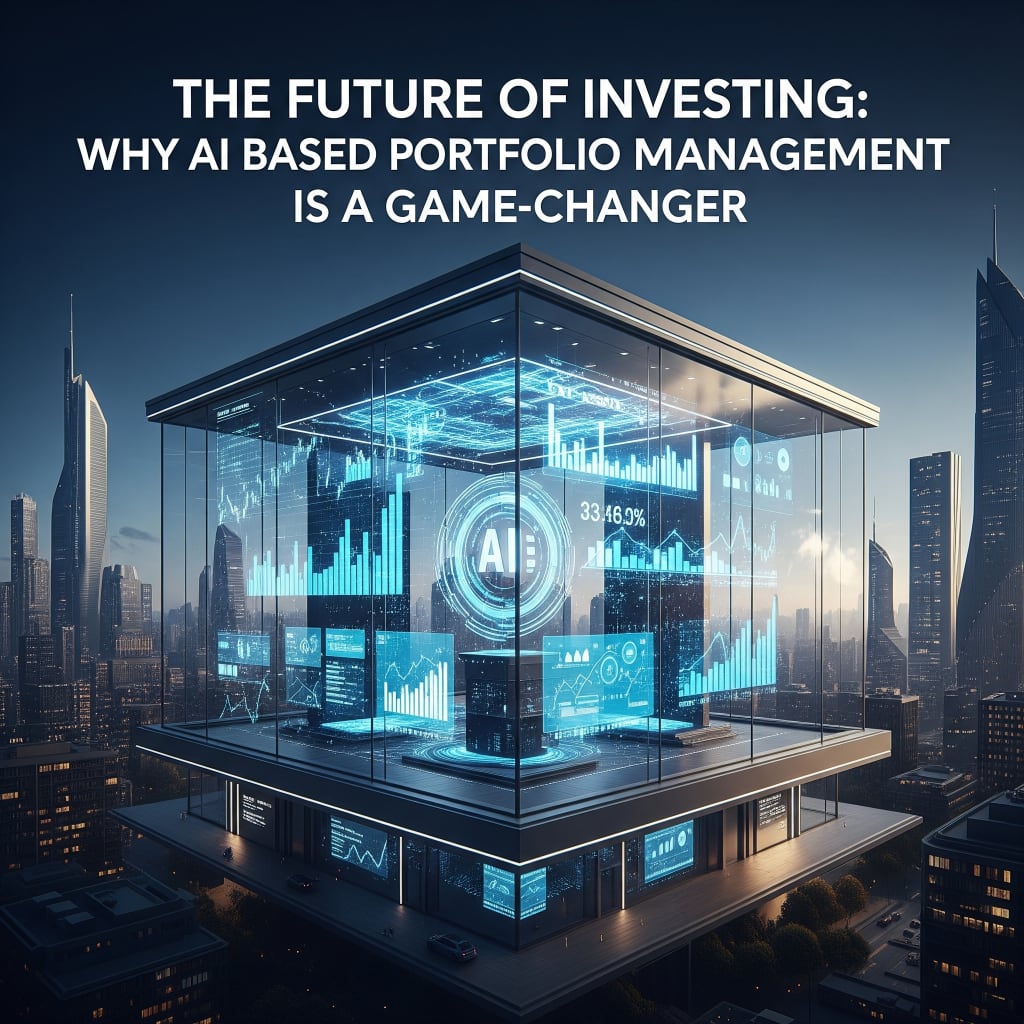
Managing an investment portfolio has always been part art, part science. Investors balance risk tolerance, time horizon, asset allocation, and market cycles. In recent years, AI based portfolio management has emerged as a transformative approach—one blending computational power with data‑driven insights to enhance returns, reduce risks, and ease decision‑making. In this post, we dive into what this technology really means, why it matters, and how individuals and firms can harness it to achieve smarter investment outcomes.
1. What Exactly Is AI Based Portfolio Management?
At its core, AI based portfolio management refers to leveraging artificial intelligence—specifically machine learning, natural language processing, and pattern recognition—to construct, monitor, rebalance, and optimize investment portfolios. Unlike traditional methods that rely heavily on financial analysts or simple formulas, this approach:
- Processes massive datasets—market prices, economic indicators, social sentiment, earnings reports, even satellite imagery.
- Learns patterns and signals over time, predicting risk and return more dynamically.
- Executes strategic adjustments with speed and precision based on evolving conditions.
Think of it as giving your portfolio a smart assistant: one that stays awake, scans data incessantly, and nudges you to take action before opportunity or danger strikes.
2. The Ingredients of AI Powered Investing
There are several core components that make AI based portfolio management powerful:
a. Data Ingestion and Cleansing
Quality analysis depends on quality data. AI tools gather information from public filings, news articles, social media posts, economic releases, and more. They also clean and standardize data, discarding noise and correcting inconsistencies so downstream models are reliable.
b. Feature Engineering and Signal Discovery
AI sifts through thousands of variables—like price trends, volatility clusters, insider trades, market momentum, and macroeconomic shifts—to discover which ones actually move markets. These signals may escape human intuition.
c. Model Training and Testing
Machine learning models undergo rigorous training on historical data (“backtesting”) and real‑time validation (“paper trading”). They learn to discern profitable setups and avoid false signals, recognizing regime changes across bull and bear markets.
d. Risk Modeling and Diversification
AI constructs efficient frontiers dynamically, blending assets and derivatives to tailor portfolios to investor risk profiles. It can simulate stress scenarios—pandemics, geopolitical shocks, inflation spirals—and adapt allocations proactively.
e. Execution and Rebalancing
Once a strategy is defined, AI can automate transactions—placing buy/sell orders via APIs. Rebalancing becomes a data‑driven exercise, optimized for market conditions, transaction costs, and tax considerations.
f. Continuous Learning
The hallmark of AI based portfolio management is feedback loops. Models update themselves with each new data stream, fine‑tuning predictions to adapt to shifting realities.
3. Why Mainstream Adoption Is Accelerating
AI’s rise into mainstream portfolio management isn’t an accident—it’s fueled by clear, measurable benefits:
- Enhanced Accuracy: AI models often see patterns invisible to human analysts—momentum shifts, macro signals, correlations across borders.
- Operational Efficiency: Tasks that once needed teams of analysts—data collection, earnings modeling, risk reporting—can be automated.
- Speed and Responsiveness: Algorithms can rebalance portfolios within seconds, responding to news events or market moves faster than humans.
- Customization at Scale: High‑net‑worth investors and advisors alike can now access tailored strategies that adapt to individual goals and constraints.
- Reduced Costs: Robo‑advisor platforms powered by AI have driven fee compression, making advanced investing techniques affordable for everyday people.
4. Real‑World Applications in Practice
Let’s examine how AI based portfolio management is being leveraged today:
a. Retail Robo‑Advisors
Platforms like Wealthfront, Betterment, and M1 Finance use AI algorithms to suggest portfolios aligned with personal goals. They automate tax‑loss harvesting, rebalancing, and even goal‑based saving—making sophisticated investing accessible.
b. Hedge Funds and Institutional Investors
Quant firms like Renaissance Technologies, Two Sigma, and AQR integrate AI into high‑frequency trading, statistical arbitrage, and multi‑asset strategies. Their success demonstrates AI’s potential to outperform traditional beta.
c. Hybrid Human‑AI Models
Some asset managers merge AI insights with human judgment. AI generates trade ideas; human analysts vet them. This synergy combines computational rigor with business context.
d. ESG and Thematic Portfolios
AI helps identify companies meeting social, environmental, and governance criteria by scanning textual data, news coverage, and policy filings—enabling more credible ESG portfolios.
e. Risk‑Sensitive Allocation
Using real‑time data and predictive analytics, AI can shift a portfolio toward bonds during anticipated volatility, or overweight cyclicals when economic recovery becomes likely.
5. Overcoming Challenges and Misconceptions
Despite its promise, AI based portfolio management has limitations:
Overfitting Risk: Models might excel on past data but perform poorly in new conditions. Vigilance in backtesting and live performance is essential.
Black‑Box Concerns: Some AI systems make decisions without transparent explanations, which can trouble regulators and investors.
Data Bias: Poor or skewed data can lead to flawed models. Regular audits and diversified sources are necessary.
Operational Risks: Errors, bugs, or connectivity failures can trigger unintended trades or delays.
Human Oversight Needed: AI should support—not replace—human judgment. Especially when major capital is involved, oversight ensures alignment with broader objectives.
6. How to Evaluate AI‑Driven Portfolio Tools
If you're considering AI based portfolio management, look for these criteria:
- Model Transparency: Does the provider explain key signals? Can you access performance reports?
- Data Quality: Are multiple, verified data feeds used? How often are they updated?
- Risk Safeguards: What controls limit exposure and prevent runaway trading?
- Fees and Accessibility: Are costs competitive compared to passive index funds or traditional advisors?
- Track Record: How has the strategy performed through different market cycles—bull, bear, and sideways?
- Customization Features: Can you adjust risk levels, opt into tax‑efficient rebalancing, exclude sectors, or add sustainability preferences?
- Support and Governance: What kind of human support, accountability, and compliance frameworks are in place?
7. Steps to Begin with AI‑Driven Investing
Whether you're a retail investor or advisor, adopting AI based portfolio management involves:
Clarify Objectives – Define risk tolerance, time horizon, return goals, themes (e.g. growth, value, ESG).
- Vet Solutions – Compare robo‑advisors, hybrid platforms, or independent AI tools.
- Pilot Small – Start with a test allocation, track returns and behavior over 6–12 months.
- Review Regularly – Monitor performance, rebalance frequency, and alignment with goals.
- Scale Responsibly – Transition more capital only when comfortable with how the model behaves in volatility.
- Maintain Oversight – Use alerts, thresholds, and periodic expert reviews to ensure alignment.
8. Myths and Facts About AI Investing
Myth: AI always beats the market.
Fact: Performance varies by strategy. AI adds repeatable rigor and timeliness—but it doesn’t guarantee alpha in every environment.
Myth: AI removes emotion from investing.
Fact: It automates execution and signals, but human emotions can still lead to abandonment or misuse of tools.
Myth: You need tons of capital to benefit.
Fact: Many AI‑powered platforms are accessible to investors with just a few hundred dollars—no hedge‑fund bankroll required.
9. A Real‑World Example
Consider Jane, a 35‑year‑old professional seeking a long‑term retirement plan. Risk‑averse but wanting moderate growth, she allocates $10,000 in an AI‑powered robo‑advisor account. The platform:
Combines U.S. equities (40%), international equities (30%), corporate bonds (20%), and short‑term T‑bills (10%).
Uses AI to detect inflation pressure and shifts to shorter duration bonds accordingly.
- Incorporates tax‑loss harvesting to reduce her capital gains.
- Alerts Jane during a sudden market drop prompting additional investment—proactively reinforcing her plan.
Six months in, her portfolio is within target variance, outperforming a standard 60/40 index portfolio by a modest margin, while encouraging disciplined behavior and low effort on her part.
10. The Ethical and Social Side
As AI grows, ethical considerations become central:
- Fair Access: Tools should remain inclusive, avoiding hidden fees that target retail investors unfairly.
- Transparency: Users deserve clarity on how decisions are made—what data, what models, and what limitations exist.
- Regulatory Compliance: Firms must follow evolving rules around algorithmic trading, investor protection, and privacy.
- Data Privacy: As platforms ingest personal financial data, protection against misuse or breaches is paramount.
- Avoiding Over‑Automation: The goal is smarter investing, not replacing financial literacy or personal accountability.
11. What Lies Ahead?
The future of AI based portfolio management promises even deeper integration:
- Multi‑Modal Data: Satellite feeds, consumer behavior signals, and alternative data sources will further enrich models.
- Personalized Micro‑Advisors: AI agents tailoring portfolios for life‑events—marriage, property purchase, early retirement.
- Real‑Time Rebalancing Mirrors: Smart contracts and blockchain could allow instantaneous trades once predefined thresholds are met.
- Emotional AI Overlays: Sentiment‑aware bots helping investors stay disciplined, nudging away from panic selling.
- Open‑Source Models: Transparent, community‑driven algorithms that empower users to tweak strategies and share learnings.
12. Final Thoughts: Embrace, But Don’t Abdicate
AI based portfolio management offers tangible advantages: smarter data analysis, disciplined rebalancing, and modular access. That said, it’s not a “set it and forget it” magic bullet. The most effective use comes when:
- You maintain oversight—review model performance and ask tough questions.
- You understand trade‑offs—why the model buys or sells.
- You align the tool with your life plan—not the other way around.
Ultimately, the smartest investors will be those who embrace AI as a partner—not a crutch. It’s a leap forward in portfolio thinking, but real success still hinges on human values, prudence, and strategic vision.
Why This Matters to You
If you’re an investor, financial advisor, or just someone curious about better ways to manage money, AI based portfolio management offers a path to smarter, more disciplined investing. It combines advanced technology with core investment principles in a way that’s accessible, adaptable, and intelligent.
Take the time to explore, test, and personalize. Let AI handle the mechanics—data crunching, model updates, trade execution—while you focus on the bigger picture: your goals, values, and future. That’s how this next evolution in portfolio management becomes truly transformative.
About the Creator
Keep reading
More stories from Siddarth D and writers in The Chain and other communities.
Automated Crypto Trading: A Smart Addition to Your Crypto Investment Strategies
Cryptocurrency has transformed from an obscure digital experiment to a global financial force. As Bitcoin and its peers continue to capture headlines and investor interest, the conversation has naturally shifted from whether to invest in crypto to how to invest in crypto. That’s where smart crypto investment strategies—and innovations like automated crypto trading—come into play.
By Siddarth D7 months ago in The Chain
Bitcoin Dominance Explained: What It Is & Why It Matters for Crypto Traders
Introduction Bitcoin dominance is one of the most watched indicators in the crypto market. It shows how much of the total cryptocurrency market value belongs to Bitcoin compared to all other cryptocurrencies combined. Traders, long-term investors, and analysts track this metric because it helps explain capital rotation, market sentiment, and risk appetite across crypto cycles.
By saif ullah2 days ago in The Chain
When Did Bitcoin Start? A Simple History of Bitcoin’s Beginning
Introduction Many people use Bitcoin today, but few know exactly when Bitcoin started and how quietly its journey began. Bitcoin did not launch with hype, investors, or advertisements. Instead, it emerged during a time of global financial uncertainty, offering a new idea: money without banks.
By saif ullah4 days ago in The Chain




Comments
There are no comments for this story
Be the first to respond and start the conversation.