
Smart Cryptocurrency Investing: How to Use Binance and Bybit Effectively
Benefits and Risks of Investing in Cryptocurrency

1. Introduction to Cryptocurrency
1.1 What is Cryptocurrency?
Cryptocurrency is a type of digital asset that operates on blockchain networks, enabling peer-to-peer transactions without intermediaries like banks or financial institutions. Transactions are validated by network nodes and stored on distributed ledgers, ensuring transparency and security. Bitcoin, the first cryptocurrency, was launched in 2009, and since then, thousands of other cryptocurrencies, known as altcoins (alternative coins), have emerged.
1.2 History and Development of Cryptocurrency
Cryptocurrency originated with Bitcoin, created by Satoshi Nakamoto to address centralization issues in traditional financial systems. Blockchain, the technology behind Bitcoin, creates a transparent, decentralized, and secure transaction system. Following Bitcoin, Ethereum was introduced, enabling decentralized applications (DApps) and fueling the growth of other cryptocurrencies like Ripple, Litecoin, and Cardano.
1.3 Benefits and Risks of Investing in Cryptocurrency
Benefits:
Decentralization: Not controlled by any central authority, reducing the risk of manipulation and control.
High Profit Potential: Cryptocurrencies like Bitcoin and Ethereum have seen substantial growth in recent years.
Risks:
Price Volatility: Cryptocurrency prices can change rapidly, posing significant risks for investors.
Regulatory Uncertainty: Cryptocurrencies are not accepted globally and may face strict regulations.
Security: While blockchain is secure, personal wallets or exchanges can be hacked if proper security measures are not in place.
2. What are Binance and Bybit? (Introduction to the Trading Platforms)
2.1 Binance
Binance is one of the largest cryptocurrency exchanges globally, offering trading services for hundreds of cryptocurrencies. Launched in 2017, Binance has rapidly grown due to its low transaction fees, fast processing speed, and strong security features. The platform also provides additional services such as staking, futures trading, and an NFT marketplace.
Key Features of Binance:
Trade over 200 different cryptocurrencies.
Low transaction fees starting from 0.1%.
Comprehensive services, including spot, futures, margin trading, staking, and lending.
2.2 Bybit
Bybit is a cryptocurrency trading platform specializing in futures and margin trading. Since its launch in 2018, Bybit has become a popular choice for traders seeking to leverage financial instruments to maximize profits. Bybit is known for its user-friendly interface and high liquidity.
Key Features of Bybit:
Futures trading with leverage up to 100x.
No hidden fees and 24/7 trading support.
Highly secure platform with cold wallet storage.
3. How to Register and Use Binance
3.1 How to Create a Binance Account
To register for a Binance account, follow these steps:
Step 1: Visit the Binance homepage and click on “Register.”
Step 2: Enter your email and password, or use a phone number.
Step 3: Verify your identity (KYC) by uploading personal documents like a passport or ID.
Step 4: Enable two-factor authentication (2FA) for additional security.
3.2 How to Deposit Funds on Binance
Once your account is set up, you can deposit funds into your Binance account via:
Transfer from another cryptocurrency wallet: Binance supports deposits from external wallets such as MetaMask and Trust Wallet.
Bank account deposit: Use wire transfers or credit cards to deposit fiat currencies.
3.3 How to Trade on Binance
Spot Trading: Go to “Markets,” choose the pair you want to trade (e.g., BTC/USDT), enter the amount, and click "Buy" or "Sell."
Futures Trading: Navigate to “Futures,” select the desired leverage, and execute futures contracts.
3.4 Other Features of Binance
Staking: Earn interest by locking your cryptocurrency, ideal for those who do not want to trade frequently.
NFT Marketplace: Buy and sell digital assets and artwork on Binance’s NFT platform.
4. How to Use Bybit
4.1 How to Create a Bybit Account
To create a Bybit account, follow these steps:
Step 1: Go to the Bybit homepage, click "Sign Up."
Step 2: Fill in personal information, email, and password.
Step 3: Verify your identity and enable 2FA for additional protection.
4.2 How to Deposit Funds on Bybit
Deposit via USDT: Bybit supports deposits using USDT from external wallets.
Deposit other coins: Transfer Bitcoin, Ethereum, or other altcoins into your Bybit account.
4.3 How to Trade on Bybit
Futures Trading: Select your preferred trading pair, set the desired leverage, and start trading.
Leverage Trading: Use leverage up to 100x to boost profits (with increased risk).
4.4 Other Features of Bybit
Bybit Earn: Earn interest on idle cryptocurrency through staking or lending.
Promotions: Bybit frequently offers special promotions for new users.
5. Binance vs. Bybit Comparison
5.1 Transaction Fees Comparison
Binance: Transaction fees start from 0.1% and can be reduced if you use BNB (Binance Coin).
Bybit: Futures trading fees are as low as 0.05%, making it highly competitive.
5.2 Features Comparison
Binance: Offers a wide range of products, including spot, futures, margin trading, staking, and NFT marketplace.
Bybit: Focuses on derivatives trading with high leverage, ideal for professional traders.
5.3 User Base
Binance: Suitable for both beginners and experts, offering a complete trading ecosystem.
Bybit: Best for traders looking for high leverage and specialized derivatives trading.
6. How to Earn from Cryptocurrency Without Trading
6.1 What is Staking?
Staking involves locking your cryptocurrency to earn interest. Both Binance and Bybit offer staking services, allowing users to generate passive income without actively trading.
6.2 Binance Launchpad and Bybit Launchpool
Binance Launchpad: Offers opportunities to invest in new cryptocurrency projects before they are listed on exchanges.
Bybit Launchpool: Allows users to invest in new crypto projects through staking.
6.3 Join the Affiliate Marketing Programs
You can earn money through Binance and Bybit by joining their affiliate marketing programs. Promote their services and earn commissions from referred users.
7. Risks and Risk Management in Cryptocurrency Trading
7.1 Risk Management in Trading
Stop-Loss Orders: Use stop-loss orders to minimize losses when prices fluctuate.
Leverage Usage: Be cautious when using leverage, as it amplifies both profits and losses.
7.2 Account Security
Protecting Your Account: Use two-factor authentication (2FA) and hardware wallets to safeguard your accounts on Binance and Bybit.
7.3 Regulatory Compliance
Stay Updated: Keep track of legal developments regarding cryptocurrencies in your country to avoid regulatory risks.
8. Conclusion
Why Binance and Bybit are ideal platforms for cryptocurrency investment.
Steps to start trading and maximize your profits safely.
About the Creator
Aday Star
Explore all things famous and beautiful from a woman's perspective, from new fashion and beauty knowledge to in-depth topics.
Keep reading
More stories from writers in The Chain and other communities.
How Blockchain Development Reduces Operational Costs for Enterprises in 2026
Enterprise leaders in 2026 are under relentless pressure to cut operational expenses without slowing innovation. According to multiple industry reports, global blockchain spending is projected to exceed $25 billion, with over 70% of enterprises exploring distributed ledger technology to optimize operations. The reason is simple: traditional systems are fragmented, reconciliation-heavy, and labor-intensive. Blockchain introduces automation, transparency, and trust at the protocol level—reducing inefficiencies that silently drain millions from enterprise budgets every year.
By Nia Higgins6 days ago in The Chain
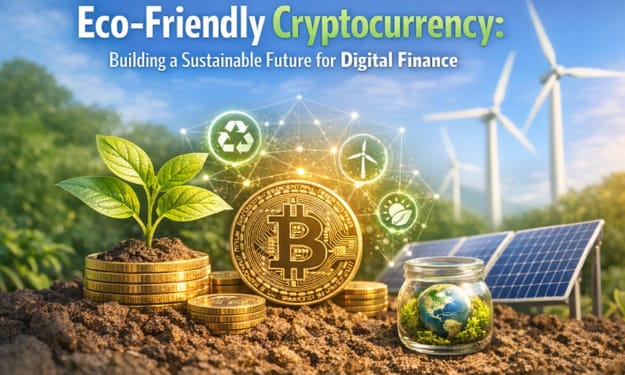
Eco-Friendly Cryptocurrency: Building a Sustainable Future for Digital Finance
The rapid growth of digital assets has transformed global finance, but it has also raised serious concerns about environmental sustainability. Traditional blockchain networks—especially those relying on energy-intensive mining—have drawn criticism for their high electricity consumption and carbon footprint. In response, a new wave of innovation has emerged: eco-friendly cryptocurrency.
By Siddarth Dabout 4 hours ago in The Chain
The Piggy Project
I’ve had so many names in this life I lose track of which ones were ever really mine and which ones I wore because someone needed me to. Some were handed to me before I had words to refuse them, before I knew what they meant, before I knew I could say no. Most weren’t meant to hurt. That doesn’t mean they didn’t leave marks. Marks that told me who I belong to, who I am by way of who claims me, recognizes me in the good and bad, who walks beside me.
By Fatal Serendipity6 days ago in Confessions



Comments
There are no comments for this story
Be the first to respond and start the conversation.