
How Blockchain Development Reduces Operational Costs for Enterprises in 2026
Blockchain Development Reducing Operational Costs by 40% for Enterprises
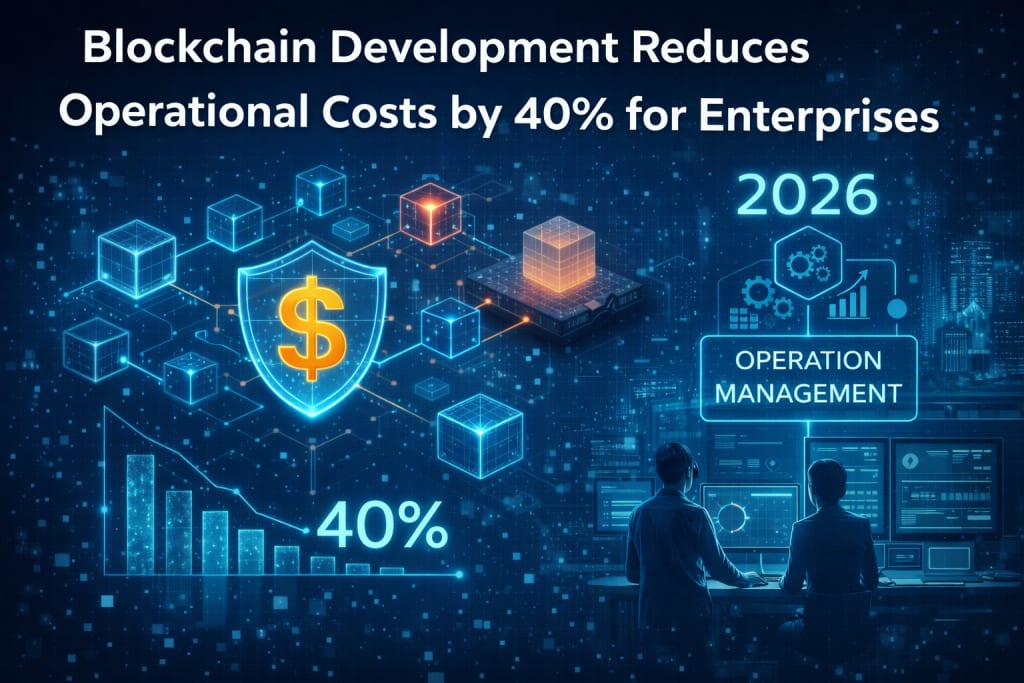
Enterprise leaders in 2026 are under relentless pressure to cut operational expenses without slowing innovation. According to multiple industry reports, global blockchain spending is projected to exceed $25 billion, with over 70% of enterprises exploring distributed ledger technology to optimize operations. The reason is simple: traditional systems are fragmented, reconciliation-heavy, and labor-intensive. Blockchain introduces automation, transparency, and trust at the protocol level—reducing inefficiencies that silently drain millions from enterprise budgets every year.
From banking and supply chains to healthcare and insurance, enterprises are leveraging blockchain to eliminate intermediaries, reduce compliance overhead, and streamline data exchange. This article explores how blockchain development directly reduces operational costs—and how businesses can deploy it strategically for measurable ROI.
The Real Blockchain Development Cost Problem Enterprises Face in 2026
Before understanding the savings, it’s critical to examine where enterprises lose money operationally.
Manual Reconciliation and Data Silos
Large enterprises operate across departments, geographies, and vendor networks. Every transaction often requires reconciliation between multiple systems. This results in:
- Duplicate data entry
- Human errors
- Time-consuming audits
- Delays in settlements
Blockchain removes reconciliation because all participants access a shared, immutable ledger.
Third-Party Intermediary Costs
Banks, clearing houses, legal verifiers, and compliance intermediaries charge transaction or service fees. For high-volume enterprises, these fees accumulate into millions annually.
Fraud and Compliance Losses
Fraud detection, regulatory reporting, and compliance monitoring require heavy investment in personnel and software. Even then, inefficiencies persist due to lack of real-time data validation.
Blockchain technology addresses these cost centers structurally—not temporarily.
How Does Blockchain Development Cut Operational Costs at the Core?
Blockchain is not just a technology upgrade; it is a cost-reduction architecture.
Eliminating Intermediaries Through Smart Contracts
Smart contracts automate agreements between parties. Once predefined conditions are met, transactions execute automatically.
Cost reductions include the following:
- No escrow services
- No manual approval chains
- Faster settlement cycles
- Reduced legal overhead
For enterprises handling cross-border transactions, this automation can reduce settlement time from days to minutes—dramatically lowering administrative costs.
Real-Time Transparent Recordkeeping
A shared ledger ensures all stakeholders see the same version of data. This reduces:
- Audit preparation costs
- Dispute resolution expenses
- Compliance reporting overhead
Enterprises implementing advanced blockchain development solutions are now embedding compliance logic directly into blockchain protocols, reducing regulatory management expenses significantly.
Supply Chain Cost Optimization
Supply chain inefficiencies cost global enterprises billions annually due to counterfeit goods, shipment delays, and poor traceability.
Blockchain reduces these risks by:
- Enabling end-to-end product traceability
- Automating inventory validation
- Reducing paperwork
- Preventing fraud
The result is lower insurance premiums, fewer disputes, and minimized logistics delays.
Industry-Specific Cost Reductions Through Blockchain Development
Banking and Financial Services
Financial institutions save operational costs through:
- Instant settlements
- Automated KYC/AML processes
- Reduced fraud detection costs
- Faster loan approvals
In Europe and the Middle East, many institutions collaborate with leading blockchain companies to modernize backend systems and reduce manual intervention.
Healthcare
Healthcare enterprises reduce costs by:
- Securing patient data with immutable records
- Eliminating redundant diagnostics
- Automating insurance claims processing
This reduces administrative overhead and speeds up reimbursements.
Energy and Utilities
Blockchain enables peer-to-peer energy trading, automated billing, and transparent metering systems. Enterprises reduce operational friction while improving trust with consumers.
Why Are Enterprises in the UAE Accelerating Blockchain Adoption?
The UAE is positioning itself as a global blockchain hub. Government-backed initiatives and digital transformation strategies have pushed enterprises to adopt distributed ledger technologies at scale.
Businesses frequently partner with top blockchain development companies in the UAE to implement blockchain across logistics, fintech, and real estate sectors. These implementations are reducing document verification costs, land registry fraud, and cross-border trade inefficiencies.
The cost savings in the UAE are particularly visible in the following:
- Customs documentation automation
- Real estate transaction validation
- Trade finance digitization
The Hidden Operational Savings Most Enterprises Overlook
Beyond obvious cost reductions, blockchain creates indirect savings that compound over time.
Reduced IT Infrastructure Costs
Traditional centralized databases require high maintenance, backup systems, and reconciliation infrastructure. Blockchain’s distributed architecture reduces dependency on redundant infrastructure layers.
Lower Cybersecurity Risk Exposure
Data breaches cost enterprises millions in damages and penalties. Blockchain’s cryptographic design significantly reduces vulnerability, lowering long-term cybersecurity expenditure.
Faster Decision-Making
With real-time data visibility, executives make quicker, data-driven decisions—cutting delays that otherwise cost revenue opportunities.
Why Strategic Implementation Matters More Than Technology?
Many enterprises fail to capture blockchain’s full cost benefits because they implement it without a clear ROI roadmap.
This is where working with an expert blockchain consultant becomes critical. A consultant evaluates:
- Operational bottlenecks
- Regulatory risks
- Integration complexity
- Scalability requirements
Instead of deploying blockchain for hype, enterprises align it directly with cost-reduction KPIs.
Build vs. Integrate: The Enterprise Cost Debate
In 2026, enterprises must decide whether to build custom blockchain systems or integrate existing frameworks.
Custom Development
Pros:
- Full control over architecture
- Tailored automation logic
- Higher scalability
Cons:
- Higher upfront development cost
Ready Framework Integration
Pros:
- Faster deployment
- Lower initial expense
Cons:
- Limited customization
- Potential scaling constraints
Strategic collaboration with experienced blockchain providers ensures enterprises choose the most cost-efficient path based on long-term growth objectives.
Measuring ROI from Blockchain Cost Optimization
Enterprises must quantify savings using metrics such as:
- Reduction in transaction processing time
- Decrease in compliance workforce hours
- Drop in dispute resolution cases
- Lower audit preparation expenses
- Reduced fraud-related losses
When properly implemented, enterprises report operational cost reductions ranging from 20% to 40% within the first 18–24 months.
2026 Outlook: Why Blockchain Is Becoming a CFO-Level Priority
Blockchain is no longer confined to innovation labs. CFOs now evaluate it as a cost optimization strategy rather than a speculative technology.
Key 2026 trends include the following:
- Blockchain integrated with AI-driven analytics
- Enterprise-grade permissioned networks
- Tokenized asset management platforms
- Automated regulatory reporting systems
These advancements further reduce operational complexity and increase financial transparency.
Conclusion:
Operational cost reduction is not achieved through temporary automation patches. It requires structural redesign of processes—and blockchain enables exactly that.
From eliminating intermediaries to automating compliance and securing enterprise data, blockchain is becoming a foundational cost-optimization layer for global enterprises in 2026. However, achieving measurable ROI requires strategic planning, technical expertise, and scalable architecture.
Enterprises aiming to accelerate cost efficiency and digital transformation should partner with the right experts and even consider hiring blockchain developers who understand enterprise-grade deployment models.
Blockchain is no longer an experimental investment—it is an operational cost strategy that forward-thinking enterprises are already leveraging to stay competitive in an increasingly efficiency-driven global economy.
About the Creator
Keep reading
More stories from Nia Higgins and writers in The Chain and other communities.
How Smart Founders Validate Blockchain Ideas in 4 Weeks - Before Spending Millions
Founders don’t lose money on blockchain because the technology fails — they lose money because they validate too late. By the time many startups build a full platform, they discover the market doesn’t need decentralization, regulators require changes, or integration costs explode. A fast Proof of Concept (PoC) flips that risk model. Instead of committing six months and a large budget, founders can validate feasibility, scalability, and stakeholder adoption in four weeks.
By Nia Higgins10 days ago in The Chain
Real Estate Tokenization: How It Enables Property Ownership Through Tokens
The Evolution of Property Investment in the Digital Era For decades, real estate has been recognized as one of the most stable and wealth-generating asset classes. However, traditional property investment comes with notable challenges high upfront capital requirements, limited liquidity, lengthy paperwork, and complex transaction structures. Today, blockchain technology is reshaping the financial landscape, and Real Estate Tokenization Development is introducing a modern framework for property ownership. By converting physical real estate assets into digital tokens on secure blockchain networks, this approach makes property investment more accessible, efficient, and globally connected. It reflects a significant shift in how assets are owned, managed, and transferred in the digital economy.
By Michal steve6 days ago in The Chain
Tokenization Strategies for Startups and Enterprises: Building Value Through Digital Assets
Digital assets are gradually redefining how businesses think about ownership, capital formation, and asset management. Over the past decade, blockchain technology has moved from experimental cryptocurrency networks into a broader infrastructure capable of representing real-world assets, intellectual property, financial instruments, and even governance rights in digital form. Tokenization, the process of converting rights to assets into blockchain-based tokens, is emerging as a powerful strategy for startups and established enterprises seeking new ways to raise capital, increase liquidity, and build more efficient ecosystems.
By Jennifer Atkinsonabout 3 hours ago in The Chain
When the Shelter Closes
Across the street from my house, a man slept under a tree, his dog by his side. My first, naive thought: he must be traveling through. But he kept coming back, often sleeping there during the day. Then it hit me—that person might not have a home.
By Bride of Sound6 days ago in Humans




Comments
There are no comments for this story
Be the first to respond and start the conversation.