
Seed Phrase
Where Does a Creator End and His Creation Begin?
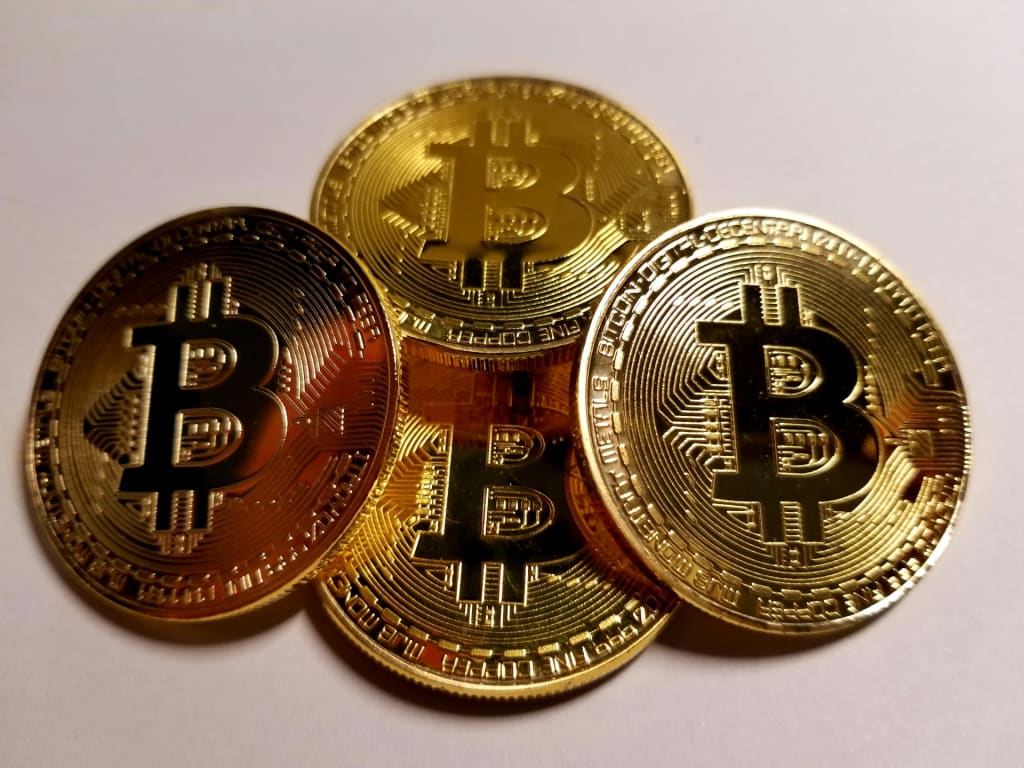
Satoshi Nakamoto isn’t a real person.
Well, sort of.
I mean he is.
Or was.
I mean I am him, or I was him, and I’m a real person.
So then, Satoshi Nakamoto was a real person. But isn’t anymore.
Now, the thing known as Satoshi Nakamoto is something more like… A persona? A mask of sorts. A character, once portrayed by an actor.
But what becomes of a character when the actor stops playing them? When you disassemble a ship made of legos, where does the ship go? The legos go into a box, but they’re not the ship. They’re just pieces. The ship goes… somewhere else. And that somewhere else is where Nakamoto resides now. If he ever really existed at all.
Which he didn’t, except for when he did.
I’m getting ahead of myself. Or behind, I’m really not sure. But I’m not right where I ought to be. Let me start from the beginning.
I, and by “I” I mean of course myself, the human me, started what would be called Bitcoin in 2007. It wasn’t called Bitcoin yet, because it wasn’t called anything. I hadn’t gotten that far yet. It began like everything begins, as an errant thought. A “what if” that flits into your mind, then immediately flitters away. You have a hundred of these sort of thoughts every day, and don’t even notice them. You forget them as soon as they happen, unless they happen to be exceedingly bizarre— What if I just jumped out that window? Or, What if I just pulled my pants down in the middle of this wake?
Strange thoughts. I don’t claim to understand where they come from. The classical explanation was the muses, spirits or goddesses who would inspire creativity in those receptive. The concept of genius stems from this: one wasn’t a genius, one had a genius. Some kind of demiurge giving them ideas. The more reasonable modern explanation probably has to do with the subconscious, or neuroplasticity, or your father not hugging you enough, or something. As I said, these are typically useless or silly thoughts, but occasionally something more powerful plants its roots in your head, and sticks around long enough for you to notice it sitting there. This was one of those times.
Peer to peer digital currency. This was the thought. Of course, on its own, this thought was nothing new. The idea of, and the problems associated with the idea of, a digital currency have been known for as long as the internet has been around, if not longer. In fact, http error code 402 was set as “Payment Required” way back in 1999, under the assumption that someone would get around to working out the details of digital currency shortly thereafter. But then I guess we were all too busy Livin’ La Vida Loca, because in 2007 nobody had gotten around to it. So the thought, now stuck in my head, kept cropping up. Kept distracting me. So I did the only thing I could do, just to get the bothersome thought from my head— I indulged it. I tried to solve the problem. The problem that others had tried to solve, and couldn’t. The problems associated with central authority, and ledgers, and bank accounts, and double-spending.
Then suddenly, one day in 2008 (to be honest, I don’t remember much of the preceding year outside of my work on what would be called Bitcoin), something strange happened.
I did it. I solved the problem.
The problem with digital currency was in large part the problem with money in general, and especially the problem with banking— trust. If the money is all just data, with no bills, no gold bullion, nothing of “actual value” (I would argue that gold and bank notes have no more or less nominal value than data and processing power, but I digress), then how can one trust the money? How can one be sure that no one is tipping the scales? Fudging the numbers? Cooking the books? The traditional solution was authority— let the government keep track of it, let large corporate banks keep track of it, and just trust them. Because if we can’t trust politicians and multinational corporations, well then who can we trust? The solution, it turned out, was the exact opposite. Instead of letting just one special “trustworthy” person track the ledgers…
…Let everyone do it.
Let everyone see the ledger, the whole damn thing from start to finish. Such a solution allowed for full trust, because it required none. Whether you trust everyone, or just certain people, or absolutely no one, you can trust the ledger. Because it’s yours too. You can check it yourself if you don’t trust the 100 other people who have already audited it. Split the transactions into digestible “blocks” and put them together into a “chain”. A “blockchain”, if you will. But then, you still have to trust the concept of the ledger as a whole. You have to trust the blockchain. You have to trust Bitcoin, at least long enough to see it work for yourself. The easiest way would be for Bitcoin to have a charismatic, trustworthy creator. But I am neither, and besides, the whole point is for us to get away from centralization. Away from trust in the individual. No higher authority, issuing transaction approvals from Mount Sinai… Or you know, whatever.
Enter Satoshi Nakamoto. A forward-thinking, technically skilled, altruistic creator. Japanese, because lets face it, ideas like Bitcoin, and the cypherpunk movement that created it, all have roots in the cyberpunk works of the 80’s. And in cyberpunk, everything is Japanese, for… some reason. They’re just lucky I didn’t name the currency Nuyen just for the reference clout.
Satoshi Nakamoto would be the vehicle for this new technology. And the time was right, the iron was hot for striking— the housing market had just collapsed, and the banks were readily passing their offering plates around Parliament Now I don’t claim to have predicted this, although, strictly speaking, I did. But it’s much the same as a psychic predicting that you’ll die, or a Stark insisting that winter is coming. Every fractional reserve bank will fail, if you’re just willing to wait long enough.
The people needed a new way of doing things, which didn’t rely on trusting the politicians and bankers to hand us back our money once they were done with it. And so I published the white paper, and set to work on the official launch.
No longer just a theory. A real thing.
Bitcoin. Digital, peer-to-peer currency. Finally.
Of course, it had its detractors. The first, and most boringly obvious complaint was that this could be used for crime. Which of course, is true. But the same can be (and often is) said for cash. Or for gold or silver coins. Or bottles of Tide detergent. Anything of value can be used to pay for illicit goods, as easily as they can be used for legal goods. You could buy weed with Chuck E. Cheese tokens if you could find a dealer who wanted them. So the problem with crime is less a problem with the currency used to obtain crime, and more with the committing of said crimes. Which I feel like most anyone could have already told you.
Another problem, and one that I’ll admit is at least marginally more concerning, is that the lack of a central authority makes recovery difficult. If I lose access to my bank account, I can march into the bank and get it back. I can show them my IDs, my birth certificate, my paperwork, and prove that I am who I say I am, and that money is mine. If one loses the seed phrase, that is, the phrase of twelve words which hash together to grant access to a wallet, then… you’re out of luck. There’s no central authority to appeal to. If you get tricked into spending all of your Bitcoin on a holographic Charizard card, and that card never shows up… There’s no recess teacher to tattle to. Now, I’m inclined to simply say, too bad, so sad, and revel in the Darwinian schadenfreude of it all, but I can certainly see the concern others might have. And if Bitcoin is to become a standard currency, available to everyone (as I should hope it will), then the risk of scammers will need to be more acutely addressed. Which I’m sure will happen, if and when adaptation of cryptocurrency becomes more widespread. So it is with most other complaints about cryptocurrency— that the carbon footprint is too high, that the value is too volatile, etc etc. Each of these has been handled (quite impressively, I might add) by various forks, alternative cryptos, and tokens.
And I think there’s something… romantic(?)… about the idea of permanence, when it comes to the ledger, and to the accessibility (or lack thereof) of wallets. I take a strange sort of comfort in the idea that the coin will always be waiting for you, waiting for your seed phrase. No bank or government can claim it, no relative can inherit it, no deposed Nigerian prince can lay claim to it. It exists, in the same space that Satoshi Nakamoto exists, waiting to be brought back from the nothing, to be precipitated from the aether, responding to an incantation of twelve magic words.
And so Satoshi Nakamoto, and the one million BTC I mined as him (which I promise wasn’t as impressive at the time. Not to brag, but that’s £32,328,280,000 in modern Pounds Sterling. I, or rather, he, is quite a rich man) wait in the nullspace. They lie locked away, waiting for the twelve-word phrase that would release them into my custody again.
Yeah, in retrospect…
I really should have written it down somewhere.
About the Creator
Keep reading
More stories from Jordan Gray and writers in The Chain and other communities.
Lazy Nachos
Scene: some bar, Oskaloosa, Iowa. Two-year-old me sits in a barstool, because this is the early ninties, so you can totally just take a two-year-old into a bar. My Grandma Dee and Grandpa Shelk are sitting with me. That’s when I spot it: on the bar, a bowl of cheese dip. I know what it is, I’ve seen the grown ups eat it before. They use chips, in triangle or round shapes, and scoop it into their mouths. Sure enough, there’s a flat, geometric shape sitting on the bar next to me. I pluck it up, scoop up some dip, and bite down. The cheese is good, if a little spicy, but there’s something wrong with the chip. For some reason I can’t seem to bite all the way through it. Finally my grandmother turns around and sees what I’ve gotten up to in the five seconds she had her back turned. Laughing, she takes the cheese-covered drink coaster from me.
By Jordan Gray5 years ago in Feast
Understanding the Structure and Role of a Cryptocurrency Coin Ecosystem
The evolution of blockchain networks has introduced a complex yet highly structured digital economy known as the Cryptocurrency Coin Ecosystem. Rather than functioning as isolated digital assets, modern cryptocurrencies operate within interconnected frameworks that include protocols, consensus mechanisms, governance models, decentralized applications, and token utility layers. A well-designed Cryptocurrency Coin Ecosystem establishes the technical and economic infrastructure that enables digital assets to circulate, gain value, and support decentralized services.
By Siddarth D4 days ago in The Chain



Comments
There are no comments for this story
Be the first to respond and start the conversation.