
Securing High-Tech Industries Through Independent Material Supply Chains
Centralized Supply Chains


High-tech industries have emerged as key drivers of global innovation, with industries such as electronics, telecommunications, renewable energy, and aerospace heavily relying on specialized materials like semiconductors, rare earth elements, and advanced composites. The increasing demand for high-tech products makes the stability of material supply chains a critical issue for the future. Yet, many industries today remain heavily dependent on centralized supply chains that rely on a few key countries or suppliers. This centralized approach, while cost-effective in the short term, has raised concerns about vulnerabilities that could jeopardize the sustainability and growth of these industries. The importance of securing independent and resilient material supply chains is becoming more evident as industries face unprecedented disruptions such as geopolitical tensions, natural disasters, and the global pandemic. For high-tech industries to thrive in the future, they must embrace independent supply chains that can withstand these disruptions and ensure the continued availability of vital materials.
The Risks of Over-Reliance on Centralized Supply Chains
Centralized supply chains have become a hallmark of high-tech industries, often relying on a limited number of countries for critical materials. For instance, the semiconductor industry is heavily dependent on countries such as Taiwan, South Korea, and the United States, while China dominates the production of rare earth elements, which are essential for many high-tech applications, including batteries and electronics. This reliance on specific countries for materials creates significant risks for industries. Geopolitical instability, such as trade wars, tariff impositions, or diplomatic tensions, can lead to sudden disruptions in the supply of these materials, resulting in delays, cost increases, and production bottlenecks. For example, the trade war between the U.S. and China raised concerns about the stability of the rare earth supply chain, as China is the largest producer and exporter of these critical materials.
In addition to geopolitical risks, the fragility of centralized supply chains became abundantly clear during the COVID-19 pandemic. When factories in Asia, including China, were forced to shut down, it caused a ripple effect across industries worldwide. Companies dependent on these regions for manufacturing or material sourcing faced significant disruptions, with delays in product delivery and manufacturing stoppages becoming common. This disruption was not isolated to the pandemic, but also serves as a warning that future global crises—whether health-related, environmental, or economic—can have similar, if not more severe, impacts. The lesson is clear: relying too heavily on a single country or region for essential materials leaves industries exposed to major risks that can severely affect their stability.
Environmental concerns also play a role in the vulnerabilities of centralized supply chains. Many materials, such as rare earth metals, are mined in regions that experience significant environmental degradation. The reliance on these specific countries for such materials has led to ethical and sustainability concerns, which could lead to more stringent regulations in the future. As the global focus shifts toward environmental sustainability, high-tech industries may face increasing pressure to adopt more sustainable sourcing practices. The current dependence on countries with questionable environmental standards for material extraction may become increasingly untenable in the coming years.
Strategies for Building Resilient and Independent Material Supply Chains
To address these risks, high-tech industries must shift towards more independent and diversified material supply chains. One of the most important strategies for achieving this goal is to diversify material sourcing. Relying on multiple countries and suppliers can help mitigate the risks associated with political instability, natural disasters, or supply shortages in any single region. For instance, efforts are already underway to reduce dependence on Chinese rare earth materials by exploring alternative sources in countries like Australia, Canada, and the U.S. By expanding the geographical scope of material sourcing, companies can better protect themselves from disruptions that affect a specific region.
Another key strategy is to invest in recycling and the circular economy. High-tech industries use materials such as lithium, cobalt, and rare earth elements, which are critical for batteries, electronics, and renewable energy systems. Recycling these materials from used products is an effective way to reduce the reliance on newly mined resources. Investing in technologies that allow for the efficient recovery and reuse of these materials will not only reduce supply chain vulnerabilities but also help meet sustainability goals. As demand for high-tech products continues to rise, the importance of recycling and reusing materials will only grow, offering industries a more sustainable and independent source of essential materials.
Advanced manufacturing technologies also have a crucial role to play in the future of independent supply chains. Technologies like 3D printing and additive manufacturing allow for the production of complex parts with less material waste and less dependence on specific sources of raw materials. By using these technologies, companies can reduce their reliance on centralized supply chains and increase their flexibility in sourcing materials. 3D printing, in particular, can enable more localized production, which not only shortens supply chains but also makes it easier to tailor products to local needs without the need for extensive transportation. This shift to more localized and sustainable manufacturing processes can help high-tech industries build more resilient supply chains.
Moreover, high-tech industries can benefit from embracing transparency and traceability in their supply chains. Tools like blockchain technology can ensure greater visibility into the sourcing and movement of materials, making it easier for companies to track the origin of their materials and confirm their ethical sourcing practices. Blockchain offers the potential to create a more secure and transparent supply chain that can reduce the risk of fraud and ensure compliance with environmental and labor standards. By integrating such technologies, companies can build more independent and sustainable supply chains that are less vulnerable to disruptions.
The Path Forward: How High-Tech Industries Can Secure Their Future
For high-tech industries to secure their future, they must embrace these strategies and work toward developing independent material supply chains. The increasing demand for high-tech products, along with the complexities of global supply chains, makes it essential for industries to build more diversified, flexible, and sustainable systems. By diversifying material sources, investing in recycling, and adopting advanced manufacturing technologies, companies can ensure a steady and reliable supply of critical materials. Additionally, the use of transparency and traceability tools like blockchain can help companies maintain ethical and sustainable practices in their supply chains, further enhancing their resilience.
High-tech industries must also consider the role of collaboration in building independent supply chains. Governments, industry stakeholders, and research institutions need to work together to create strategies for securing the future supply of critical materials. Public-private partnerships can help foster research into alternative materials, more efficient production processes, and sustainable sourcing methods. By collaborating on these issues, high-tech industries can develop solutions that address supply chain vulnerabilities while supporting global sustainability goals.
As the global landscape continues to evolve, the importance of independent material supply chains will only grow. For high-tech industries, the path forward involves embracing innovation, diversifying sourcing strategies, and adopting sustainable practices to ensure a reliable, ethical, and resilient supply of materials. In doing so, they can safeguard their future and continue to drive technological advancements that benefit society at large.
About the Creator
William David Wilcox
William David Wilcox, managing member of Evolution Metals LLC, spearheads a merger to build a critical materials supply chain in the U.S.
Keep reading
More stories from William David Wilcox and writers in The Chain and other communities.
Leadership in Action: Driving Efficiency and Innovation in Global Supply Chain Management
In today’s rapidly evolving global economy, supply chain management has become one of the most crucial aspects of business operations. Supply chains connect the dots across various industries and geographical boundaries, from sourcing raw materials to the final delivery of products to consumers. However, the complexity and scale of modern supply chains pose significant challenges, including supply chain disruptions, rising consumer expectations, and environmental concerns. In this environment, strong leadership is essential for driving efficiency, innovation, and resilience in global supply chains.
By William David Wilcox10 months ago in Education
Crypto Coin: Architecture, Utility Models, and Market Dynamics Explained
The term Crypto coin refers to a native digital asset that operates on its own blockchain infrastructure, functioning as a medium of exchange, store of value, and programmable financial instrument. Unlike tokens that are deployed on existing chains, a Crypto coin underpins its network’s consensus, incentivization, and transaction validation layers. Understanding how a Crypto coin operates requires a multi-dimensional perspective that includes cryptographic security, economic design, governance structures, and regulatory implications.
By Siddarth D2 days ago in The Chain
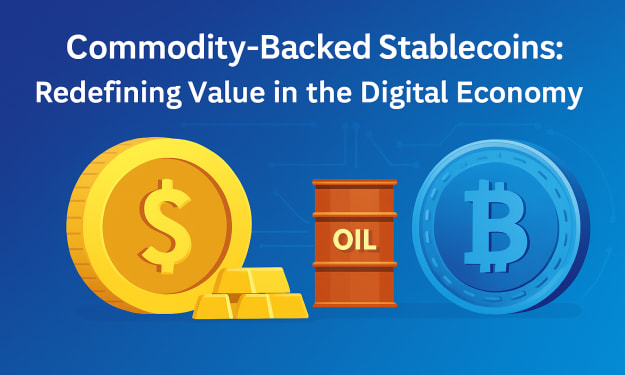
Commodity-Backed Stablecoins: Redefining Value in the Digital Economy
The cryptocurrency market has consistently evolved to address volatility, scalability, and trust. Among the innovations reshaping this ecosystem, commodity-backed stablecoins have emerged as a critical bridge between blockchain technology and traditional asset classes. Unlike purely algorithmic or fiat-backed models, these tokens derive value from tangible commodities such as gold, silver, oil, or even agricultural products. This asset-collateralized approach not only mitigates market instability but also offers institutional-grade trust for investors seeking transparency and sustainability in digital finance.
By Siddarth D6 days ago in The Chain
Pearl
1980 something. we all hung out at Pearl and you and i were nothing special, or so i thought. i mean we all danced, drenched in our own sweat, our own saline solution of fear, too many beers, shots, laughter, tears, fucks in the bathroom and i don't know when we began to be afraid. do you?
By ROCK aka Andrea Polla (Simmons)3 days ago in Fiction



Comments
There are no comments for this story
Be the first to respond and start the conversation.