
Multi-Chain Perp DEX Development: Solving Engineering & Operations Issues
Perp Dex Development


The decentralized finance landscape in 2026 is no longer defined by single-chain dominance. As liquidity fragments across a multitude of Layer-2 solutions, sidechains, and sovereign app-chains, the demand for multi-chain perpetual DEX development has shifted from a luxury to a fundamental necessity. In the early days of DeFi, a protocol could thrive by capturing the liquidity of a single ecosystem like Ethereum or Solana. However, the modern trader demands "liquidity without borders" the ability to trade with high leverage against a global pool of capital, regardless of which blockchain that capital originates from.
Engineering a decentralized perpetual exchange that operates across multiple chains introduces a layer of complexity far beyond traditional spot trading. It requires solving the "Liquidity Fragmentation" problem, ensuring cross-chain state synchronization, and maintaining protocol solvency in the face of varying network latencies.
Overcoming Liquidity Fragmentation in Multi-Chain Perp DEXs
The most significant hurdle in decentralized perpetual exchange development is liquidity fragmentation. When a DEX operates on five different chains, it often ends up with five isolated liquidity pools. This leads to high slippage, inefficient pricing, and a poor user experience.
Unified Liquidity vs. Isolated Pools
To solve this, advanced crypto perpetual exchange development services are moving toward Unified Cross-Chain Liquidity Vaults. Instead of siloed pools, the protocol uses a "Hub-and-Spoke" architecture. A central "settlement hub" (often a high-speed L2 or a dedicated Cosmos-based app-chain) keeps the master record of all user balances and positions, while "spoke" contracts on various chains handle deposits, withdrawals, and trade execution.
This engineering feat requires robust cross-chain messaging protocols (like LayerZero, Wormhole, or CCIP). When a trader on Arbitrum opens a 20x long position, the message must be relayed to the central hub, the collateral must be verified, and the virtual liquidity must be adjusted all in a matter of seconds. Failure to synchronize these states accurately can lead to "double-spending" of collateral or delayed liquidations, both of which are fatal to protocol solvency.
Bridging the Gap: How to Master Cross-Chain Finality and Latency
In a decentralized perpetual exchange, timing is everything. A multi-chain environment introduces "State Latency" the time it takes for a transaction on one chain to be reflected in the protocol’s global state. If a trader's position on Polygon is nearing liquidation, but the price update or the margin status is stuck in a cross-chain message queue, the protocol faces the risk of bad debt.
Asynchronous Execution Engines
To mitigate this, developers are implementing Asynchronous Execution Engines. These systems use a "optimistic" approach to trading: they allow a trade to be matched and confirmed to the user instantly at the "edge" (the spoke chain), while the final settlement occurs asynchronously at the hub.
This requires a sophisticated Risk-at-the-Edge module. The local contract on the spoke chain must have enough "local intelligence" to verify that the user has sufficient margin before sending the message to the hub. By decentralizing the risk checks while centralizing the settlement, engineering teams can provide a CEX-like experience across multiple blockchains without compromising on-chain integrity.
Operational Hurdles: Oracle Consistency and Data Integrity
Oracles are the lifeblood of any crypto perpetual exchange development project, but in a multi-chain context, they become an operational minefield. Each blockchain has different block times and finality speeds. An oracle update that arrives on Solana in 400ms might take several seconds to finalize on an Ethereum-based L2.
Oracle Latency Arbitrage
If the "Mark Price" used for liquidations is inconsistent across chains, sophisticated bots can engage in latency arbitrage. They can see a price move on one chain and exploit the delayed update on another chain to open "risk-free" positions.
The solution lies in Cross-Chain Price Aggregators. Professional crypto perpetual exchange development services now utilize high-frequency, pull-based oracles (like Pyth) that allow the protocol to "pull" the latest price at the exact moment a trade is executed, rather than relying on a "push" model that updates on a timer. This ensures that every chain in the multi-chain ecosystem is operating on the same "Source of Truth" at the same millisecond.
Multi-Chain Risk Management & Auto-Liquidations
Risk management is the most vital operational pillar of a decentralized perpetual exchange. When a protocol is spread across multiple chains, the "Insurance Fund" and "Liquidation Bots" must be architected for global coverage.
Global vs. Local Insurance Funds
Engineering teams must decide between a single, global insurance fund or localized funds for each chain. A global fund is more capital-efficient but requires complex cross-chain bridging to cover losses on a specific spoke. In 2026, the trend has shifted toward Virtualized Global Insurance Funds, where the fund’s assets are held on a secure settlement layer, but "credit lines" are issued to each spoke chain to facilitate immediate liquidations.
Cross-Chain Keeper Networks
Liquidations must be permissionless and instantaneous. Operations teams must incentivize a decentralized network of "Keepers" (bots) that monitor all chains simultaneously. If a keeper on Optimism misses a liquidation because of gas spikes, the global risk engine must be able to "failover" and allow a keeper on another chain to trigger the liquidation via a cross-chain message.
Security and Smart Contract Complexity
Every new chain added to a multi-chain perpetual DEX increases the "attack surface." A bug in a bridge contract or a vulnerability in a new chain's VM can compromise the entire protocol’s liquidity.
Modular Auditing and Formal Verification
In decentralized perpetual exchange development, the "Core Logic" (the math governing leverage and funding) should be strictly separated from the "Transport Logic" (the code that moves data between chains). This allows for Modular Auditing, where the core logic is formally verified once, and only the chain-specific bridge adapters are audited as the protocol expands. This approach reduces the risk of cross-chain contagion and allows the protocol to scale safely to dozens of networks.
Conclusion:
Developing a multi-chain perpetual DEX is an exercise in balancing extreme performance with distributed security. The engineering and operational issues ranging from liquidity fragmentation to cross-chain latency are significant, but the rewards are immense. Platforms that can successfully unify liquidity and provide a seamless, non-custodial trading experience across the entire Web3 ecosystem will be the ones that capture the next trillion dollars in derivatives volume.
As crypto perpetual exchange development continues to evolve, the focus will shift toward "Omnichain" abstractions, where the user doesn't even know which chain they are on they simply see a liquid, secure, and high-speed market.
About the Creator
john
I focus on DeFi's disruptive potential via blockchain, crypto, and tokens. My interest: evolving NFTs into full metaverse economies.
Stock Trading - Entry 55
While spiritual, I ascribe neither to Christianity nor to Judaism. This article is all about a warning for investors such as myself. I am not dispensing investing advice, only reflections on my personal financial situation when it comes to investing...in blockchains.
By Richard Soulliere6 days ago in The Chain
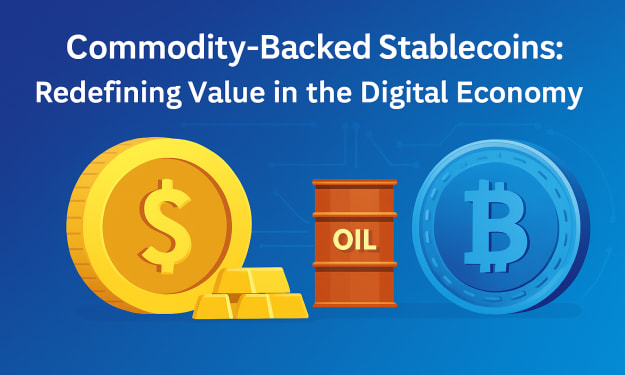
Commodity-Backed Stablecoins: Redefining Value in the Digital Economy
The cryptocurrency market has consistently evolved to address volatility, scalability, and trust. Among the innovations reshaping this ecosystem, commodity-backed stablecoins have emerged as a critical bridge between blockchain technology and traditional asset classes. Unlike purely algorithmic or fiat-backed models, these tokens derive value from tangible commodities such as gold, silver, oil, or even agricultural products. This asset-collateralized approach not only mitigates market instability but also offers institutional-grade trust for investors seeking transparency and sustainability in digital finance.
By Siddarth D2 days ago in The Chain
It's 2026. Songs Turning 10 This Year
In 2016, we saw the rise of short form videos and what would lead to the birth of TikTok. We cannot forget the Snapchat filters no matter how cringe worthy some of them might have been. It was also the year in which the hit series Stranger Things debuted.
By Jasmine Aguilar3 days ago in Beat



Comments
There are no comments for this story
Be the first to respond and start the conversation.