
How Real Estate Tokenization Is Making Property Ownership More Accessible
Unlocking Fractional Ownership, Global Investment Opportunities, and Greater Liquidity Through Blockchain-Powered Real Estate Tokenization


Traditionally, real estate investment has been one of the most reliable wealth-building strategies, but it has also been one of the least accessible. High capital requirements, complex legal structures, and geographic limitations have long made real estate a playground for institutional investors and the wealthy elite. However, in the age of blockchain and decentralized finance, real estate tokenization is beginning to change that narrative. By breaking down physical assets into digital tokens, this innovative model is democratizing property ownership, enabling fractional investment, and transforming global real estate markets. This blog delves into how tokenization is reshaping the property investment landscape, particularly by making ownership more inclusive and attainable for the average investor.
Understanding Real Estate Tokenization
Digitizing Ownership Rights with Blockchain
Real estate tokenization refers to the process of converting ownership rights in a real-world property into digital tokens on a blockchain. Each token represents a fraction of the asset and can be bought, sold, or traded on digital platforms. These tokens are governed by smart contracts, which ensure transparent execution of terms, automate dividend payments, and enable real-time transactions.
Why Tokenization Matters for Property Markets
Rather than requiring someone to purchase an entire property, tokenization allows multiple investors to buy small pieces of it. This makes it possible to participate in the real estate market without the need for substantial upfront capital or the burden of managing a property. These digital tokens can represent ownership in residential buildings, commercial real estate, rental income, or even mortgage-backed assets, depending on the structure.
Fractional Ownership: Breaking Down the Barriers to Entry
From Million-Dollar Properties to Micro-Investments
One of the biggest contributions of tokenization to accessibility is the concept of fractional ownership. Instead of requiring hundreds of thousands or even millions of dollars to invest in a property, individuals can now purchase real estate tokens for as little as a few dollars. This is particularly transformative for young investors, individuals from emerging markets, or those looking to diversify their portfolios without overcommitting capital.
Diversification Made Easy for Retail Investors
Fractional ownership lowers the risk threshold for new entrants. It provides the flexibility to own fractions of multiple properties across different geographies and asset classes, reducing exposure to localized market downturns. Investors can now spread their funds across residential units in New York, commercial office space in London, and vacation rentals in Bali—all without leaving their homes or relying on middlemen.
Reducing Geographic and Bureaucratic Limitations
Invest Globally Without Physical Boundaries
Real estate investing has historically been limited by jurisdictional red tape and geographic proximity. Foreign investment in local markets often involves complicated legal structures, language barriers, high transaction costs, and regulatory restrictions. Tokenization removes many of these barriers by operating on global blockchain networks that allow permissionless participation and cross-border asset access.
Simplifying Legal Processes with Platform Integration
Investors no longer need to be in the same country—or even on the same continent—as the asset they are investing in. Platforms facilitating real estate tokenization handle the legal structuring, compliance, and property management, allowing global investors to invest with confidence. Smart contracts and blockchain transparency further ensure that all transactions are traceable and immutable, enhancing security and trust.
Enhanced Liquidity: Turning Illiquid Assets into Tradeable Instruments
From Locked Capital to Tradeable Tokens
Real estate is traditionally known for being highly illiquid—once you buy a property, selling it could take weeks or even months. Tokenization dramatically enhances liquidity by enabling peer-to-peer trading of real estate tokens on secondary markets. If an investor wants to cash out their investment, they can simply sell their tokens on a digital marketplace rather than finding a buyer for the entire property.
Dynamic Portfolio Management for the Modern Investor
This liquidity allows for more dynamic portfolio management. Investors can react to market conditions in real-time, rebalance their holdings, or exit positions without the delays of conventional real estate sales. This is particularly attractive to younger investors and those seeking flexibility, making real estate a more compelling asset class for a new generation of market participants.
Automation Through Smart Contracts
Eliminating Middlemen and Streamlining Ownership
Smart contracts are self-executing agreements embedded in the blockchain that facilitate automated processes without the need for intermediaries. In real estate tokenization, smart contracts can automate rent distribution, dividend payments, voting rights, and compliance checks. This removes the need for expensive legal and financial intermediaries while increasing trust in the process.
Ensuring Transparent and Trustless Transactions
For example, if you own a token representing 1% of a rental property, the smart contract can automatically transfer your share of rental income to your digital wallet at regular intervals. There’s no need to contact property managers or wait for manual accounting processes. This seamless, automated experience makes real estate investment more accessible, transparent, and efficient.
Regulatory Frameworks Are Evolving to Support Tokenization
The Push Toward Legal Clarity in Digital Property Ownership
A major factor influencing the adoption of real estate tokenization is regulatory clarity. In recent years, regulators across the globe have started recognizing digital securities and defining guidelines around tokenized assets. While challenges remain—particularly around investor protection, cross-border compliance, and taxation—several jurisdictions, including the United States, Switzerland, Singapore, and the UAE, have taken steps to create crypto-friendly environments for tokenized real estate projects.
Bringing Institutional Confidence to Tokenized Markets
These evolving frameworks are encouraging more developers, property managers, and asset tokenization platforms to enter the space. Legal compliance, when built directly into the token’s smart contract, ensures that only verified investors can access certain assets and that all rules are transparently enforced. This regulatory maturity is further encouraging traditional investors and institutions to explore tokenized offerings as part of their real estate strategy.
Lowering Costs Through Disintermediation
Cutting Out the Middlemen in Real Estate Deals
Real estate transactions typically involve multiple intermediaries such as brokers, lawyers, escrow agents, banks, and notaries. Each party adds fees, delays, and complexity. Tokenization significantly reduces these costs by embedding trust in the technology itself. Blockchain serves as a single source of truth, eliminating the need for redundant verification and paperwork.
Maximizing ROI for Small and Mid-Sized Investors
Smart contracts enforce contractual obligations without human intervention, reducing the administrative overhead associated with traditional real estate investment. Tokenized platforms often provide integrated services—from due diligence to KYC/AML compliance—within a unified interface. As a result, more capital is directed toward actual asset ownership, and transaction fees become more affordable, especially for small investors.
Empowering New Business Models and Investment Vehicles
From Community Crowdfunding to Digital REITs
Real estate tokenization is also giving rise to innovative business models that promote accessibility and community participation. For example, tokenized real estate investment trusts (REITs) are emerging, where investors can earn returns from diversified property portfolios through blockchain-based shares. Similarly, community-driven real estate development projects allow local stakeholders to crowdfund developments and share in future profits through tokenized equity.
Building Inclusive and Participatory Property Markets
This not only provides financial upside but also strengthens community ownership and accountability. These decentralized investment vehicles align incentives between developers, investors, and tenants—creating a more participatory real estate ecosystem. Additionally, property owners can use token sales as a form of capital raising, avoiding debt or giving up full equity ownership.
Challenges and Risks to Address
The Double-Edged Sword of Innovation
While tokenization offers immense promise, it is not without challenges. Security concerns around smart contract vulnerabilities, wallet management, and platform reliability can hinder trust. Regulatory uncertainty in many jurisdictions also poses a risk, particularly for retail investors who may not fully understand the legal implications of investing in digital assets.
Balancing Blockchain with Brick-and-Mortar Realities
Furthermore, real estate remains a complex asset with physical dependencies. Maintenance, local governance issues, zoning laws, and economic cycles all affect property value—factors that tokenization cannot entirely eliminate. Therefore, thorough due diligence, robust legal structuring, and strong platform governance remain essential to sustainable growth in this space.
The Road Ahead: A More Inclusive Real Estate Future
How Tokenization Will Shape Property Investment by 2030
As blockchain infrastructure matures and regulatory clarity increases, real estate tokenization is poised to become a mainstream investment avenue. Platforms are becoming more user-friendly, legal frameworks more robust, and investor education more widespread. With each new successful project, tokenization is proving that fractional ownership of real estate is not just a technical innovation it is a gateway to financial inclusion.
From a Trillion-Dollar Market to Borderless Participation
Tokenization represents a significant shift in how real estate is bought, sold, and owned. It offers the potential to open up $300+ trillion in global property markets to a broader range of investors who were previously excluded due to capital limitations or geographic constraints. By removing barriers, enhancing liquidity, and automating processes, it is fundamentally reshaping the accessibility of real estate investment.
Conclusion:
Real estate tokenization is not just a technical trend—it’s a financial revolution that aligns perfectly with the growing demand for decentralized, inclusive, and borderless investment opportunities. By empowering individuals to invest small amounts in high-quality assets, reducing transaction costs, and simplifying the ownership process, tokenization is helping to level the playing field in one of the world's most valuable markets.
As adoption accelerates and platforms mature, we’re likely to witness a new era where anyone with a smartphone and internet connection can become a global property investor. This is more than innovation—it’s economic empowerment through digital ownership.
About the Creator
Gabrielle
Blockchain enthusiast and NFT writer dedicated to merging technology with art on decentralized platforms, driving innovation for a creative future. Embracing the potential of digital expression.
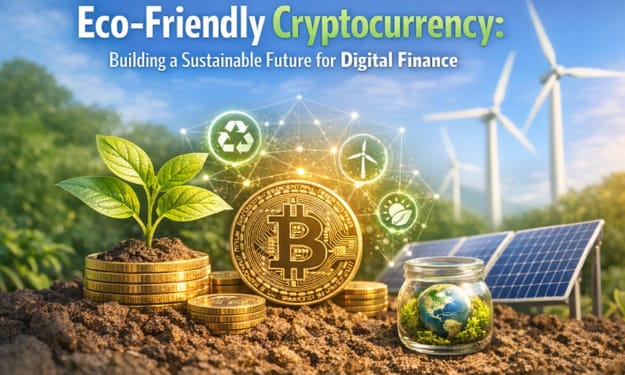
Eco-Friendly Cryptocurrency: Building a Sustainable Future for Digital Finance
The rapid growth of digital assets has transformed global finance, but it has also raised serious concerns about environmental sustainability. Traditional blockchain networks—especially those relying on energy-intensive mining—have drawn criticism for their high electricity consumption and carbon footprint. In response, a new wave of innovation has emerged: eco-friendly cryptocurrency.
By Siddarth Dabout 11 hours ago in The Chain
Bomb Scare
It was 2027, and the world never thought it would happen. A missle hit the United States, but it wasn't where they had anticipated. A little town in the northeast was hit by a missile strike, they didn't know why, and they didn't know exactly where it hit, but they did know it was a coastal community, somewhere between Maine and Delaware.
By Gregory Payton5 days ago in Fiction


Comments
There are no comments for this story
Be the first to respond and start the conversation.