
How Is Custom Altcoin Development Redefining Digital Asset Utility in Emerging Markets?
Empowering Local Economies and Driving Financial Inclusion Through Tailored Blockchain Solutions


As blockchain adoption continues to spread globally, emerging markets are becoming fertile ground for crypto innovation. While Bitcoin and Ethereum have paved the way, it's the rise of custom altcoin development that is fundamentally reshaping how digital assets are used, traded, and valued in these regions. Custom altcoins—cryptocurrencies built with specific utilities, governance models, and technical architectures—are being tailored to address local economic challenges, enhance financial inclusion, and provide scalable solutions where traditional finance has failed. These digital assets are no longer just speculative instruments; in emerging markets, they are becoming vital tools for economic empowerment and community-led development.
Understanding Custom Altcoin Development
Custom altcoin development refers to the creation of alternative cryptocurrencies that are built from the ground up or forked from existing blockchains, designed with unique features, utilities, or economic models. Unlike generic tokens deployed on pre-existing chains like Ethereum or Binance Smart Chain, custom altcoins can have their own consensus mechanisms, monetary policies, governance frameworks, and built-in utilities tailored to specific use cases. This flexibility makes them ideal for regions with unique socio-economic dynamics, where one-size-fits-all solutions do not work.
Developers and blockchain entrepreneurs are leveraging this flexibility to solve problems that legacy financial systems have struggled to address—such as high remittance fees, lack of access to banking, currency volatility, and inflation. In the context of emerging markets, this has enormous implications. These altcoins are being customized to integrate with local needs, whether it's supporting microtransactions, acting as stable payment systems, or even powering decentralized energy grids and supply chains.
Driving Financial Inclusion Where Traditional Systems Fail
One of the most significant contributions of custom altcoin development in emerging markets is its role in promoting financial inclusion. In countries where large portions of the population remain unbanked or underbanked, custom altcoins are enabling secure, low-cost access to financial tools. With just a smartphone and internet access, individuals can now participate in decentralized finance (DeFi), engage in cross-border commerce, and access credit systems—all powered by altcoins.
For example, in parts of Africa and Southeast Asia, localized cryptocurrencies are being used as mediums of exchange in rural communities. These altcoins often come with built-in wallet applications and user interfaces in native languages, lowering the barrier to entry and ensuring that more people can participate. Because many of these coins are not tied to the inflation-prone fiat currencies of their respective regions, they also offer a hedge against economic instability.
Facilitating Cross-Border Payments and Remittances
Remittance is a lifeline for millions in developing nations, but traditional services such as Western Union or MoneyGram come with hefty transaction fees and delays. Custom altcoins are disrupting this system by enabling instant, low-cost, and secure cross-border transactions. These coins can be programmed to function as stablecoins or pegged to a local or global reserve asset, ensuring value retention while removing the friction associated with international money transfers.
Many blockchain developers in Latin America and Africa are creating region-specific coins that optimize peer-to-peer transfer systems. These altcoins often integrate with decentralized applications (dApps) and mobile money systems to create seamless user experiences. By cutting out intermediaries and reducing transaction costs, these digital assets make remittance more accessible to everyday users.
Creating Local Economies Through Tokenization
Another way custom altcoin development is redefining digital asset utility is through the tokenization of local economies. In many developing regions, micro-economies and community-driven trade form the backbone of economic activity. Custom altcoins are being designed to incentivize participation, reward community contributions, and tokenize real-world assets ranging from agriculture yields to renewable energy credits.
This transformation allows communities to operate independent of unreliable or corrupt financial institutions. For example, farmers in Kenya are beginning to use blockchain-powered tokens to track crop yields, access financing, and trade goods in decentralized marketplaces. These tokens become the de facto currency within a trusted ecosystem, creating a self-sustaining digital economy.
Such ecosystems not only promote financial autonomy but also introduce transparent, tamper-proof records of all transactions—reducing corruption and improving accountability. Blockchain governance mechanisms baked into altcoin protocols also allow for decentralized decision-making, giving users a say in how their local economies evolve.
Empowering Microfinance and Credit Access
Access to credit remains a major barrier to economic growth in many emerging markets. Traditional banks often require collateral, strong credit history, and high interest rates—conditions that most individuals in low-income regions cannot meet. Custom altcoins, when combined with decentralized lending protocols, are addressing this issue by enabling peer-to-peer lending models powered by smart contracts.
These altcoins often act as collateral or utility tokens within lending platforms, allowing users to borrow and lend funds in a trustless environment. Through decentralized identity systems and on-chain credit scoring, lenders can assess risk without invasive data collection or centralized control. This innovation opens the door for entrepreneurs, small business owners, and students to gain access to much-needed capital without the red tape and predatory practices of traditional financial institutions.
Government-Backed and Enterprise Altcoins: A Growing Trend
Governments and enterprises in emerging markets are also recognizing the potential of custom altcoin development. Some are launching their own altcoins as national stablecoins or programmable central bank digital currencies (CBDCs), while others are partnering with blockchain developers to create tokens for supply chain management, digital identity, and taxation systems.
For instance, in Nigeria, the eNaira was launched as a government-issued digital currency to complement the existing financial infrastructure. Although it has faced adoption hurdles, it signals a shift in the way governments are engaging with blockchain. Meanwhile, private corporations in India and South America are exploring custom tokens for employee incentives, loyalty programs, and trade settlements—showcasing how versatile and utility-focused altcoin development has become.
Overcoming Infrastructure and Education Challenges
Despite its immense potential, the success of custom altcoins in emerging markets depends heavily on digital infrastructure and blockchain literacy. Internet connectivity, smartphone penetration, and user education are all prerequisites for meaningful adoption. To address this, many altcoin development initiatives now incorporate educational campaigns, offline functionality, and integration with popular platforms like WhatsApp or SMS-based wallets.
Projects that succeed in these environments are often those that simplify the user experience and provide tangible value to end-users. Custom altcoins are also being developed with lightweight architectures that can run on low-bandwidth connections and older mobile devices. These design decisions make them ideal for regions where technological limitations are still a significant barrier.
Sustainability and Environmental Considerations
In regions where energy resources are scarce or expensive, the environmental impact of blockchain technology is a real concern. Custom altcoin developers are increasingly prioritizing sustainability by choosing consensus algorithms that are energy-efficient, such as Proof-of-Stake (PoS) or Delegated Proof-of-Stake (DPoS). Additionally, some altcoins are being developed specifically to support environmental initiatives, such as carbon credit trading, renewable energy projects, and sustainable agriculture.
These tokens not only serve as financial instruments but also as behavioral incentives. For instance, users may earn tokens for recycling, conserving energy, or participating in community sustainability efforts. This integration of environmental consciousness into tokenomics is particularly important in emerging markets that are disproportionately affected by climate change and resource scarcity.
Security, Regulation, and Trust
For altcoins to gain mainstream acceptance in emerging markets, issues of trust and regulatory clarity must be addressed. Scams, rug pulls, and poor smart contract security have damaged the credibility of many crypto projects. To combat this, developers are placing greater emphasis on third-party audits, transparency in tokenomics, and community governance.
Moreover, regulatory engagement is becoming a strategic focus. Custom altcoin projects that proactively work with local authorities to meet compliance standards are more likely to gain institutional and consumer trust. Countries like Brazil, South Africa, and the Philippines are beginning to outline clearer frameworks for digital asset regulation, opening the door for compliant and trusted altcoin ecosystems to flourish.
The Future of Custom Altcoins in Emerging Markets
The evolution of custom altcoin development is still in its early stages, but the trajectory is clear: these digital assets are set to become foundational elements in the economic architecture of emerging markets. From enabling decentralized finance to powering local economies, custom altcoins are delivering real-world utility beyond speculation.
As the technology matures, we can expect more advanced integrations with AI, IoT, and edge computing—further expanding the capabilities of altcoins in data collection, automation, and real-time analytics. Additionally, innovations like Layer-2 scalability solutions, zero-knowledge proofs, and cross-chain interoperability will make custom altcoins more efficient and secure, ensuring their long-term viability.
Conclusion: A New Economic Paradigm
Custom altcoin development is redefining digital asset utility across emerging markets by aligning blockchain technology with local needs, cultural contexts, and socio-economic realities. These altcoins are no longer confined to tech-savvy investors or centralized exchanges—they are becoming lifelines for financial access, community empowerment, and economic resilience.
As emerging economies continue to leapfrog traditional financial systems, the role of custom altcoins will only grow more critical. With the right mix of innovation, regulation, and user education, these digital assets could become the backbone of inclusive, decentralized economies in the years to come.
About the Creator
Gabrielle
Blockchain enthusiast and NFT writer dedicated to merging technology with art on decentralized platforms, driving innovation for a creative future. Embracing the potential of digital expression.
How Blockchain Development Reduces Operational Costs for Enterprises in 2026
Enterprise leaders in 2026 are under relentless pressure to cut operational expenses without slowing innovation. According to multiple industry reports, global blockchain spending is projected to exceed $25 billion, with over 70% of enterprises exploring distributed ledger technology to optimize operations. The reason is simple: traditional systems are fragmented, reconciliation-heavy, and labor-intensive. Blockchain introduces automation, transparency, and trust at the protocol level—reducing inefficiencies that silently drain millions from enterprise budgets every year.
By Nia Higgins6 days ago in The Chain
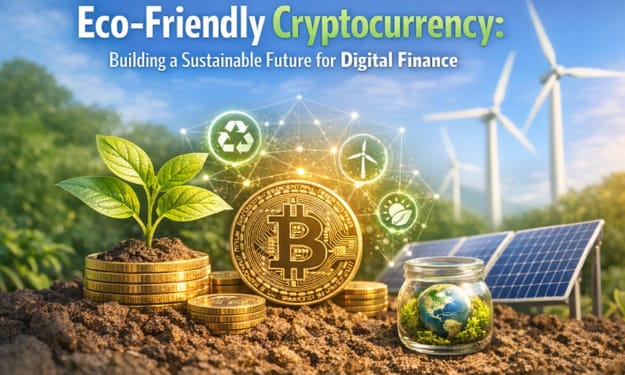
Eco-Friendly Cryptocurrency: Building a Sustainable Future for Digital Finance
The rapid growth of digital assets has transformed global finance, but it has also raised serious concerns about environmental sustainability. Traditional blockchain networks—especially those relying on energy-intensive mining—have drawn criticism for their high electricity consumption and carbon footprint. In response, a new wave of innovation has emerged: eco-friendly cryptocurrency.
By Siddarth Dabout 13 hours ago in The Chain



Comments
There are no comments for this story
Be the first to respond and start the conversation.