
How Do Real Estate Tokens Improve Liquidity in Property Markets?
Unlocking Instant Trading Opportunities: How Real Estate Tokens Enhance Liquidity in Property Markets

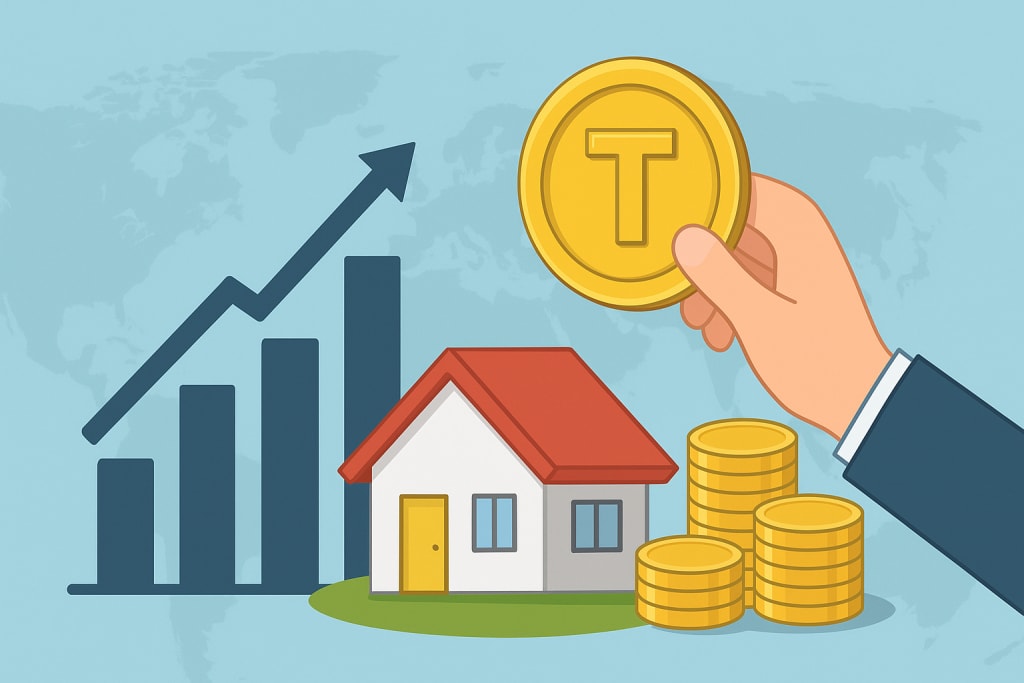
The property market has always been considered a stable, wealth-building asset class. From luxury apartments in New York to commercial towers in London, real estate holds immense value and long-term investment potential. Yet, despite its size and significance, it remains one of the most illiquid markets in the world. Investors often need to commit huge amounts of capital, wait through lengthy transaction processes, and accept that exiting an investment could take months or even years.
This lack of liquidity has historically been the greatest drawback of real estate investment. But with the rise of blockchain technology, real estate tokenization has emerged as a game-changing solution. By representing property ownership through digital tokens, investors gain access to fractional ownership, rapid transactions, and secondary market trading that transforms the illiquid nature of real estate into a dynamic, liquid market.
In this article, we’ll explore how real estate tokens improve liquidity, the mechanics behind tokenization, real-world examples, potential challenges, and the future of this revolutionary investment model.
Why Real Estate Suffers From Illiquidity
Liquidity is the measure of how quickly and easily an asset can be bought or sold without dramatically changing its price. Stocks, bonds, and cryptocurrencies are highly liquid because they can be traded instantly on exchanges, often with millions of buyers and sellers available at any given moment. Real estate, however, operates on the opposite end of the spectrum.
Selling a property usually involves:
- Lengthy due diligence and inspections
- Negotiations between multiple parties
- Title checks and legal approvals
- Complex financing and mortgage processes
- Reliance on agents, brokers, and banks
This makes it one of the most time-consuming asset classes to transact. Add to this the high cost of entry—often hundreds of thousands or millions of dollars—and it becomes clear why liquidity is limited. Only a small number of investors can afford to buy in, and even fewer can step out quickly when they need to cash out.
What Is Real Estate Tokenization?
Tokenization is the process of converting ownership rights in a real-world asset into digital tokens stored on a blockchain. These tokens represent fractional interests in a property, which can then be traded, transferred, or held in a digital wallet, just like cryptocurrencies.
Types of real estate tokens include:
- Equity Tokens: Represent ownership shares in a property. Investors benefit from appreciation and rental income.
- Debt Tokens: Represent fractionalized loans or mortgages secured by real estate. Investors earn interest returns.
- Hybrid Models: Combine ownership rights with debt structures, allowing flexibility for developers and investors.
For example, a $20 million commercial property could be split into 2 million tokens worth $10 each. Instead of one investor needing to commit millions, thousands of investors worldwide can participate with smaller amounts. This model fundamentally changes the liquidity dynamics of real estate.
How Real Estate Tokens Drive Liquidity
1. Fractional Ownership Expands Investor Pools
Fractionalization is one of the most powerful liquidity drivers. By lowering the minimum investment threshold, tokenization makes real estate accessible to retail investors who otherwise couldn’t afford direct ownership.
For instance, instead of requiring $200,000 to invest in a Manhattan condo project, tokenization allows entry with as little as $500. This dramatically increases the pool of potential investors, ensuring that there are always buyers and sellers for tokenized shares.
2. 24/7 Secondary Market Trading
Unlike traditional property sales restricted to lengthy negotiation cycles, real estate tokens can be traded 24/7 on blockchain-powered exchanges. Investors no longer need to wait months to liquidate holdings—they can instantly sell tokens to another buyer in real-time.
This ability to trade property shares like stocks or crypto is perhaps the single biggest leap in solving real estate’s illiquidity problem. It transforms properties into liquid assets, where exits are no longer bound by physical transactions.
3. Global Capital Flows
Traditional real estate investments are often restricted by jurisdiction, currency, and local legal systems. Tokenization breaks down these barriers by allowing a property in one country to be marketed and sold to investors worldwide.
For example, an investor in Singapore can buy fractional ownership in a Paris office building without physically traveling or dealing with foreign banking systems. This inflow of international capital increases both demand and liquidity for tokenized assets.
4. Automated Transactions with Smart Contracts
Smart contracts power the efficiency of real estate tokens. These self-executing contracts automatically handle dividend payouts, compliance, identity verification, and ownership transfers without intermediaries.
This automation reduces settlement times, eliminates unnecessary costs, and allows seamless investor exits. By minimizing friction, smart contracts support a more liquid and investor-friendly property market.
5. Institutional-Grade Exchanges
Liquidity is further enhanced by regulated security token exchanges like tZERO, INX, and Securitize, which specialize in trading tokenized assets. These exchanges bring transparency, compliance, and investor protection, bridging the gap between traditional finance and blockchain innovation.
Institutional-grade platforms encourage larger funds, REITs, and accredited investors to participate, further deepening liquidity pools.
Benefits of Liquidity for Stakeholders
Benefits for Investors
Flexible Exits
Traditionally, real estate investments required long holding periods, often lasting years before investors could liquidate their positions. Tokenization changes this by allowing investors to sell their tokens on secondary markets almost instantly. This flexibility gives investors more control over their capital, letting them reallocate funds quickly without being tied down to lengthy exit timelines.
Portfolio Diversification
With the lower entry barriers created by fractional ownership, investors can spread their funds across different property types and regions. Instead of committing large sums to a single property, they can diversify across residential apartments, commercial towers, and even international markets. This diversification reduces risk exposure and allows investors to enjoy the benefits of a truly global property portfolio.
Global Accessibility
Tokenization breaks down the geographical and legal barriers that traditionally restricted cross-border real estate investment. Through blockchain platforms, investors can purchase fractions of properties anywhere in the world without dealing with complex foreign exchange issues or legal hurdles. This democratization of access makes real estate an inclusive and borderless investment opportunity.
Benefits for Developers and Property Owners
Faster Capital Raising
Developers no longer need to depend solely on banks or a limited group of wealthy investors. By issuing tokens, they can raise funds from a global pool of retail and institutional investors. This accelerates fundraising timelines, ensures quicker project execution, and minimizes delays caused by financial constraints.
Higher Valuations
Liquid assets generally command higher premiums in financial markets, and the same applies to tokenized real estate. With more investors able to buy in and sell out freely, demand for tokens rises, which often boosts overall property valuations. Developers and owners benefit directly from this liquidity premium.
Reduced Dependence on Banks
Tokenization provides developers and property owners with an alternative financing model, reducing reliance on traditional bank loans or institutional credit. By raising funds directly through fractional ownership, they can bypass high financing costs and enjoy greater autonomy in project management.
Real-World Examples of Tokenized Real Estate Liquidity
RealT (United States)
RealT is one of the leading tokenized real estate platforms in the U.S., focusing on residential rental properties. The company fractionalizes homes and apartment buildings into Ethereum-based tokens, which investors worldwide can purchase. Each token represents ownership in the property, with rental income distributed in stablecoins like USDC. RealT tokens are also tradable on secondary marketplaces, allowing investors to exit positions quickly.
Brickblock (Germany)
Brickblock is a German platform that specializes in tokenizing commercial real estate. By creating blockchain-based tokens backed by high-value properties, it opens opportunities to both institutional and retail investors. The platform emphasizes compliance and security, helping establish trust in Europe’s tokenized real estate market. Brickblock also provides a structured secondary marketplace where tokens can be traded, increasing liquidity and transparency in assets that were once highly illiquid and difficult to access.
Propy (Global)
Propy operates globally, enabling entire property transactions through blockchain and tokenization. Buyers and sellers can complete cross-border real estate deals digitally, with ownership rights transferred via tokens. This eliminates paperwork, reduces costs, and speeds up settlement. Propy has already facilitated tokenized sales in the U.S. and Europe, proving how blockchain can make property more liquid not only through fractional shares but also with complete ownership transfers. By bridging global property markets, Propy improves liquidity at both the retail and institutional levels.
Slice (Europe)
Slice is a European platform focused on commercial properties, offering fractionalized investments in office buildings and shopping centers. By lowering entry costs, Slice allows retail investors to access assets once dominated by large institutions. Tokens can later be sold on secondary markets, providing much faster liquidity than traditional property exits. With seamless buy-in and exit options, Slice boosts investor confidence and expands liquidity across Europe’s commercial real estate sector.
A New Era of Real Estate Investment
Beyond Liquidity: A Shift in Ownership
Real estate tokenization is not simply about making property more liquid—it is about reshaping the very foundation of property ownership and investment. By merging traditional real estate with blockchain innovation, tokenization democratizes access to wealth, allowing investors from around the world to participate in opportunities that were once reserved for institutional players and high-net-worth individuals.
Unlocking New Possibilities for Stakeholders
This shift does more than increase flexibility; it creates a new paradigm where ownership can be divided, transferred, and monetized in ways that were never before possible. Developers gain faster access to capital, investors enjoy fluid entry and exit points, and global markets become more interconnected through transparent, blockchain-enabled ecosystems.
The Future of Real Estate Markets
As liquidity deepens, the future of real estate begins to resemble that of global equity markets—highly accessible, fast-moving, and digitally integrated—yet with the inherent security, stability, and value preservation that property has always provided. Tokenization is setting the stage for real estate to evolve from a rigid, illiquid asset class into a dynamic, borderless investment frontier.
Conclusion
The illiquidity of real estate has long been a barrier to broader participation and efficiency in property markets. But through fractional ownership, secondary market trading, global access, and blockchain-powered smart contracts, tokenization is removing those barriers.
While regulatory uncertainty and adoption challenges remain, the momentum is clear: real estate tokens are unlocking liquidity in one of the most illiquid asset classes in history. Over the next decade, this shift will not only reshape how investors engage with property but also democratize real estate investment for the masses, opening doors to new wealth-building opportunities worldwide.
About the Creator
Gabrielle
Blockchain enthusiast and NFT writer dedicated to merging technology with art on decentralized platforms, driving innovation for a creative future. Embracing the potential of digital expression.
When Did Bitcoin Start? A Simple History of Bitcoin’s Beginning
Introduction Many people use Bitcoin today, but few know exactly when Bitcoin started and how quietly its journey began. Bitcoin did not launch with hype, investors, or advertisements. Instead, it emerged during a time of global financial uncertainty, offering a new idea: money without banks.
By saif ullah4 days ago in The Chain
Blockchain in Intellectual Property: How It’s Changing Ownership, Protection, and Licensing
Introduction Intellectual property (IP) is one of the most valuable assets in the modern economy. From music, films, and books to patents, trademarks, and software code, creators and businesses rely on IP laws to protect their work. However, traditional intellectual property systems are often slow, expensive, and difficult to enforce—especially in the digital age.
By saif ullah3 days ago in The Chain
Miss Persephone's Manual to a Seemingly Ordinary Life
Miss Persephone was found at the dining table, her blue eyes swollen, her tears arriving and retreating like the tides of the ocean. Earlier that day, her family had visited her in the retirement home where she had lived for eight years. It was her eightieth birthday.
By Imola Tóth3 days ago in Fiction


Comments
There are no comments for this story
Be the first to respond and start the conversation.