

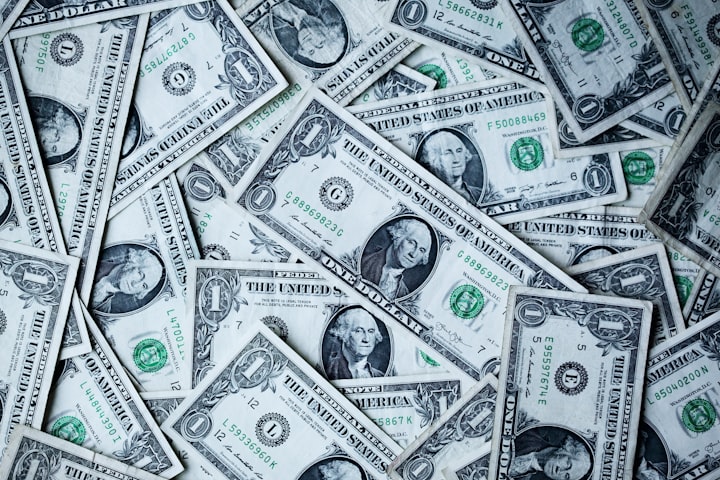
It is not for no reason that cryptos are roaring, and precious metals are playing catch-up. In the last month there have been developments that point to a new phase of accelerating monetary inflation for the dollar, and fiat money is only just beginning to be exchanged for these inflation hedges at an increasing pace.
Hyper-inflation of the dollar is now becoming obvious to a growing cohort of investors. It is driven by factors on both sides of bank balance sheets, with evidence that large depositors are reducing their term deposits and increasing their instant access checking accounts. This appears to be behind the increase in M1 money supply fuelled out of a shift from the M2 statistic, which includes savings deposits.
It amounts to a hidden run against bank balance sheets. Meanwhile, increasing supply chain problems against a background of covid lockdowns are leading to the withdrawal of bank credit from non-financial businesses, potentially imploding bank balance sheets as a bank credit contracts.
Foreign support for both the dollar and dollar-denominated fixed interest assets are being withdrawn, which is sure to lead to rising bond yields and dollar interest rates in the New Year, undermining the equity market bubble.
The Fed is now faced with not only financing ballooning federal budget deficits, but underwriting US supply chains in their entirety, which is corroborated by ongoing global logistical problems, tying up an annualised $34 trillion of intra-business payments in America alone. The Fed’s unwavering commitment to Keynesian monetary policies will lead the Fed to attempt to offset these supply chain problems, to rescue banks that fail to survive the inevitable contraction in bank credit, and to defray the bad debts that will arise.
It is a momentous task encompassing the whole US economy, requiring even faster money-printing, and is impossible without destroying the unbacked dollar.
Since May, I have been warning of a dollar collapse. I showed that commodities, stocks, cryptocurrencies and precious metals were all rising because of the dollar’s loss of purchasing power.
The media is still reporting on the economic effects solely of Covid-19. In doing so, they have consistently underestimated them and ignored other factors. To return to a normality was always there as a beacon of hope — the spring of hope in a winter of despair. And it has only been a small minority who have pointed out that far from being a solution, inflationary financing has negative consequences. And even fewer of us who have tried to demonstrate that instead of stimulating economic activity, debasing the currency actually kills it.
In the past, hyperinflations of the money quantity have led through rising prices to an increase in demand for currency in the form of notes. In the Germany of 1922—23, wage earners had to encash their salaries in order to spend them immediately, which led to a rapid increase in demand for paper marks while their purchasing power collapsed. This is why the printing presses were running at full tilt. In the modern economy where cash notes and coin play only a small role, the raising of spending liquidity at the banks creates a reservoir of funds, which when a shock comes, is poised to flow rapidly into anything which is not fiat money.
If that condition is triggered, it will drive the dollar’s purchasing power over a cliff-edge. An adjustment on these lines will lead to a more sudden increase of consumer goods prices measured in declining fiat than occurs in an economy where cash notes are the principal means of payment. But we are not there yet.
For commercial banks the initial effect of a reduction of savings accounts increases their exposure to the temporal mismatch between funding and their loan books. In the past, this has ended up with bank runs, such as that of Northern Rock in the UK in 2008, a warning of what was to come. A more apt laboratory example, perhaps, is the collapse of the whole Cypriot banking system in 2012. This is getting closer to where we are.
About the Creator
Muhammed Yaseen
London
Graduated banking and finance.
Like to read and keep updated with politics and finance.
Expert in finance
https://www.linkedin.com/mwlite/in/muhammed-yaseen-b1411598
Keep reading
More stories from Muhammed Yaseen and writers in The Chain and other communities.
The mystery of Bitcoin
The question arises as to what will replace fiat currencies (paper). In the past the answer has always been precious metals but today there are cryptocurrencies as well, whose enthusiasts are more aware than most of fiat money’s failings.
By Muhammed Yaseen 5 years ago in The Chain
Crypto Coin: Architecture, Utility Models, and Market Dynamics Explained
The term Crypto coin refers to a native digital asset that operates on its own blockchain infrastructure, functioning as a medium of exchange, store of value, and programmable financial instrument. Unlike tokens that are deployed on existing chains, a Crypto coin underpins its network’s consensus, incentivization, and transaction validation layers. Understanding how a Crypto coin operates requires a multi-dimensional perspective that includes cryptographic security, economic design, governance structures, and regulatory implications.
By Siddarth D5 days ago in The Chain
The Power Behind Bitcoin
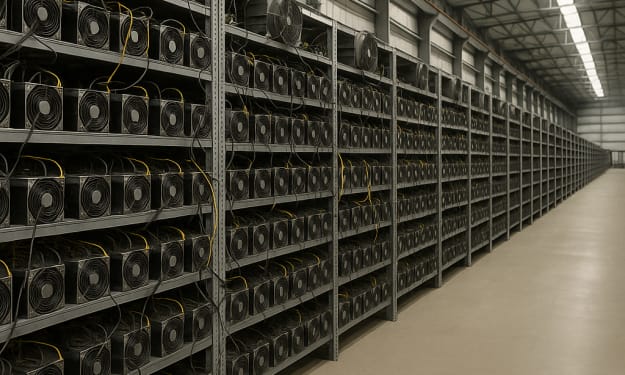
Bitcoin borrowed a word that does not belong to it. Mining sounds physical. It carries an image of dirt, steel, and effort. It suggests men who work in tunnels and move rock by the ton. When the public hears it, they picture a job that leaves a body tired in a way that makes sense. None of that exists in a modern Bitcoin facility. What you find instead is a heat-filled building lined with machines made for only one purpose. Each machine is a miner. One miner equals one computer. Thousands of them sit in rows, running without rest. Once a person understands that a miner is not a human but a device that never sleeps, the scale becomes easier to grasp. These machines fire through guesses at high speed. Each one is trying to match the one valid answer the network will accept. The winning machine earns the reward. All other miners (computers) try again. The entire operation is a probability race powered by electricity.
By Dr. Mozelle Martin6 days ago in The Chain


Comments
There are no comments for this story
Be the first to respond and start the conversation.