
Exploring the Differences Between Crypto Coins and Crypto Tokens
Differences Between Crypto Coins and Crypto Tokens

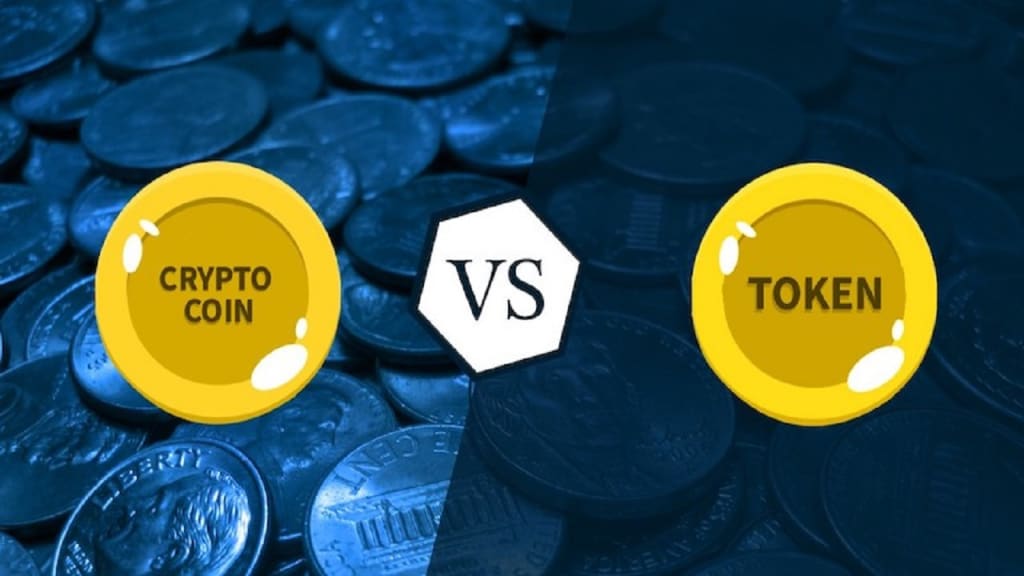
Understanding the basics of crypto is essential as it reshapes finance, technology, and business. Two terms often heard are “crypto coins” and “crypto tokens.” They sound similar, but they serve different purposes. Knowing their distinctions is key for anyone involved in crypto token development, investing, or using blockchain technology.
What Are Crypto Coins?
Crypto coins are digital currencies that operate on their own blockchain. They function similarly to traditional money. For example:
Bitcoin (BTC) runs on the Bitcoin blockchain.
Ether (ETH) runs on the Ethereum blockchain.
Key Functions of Crypto Coins
Medium of Exchange: Crypto coins are used for transactions, like buying goods or services.
Store of Value: Many people hold crypto coins as long-term investments, much like gold.
Unit of Account: Crypto coins can represent value within their own networks, offering a standardized unit for transactions.
Characteristics of Crypto Coins
Blockchain Independence: Crypto coins exist on their own blockchains.
Mining and Staking: Coins can be created through mining (Proof of Work) or staking (Proof of Stake).
Use in Native Blockchain Networks: Coins pay for transactions within their network, like ETH used for Ethereum transaction fees.
What Are Crypto Tokens?
Crypto tokens are digital assets built on top of existing blockchain networks. They don’t have their own blockchain but rely on another one. The most popular platform for crypto token development is Ethereum, though others like Binance Smart Chain and Solana are widely used too.
Key Functions of Crypto Tokens
Utility Tokens: Used to access services or products within a blockchain-based platform, like in games or DeFi projects.
Security Tokens: These represent ownership or investment interests, much like stocks or bonds.
Governance Tokens: Allow holders to participate in project decisions, like voting on protocol changes.
Asset-Backed Tokens: Represent physical assets, like real estate or gold, on the blockchain.
Characteristics of Crypto Tokens
Blockchain Dependence: Tokens rely on the blockchain they’re created on, like Ethereum.
No Native Mining or Staking: Tokens don’t get mined; they’re created through a process called minting.
Variety of Use Cases: Tokens have flexible uses, from utility to ownership, expanding the applications of blockchain.
Comparing Crypto Coins and Crypto Tokens
To understand the main differences, let’s break down their features:
1. Blockchain and Independence
Coins: Exist on their own blockchains. Example: BTC on Bitcoin, LTC on Litecoin.
Tokens: Built on top of existing blockchains. Example: USDT on Ethereum.
2. Creation Process
Coins: Created through blockchain protocols like mining (Proof of Work) or staking (Proof of Stake).
Tokens: Created through smart contracts on existing blockchains. No mining involved; they're minted based on supply needs.
3. Primary Uses
Coins: Used mainly as digital currency for transactions, investments, or network operations.
Tokens: Used for various purposes beyond currency, like accessing services, representing assets, or voting in project governance.
4. Transaction Fees
Coins: Pay for transactions within their native networks. Example: ETH is used to pay for gas fees on the Ethereum network.
Tokens: Require the native coin of the blockchain for transactions. Example: ERC-20 tokens require ETH for gas fees on Ethereum.
Why the Distinction Matters in Crypto Token Development
For those involved in crypto token development, it’s crucial to understand these differences. Coins and tokens serve different roles within the blockchain ecosystem, and the choice between creating a coin or a token affects everything from transaction methods to security measures.
Factors to Consider in Development
Network Requirements: Tokens need a host blockchain, so choose one that aligns with your project’s needs.
Regulations: Depending on the use case (especially for security tokens), consider compliance with financial regulations.
Transaction Costs: Hosting a token on Ethereum can involve high gas fees. Factor this into the development plan.
Scalability and Speed: Choose a blockchain that can handle your project’s anticipated transaction volume.
Real-World Examples of Coins and Tokens
Let’s look at some popular examples to see how coins and tokens operate differently in real-world scenarios.
Crypto Coins Examples
Bitcoin (BTC): Often called digital gold, it’s the first and most well-known cryptocurrency, used as a store of value and medium of exchange.
Litecoin (LTC): Known as silver to Bitcoin’s gold, it’s a peer-to-peer coin with faster transaction times.
Ether (ETH): While ETH is a coin on Ethereum, it also powers an ecosystem of decentralized applications and smart contracts.
Crypto Tokens Examples
Tether (USDT): A stablecoin pegged to USD, widely used in trading for its stable value.
Chainlink (LINK): A token on Ethereum that powers decentralized oracles, enabling smart contracts to interact with real-world data.
Uniswap (UNI): A governance token that lets holders vote on changes to the Uniswap protocol, a popular decentralized exchange.
Security and Risks: Coins vs. Tokens
Both coins and tokens come with unique risks. Let’s break them down.
Security of Crypto Coins
Crypto coins benefit from the security protocols of their native blockchains, like Bitcoin’s robust Proof of Work. However, coins can still face risks:
51% Attacks: If a group controls the majority of mining power, they could manipulate transactions.
Forks: Updates or disagreements within a blockchain community can lead to forks, creating new versions of a coin.
Security of Crypto Tokens
Since tokens rely on smart contracts, their security depends heavily on the blockchain and the code quality. Risks include:
Smart Contract Vulnerabilities: Poorly written smart contracts can be exploited, resulting in lost funds or system errors.
Reliance on Host Blockchain: Tokens depend on the security and stability of their host blockchain. If Ethereum has issues, all ERC-20 tokens are affected.
Future of Crypto Coins and Tokens
As crypto token development evolves, so does the role of both coins and tokens. Here’s a look at where they’re heading.
Future of Crypto Coins
Digital Payments and Adoption: Coins like Bitcoin are gaining acceptance as payment methods by major businesses.
Decentralized Finance (DeFi): Coins play a big role in DeFi, where they’re used for lending, borrowing, and more.
Central Bank Digital Currencies (CBDCs): Many governments are exploring digital versions of their national currencies, which could shift how crypto coins are used globally.
Future of Crypto Tokens
Asset Digitization: More real-world assets, like property or commodities, may be tokenized to allow easier transfer and ownership.
Enhanced Use in dApps: Tokens are crucial for dApps, which continue to grow across sectors like gaming, finance, and supply chain.
Expansion in Governance: As DAOs (Decentralized Autonomous Organizations) grow, governance tokens will play a key role in decision-making.
Conclusion:
Understanding the difference between crypto coins and tokens is essential for anyone in the blockchain space. While coins operate on their own blockchains and are primarily used as digital currencies, tokens rely on existing blockchains and offer a broader range of functionalities.
Both coins and tokens have significant roles in a crypto token development company and the blockchain ecosystem. Knowing when to use each can enhance project outcomes, improve user engagement, and lead to new innovations.
As you dive deeper into crypto, remember that whether it’s a coin or a token, each has its place and purpose. With the right knowledge, you can make informed decisions and contribute to the future of digital assets.
About the Creator
Sneha Ahlawat
I'm Sneha Ahlawat, Senior crypto marketing expert at Wisewaytec. Wisewaytec offers comprehensive crypto marketing services, expertly crafted to elevate your brand in the dynamic digital landscape.
Keep reading
More stories from Sneha Ahlawat and writers in The Chain and other communities.
A Complete Guide on Token Minting and How It Works
Token minting is an essential part of the blockchain ecosystem. It allows developers and businesses to create new tokens that serve various purposes. In this guide, we will explore token minting in detail, discussing what it is, how it works, and its importance in the crypto world.
By Sneha Ahlawatabout a year ago in The Chain
American Bitcoin Stock: How Investors Gain Exposure to Bitcoin
Introduction American Bitcoin stock is a popular search term among investors who want exposure to Bitcoin without directly owning cryptocurrency. While there is no single stock officially named “American Bitcoin,” the phrase usually refers to U.S.-listed companies whose business models are closely tied to Bitcoin.
By saif ullah3 days ago in The Chain
The Premier Cryptocurrency Recovery Firm with a 98% Success Rate
As cryptocurrency adoption has expanded across global markets, so too have the risks associated with digital assets. Investment fraud, wallet breaches, phishing attacks, and unauthorized transfers have become increasingly sophisticated, affecting both individual investors and organizations. In this complex environment, cryptocurrency recovery has emerged as a specialized discipline requiring technical expertise, regulatory awareness, and disciplined investigative methods. Autopsy Mainnet Recovery has distinguished itself within this field through a consistent, structured approach that has resulted in a documented success rate of 99 percent across viable recovery cases.
By Mason Caleb5 days ago in The Chain
Do You have a Support Network?
Life is harder when you’re on your own. Human beings are social creatures, and we usually feel better when we have support from a strong social network around us. For most people, it’s our families that hold us together like glue.
By Elizabeth Woodsabout 10 hours ago in Psyche


Comments
There are no comments for this story
Be the first to respond and start the conversation.