
A 2026 Guide to Perpetual DEX Tokens and Their Use Cases
Perpetual DEX

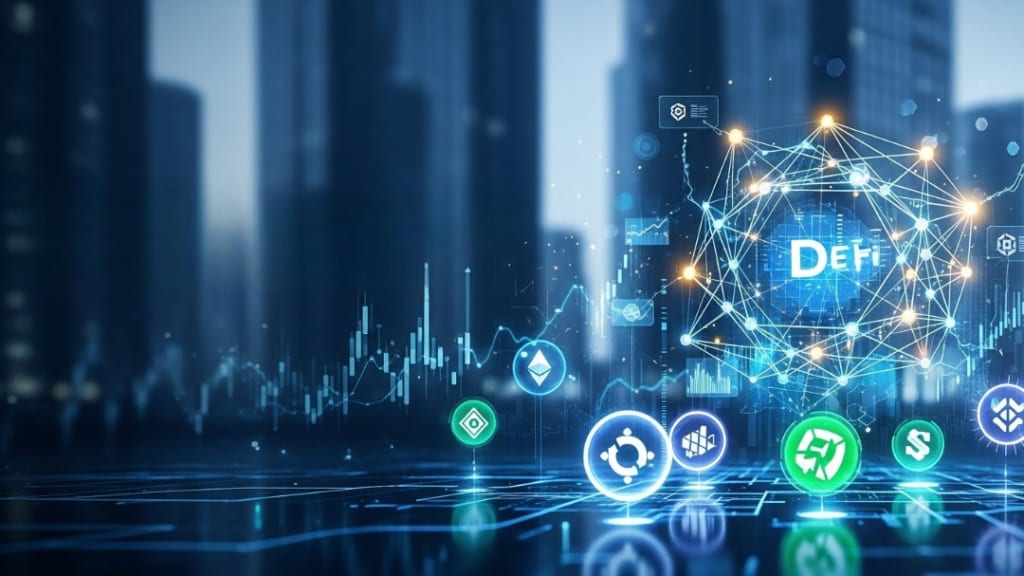
Perpetual DEXs have moved from “DeFi experiment” to serious trading infrastructure. They now power everything from high-frequency speculation to long-term hedging, with mechanics that feel familiar to centralized derivatives traders funding rates, margin, liquidations while operating through smart contracts and transparent rules. In this shift, Perpetual DEX tokens have become more than governance badges. The strongest token models increasingly function as economic coordination layers: they align liquidity, help finance security, shape incentives for market quality, and when designed well connect protocol growth to tokenholder outcomes without collapsing under dilution.
This matters even more heading into 2026 because expectations have changed. “Token incentives” used to mean emissions-driven growth. Now, traders and investors scrutinize whether a token captures value through real usage, whether incentives produce durable liquidity, and whether token mechanics introduce hidden risks (oracle fragility, toxic flow, liquidation externalities). Research and ecosystem commentary have emphasized how early models leaned heavily on emissions and discounts, while later designs moved toward fee sharing and more sustainable value capture.
If you’re building or evaluating a Decentralized perpetual exchange, this guide explains what perpetual DEX tokens are for, how leading designs differ, and which token use cases are likely to matter most in 2026 especially for teams involved in Crypto Perpetual Exchange Development, Perpetual Exchange Development, and Perpetual Futures Trading DEX Platform development.
What is a Perpetual DEX token really?
A perpetual DEX token is typically the native asset associated with a derivatives protocol (or its chain/appchain) that coordinates governance, security, economics, and growth incentives. In practice, these tokens sit at the center of how the protocol evolves: they shape which markets get listed, how risk parameters are tuned, how the treasury is deployed, and how protocol revenues or incentives get distributed. A token may also be directly useful inside the product through fee discounts, access tiers, or collateral eligibility depending on how the exchange is designed.
The nuance is that “utility” doesn’t automatically mean “value capture.” Many tokens have multiple utilities but still fail to create consistent demand, especially if their main purpose is short-term incentives. In 2026, the most resilient perpetual DEX token designs are the ones that operate more like risk-and-revenue infrastructure, not marketing instruments.
The two dominant token archetypes in perpetual DEXs
While every protocol has its own mechanics, most perpetual DEX tokens cluster into two broad archetypes. The difference between them matters because it determines what the token is truly responsible for: steering a product, securing a chain, or both.
1) Protocol token for a derivatives app
This is the classic DeFi model. The token governs the derivatives protocol and may provide holders with economic participation through mechanisms like fee sharing, buyback-based rewards, or treasury capture. This archetype is common when the perpetual DEX runs on an existing L1/L2 and does not need its token to secure consensus. In that setup, the token’s credibility depends less on “network security” and more on whether governance is effective and whether protocol activity meaningfully connects to tokenholder outcomes.
GMX is a well-known example of this direction. GMX’s documentation describes the GMX token as a utility and governance asset with benefits that include earning a share of protocol fees from leverage trading, liquidations, borrowing fees, and swaps, alongside a mechanism where buybacks help fund GMX rewards. This illustrates how an app-level perpetual token can be positioned as a claim on protocol usage, not just a governance key.
2) Appchain token
A newer wave of perpetual exchanges runs as an appchain (or sovereign chain), where the token is not merely governance, it is also staking collateral that secures the network. dYdX Chain is the most visible example. The dYdX Foundation describes DYDX as used for staking and governance, and frames staking rewards as usage-based rather than emissions-based, with rewards primarily denominated in USDC.
This design can create a stronger “network” narrative: validators, uptime, decentralization, and security become part of the token story. But it also adds complexity. Stakers must understand validator selection, commissions, unbonding time, and slashing risk. dYdX Chain’s staking documentation covers these concepts explicitly, underscoring that the token is part of an operational security system, not just an investment wrapper.
The 2026 shift:
A defining change in perpetual token design is the shift away from indefinite emissions toward usage-linked economics. Tokenomics research and ecosystem analysis often describe earlier DeFi derivatives tokens as heavily inflationary through reward emissions, while later iterations increasingly emphasized fee sharing and reduced dependence on dilution.
dYdX is often discussed in this context because its staking rewards are framed as coming from protocol usage and paid out largely in USDC. The Foundation has reported meaningful staking participation metrics and the cumulative USDC distributed to stakers as of mid-2025, reinforcing the narrative of “activity-funded” rewards rather than purely token-funded incentives.
Synthetix reflects a related evolution: rather than treating token incentives as a pure growth subsidy, it ties staking to liquidity provisioning and fee generation. In its staking guide, Synthetix notes that staking-generated liquidity powers Synthetix Perps and cites significant processed volume and fees rewarded to stakers over a year. The broader message is that the market increasingly values tokens that do real economic work and are compensated by real usage.
Core use cases of perpetual DEX tokens in 2026
1) Governance that actually matters: risk parameters, listings, and market integrity
Governance is often dismissed as “tokenholder theater,” but in perpetuals it is tightly coupled to survival. Perps require a risk engine: margin requirements, liquidation penalties, open interest limits, oracle configuration, and fee structures. Tokens that govern these parameters have a real role in shaping market integrity. Tokens that do not meaningfully influence these levers tend to become symbolic, and symbolic governance rarely sustains long-term token demand.
In 2026, “good governance” is less about voting turnout and more about whether the protocol can safely expand. This includes listing new markets with appropriate leverage caps, adjusting liquidation penalties based on volatility, tuning funding and fee structures to prevent toxic flow, and deploying treasury resources to strengthen backstops and liquidity programs.
2) Staking for security: appchain tokens and validator economics
Where perpetual DEXs run as appchains, staking becomes a core token use case. Staking secures the chain, aligns validators to protocol health, and distributes rewards to those who participate in security. dYdX Chain’s staking documentation highlights this full lifecycle: staking involves delegating and locking tokens to validators, commissions vary, unbonding periods apply, and slashing can occur if validators misbehave.
For users, that means staking is not “passive yield.” It requires decisions and carries risk. For builders in Decentralized perpetual exchange development, it means the token must balance two objectives simultaneously: security incentives must be strong enough to protect the chain, and trader economics must remain competitive enough to attract volume.
3) Fee sharing and “real yield”: aligning tokenholder outcomes with protocol usage
Fee sharing has become one of the most discussed token use cases because it provides a clear link between platform activity and tokenholder benefit. But there are multiple ways to implement it. Some protocols share fees directly with token stakers. Some use fees for buybacks that fund rewards. Others accumulate fees in a treasury and rely on governance to decide how value is deployed.
GMX provides a concrete example of fee-linked token utility. Its documentation states that holding GMX provides benefits such as earning a share of fees derived from leverage trading, liquidations, borrowing fees, and swaps, and it describes a buyback-funded reward mechanism that supports GMX incentives.
dYdX’s described approach is different: it emphasizes usage-based staking rewards paid primarily in USDC, supported by reported distribution totals and participation metrics. Each model has different implications for sustainability and market perception, but both reflect a 2026 expectation: token economics should be understandable, measurable, and grounded in real activity.
4) Liquidity and market-making incentives: tokens as market depth tools
Liquidity is the lifeblood of any perpetual venue. Deep order books and tight spreads determine whether serious traders show up, and whether the exchange can compete during volatile periods. Token incentives remain a powerful tool for building liquidity, particularly during early growth, but the industry has learned that broad emissions can create short-term volume that disappears once rewards decline.
The more mature approach is targeted incentive design. Instead of paying for raw volume, protocols increasingly pay for market quality: consistent quoting, depth at relevant price bands, and stability during stress. Tokenomics research has noted that emissions-heavy models can be unsustainable, while fee sharing and better-aligned incentive designs can create more durable ecosystems.
For teams building a Perpetual Futures Trading DEX Platform, the key question is whether token incentives create “sticky liquidity” or “mercenary liquidity.” Sticky liquidity stays because the product is good and the economics are fair. Mercenary liquidity stays only while rewards are high.
5) Risk backstops and insurance alignment: tokens as solvency infrastructure
Perpetual exchanges must survive volatility spikes. When liquidations accelerate and markets gap, the system needs backstops: insurance funds, conservative risk limits, dynamic fees, and sometimes protocol-owned liquidity. Tokens can be linked to these backstops through governance and treasury control, or through mechanisms where part of the protocol’s economics explicitly funds solvency reserves.
Even when tokenholders do not directly bear insurance risk, the market often prices the protocol’s solvency model into token narratives. In 2026, transparency is critical. Protocols that clearly explain how deficits are handled and how backstops are funded tend to build more trust among serious participants.
6) Product utility: discounts, tiers, access, and collateral eligibility
Product utility is often the most visible token use case because users feel it immediately. Fee tiers, discounts, referral benefits, access to advanced analytics, or priority feature sets can create real demand especially for active traders. Collateral eligibility can also be a strong utility, but it must be handled carefully because allowing the token as collateral can create reflexive risk if token price declines during market stress.
The strongest product-utility designs in 2026 are those that are simple and measurable. Traders respond to benefits that reduce trading costs or improve execution and tooling. However, utility should not be a substitute for sustainable economics. If a token’s main story is discounts, it becomes hard to defend against competitors without sliding into an incentive race.
How to evaluate perpetual DEX tokens in 2026: a practical framework
A useful way to evaluate tokens whether you are investing, integrating, or designing one as part of Perp DEX Platform Development is to ask five questions in sequence.
First, identify the token’s primary job. If the token is trying to be governance, yield, and security all at once, you should look for evidence that the system has clear prioritization rather than vague promises. Second, examine whether value accrual is driven by usage or dilution. Tokens that rely heavily on emissions face constant sell pressure unless growth is extraordinary; tokens that rely on activity-funded rewards may be more sustainable, but only if the protocol can maintain volume through competition and cycles.
Third, evaluate whether incentives pay for real market quality. Incentives should deepen liquidity and reduce slippage, not merely inflate volume metrics. Fourth, assess whether the token introduces new systemic risks: governance capture, oracle fragility, or reflexive collateral loops. Fifth, ask whether the token is legible to users. If users can’t quickly understand why it matters, it will struggle to maintain broad participation beyond speculative cycles.
What to expect in 2026:
A few trends are likely to define the perpetual token landscape in 2026. First, stablecoin-denominated rewards and “real yield” narratives will continue to grow in importance, as they reduce reliance on reflexive token emissions. dYdX’s USDC-denominated staking reward framing and its reported distribution metrics reflect this direction.
Second, more protocols will lean into protocol-owned liquidity and explicit treasury strategy, using treasury deployment to stabilize liquidity incentives, fund security work, and build insurance reserves. GMX’s documentation describing treasury accumulation and buyback-driven reward funding is aligned with this maturation path.
Third, risk alignment will become more explicit. Whether through staking-backed liquidity (as in Synthetix’s model) or staking-as-security (as in appchains), tokens will increasingly do real economic work and carry real responsibilities. Fourth, incentive-driven volume will be scrutinized more aggressively. The market has become more capable of identifying mercenary flows, and protocols will need to prove they are building lasting liquidity rather than temporary activity spikes.
Conclusion
Perpetual DEX tokens in 2026 are best understood as infrastructure primitives. They coordinate governance, security, liquidity, and economic alignment inside systems that must remain solvent and competitive through extreme volatility. The strongest designs are moving toward clearer value accrual, reduced dependence on inflation, and mechanisms that connect rewards to real usage illustrated by models like dYdX’s usage-based staking rewards and GMX’s documented fee-linked token benefits.
For builders in Crypto Perpetual Exchange Development and Decentralized perpetual exchange development, the takeaway is straightforward: token design is not marketing, it's part of the exchange’s risk engine and growth strategy. A token that creates durable liquidity, aligns participants during stress, and communicates tradeoffs transparently can become a long-term moat. A token that relies on short-lived emissions or unclear value capture may buy attention, but rarely buys resilience the trait perpetual markets ultimately demand.
About the Creator
john
I focus on DeFi's disruptive potential via blockchain, crypto, and tokens. My interest: evolving NFTs into full metaverse economies.
Crypto 2026 Prediction: What’s Ahead for Bitcoin, ETH & Markets
Introduction By 2026, the cryptocurrency market is poised to enter a new chapter — one defined by institutional adoption, evolving regulation, and real-world utility. After years of speculative rallies and sharp corrections, investors and traders from Sydney to Perth are asking: Where is crypto headed next? Predicting the future of digital assets isn’t an exact science, but by analysing current trends, expert forecasts, and market data, we can draw a clearer picture of what this pivotal year may hold.
By saif ullah2 days ago in The Chain
Crypto 30x: Can Bitcoin Still Deliver Exponential Returns?
Introduction When traders talk about crypto 30x, the conversation usually drifts toward obscure altcoins, meme tokens, or early-stage projects with questionable fundamentals. Bitcoin, by contrast, is often dismissed as “too big” or “already mature” to generate exponential returns. But history tells a more nuanced story. Bitcoin has delivered multiple 30x-style cycles over its lifetime — not overnight, but through long-term adoption, monetary shifts, and supply-driven scarcity.
By saif ullaha day ago in The Chain
Standing While Falling
Quotation from Friedrich Nietzsche "He who wrestles long with monsters should beware lest he himself become a monster. And if you gaze long into an abyss, the abyss also gazes into you. Man is not destroyed by suffering, but by the meaning he makes of it."
By LUCCIAN LAYTH4 days ago in Critique


Comments
There are no comments for this story
Be the first to respond and start the conversation.